Identification Guides · Oct 2026 (B.E. 2569)
A field guide to Thai amulet types: image, material, period and provenance
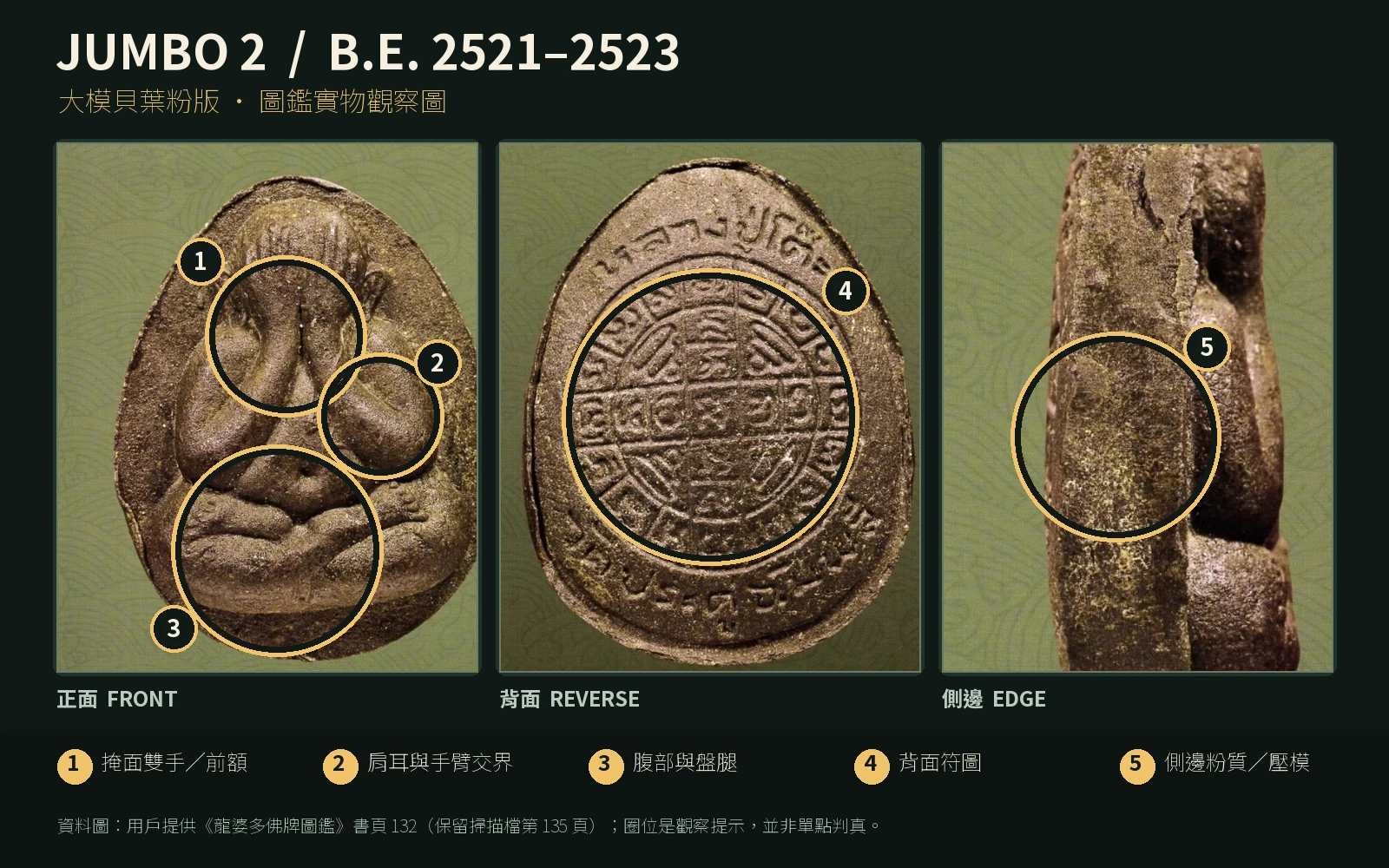
Pidta, Khun Paen and Phra Kring name forms or families, not one single amulet. A sound map begins by identifying exactly what is being compared.
13 min
A field guide to Thai amulet types: image, material, period and provenance
Pidta, Khun Paen and Phra Kring name forms or families, not one single amulet. A sound map begins by identifying exactly what is being compared.
Thai amulets have no single, timeless catalogue accepted by everyone. Markets name by image, temples by edition and consecration, and archaeology by period, region and material. One object may belong to several layers at once. A Khun Paen can be an old cache tablet, or a modern pressed-powder issue by a named master. Memorising only a Chinese trade name can collapse different periods, lineages and techniques into one thing.
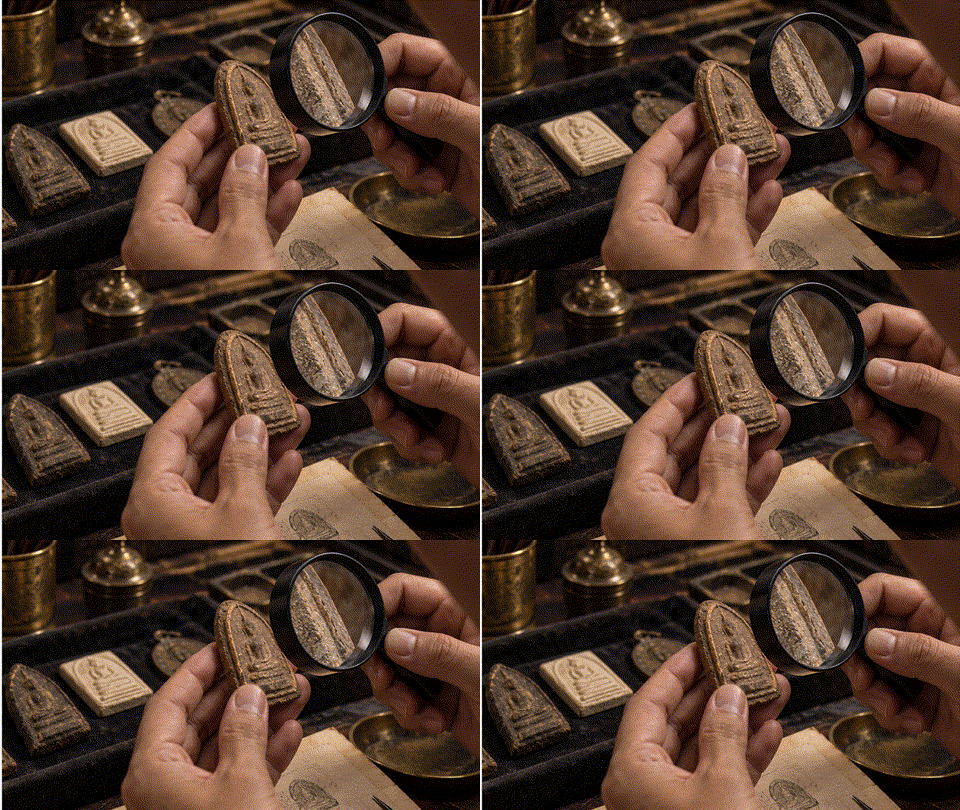
First layer: cache tablets and later temple issues
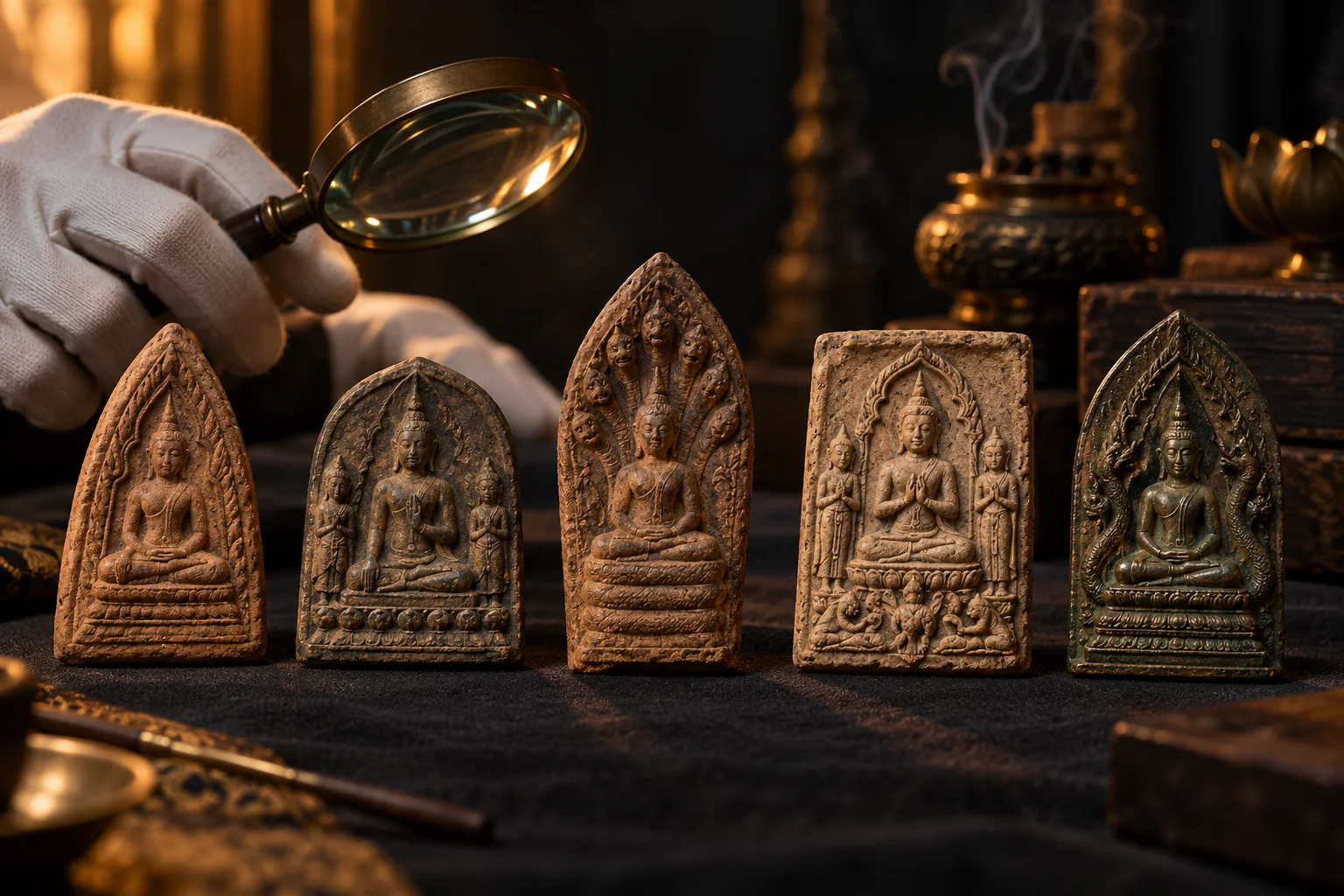
Phra kru usually denotes tablets deposited in a stupa or temple structure and later recovered through restoration, collapse or opening of the cache. Study centres on findspot, associated objects, stratigraphy and artistic style—not first on whether a modern master blessed each piece. Later temple issues may document year, purpose, moulds, ingredients and ceremonies. Both can carry religious value, but their dates are established by different evidence.
Second layer: material and manufacture
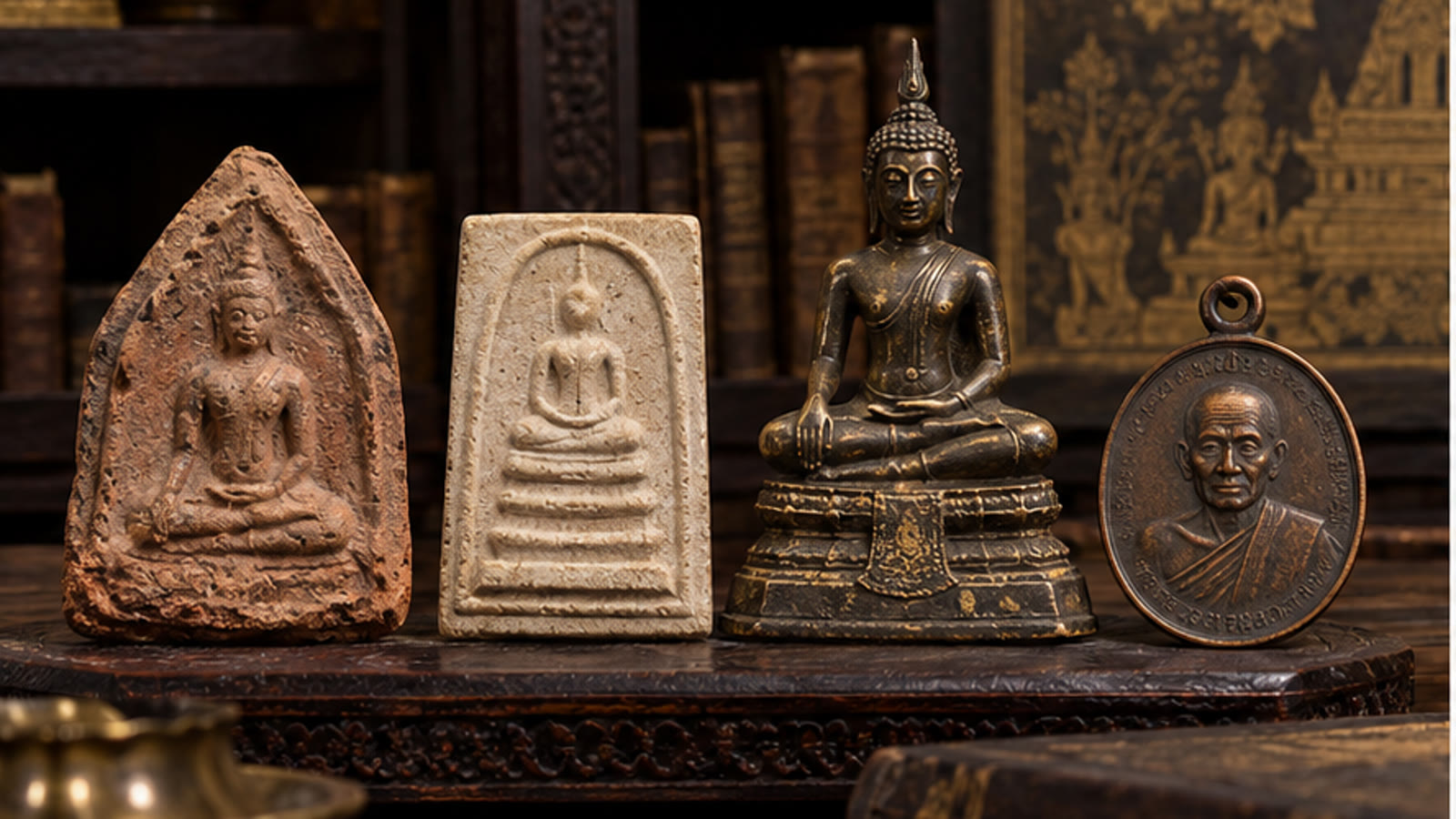
Broad groups include clay or ceramic tablets, tin-lead and related chin metals, pressed sacred powders with binders, small cast images, and die-struck coins (rians). A material label is not a verdict. An apparently old powder piece still requires study of shrinkage, pores, mould lines and provenance; a metal coin requires die, rim, lettering and issue records.
Third layer: iconography is not a benefit label
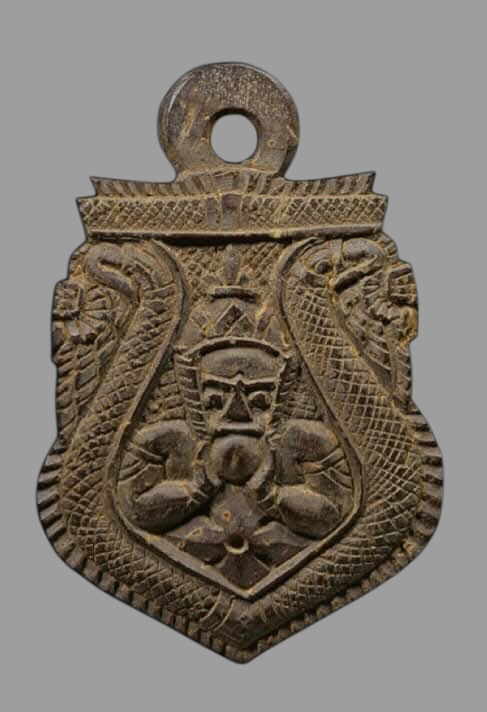
Pidta covers the eyes, Nak Prok shows Mucalinda sheltering the Buddha, and the walking Buddha represents the Teacher moving through the world. These are first religious images and narratives. Wearing traditions later associate them with discretion, protection, travel or work, but explanations vary by temple, lineage and edition. Responsible language says devotees associate or issue records claim; it does not turn belief into a physical guarantee.
How to use this series
- 01Identify the image first: figure, gesture, posture, aureole, seat and surrounding symbols.
- 02Then identify material and process: pressed, cast, struck or carved—not colour alone.
- 03Finally verify temple, maker, year, edition and a credible chain of ownership.