Origins & Belief · Oct 2026 (B.E. 2569)
Phra Pidta: covering the eyes is restraint, not fear
From Phra Phakhawambodi to the celebrated Chonburi lineages, Pidta condenses protection, discretion and inner composure into one unmistakable image.
16 min
Phra Pidta: covering the eyes is restraint, not fear
From Phra Phakhawambodi to the celebrated Chonburi lineages, Pidta condenses protection, discretion and inner composure into one unmistakable image.
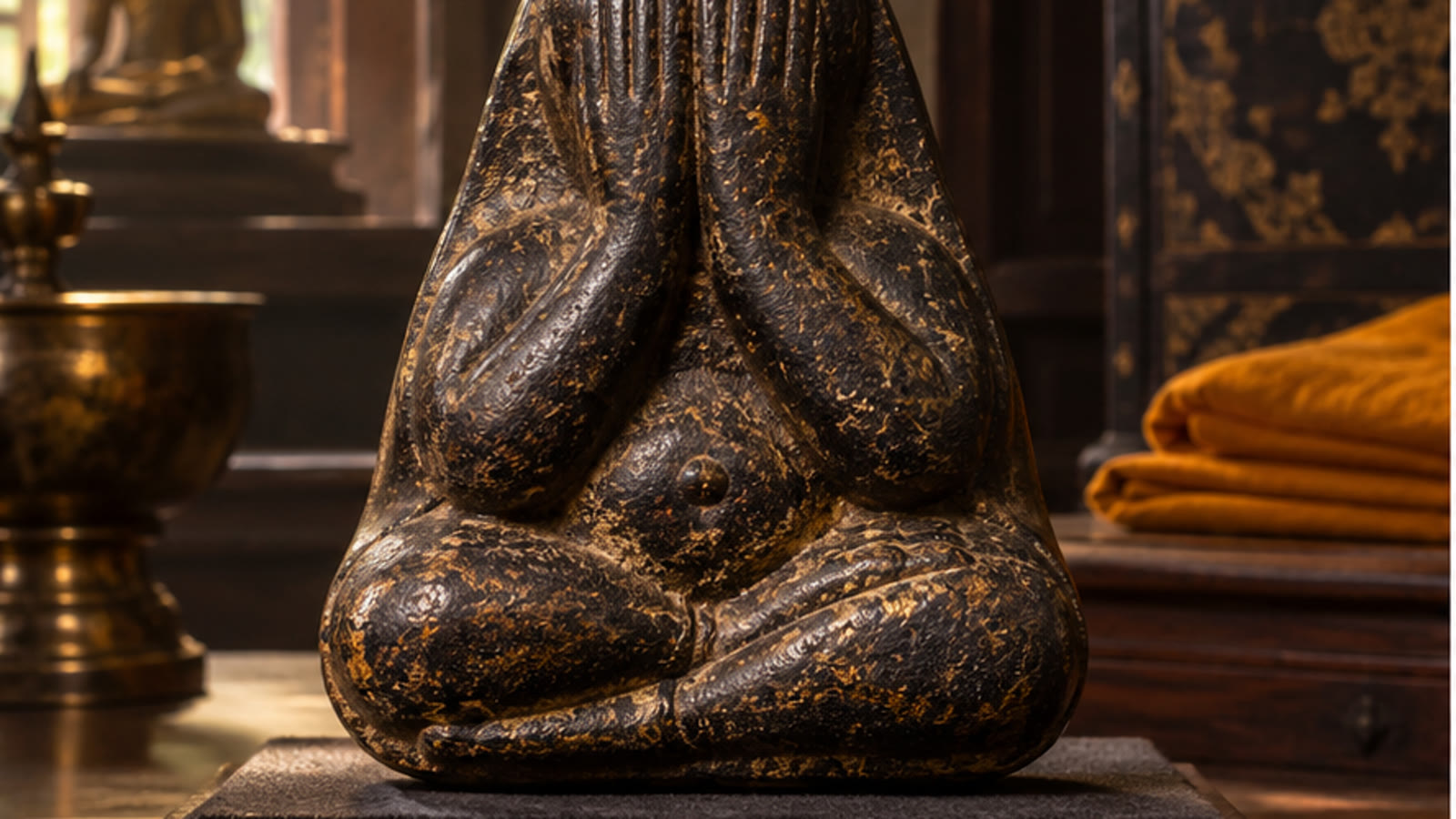
The Chinese market name Pidta comes from Thai phra pid ta, literally a sacred image that closes the eyes. The familiar form is a seated figure covering both eyes, while Thai documentation also uses Phra Phakhawambodi. Some lineages identify the figure as the Buddha, others with the disciple Mahakaccana; traditions are not uniform. When studying an object, record the temple’s own designation rather than forcing one internet story onto every Pidta.
Behind the covered eyes: turning from the outer world inward
The image is powerful because it confronts no outside enemy with a weapon; it first stops the eyes from chasing appearances. Popular interpretation extends this to restraint of eye, ear, nose, tongue, body and mind: see less quarrel, absorb less needless stimulation, and avoid being driven by greed, anger or fear. Closing the eyes is not flight from reality but the discipline of holding one’s reaction before acting. Even without supernatural claims, it remains a remarkably modern symbol of self-command.
Two-handed Pidta, nine-gate forms and Maha-ut are not interchangeable
The standard two-handed form covers the eyes. Phra Pit Thawan, especially the nine-gate form, may use multiple hands to close eyes, ears, nose, mouth and other bodily gates. Southern traditions also preserve names such as Phra Maha-ut and Phra Ruang Pidta, which need not be identical to familiar Chonburi Pidta. Calling every many-armed small figure Pidta erases region, purpose and period.
Why Chonburi matters so much
Chonburi developed an influential Pidta tradition, with the lineage associated with Luang Pu Kaeo of Wat Khruea Wan especially familiar to collectors. A Thai National Library introduction to nineteen Chonburi masters notes the regional continuity of the Khawambodi form covering both eyes; later makers often studied older models while developing their own proportions, powders and finishes. ‘Chonburi Pidta’ is therefore a regional network, not one master or one mould.
Materials: powder, lacquer, metal and inserted takrut
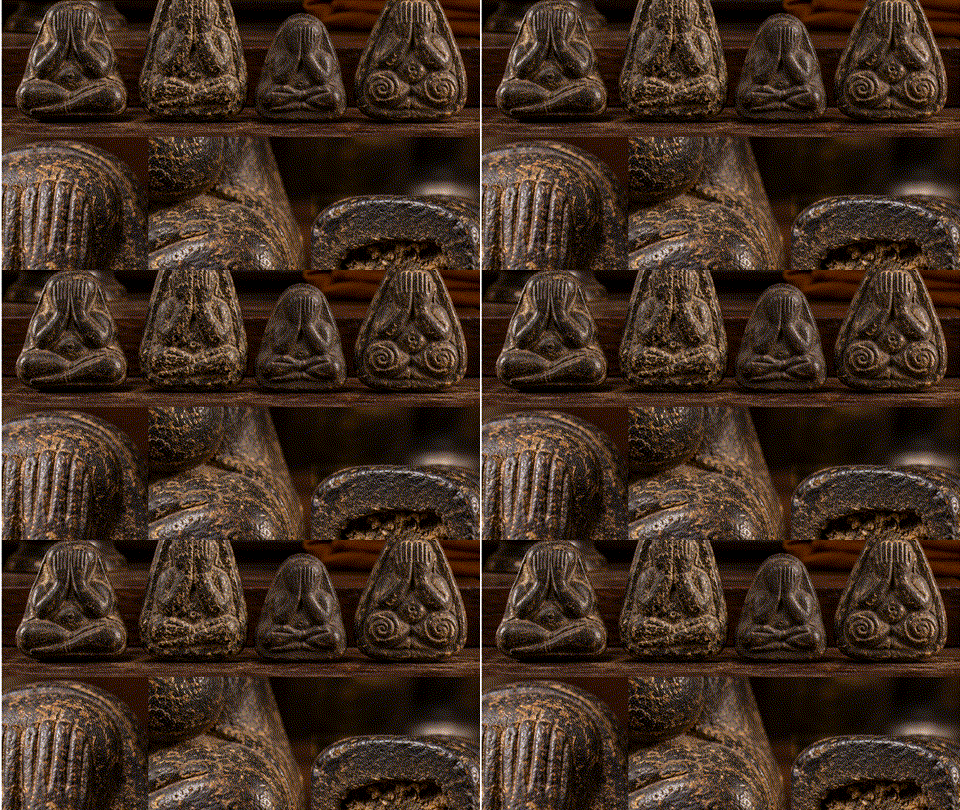
Pidta can be pressed from sacred powders, ash, pollen and binders, then lacquered or gilded; it can also be cast in metal, and some editions contain takrut scrolls. Black colour does not prove a single ‘black-magic’ formula. It may come from lacquer, carbonaceous ingredients, oils or ageing. Study must compare edition-specific dimensions, arm curves, knees, base cavities, coating cracks and known examples—not infer period or power from the phrase ‘black Pidta’.
Why devotees choose to wear one
Devotees associate Pidta with avoiding quarrel and ill will, conserving resources, protection, reducing distraction and remaining composed in negotiation or pressure. Its strongest attraction need not be a promise of automatic rescue. Worn close, it can remind the owner that not every remark deserves an answer and not every temptation a chase; guarding choice begins with guarding the mind. With temple, maker and edition properly established, a well-provenanced Pidta can unite religious meaning, craftsmanship and personal practice.