Origins & Belief · Oct 2026 (B.E. 2569)
Entering the World of Thai Amulets and Ritual Traditions | Chapter 2: History and Change
From Yang Gongzi's book: early votive images, protective objects, revered monks, markets and modern collecting—while distinguishing evidence from belief and later stories.
12 min
Entering the World of Thai Amulets and Ritual Traditions | Chapter 2: History and Change
From Yang Gongzi's book: early votive images, protective objects, revered monks, markets and modern collecting—while distinguishing evidence from belief and later stories.
Thai amulet history did not begin in today's shops, auctions or fashion. Small Buddhist images, moulded votive tablets deposited in stupas, and portable protective objects each have older histories. Over time these traditions intersected. The shift from making images and merit to wearing, obtaining and collecting amulets was gradual, shaped by religious practice, everyday life and practical needs.
1. Images, stupa deposits and protective objects
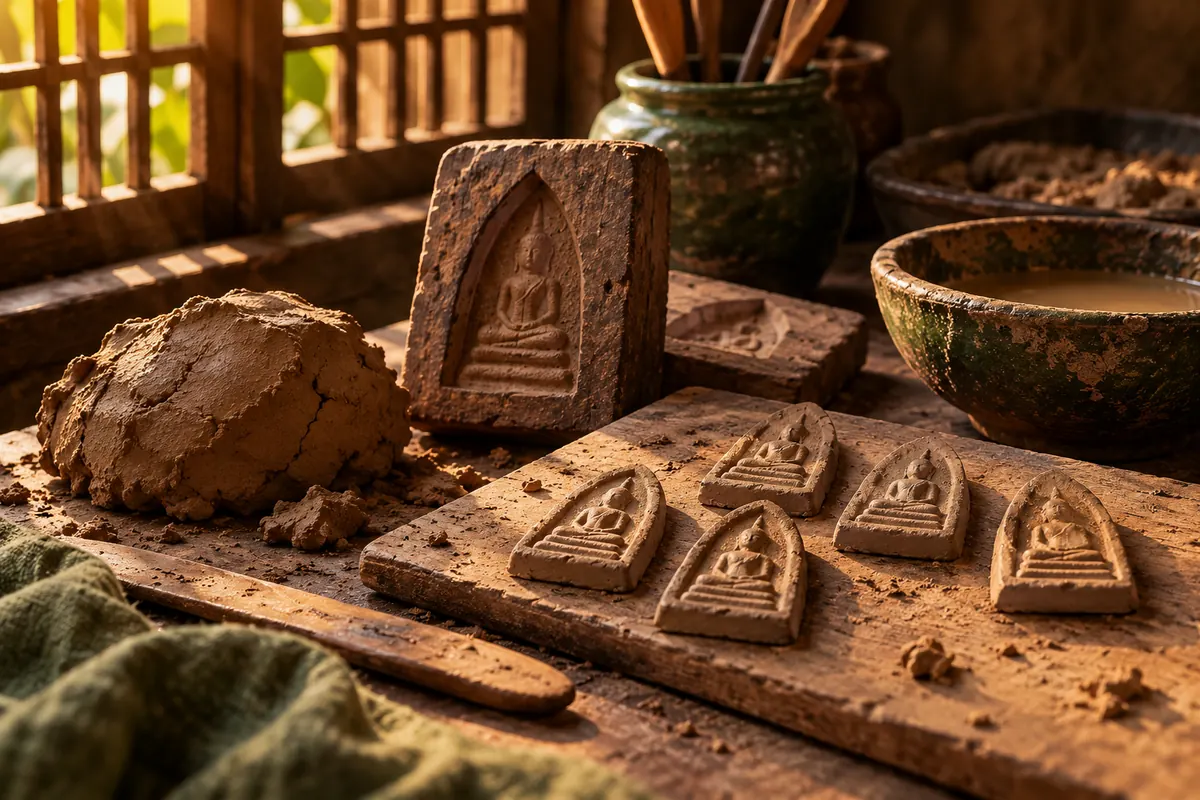
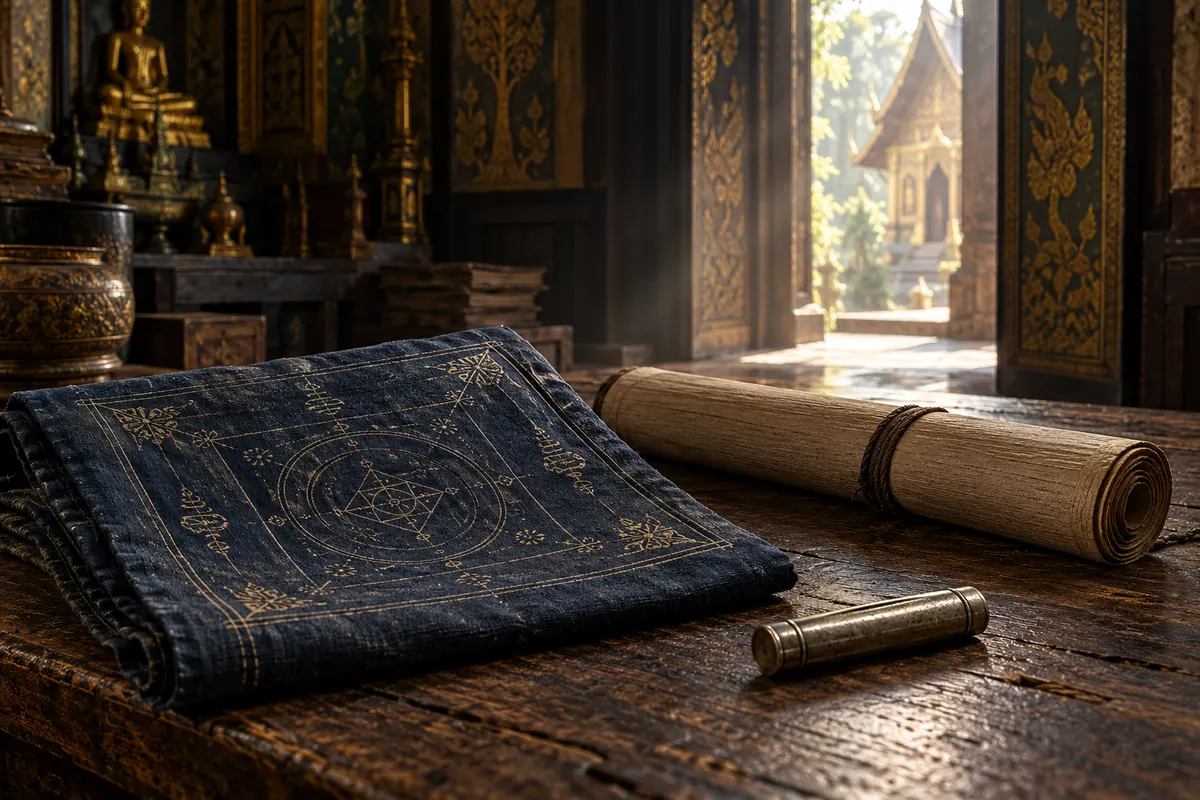
In historical Siam and neighbouring regions, Buddhist practice was closely connected with ordinary life. In illness, travel and war, people sought safety while making images, giving offerings and earning merit. Small carved Buddhas, stupa deposits, moulded images of clay or sacred ash, and cloth or clothing inscribed with scripture or yantras all belong in this history.
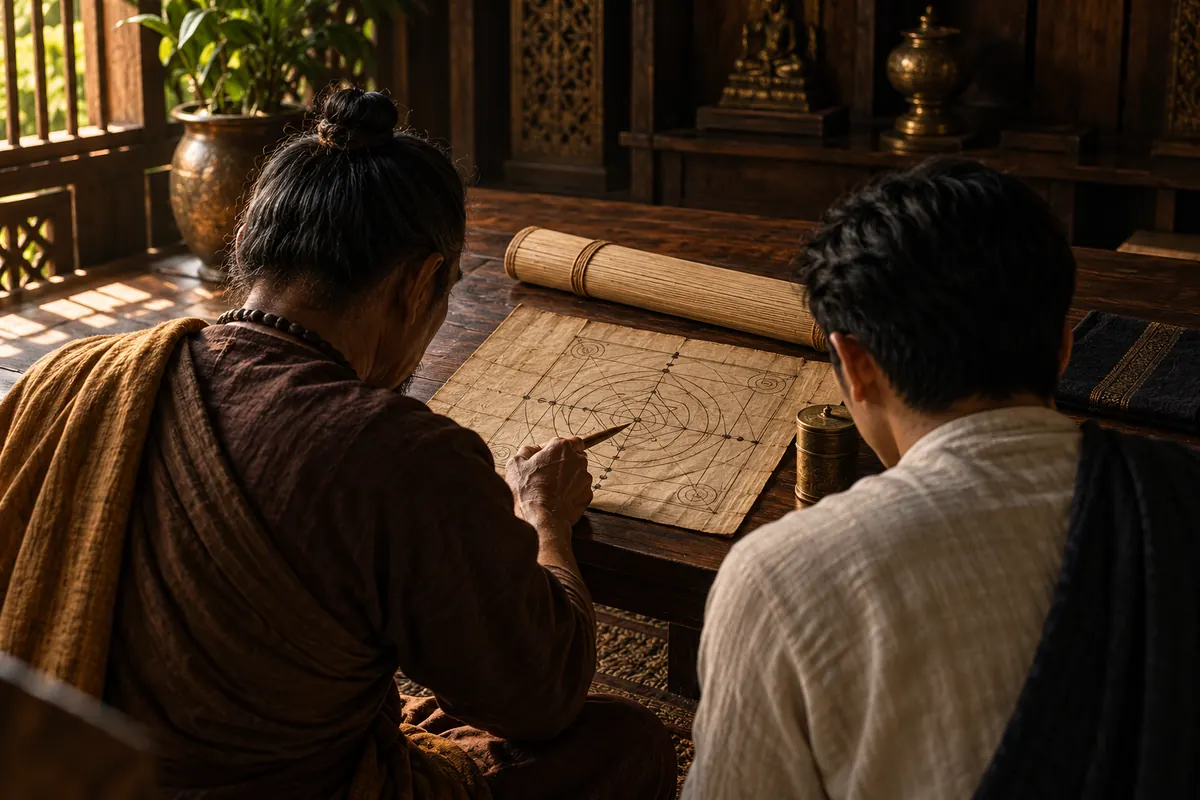
The original book treats these as forerunners of protective sacred objects, including takrut scrolls and other khrueang rang that do not depict the Buddha. Takrut, yantra cloth and small Buddhist images did not necessarily evolve in one straight line. Their shapes and uses differ, yet they share a cultural setting in which belief entered daily life. Wearable amulets found their place among these overlapping traditions.
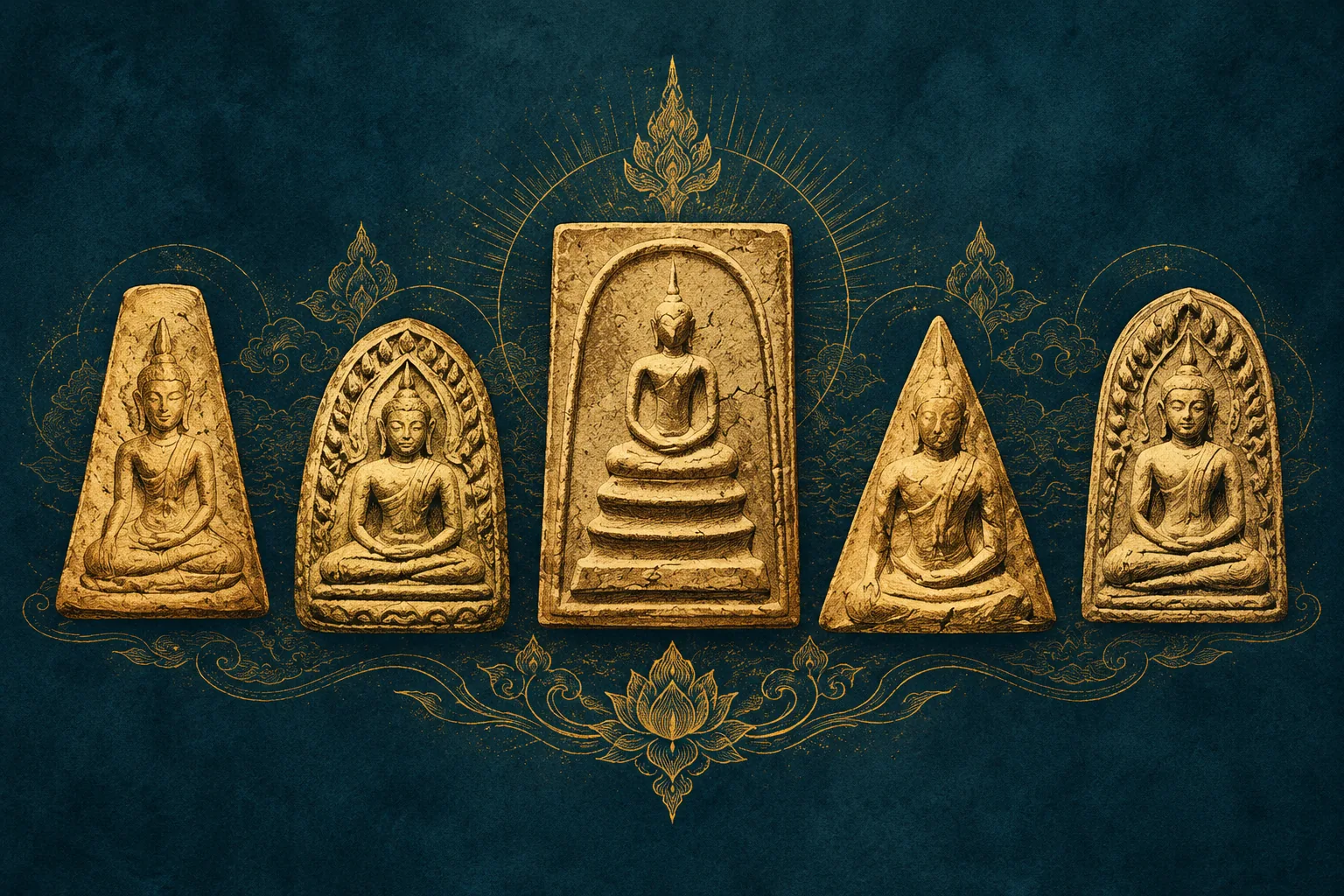
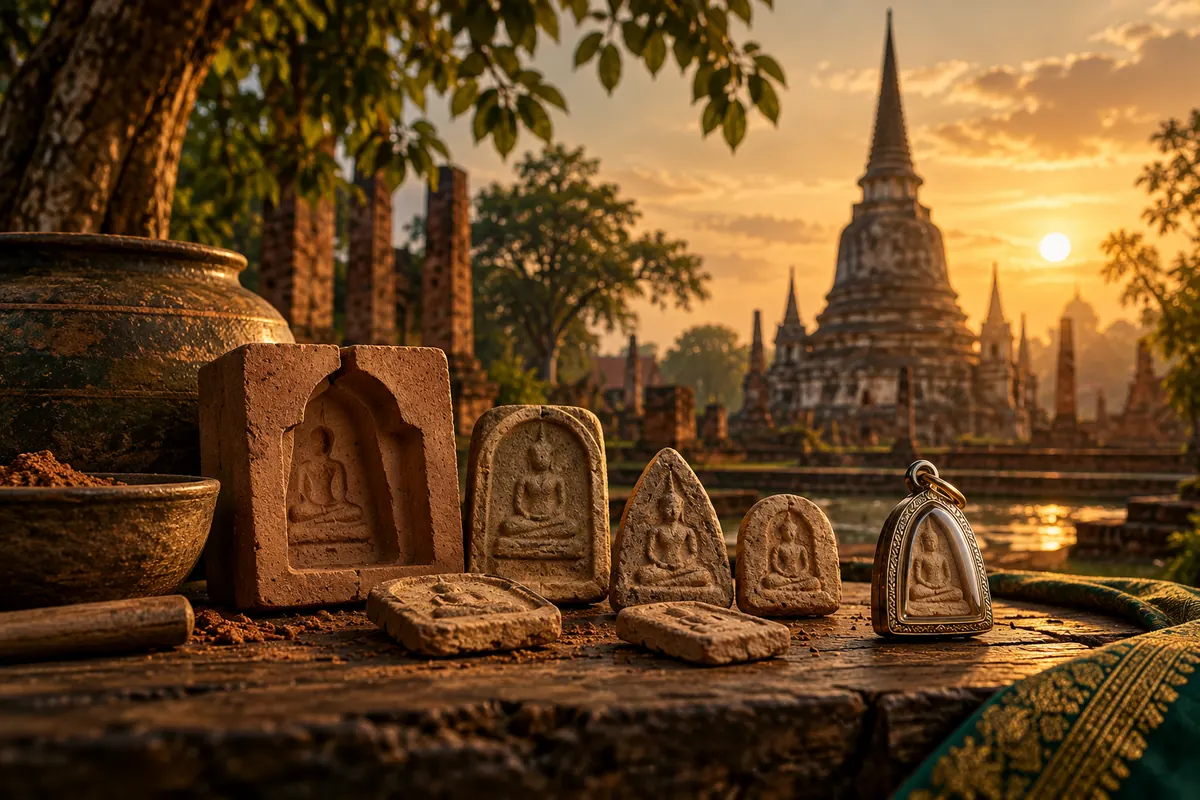
The archaeological record reaches further back than a few centuries. Thailand's Fine Arts Department describes votive tablets across the Dvaravati, Lopburi, Sukhothai, Ayutthaya and Bangkok periods. The Metropolitan Museum also records extensive clay votive-image production at early Buddhist sites in central Thailand. These sources establish a long tradition of small images; they do not make every ancient tablet identical to a cased, traded amulet worn today.
2. Revered monks, ritual lineages and beliefs about power
Thai religious life combines Buddhist teaching and practice with Brahmanical, yantra and local folk influences. The author notes that some revered monks made or consecrated takrut and amulets for villagers, soldiers and patrons. Such accounts reflect a wish for support in uncertain times. Whether a particular monk made a particular piece, however, requires specific evidence rather than a repeated story.
The book groups beliefs about power into three layers. First are Buddhist scripture, a clear mind and good conduct, described as a foundation closer to 'white' practice. Second are mantras, yantras and ideas such as the four elements. The book mentions Tibetan and older Indian influences, but Thai ritual traditions cannot all be traced to a single lineage. Third are spirit beliefs, including disputed tales of calling a spirit into an object or borrowing its power—often labelled 'black' practice. This is the author's framework for describing belief, not a universal historical classification or proof that any object has supernatural effects.
Accounts of amulets used for protection in battle should likewise be understood as the expectations of wearers and later collectors. A battlefield story can illuminate those hopes, but cannot establish an object's age, maker or provenance without supporting records.
3. Four broad phases of change
Early votive images: merit before wearing
The book calls some early small images 'merit Buddhas' or donated Buddhas. Devotees believed that making images and supporting Buddhism earned merit. Those unable to fund a large image or precious materials could contribute many small ones. Clay, ash, herbal powder, lead and other materials were used; some pieces were thumb-sized and placed in stupas, niches or other religious structures. Their initial purposes were image-making, offerings, deposition and merit, not necessarily wearing around the neck.
A key transition was the journey from stupa deposit to a person's chest. As monuments deteriorated or were repaired, deposited images could reappear. Some were brought out for worship and later worn, with beliefs about the power of an ancient Buddha image. The author places this change broadly between late Sukhothai and early Ayutthaya and names Phra Nang Phaya, Phra Rod, Phra Phong Suphan and Phra Sum Kor. Their individual dates, findspots and histories of wearing differ; the period is the book's narrative guide, not one proven starting date for every amulet.
Later, temples and teachers also made smaller images expressly for carrying, distributing them after chanting or other rites. Traditions of deposition and worship increasingly met the habit of wearing an image. The amulet gradually came to carry religious, artistic and personal meaning at once.
The era of revered monks: makers and lineages
The book treats the amulet traditions associated with revered monks such as Somdej To as another important stage. Collectors came to pay closer attention to the maker, temple, lineage, mould and materials. Alongside clay and powders, some traditions used metal, sacred powders or ash. To devotees, an amulet could connect a Buddhist image with the reputation and ritual practice of a respected monk.
Luang Pu Thuat, Somdej To's Somdej tradition and Phra Pidta appear in the book as influential names or forms. They are not all products of the same monk, temple or era. A famous name is a starting point for research, not evidence for the provenance of a specific piece.
Commercial growth: fundraising, trade and authenticity
Temples have made amulets not only for religious purposes but also to raise funds for repairs and other work. As demand grew, amulets acquired prices and collecting value; sales, auctions and collector networks expanded. The author's comparison with 'securitisation' describes pieces treated as tradable goods with comparable market prices. It is a market metaphor, not a legal claim that amulets are securities.
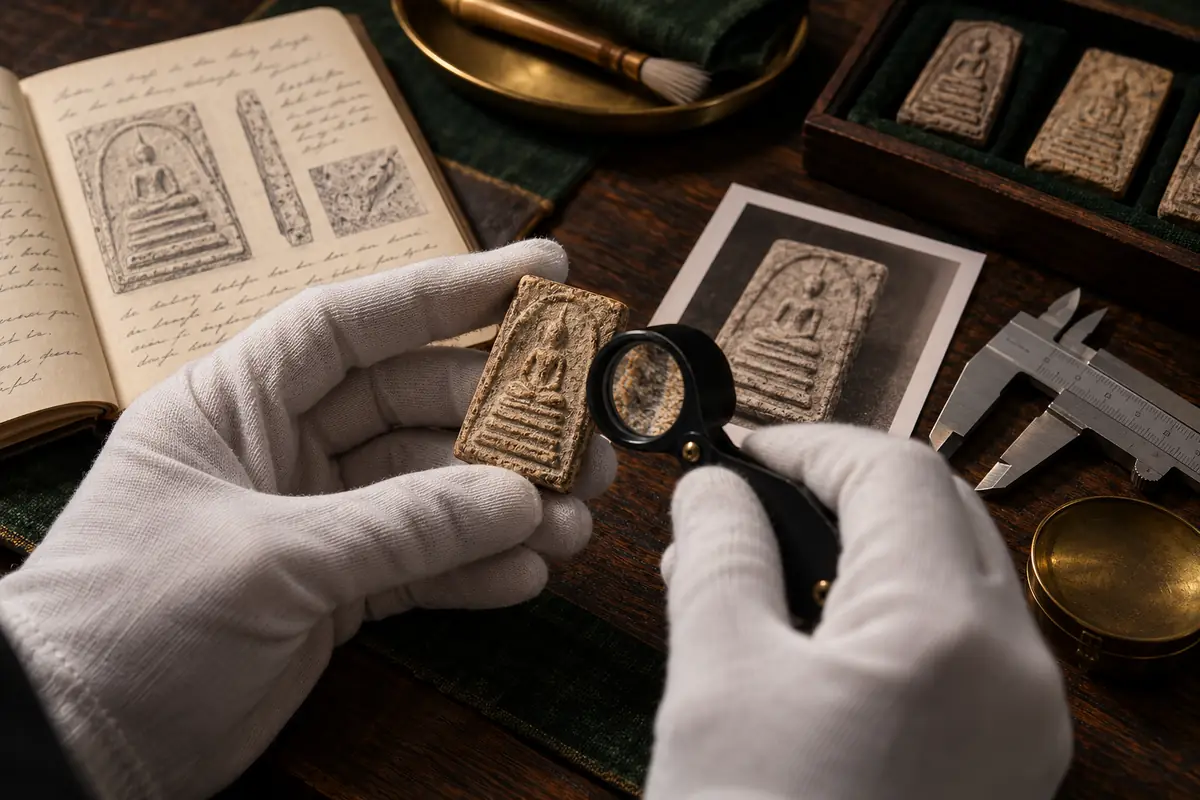
A larger market also brought confusion: imitations, disputed authenticity, mistaken attributions of monk or era, and judgments based too heavily on price or fame. A higher price does not make provenance clearer. Collectors need to compare photographs, moulds, materials and temple or period records, separating documented facts from stories that became popular later.
Modern culture: beyond the temple
Amulets now appear in popular culture in Thailand and abroad. Celebrities, entrepreneurs and online creators wear them, introducing new audiences through dress and social media. Some contemporary pieces use intricate designs or expensive gold, silver or jade. Costly materials and branding may raise production costs or appeal, but do not establish a religious lineage or authenticate a piece.
The book also discusses objects sometimes called 'yin amulets', associated with spirit narratives, specialised rites or well-known ritual teachers. Opinion on them is divided. They should not be collapsed into ordinary Buddhist images; claims about their materials, rituals or effects require case-by-case scrutiny rather than judgment based on a label alone.
4. Between the sacred and the market
An amulet today may be religious art, an expression of personal faith and a priced collectible. Is it faith or merchandise, sacred image or protective charm? The author's answer is that these meanings need not exclude one another. Temple traditions and practical human hopes often inhabit the same object's story.
Some seek safety, prosperity, a change of fortune, love or protection from danger. These wishes show how people use and understand amulets; they are not guaranteed results. The book says faith is the root and practical hopes its branches. Looking only at prices misses Buddhist and folk contexts; listening only to miracle stories while ignoring the object and its provenance weakens judgment.
The author warns about fakes, exaggerated supernatural claims, blind trust and fraud exploiting faith. This does not indict every amulet or maker. Respect for religious culture and checking transaction evidence can coexist. A famous monk, a certificate or a high price still leave questions about the image, issue, date, materials and documented chain of ownership.
As long as people worship, study and pass on these traditions, an amulet remains more than a price. When the original book says its 'culture and power continue', power can describe believers' spiritual support—and the object's ability to inspire questions about history, craft and faith. Start by respecting a piece's story, then test what can be checked so that story rests on firmer ground.