Origins & Belief · Oct 2026 (B.E. 2569)
Entering the World of Thai Amulets and Ritual Traditions | Chapter 1: What Is a Thai Amulet?
From Yang Gongzi's book: the object, its ritual setting, its place among protective objects, and the beliefs that give it meaning.
6 min
Entering the World of Thai Amulets and Ritual Traditions | Chapter 1: What Is a Thai Amulet?
From Yang Gongzi's book: the object, its ritual setting, its place among protective objects, and the beliefs that give it meaning.
Original work by Yang Gongzi
A Thai amulet is more than a protective charm. For many who wear one, it is a small object carrying blessings and hopes: a sacred object that may have been part of a monk's or ritual teacher's ceremony before a devotee brought it home to worship or wear. Some see it as faith made tangible; others use it to steady the mind and recall how they wish to act. To understand an amulet, then, is to look beyond its shape to religion, local custom, ideas about power, and the wearer's own intentions.
1. The nature of an amulet
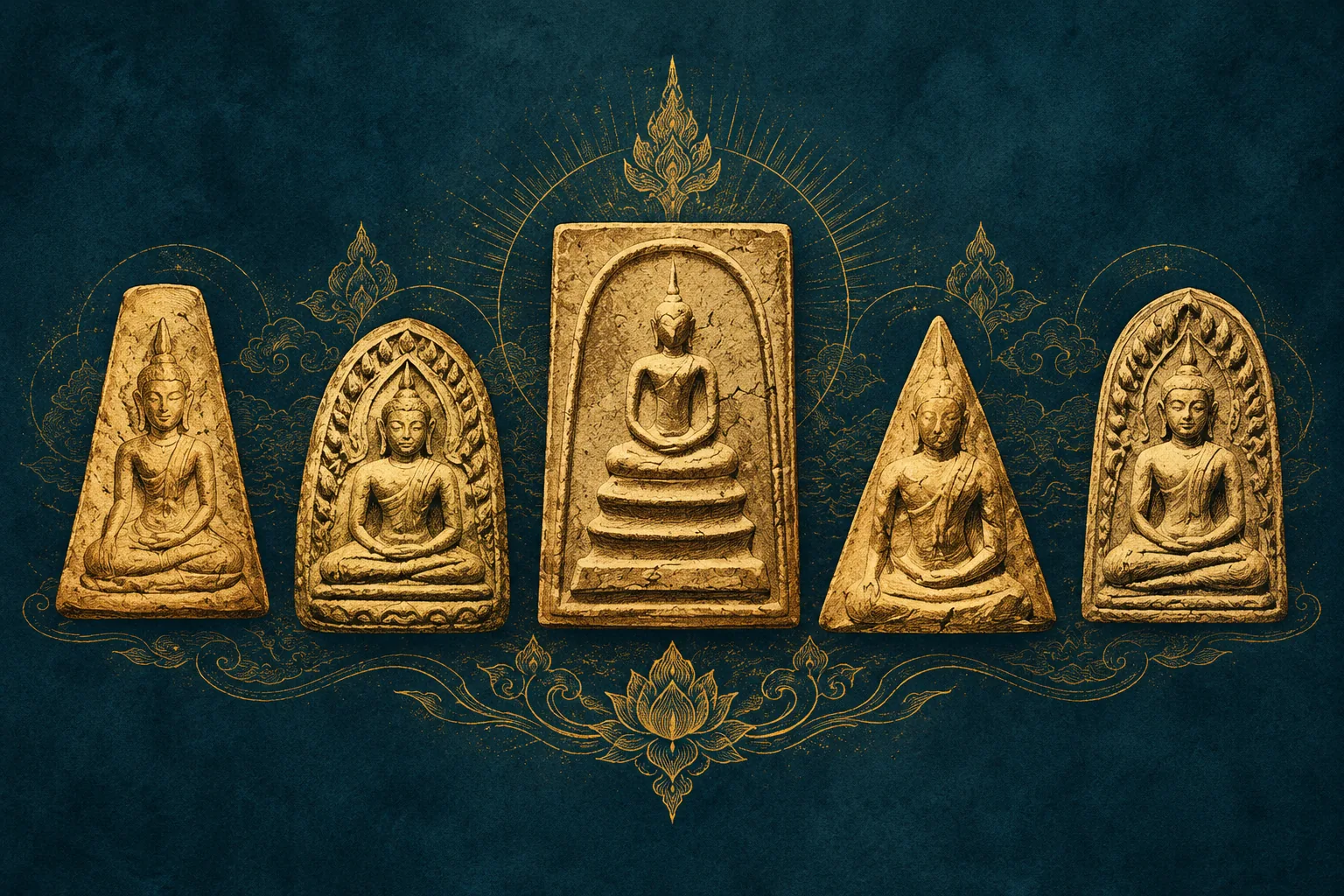
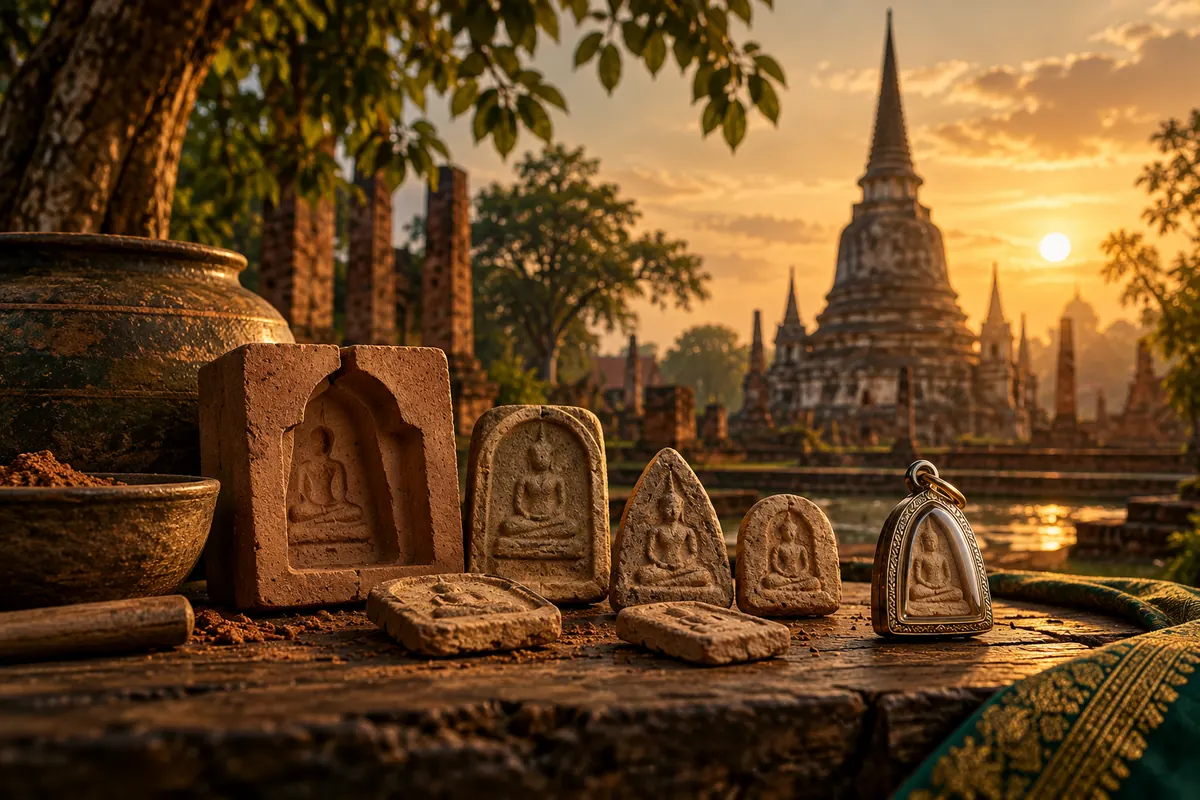
Start with what can be seen. An amulet is usually small, made from metal, pressed powder, clay, or ceramic. Its image may show the Buddha, a deity, a spirit, or even a revered monk. It is often put in a metal or waterproof plastic case and worn on the chest. The case makes it practical to carry, but to the wearer it can also express the idea of protection close at hand: keeping a respected image alongside everyday life.
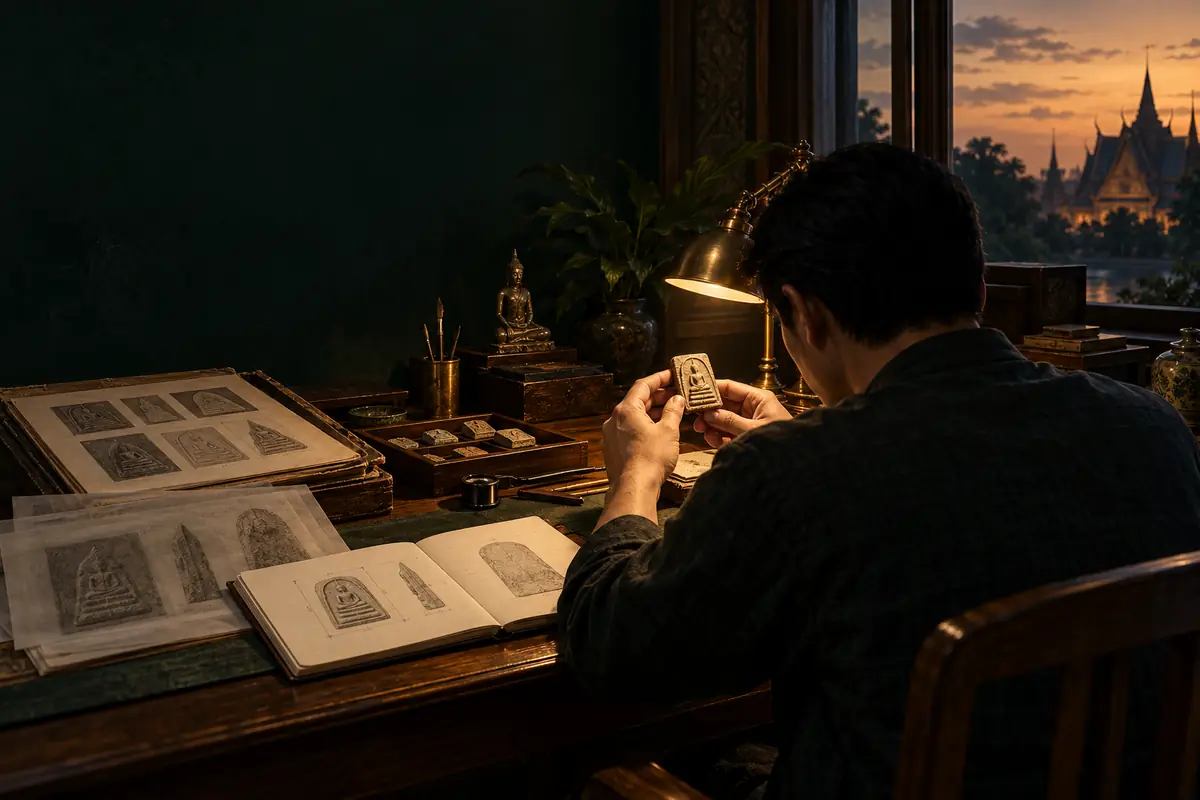
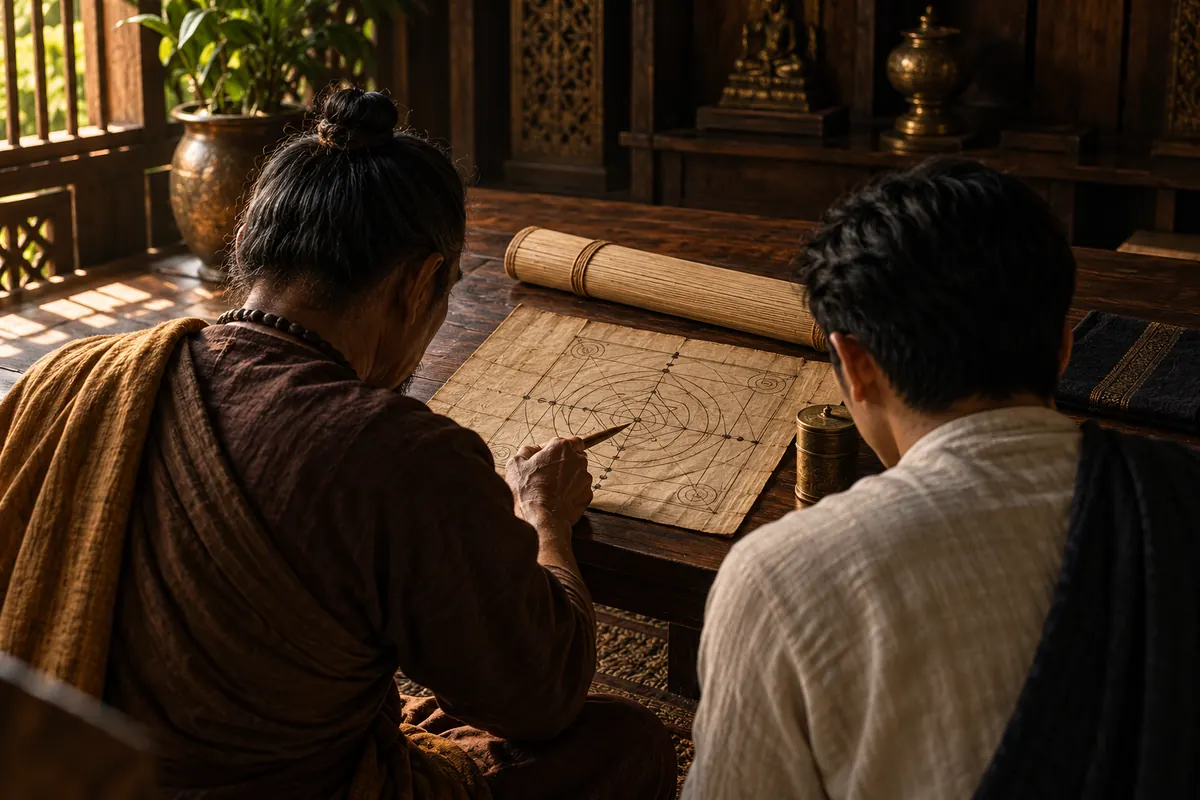
In the traditions discussed in this book, material, shape and casing are not the whole story. Makers and devotees often ask whether an amulet has been consecrated—whether, in their belief, it received a blessing or power through a particular ceremony. A respected monk or ritual teacher may lead it, drawing on chanting, formal rites, esoteric procedures or mantras. Lineages do not all understand these practices in the same way. When the original book speaks of 'placing power' in an amulet, it is speaking in the language of belief, not describing a physical property that can be confirmed by looking at the object.
Within that traditional vocabulary, people speak of different aims: protection from danger; better fortune and prosperity; attraction in friendship or love; and, in some lineages, a force described as punishing wrongdoers or confronting enemies. These are ways makers and wearers describe their hopes, not a claim that every amulet can produce such results. Different pieces and ritual lineages place emphasis on different aims, and none of these descriptions should be treated as a guarantee.
2. Amulets and other protective objects
Is a Thai amulet simply another name for a protective charm? Not quite.
'Protective charm' is a broad label; the wearable amulet described here is only one form. Thailand also has inscribed ritual cloths, containers of ritual substances—such as bottles said to hold consecrated oil or bone ash—and kuman thong, the child-spirit figure. Their forms and ways of use or worship differ. Calling them all sacred objects does not make them interchangeable. In the author's observation, a cased amulet is relatively self-contained, easy to wear, widely used, and among the forms most readily accepted by the public.
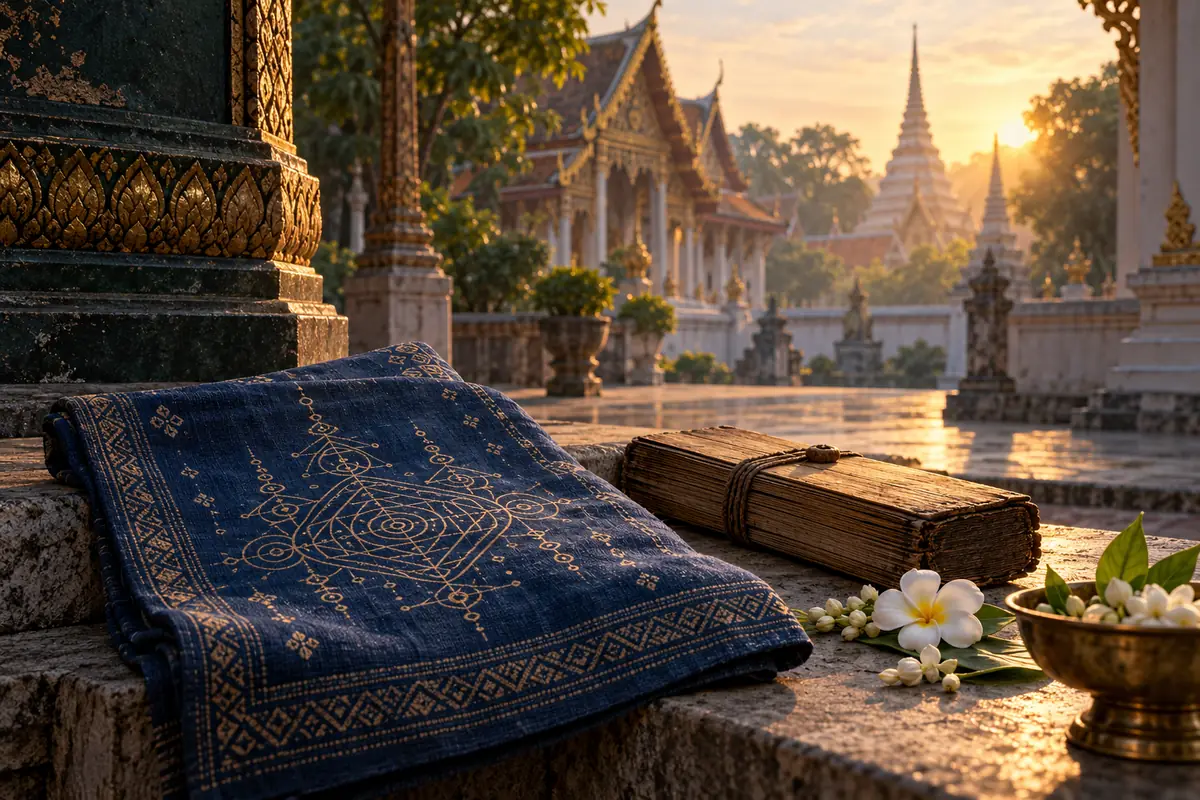
Unlike a pendant worn solely as a sign of faith, an amulet is often chosen with a particular purpose in mind. Someone hoping for financial luck may look for a piece associated with prosperity; someone troubled by hostility or difficult relationships may seek one believed to ward off harm. This describes how people choose and understand amulets, not proof that a promised outcome will follow. The link among the object, the wearer's wish, and a lineage's interpretation is an important part of this culture.
3. Where believers locate an amulet's spiritual power
Why, then, do believers think an amulet might matter? The book's answer is not that one consecration automatically makes an object effective. It describes four connected conditions in this belief system:
- 01Sacred materials (the material): these may be drawn from a stupa, shrine, sacred soil or ritual ash, and are regarded by makers or devotees as religiously meaningful.
- 02A respected maker (the teacher): a monk or ritual teacher with training and a lineage makes or blesses it; in the book's account, the person's conduct matters as well as ritual knowledge.
- 03Honest intention (the purpose): it is made with good intentions, not as a means to cheat people out of money or deliberately harm them.
- 04Responsible use (the practice): the wearer approaches it with respect and goodwill, observes basic precepts, and avoids harming others.
Together, these four conditions form what the author calls the amulet's 'spiritual system.' It is not an object that works on its own like a machine. The point of the book's account is the interplay of belief, blessing and use. Even when two people wear the same type of amulet, their relationship with it need not be identical.
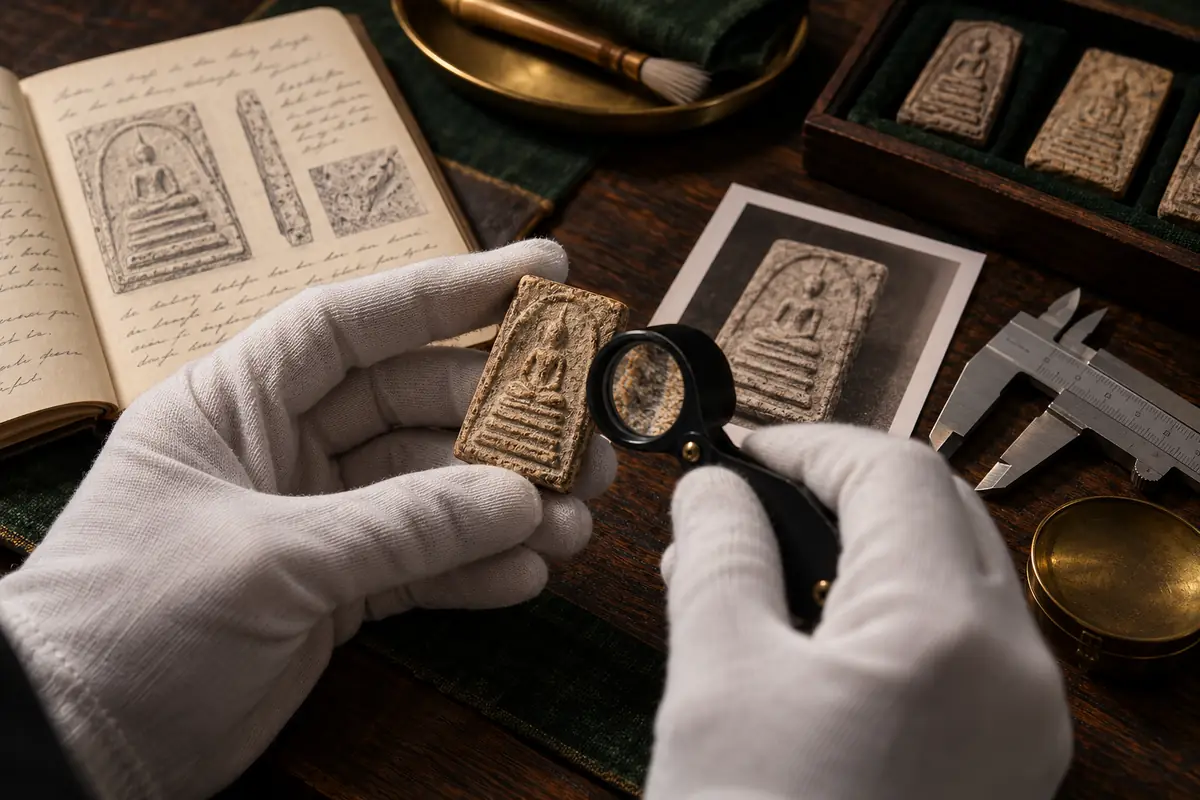
That leaves a question worth taking into everyday collecting. We can appreciate an amulet's form and respect the traditions in which it was made and worshipped while still asking what can be checked about a particular piece: its materials, origin, date and ownership history. Faith may be personal; a purchase also calls for evidence and judgment. Learning about amulets can begin with both.