Identification Guides · Oct 2026 (B.E. 2569)
How to Read Amulet Iconography: From Hand Gestures to Figure Relationships
Iconographic identification does not rest on one isolated sign. It separates identity, posture, attributes and composition, then recombines them against catalogued examples.
16 min
How to Read Amulet Iconography: From Hand Gestures to Figure Relationships
Iconographic identification does not rest on one isolated sign. It separates identity, posture, attributes and composition, then recombines them against catalogued examples.
A seated figure on a lotus is not automatically the same Buddha, and three adjacent figures do not automatically mean three Buddhas. The common error is to memorise a market name and force every similar silhouette into it. A sounder method separates identity, posture, attributes and overall composition before recombining them.
The central argument is relational: a gesture helps identify a pose but cannot name a temple by itself; a lotus seat establishes a religious visual context but not an issue date. Official Thai explanations and accessioned museum objects provide a repeatable order of reading.
Separate iconographic identity from collectors’ names
Names answer different questions. ‘Shakyamuni’ identifies a figure; ‘meditation pose’ a posture; ‘Eighteen Buddhas’ a multi-figure arrangement; and ‘a particular temple issue’ an issuing context. All four may describe one object, but none substitutes for another.
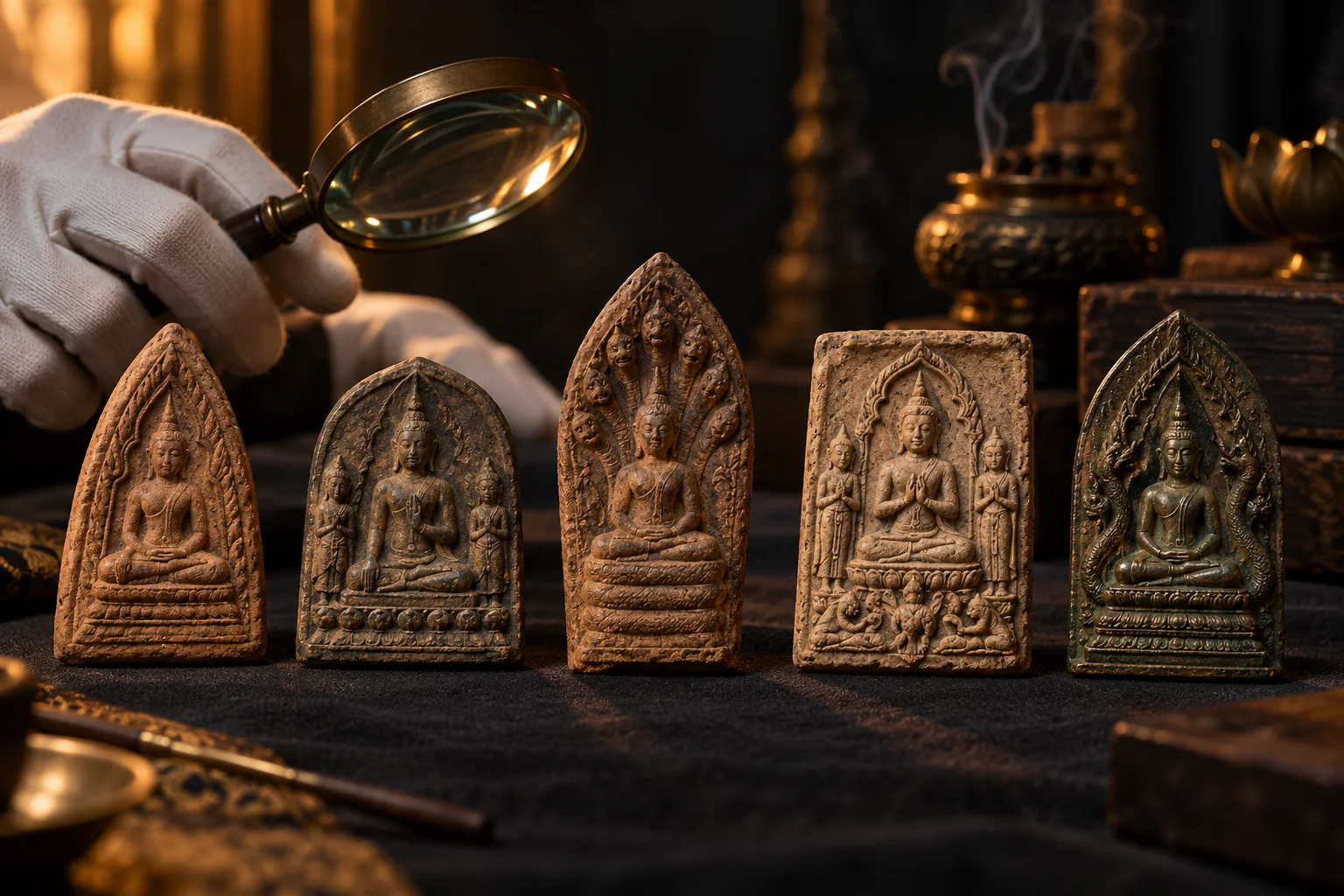
Smithsonian S2005.428 is catalogued as an earthenware votive tablet of the Eighteen Buddhas, late thirteenth-century Haripunchai art from Lamphun in northern Thailand. That record contains configuration, material, region and period. The title alone does not contain the final three. Before comparison, write a neutral description—such as a central seated figure, smaller figures in tiers and an arched border—then consult catalogues.
Read the hand together with the arm
Thai posture names often begin with ปาง. The earth-touching victory over Mara is ปางมารวิชัย; meditation is ปางสมาธิ. In the former, the figure’s left hand commonly rests palm-up on the lap while the right lies over the right knee with fingers toward the ground. Left and right belong to the figure, not the viewer. The Chiang Mai National Library likewise explains the pose through palm direction, knee position and the earth-touching movement.
On a tiny or worn piece, fingers may survive as one raised line. Trace shoulder, elbow, forearm and palm: does the right arm descend toward the knee, or do both hands meet before the abdomen? A robe fold can masquerade as a finger, and a knee edge as a palm. Meditation, teaching and fearlessness cannot be named merely because one hand is raised. Record ‘right hand raised, fingers unclear’ when detail is missing; that preserves room for correction.
Posture and naga canopy are separate observations
Posture describes the legs; a naga canopy describes the relation between principal figure and serpent. A fan shape above the head is insufficient. Look for heads within it, their spread, and coiled bodies below. An official description of one sandalwood image in Bangkok’s National Museum records seven heads and four coils. Those numbers belong to that object, not to every naga-protected image. The transferable feature is the joint protective relationship of heads above and coils below.
Parasols, bodhi trees and halos can also create an arc above a head. Trace whether the contour connects to a trunk, parasol shaft, serpent body or independent halo before naming it. Calling every arch a shrine niche erases useful distinctions.
In multi-figure scenes, read roles rather than count heads
One Buddha with two attendants and three Buddhas side by side both yield three major heads, but not the same composition. Is the centre larger? Do the side figures pray, carry objects or face inward? Do they share a seat? LACMA M.87.278.18, a Thai terracotta votive tablet dated around the eighth century and measuring 12.7 × 7.6 × 1.3 cm, is described as a central seated figure with standing figures at either side. It is a useful principal-and-attendants example, not automatically ‘three Buddhas’ by count.
A multi-figure image may also narrate. Small figures who support, worship, hold a parasol or attend can belong to the same event. A tiny form beside the principal is not necessarily an added wealth symbol; it may be indispensable to the story. Progress comes when counting shapes becomes reading relationships.
A corpulent figure is not automatically a wealth deity
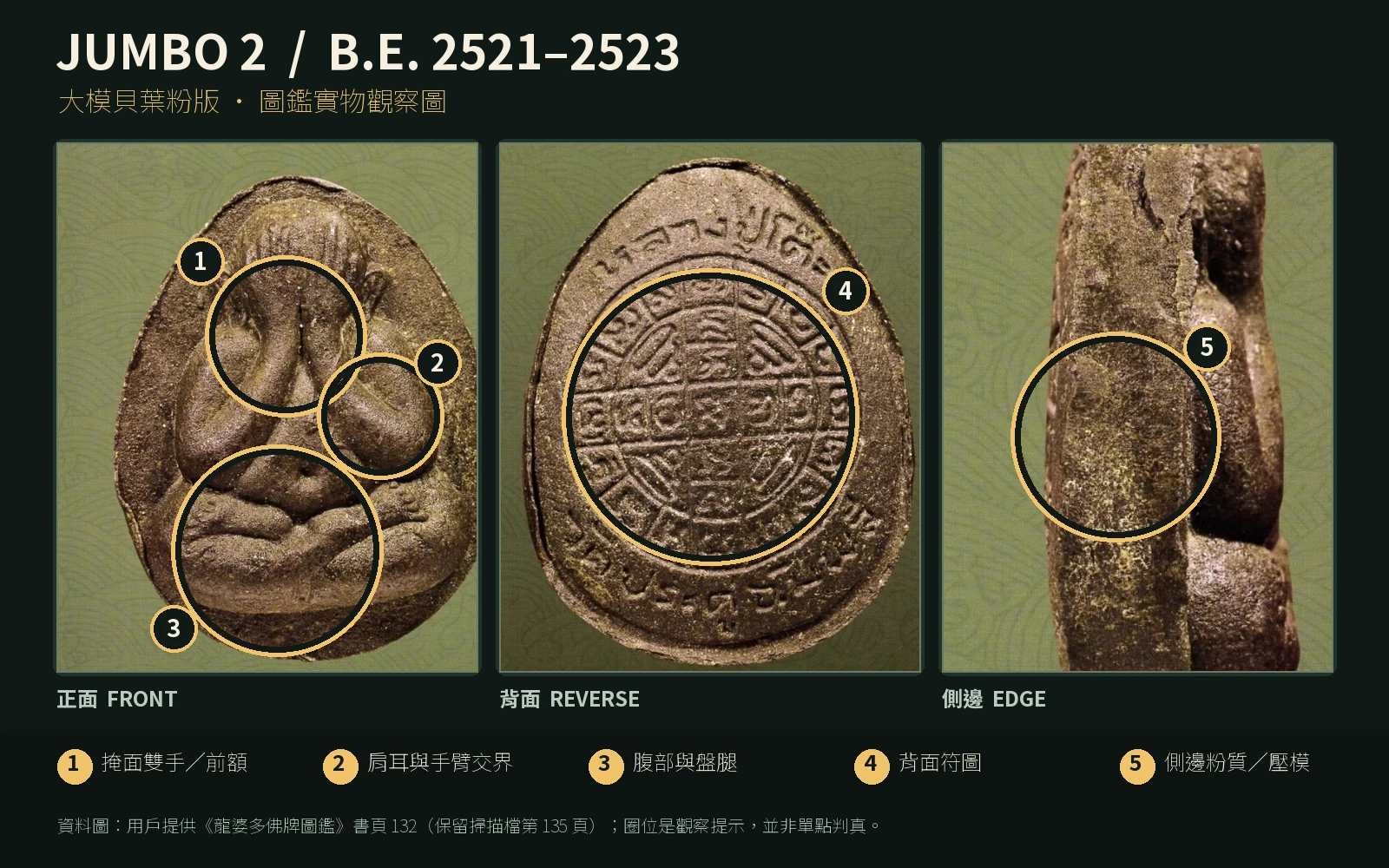
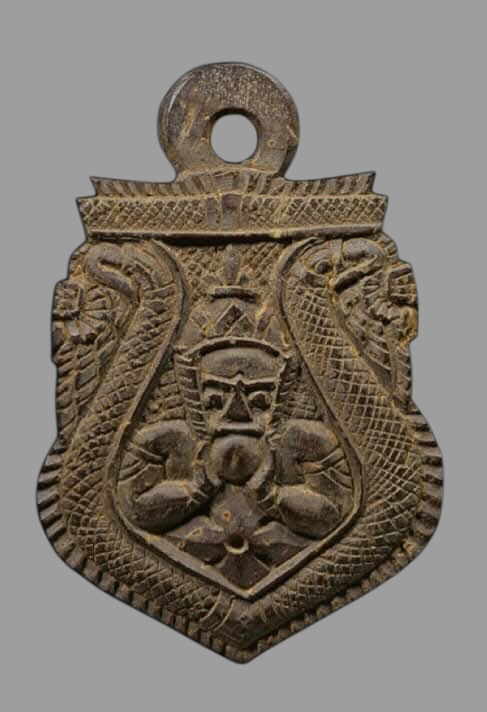
Corpulent seated figures are often indiscriminately called Budai, wealth gods or arahants. The British Museum identifies FBInd.35 as Phra Sang Kachai, Mahathera Kaccayana in Thai tradition. Object 2013,3024.1 is identified as the literary Khun Chang, with a money bag and named packaging. Similar bodies can carry different identities; dress, posture, attribute, reverse text and inherited name must be read together.
A photograph of the belly alone cannot choose among these identities. A complete front and readable name should be cross-checked. If text and image conflict, preserve the conflict and test whether packaging was switched, writing misread, or a later nickname mistaken for an original title.
Build an iconographic record that can be compared again
This is not a scoring system, and completing five layers does not output authenticity. It lets different observers compare the same questions. Hide the sales title, write a description of visible form, find two securely identified and numbered references, and only then return to the seller’s name to distinguish fit from suggestion. The sequence is especially useful for unfamiliar types.
How far can matching imagery take us?
One image can cross periods and migrate from monumental sculpture to a small votive. Metropolitan Museum 1990.135 is catalogued as a seventh-century gold-sheet votive of a seated bodhisattva measuring 5.4 × 3.6 cm. Votive imagery is not confined to clay, and a small seated figure is not automatically a modern pressed amulet. Matching a theme normally establishes only the field of inquiry.
Ask in order: what does the image represent; which documented group does it resemble; and what evidence links this object to a particular issue or period? Correctly answering the first does not waive the other two. Replace ‘what is this called?’ with ‘which visible features support that name?’ A justified name improves consultation, cataloguing and cross-language research, and turns a familiar face into historical material that can be read layer by layer.