Origins & Belief · Oct 2026 (B.E. 2569)
Thep Ramluek: Not One Fixed Deity, but a Thai Tradition of Recollection and Attraction
It may appear as an incantation, a paired celestial yantra, a takrut, scented wax, a named herb or a powder ball. Understanding Thep Ramluek begins by separating a personified ritual formula from a deity with a canonical genealogy.
19 min
Thep Ramluek: Not One Fixed Deity, but a Thai Tradition of Recollection and Attraction
It may appear as an incantation, a paired celestial yantra, a takrut, scented wax, a named herb or a powder ball. Understanding Thep Ramluek begins by separating a personified ritual formula from a deity with a canonical genealogy.
The first question is not ‘which god is this?’ but ‘within this lineage, does the name refer to an incantation, a yantra, an ingredient, or a completed sacred object?’
The term is easy to misread. Thep can mean a celestial being, sacred power or something framed in divine language; ramluek means to remember or recall. Together they sound like the proper name of a ‘god of remembrance’. Yet the verifiable Brahmanical pantheon in Thailand contains no Thep Ramluek with fixed parents, consort, mount, weapons, mythology and temple iconography. The name appears far more often in vernacular ritual, yantra and khrueang rang contexts, describing practices intended—within belief—to make a person remembered, missed, approached or regarded warmly.
A short guide to the Thai terms used below
- 01Thep Ramluek: a name meaning sacred recollection or a formula intended to keep someone in mind; it is not the canonical name of one fixed deity.
- 02Thepabut: literally a male celestial being; here it describes a personified male figure in a yantra, not necessarily an independently documented god.
- 03Thep Ramjuan: a female personification of yearning, longing or emotional restlessness whose depiction varies by lineage.
- 04Thep Nimit: a sacred or celestial manifestation, image or visualised form, not necessarily a separate deity with a full genealogy.
- 05Metta-mahaniyom: a broad category of goodwill, affability, persuasiveness and popularity, wider than romantic attraction alone.
- 06Common object terms: yan is a ritual diagram, takrut a rolled charm tube, si phueng scented ritual wax, namman ritual oil, wan a ritual herb, and luk om a small powder ball.
Why a ritual formula comes to be spoken of as a deity
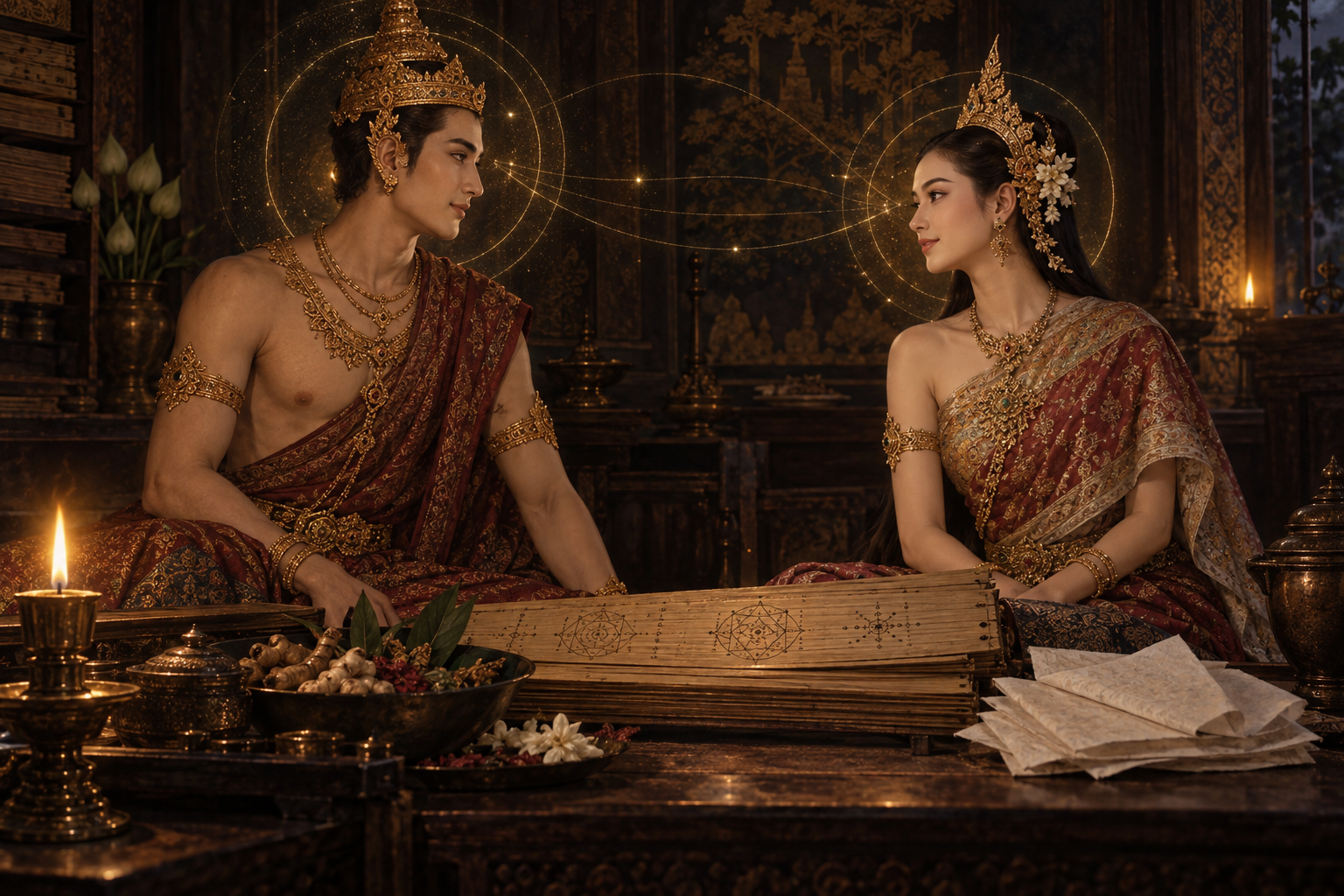
Thai ritual culture often personifies an abstract force. Once ‘recollection’ is no longer merely a verb but is drawn as a thepabut, inscribed into a yantra core or visualised during consecration, it gains a face, action and relationship. Some modern lineages depict Thep Ramluek as a male celestial figure opposite Thep Ramjuan, a female personification of yearning or restless longing. Some diagrams show the pair gazing at one another; others place male and female ‘hearts’ inside the design. Other lineages pair Ramluek with Thep Nimit or include it among four attraction formulae. These variants show teachers turning states of mind into visual, spoken and material ritual language. They do not establish an ancient Hindu divine couple.
Its place in the broad world of metta-mahaniyom
The Thai category metta-mahaniyom is broader than the ‘love magic’ label common in overseas markets. It may concern affability, the goodwill of elders, being heard in negotiation, or earning an audience’s affection; it can also narrow into romantic attraction. Thai cultural and performing-arts records show many carriers: incantations, wax, oils, powders, herbs, face powder, clothing, betel, cloth yantra, takrut and small charms. Thep Ramluek should therefore not be reduced to ‘making one person fall in love’. In its wider reading, it symbolises being remembered, treated kindly and held within good social relations. Lineages and commercial descriptions focused on romance often use much stronger language.
One name, at least five different material forms
- 01Incantation: some lineages use the names mon Thep Ramluek or khatha Thep Ramluek, centring sound and visualisation. Circulating texts differ in length and wording; one online verse is not a national standard.
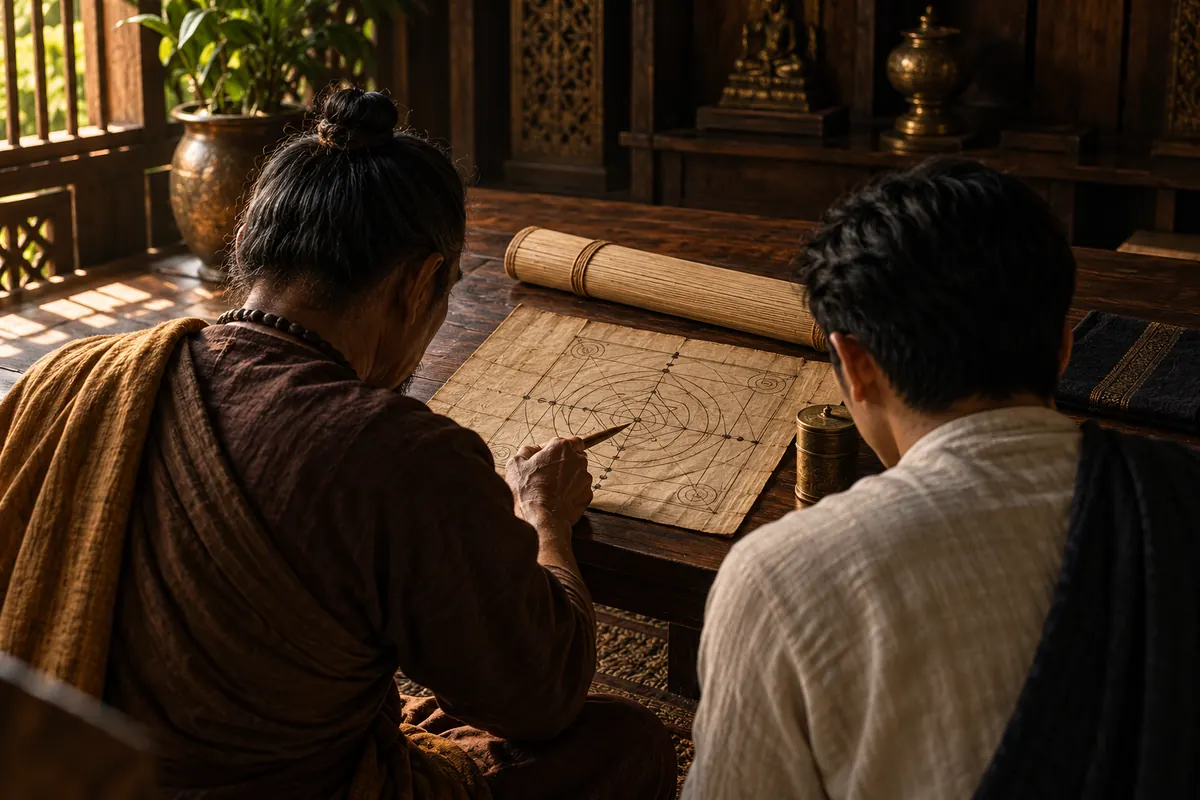
- 02Yantra and takrut: figures, heart formulae, letters or numerical structures may be inscribed on paper, cloth or metal and rolled according to lineage. Two figures in a diagram do not automatically become two independently documented gods.
- 03Wax and oil: some practices combine recitation with wax, aromatics and herbs for application or offering. Ingredients, restrictions and instructions vary sharply between teachers.
- 04A plant called wan Thep Ramluek: a folk or horticultural plant bearing the same name may be included as material, but its name alone does not prove that an object received a particular rite. Species, provenance and maker records still matter.
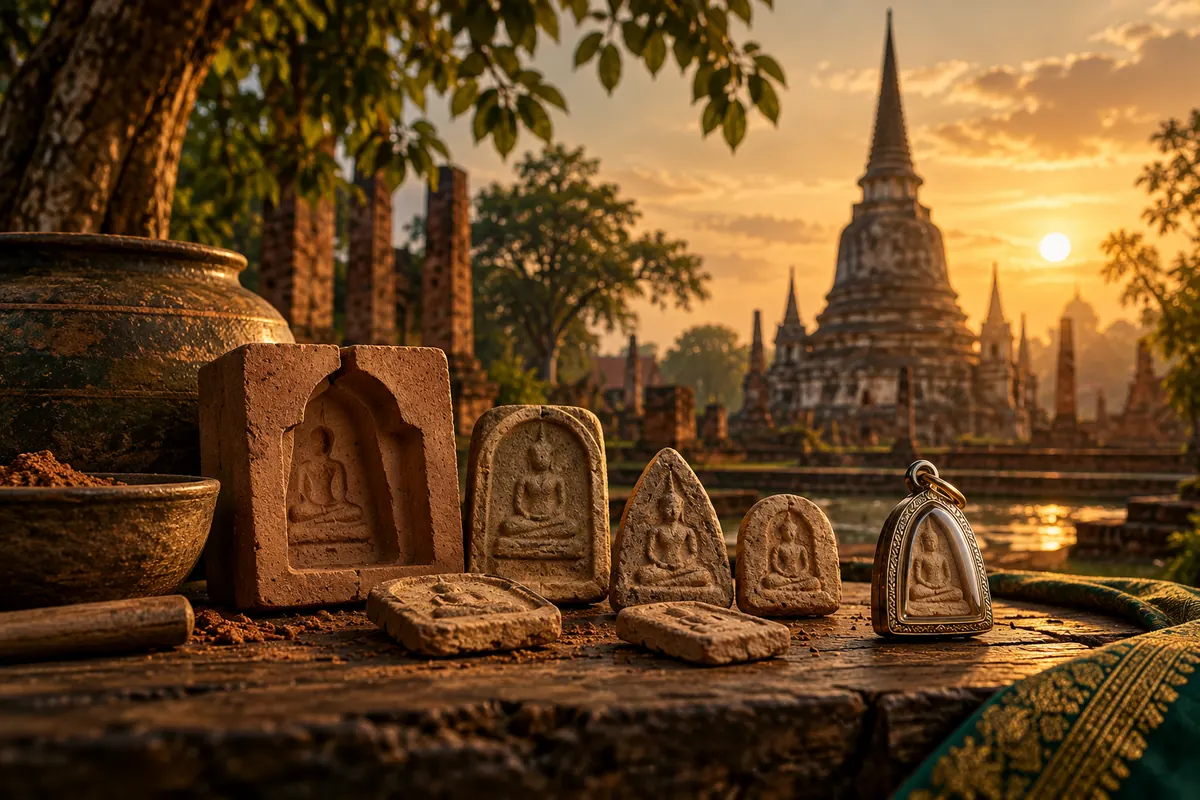
- 05Powder balls and mixed-material objects: some issues are called luk om Thep Ramluek, formed from blessed powders, fragments of older objects or herbs. Here Thep Ramluek names an issue or ritual intention, not a deity literally contained in the ball.
There is no single national iconography
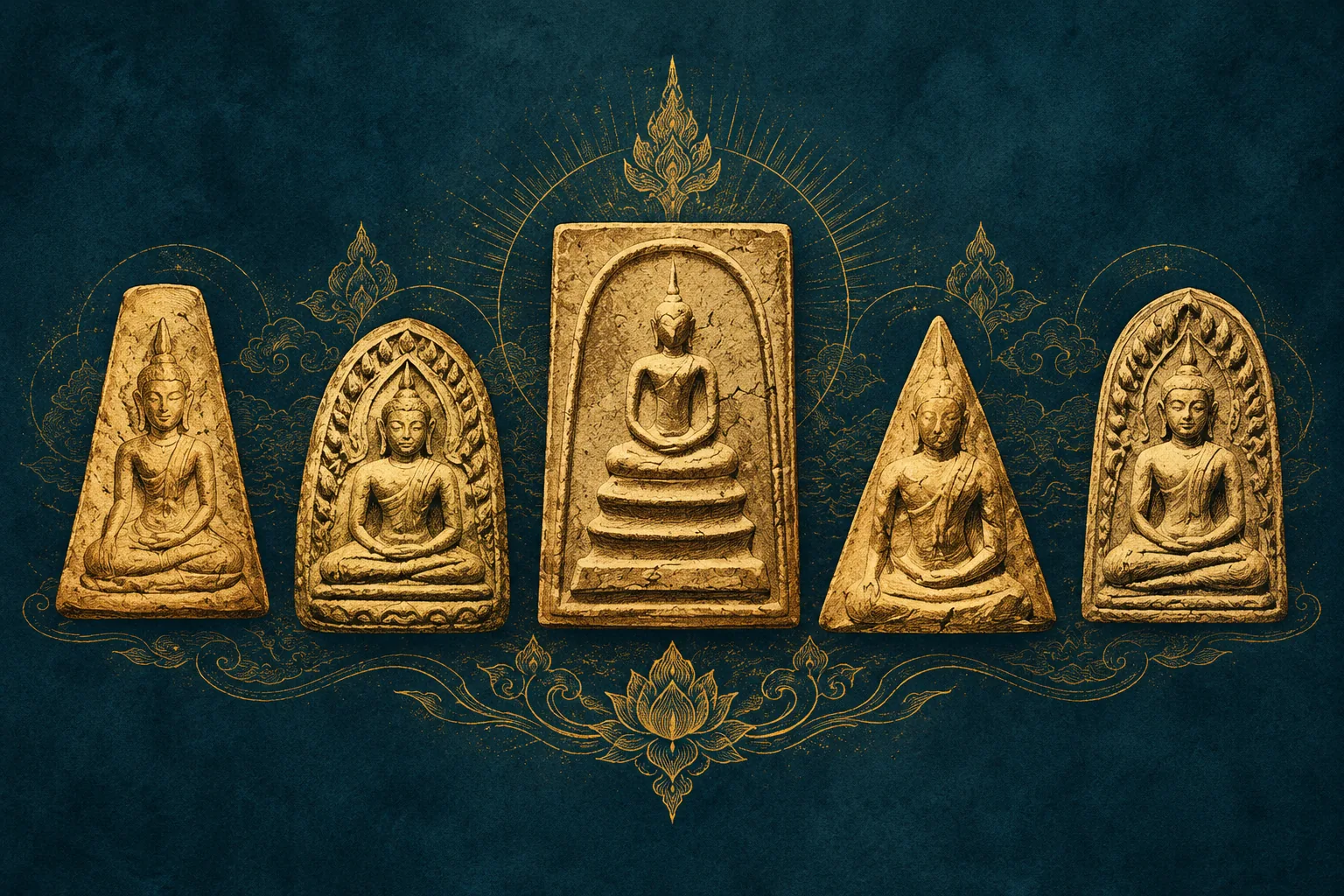
Brahma can be traced through heads, attributes and vehicles; Ganesha through the elephant head, broken tusk and mouse. Thep Ramluek differs. It may be only a sequence of letters, a yantra core or two facing outlines. Figures may wear pointed crowns or be reduced to lines; gender and attributes can change by lineage. A common collecting error is to label every paired male–female yantra ‘Thep Ramluek–Thep Ramjuan’. A sound identification reads image, formula core, reverse inscription, maker, date and same-issue objects together. An unproven market caption cannot be used to manufacture a mythology retroactively.
Why the Wat Sap Lam Yai powder ball is frequently discussed
Modern amulet discussions often use a powder ball associated with Wat Sap Lam Yai around B.E. 2542–2543 as an example. Circulating accounts say Ajarn Tua—Phra Ajarn Samuh Phat—had collected sacred powders from many teachers; material used around a larger ceremony was later formed into small luk om, and Luang Pu Moon is named among the important monks connected with the rite. Market narratives also link phong Chomphunut with attraction and goodwill. The case matters because it shows a ritual name becoming a collectible issue. Yet sales records do not fully agree on year, formula, quantity or principal issuer. Name and story cannot authenticate one. Size, surface, handwritten marks, inserts, same-issue photographs and traceable provenance still require comparison.
The line between goodwill, attraction and control
Market copy may promise that someone will think constantly of the keeper, return to a lover or experience even stronger compulsion. Such claims belong to belief and sales narrative, not verified outcomes; they cannot justify harassment, deception, breaking relationships or ignoring another person’s will. The cultural core worth retaining is to turn ‘being remembered’ into a demand on one’s own conduct: is one’s speech trustworthy, treatment gracious, and work good enough to invite future cooperation? A charm may support reflection and confidence, but it cannot replace consent, communication, respect or professional help. Some makers explicitly prohibit misuse in relationships, invoke the third precept or require respect for the teacher. Rules differ, but this ethical boundary matters more than extravagant claims.
How to identify what you are actually collecting
- 01Record the full Thai name first. Is it a mon, yantra, takrut, wax, oil, herb or luk om? Do not stop at the translation ‘deity of remembrance’.
- 02Identify lineage and maker. A formula bearing the same name may differ completely in diagram, materials and rules across regions and teachers.
- 03Separate issue history from object identity. A ceremony list can show attendance at an event; it does not automatically place the object in hand within that issue.
- 04Do not collapse plant, incantation and deity names. Wan Thep Ramluek may be an ingredient; Thep Ramluek may simply be an issue or formula name.
- 05Compare the object with reliable same-issue specimens and traceable records. Efficacy stories may be documented, but they cannot replace provenance or authentication.
Its enduring appeal is making remembrance portable
A narrow takrut, a powder ball or a box of scented wax is small, yet it carries an ordinary human hope: that one’s words are remembered, one’s effort noticed, and some goodwill remains after parting. This helps explain how Thep Ramluek expanded from ritual vocabulary into diagrams, plant names and multiple sacred-object issues. It lacks Brahma’s developed cosmology but possesses a powerful psychological image. For a collector, the most valuable piece need not carry the loudest ‘calling the heart’ story. It may instead be the one with coherent design, clear provenance and the ability to represent a particular teacher and local body of knowledge. Understanding before collecting keeps the object from becoming only an attractive name.