Origins & Belief · Oct 2026 (B.E. 2569)
Khrueang Rang and Buddhist Amulets: Start with Object and Provenance
Not every pendant is a Buddhist amulet; names, images, temples and markets must be separated.
16 min
Khrueang Rang and Buddhist Amulets: Start with Object and Provenance
Not every pendant is a Buddhist amulet; names, images, temples and markets must be separated.
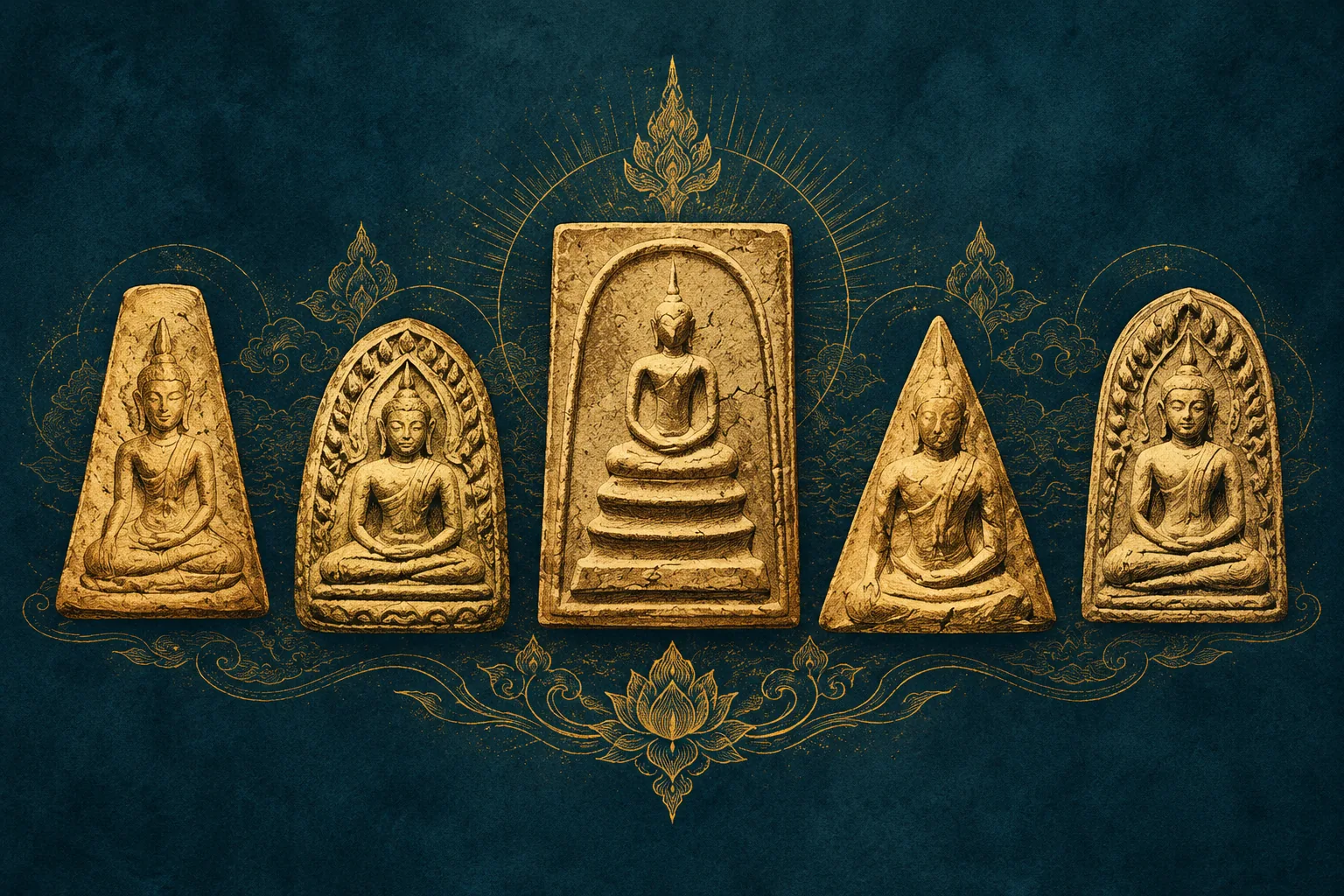
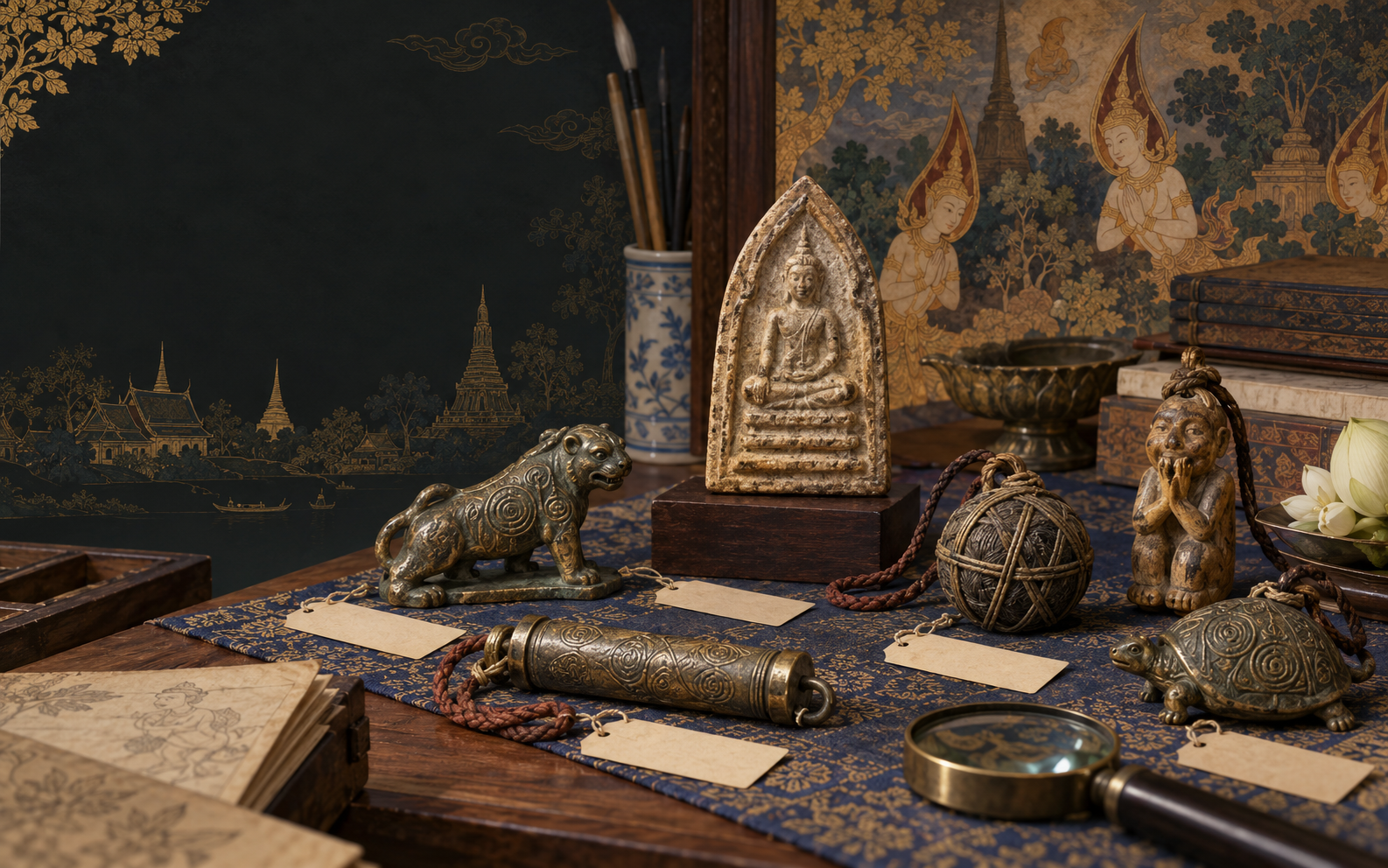
The Thai term khrueang rang covers charms, folk sacred objects and specific belief objects: human or animal figures, takrut tubes, herbs, wood and cords among them. Chinese ‘Buddha amulet’ is often broadened in markets, but Buddhist images, temple issues, Hindu-deity pendants and folk charms have different provenance and methods of reading.
How to read the image
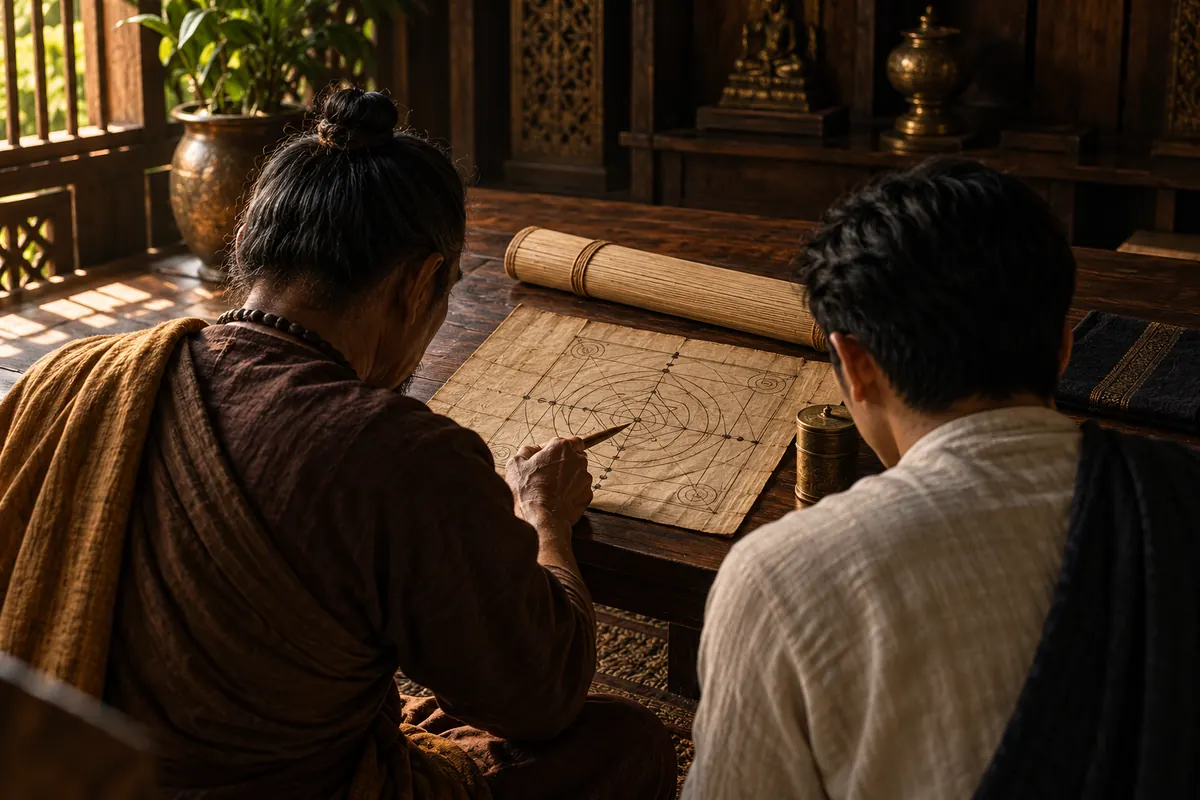
The first question is not ‘does it work?’ but ‘what is it?’ Read main image, script, material, form, provenance and purpose, then locate comparable public records. A Buddha image is not automatically an old amulet, nor is a takrut automatically an authentic work of a named master. Same-name products can be decades apart with different materials and purposes. Clear categories reduce the risk of treating market nicknames, cards or personal impressions as historical evidence.
Classification is more than ‘amulet/not amulet’: begin with form, material and use
Khrueang rang is an umbrella term, not one fixed shape. Common families include takrut scrolls of inscribed metal; yantra cloths or shirts; knotted cords, arm bands and phirot rings; luk om pellets of herbs, wax, resin or powder; animal or bodily emblems such as tiger, monkey, lizard or palat khik; knives, rings and teacher or ruesi figures. Some are worn, others placed in shops, vehicles, doorways or ritual areas. Phra khrueang more often centre Buddha, disciples, monks or Buddhist narratives, but modern markets blur the boundary. Record object name, Thai term, material, mode of use and issuer together.
‘Blessed’ is not provenance: build an object biography
One name may be produced repeatedly by different temples, teachers and workshops; one teacher may change material, yantra and purpose across years. A seller saying ‘empowered’, ‘old collection’ or ‘handmade by the master’ does not establish identity. A stronger object biography combines original packet, issue sheet, temple notice, period photograph, measurements, material analysis, mould or handwork traits, a reliable ownership chain and same-edition comparisons. A certificate records one organisation’s opinion and cannot replace provenance. Claims of invulnerability, safety, attraction or wealth should be labelled belief and market claims, never encouragement to take risks, stop medicine or treat a charm as financial advice.
Its Thai context
This distinction does not demean any belief. It lets readers respect different traditions while making steadier transaction decisions. When a seller says only ‘old’, ‘wealth-attracting’ or ‘famous master’ without issue records, treat the claim as unverified rather than supplying a story from imagination.
Names, provenance and local difference
Thai deities, guardians and folk sacred beings often coexist in texts, art, local oral tradition, temple rites and contemporary markets. The same name does not always indicate the same identity, and one image may carry different stories and customs across provinces, lineages, temples and periods. This site separates traceable historical material, community accounts and later market language rather than presenting one telling as a fact for every place.
Belief, image and market cannot replace one another
Ways of worship can reflect devotees’ respect and hopes, and images can provide cultural and iconographic clues; neither proves the age or authenticity of a particular pendant, takrut or figure. A concrete object still requires checks of issuer, temple, date, materials, ceremony and public records. This distinction does not make belief cold; it makes both cultural writing and collecting more honest.
A note for readers and collectors
First establish whether the name is a Thai original, Buddhist guardian, local spirit or commercial label. Then check temple, ceremony, date, materials and public issue records. Similar imagery or the same name never proves an object’s origin, age or authenticity.