Origins & Belief · Oct 2026 (B.E. 2569)
Phra Khun Paen: first a votive Buddha, later a hero, charisma and market story
Khun Paen is not simply a literary hero miniaturised for the neck. From Suphan Buri cache tablets to modern Phong Phrai Kuman issues, its name and meanings have repeatedly changed.
24 min
Phra Khun Paen: first a votive Buddha, later a hero, charisma and market story
Khun Paen is not simply a literary hero miniaturised for the neck. From Suphan Buri cache tablets to modern Phong Phrai Kuman issues, its name and meanings have repeatedly changed.
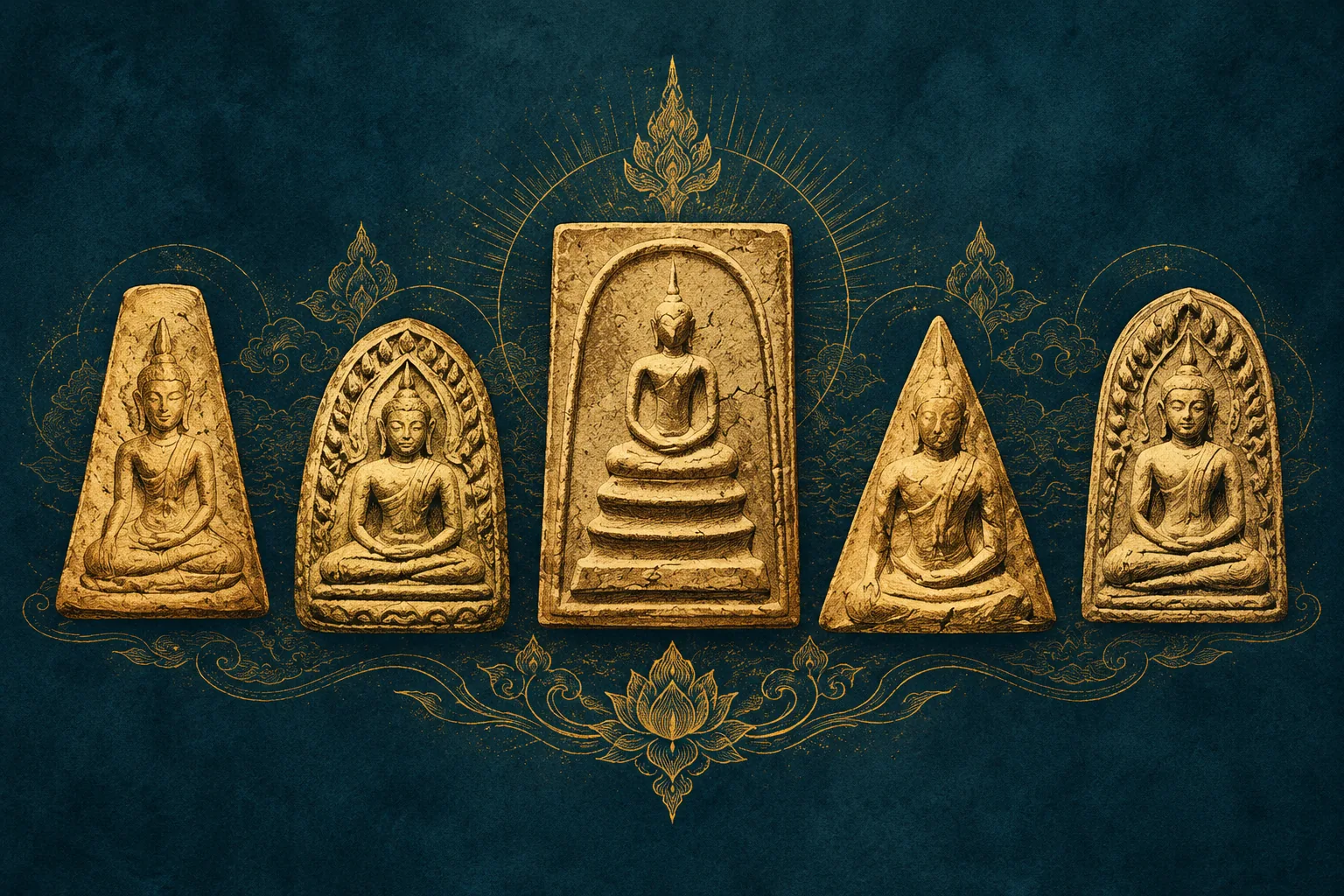
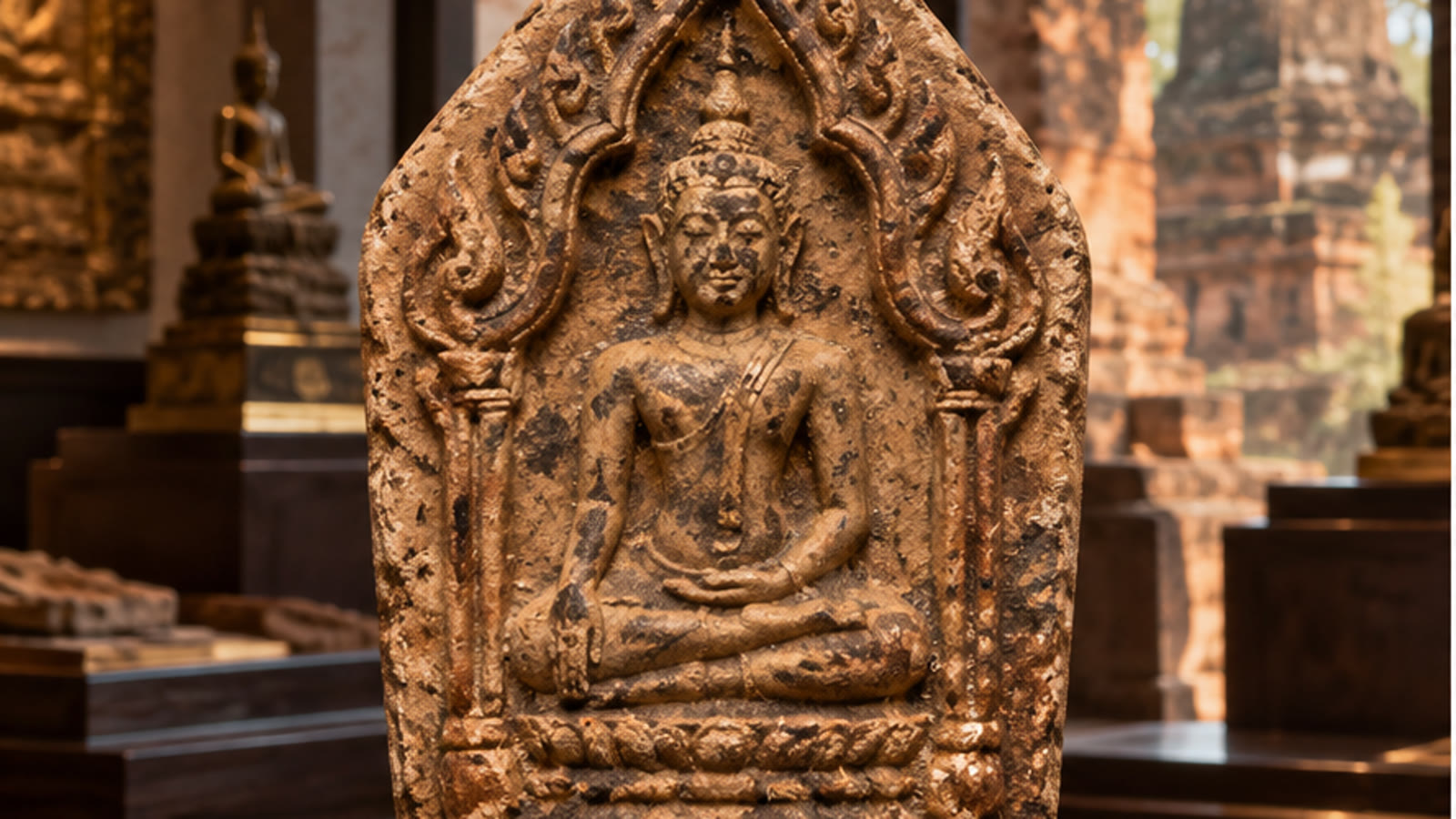
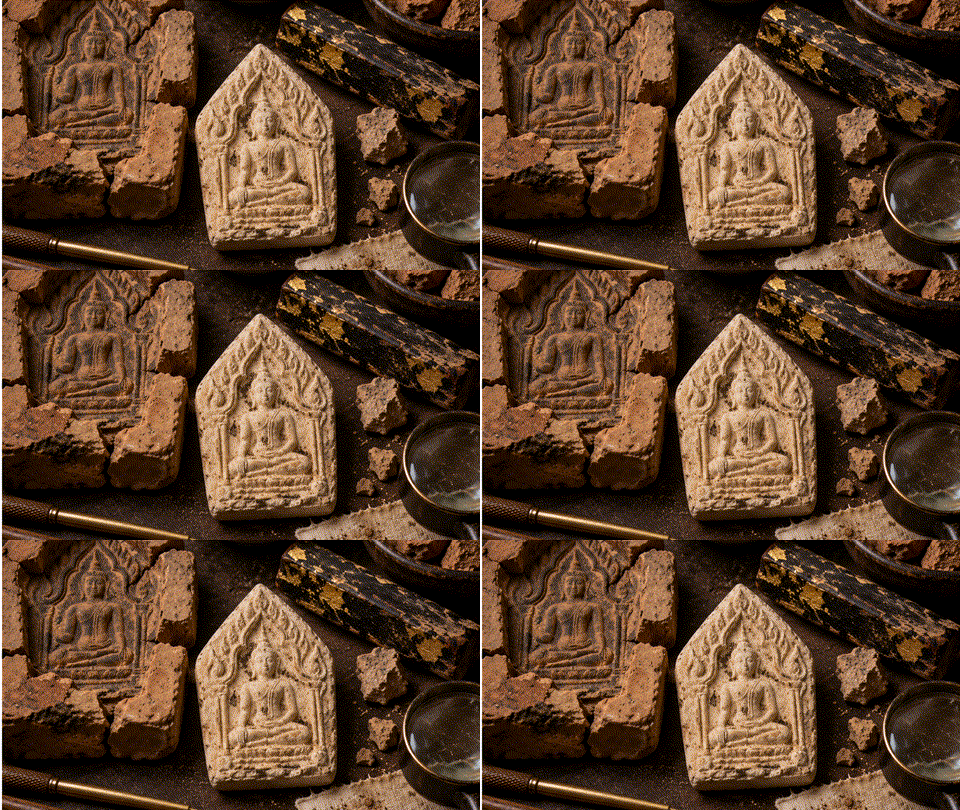
Today Khun Paen immediately suggests popularity, attraction and romance. In the material record, however, Phra Khun Paen first names families of seated-Buddha votive tablets, especially those associated with old Suphan Buri caches. The Buddha is commonly framed by a sum ruean kaeo: an ornamental shrine-arch, niche or full-body aureole that may use curving, flame or foliage forms. It belongs to Thai Buddhist visual language; it is not Khun Paen's residence, and the figure is not the armoured literary warrior. Reading the image as a Buddha first prevents later literary associations from being projected backward as the original intention.
How the name became tied to Khun Chang Khun Phaen
Khun Paen is the famed warrior-magician of the long Thai narrative Khun Chang Khun Phaen, master of spells, weapons and the Kuman Thong episode. Collectors later applied his name to certain Suphan Buri tablets, probably through a combination of place, local memory, heroic reputation and the force of the design. That does not mean ancient makers modelled the amulet on the man himself. Fine Arts Department records still describe the type as a five-sided seated-Buddha tablet beneath a ruean-kaeo arch. The name is cultural evidence; the image remains Buddhist.
Khun Chang Khun Phaen was not written once by a single novelist
Khun Chang Khun Phaen belongs to the Thai sepha performance tradition: a story was sung or recited in verse while wooden krap marked the rhythm. Thai literary scholarship traces its circulation to the Ayutthaya period, but the text read today is not one intact ancient manuscript. Episodes passed orally, were enlarged by different performers, and were then edited and extended by court and popular poets in the early Bangkok period. A royal recension was assembled under Rama II, while particular passages are attributed to Rama II, Rama III, Sunthorn Phu and others. Its shifting tones and occasionally contradictory characters therefore reflect a long collective history rather than one novelist's fixed design.
From Phlai Kaeo and Phim Philalai to Khun Paen and Wanthong
The story is centred on Suphan Buri and Kanchanaburi. Khun Paen begins as Phlai Kaeo, a childhood companion of the wealthy Khun Chang and the girl Phim Philalai. He ordains as a novice, studies letters, Buddhist learning and—in the narrative world—magic, then returns to Suphan Buri and marries Phim. Soon afterwards he is sent to war, wins distinction and receives the title Khun Paen; during the campaign he also marries Laothong. When Phim becomes gravely ill, her name is changed to Wanthong to alter her fortune. Khun Chang exploits Khun Paen's absence, falsely reports his death and frightens Wanthong's family with claims about the legal fate of a soldier's widow. Under pressure from her mother, Wanthong is forced into marriage with him. Khun Paen returns victorious with Laothong, and misunderstanding, jealousy and anger finally break the three lives apart.
War, magic and Kuman Thong: Khun Paen is not a simple romantic hero
Khun Paen later enters Khun Chang's house and takes Wanthong away into the forest; royal disobedience, lawsuits and his many relationships repeatedly bring punishment and imprisonment. The narrative also makes him a formidable soldier, speaker and magician. He knows protective and concealment spells, commands spirits, owns the horse Si Mok and the sword Fa Fuen, and is central to the famous Kuman Thong episode. That episode includes the killing of the pregnant Buakhli and a ritual performed upon the foetus. Its violence belongs to an old literary imagination of magic, power and fear and should not be softened into a picturesque origin tale. Khun Paen possesses courage, intelligence and charisma, but also impulsiveness, possessiveness, violence and infidelity. He is morally conflicted—not a flawless deity.
Phlai Ngam grows up and Wanthong dies: more than two men fighting over one woman
Wanthong and Khun Paen's son Phlai Ngam survives an attempt by Khun Chang to kill him, grows up under his grandmother's care, enters royal service and, after military success, receives the title Chamuen Waiworanan—usually called Phra Wai. Hoping to reunite his parents, he takes Wanthong from Khun Chang's house. Khun Chang petitions King Phan Wasa, bringing the family once more before royal judgment. Ordered to choose among Khun Paen, Khun Chang and her son, Wanthong tries to explain the affection, obligation and concern she feels for all three. Her answer is read as a desire to keep two husbands, and she is sentenced to death. A pardon comes only after the execution. Modern readers need not repeat the old label of an 'indecisive' woman; they can see someone constrained by maternal command, marriage law, male rivalry and royal power. The tragedy endures because it asks not only whom she loves, but who is permitted to decide a woman's life.
How the literary figure shaped modern amulet language
Once amulet culture borrowed Khun Paen's name, the literary figure's courage, eloquence, magic, attraction and ability to survive danger could be translated into claims about popularity, negotiation, prosperity, protection, victory and relationships. This helps explain where modern market language came from. It does not prove that old cache tablets were portraits of Khun Paen, or that every issue bearing the name promises identical effects. A sounder method keeps four lines of evidence distinct—Buddhist iconography, local archaeology, temple production records and literary symbolism—then asks how they met in each period.
Cache Khun Paen and modern powder Khun Paen require different methods
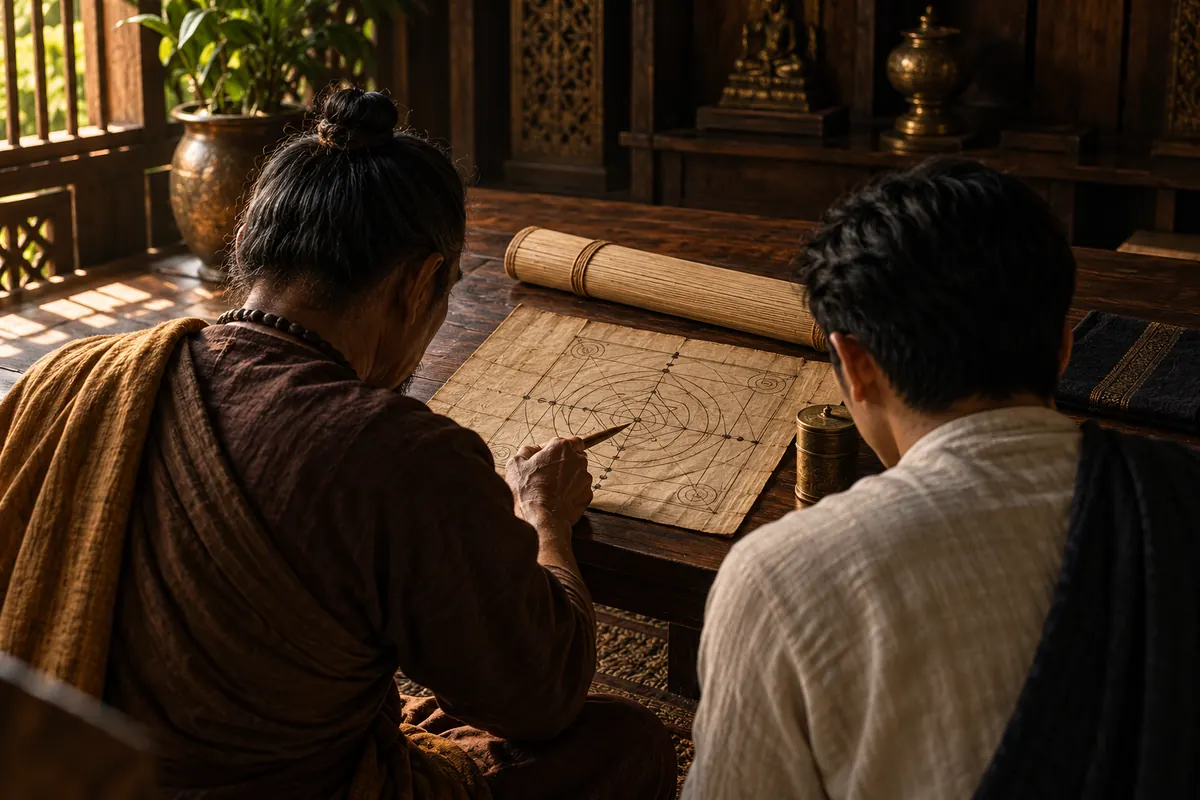
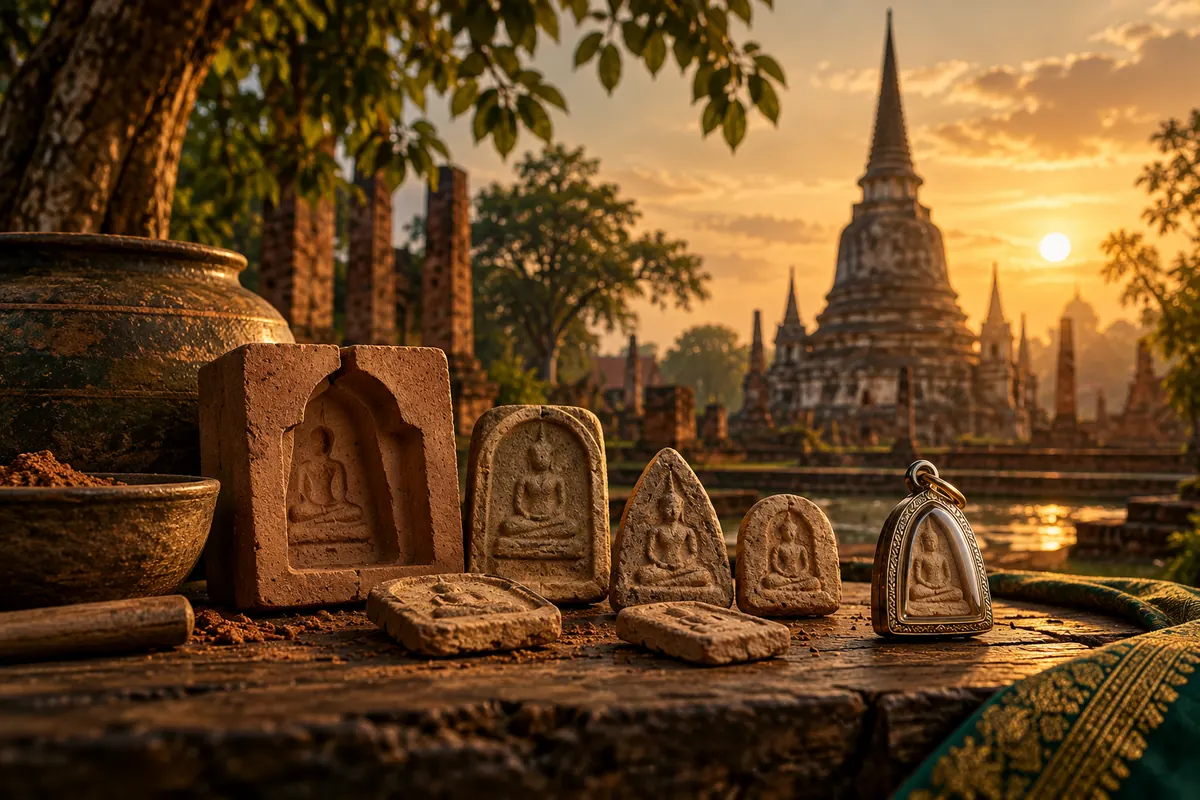
Cache Khun Paen demands findspot, associated deposits, clay or metal, firing, lacquer and gilding traces, and art-historical dating. Modern powder Khun Paen demands temple, master, year, mould, sacred powders, pollen, ash or other claimed ingredients, inserts and ceremony records. Their outlines may resemble one another, but their evidence chains are different. Applying ‘old clay’ rules to modern powder—or using a modern master’s fame to prove an ancient date—is a category error.
Why Luang Pu Tim’s Phong Phrai Kuman became a modern landmark
Modern discussion often treats the Phong Phrai Kuman system of Luang Pu Tim, Wat Lahan Rai, as a landmark. Its importance is not only market value. It joined local lineage, compound powders, recognisable moulds and editions, and inserts such as takrut or gems into a modern Khun Paen language later widely imitated. Yet Khun Paen is not synonymous with Phong Phrai Kuman, nor with every rectangular powder amulet advertised for attraction. Each edition still needs independent study.
Why it became linked to charisma, relationships and victory
The literary Khun Paen combines military skill, eloquence, magic and intense relationships, so modern markets readily extend his character into claims of charisma, persuasion, romance, protection and victory. These are later interpretations of the name within wearing culture, not a universal feature list inscribed on every cache tablet. Collectors may value the symbolism while still asking what a specific temple and edition actually claimed, rather than substituting heroic legend for issue history.
A Khun Paen worth owning should invite study
Khun Paen is compelling because it holds Buddhist iconography, Suphan Buri history, literary memory and modern monastic craft together. A well-provenanced piece lets its wearer encounter all these layers, not merely pursue a romantic shortcut. If an edition attracts you, begin with temple records, measurements and mould comparison, then study materials and ownership history. The clearer the research, the more grounded the pleasure of ownership.