Identification Guides · Nov 2026 (B.E. 2569)
BE 2500 Walking Buddha: Four Manufacturing Clues for Struck and Cast Pieces
Where should we begin with an aged-looking lead-alloy amulet? Based on a Phra Khruang Zhen Zhang lesson, this guide follows four areas: robe contours, metal flow, recessed reverse marks, and the edge.
7 min
BE 2500 Walking Buddha: Four Manufacturing Clues for Struck and Cast Pieces
Where should we begin with an aged-looking lead-alloy amulet? Based on a Phra Khruang Zhen Zhang lesson, this guide follows four areas: robe contours, metal flow, recessed reverse marks, and the edge.
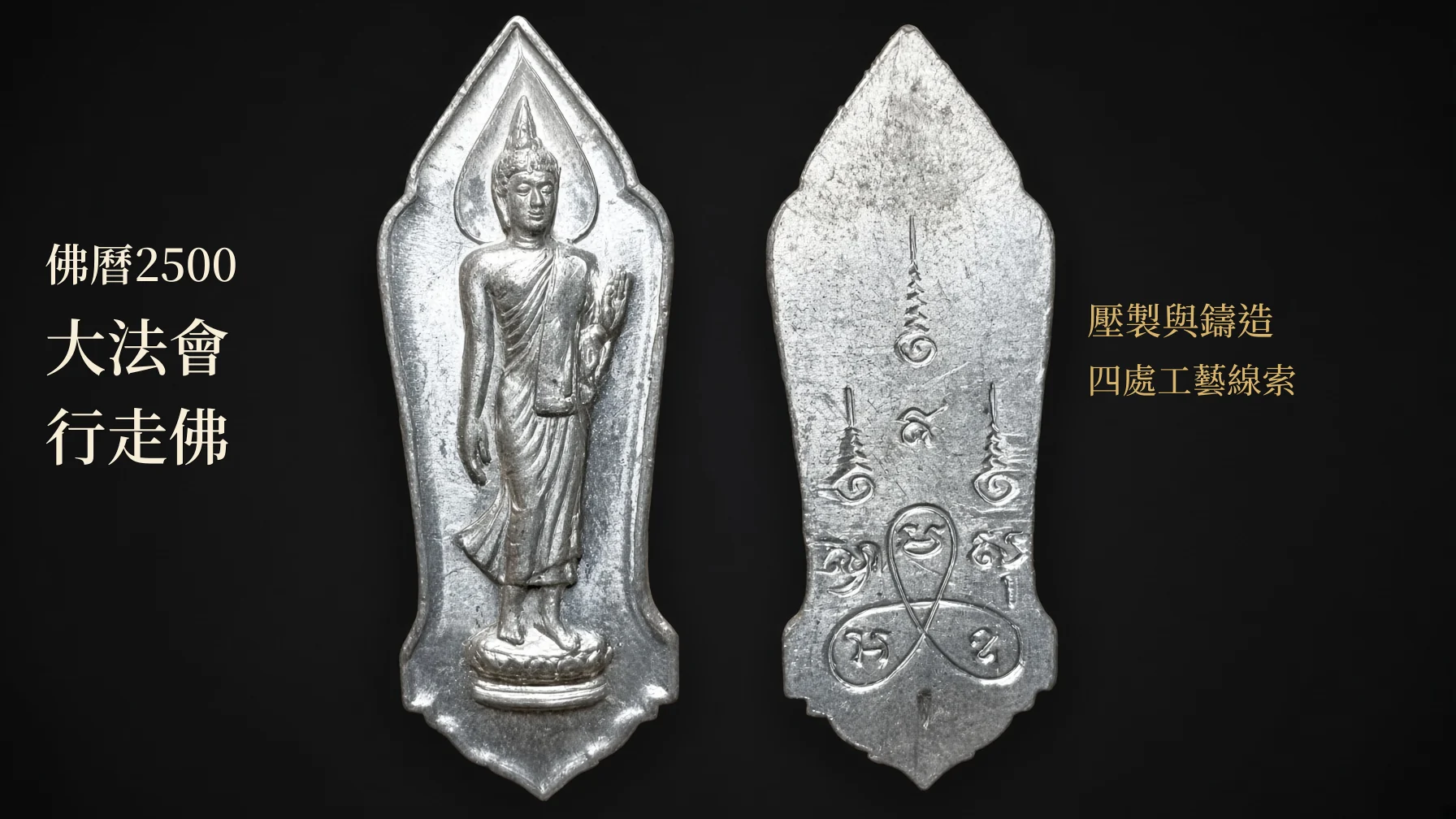
The BE 2500 Walking Buddha is a familiar subject to many collectors. An aged-looking lead-alloy piece immediately draws the eye to its colour, but the better opening question is how its form was made. This episode of Phra Khruang Zhen Zhang uses a walking Buddha amulet to trace possible differences between a struck piece and a cast copy across the front, reverse and edge.
Establish the exact issue before comparing
Walking Buddha names a posture, not an exact die variety. Before comparing objects, establish dimensions, metal, design and reverse marks, then find reliable examples of the same issue and variety. Differences between dies or batches must not automatically become authenticity claims. The following four areas provide an order for reading manufacture, not an instant verdict.
1. Robe lines and the front silhouette
Begin with the figure's outer contour, then follow where robe lines start, turn and end. In striking, pressure from a die forms the relief. Look for a coherent transition between lines and adjacent fields, and for depth that changes in a plausible sequence. A single sharp line tells little if nearby details have softened in a different way.
2. Flow marks on the metal surface
The second stop is the surface under magnification. Pressed metal can show fine flow traces related to pressure and relief; a cast surface may have a different texture. Move the light and read the raised motif together with its recessed field. Scratches, cleaning marks and image compression can imitate lines, so a photograph alone may be misleading.
3. Recessed reverse marks and their edges
On the reverse, the question is more than whether the marks look similar. Trace each recessed line through its depth, corners and both lips. The episode draws attention to tiny burrs beside a groove and their relationship to pressure. A symbol reproduced as part of a casting can leave a different edge from one pressed into metal. Wear and later cleaning can also alter burrs, so compare several locations together.
4. Trim marks versus a mold seam on the edge
Finally turn the piece sideways. Trimming after striking and a seam left where casting molds meet arise through different processes. Follow the entire edge: is the line continuous, at what level does it run, and how does it meet the front and reverse rims? Edges are also readily polished or reworked. One short smooth or rough segment cannot stand in for a full inspection.
Patina cannot replace the manufacturing story
Oxidation and colour on lead alloy can change through environment, handling and later treatment. Record them, but do not let them erase a conflict between front, reverse and edge. Before buying, photograph both faces and the full edge under comparable light, then compare with reliable examples of the same variety. For a valuable piece, seek an in-hand examination by someone who knows that issue. This keeps appreciation and evidence in the same conversation.
First understand how the amulet took shape; then its colour and details have a proper place in the assessment.
Teaching video: BE 2500 Walking Buddha manufacturing clues
About 2 minutes 26 seconds. Presented by Yeung Gong-zi; the video description credits เมย์ แสงสิริโกมล (เมย์ ตลาดพลู). The article cover uses the owner-supplied image with title typography.
Open on YouTube