Origins & Belief · Oct 2026 (B.E. 2569)
Entering the World of Thai Amulets and Ritual Traditions | Chapter 5: Spirit-Associated Objects and Taboos
A small figure, a folded ritual cloth and an unfinished wish open a chapter on Kuman Thong, spirit-linked objects, respect and restraint.
10 min
Entering the World of Thai Amulets and Ritual Traditions | Chapter 5: Spirit-Associated Objects and Taboos
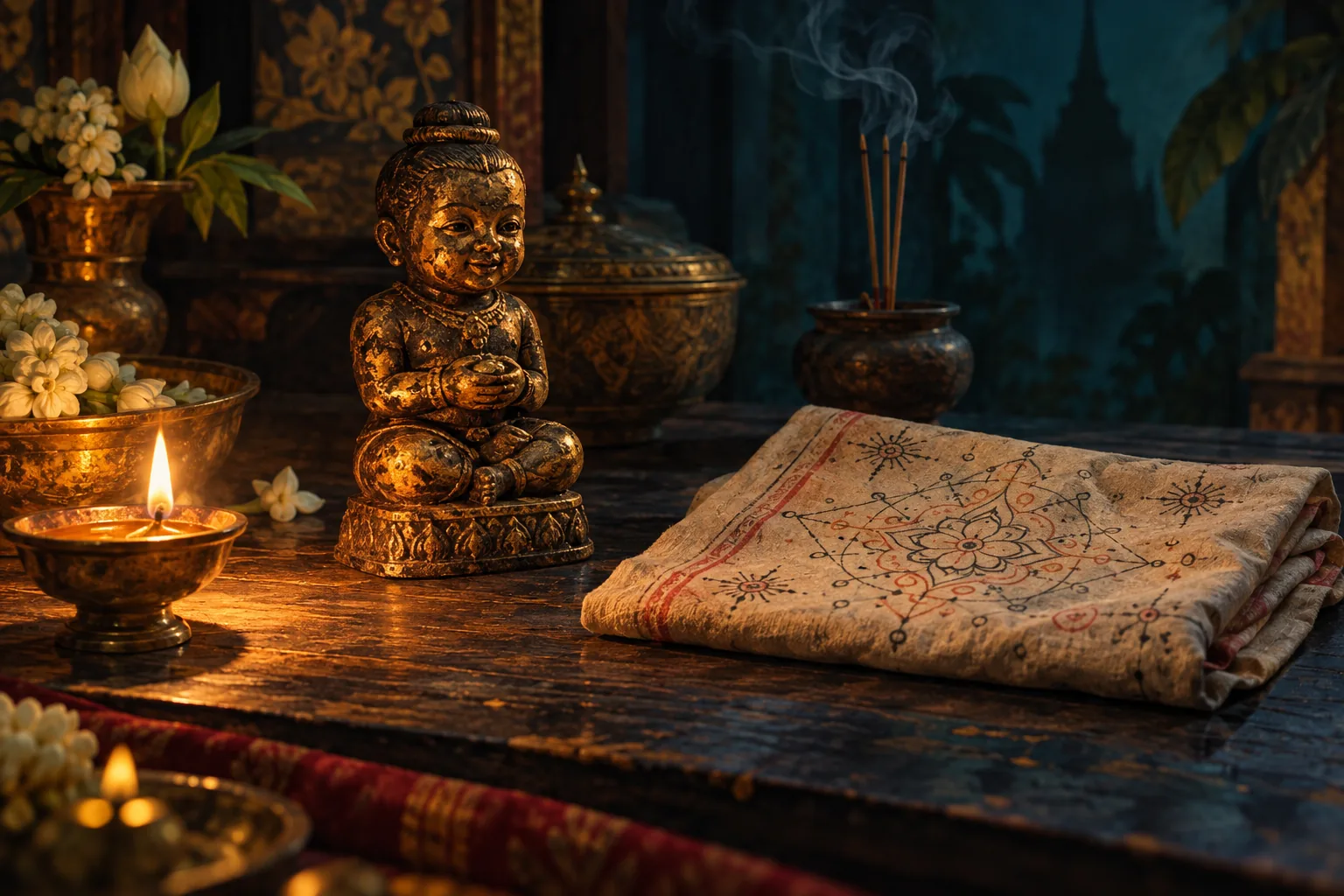
A small figure, a folded ritual cloth and an unfinished wish open a chapter on Kuman Thong, spirit-linked objects, respect and restraint.
Original work by Yang Gongzi
Late at night, the lamp on a small shrine is still burning. One person sees a guardian in the little figure; another sees something unsettling. This chapter brings those responses together. In Thai folk belief and Chinese-speaking collecting circles, what do people mean by a 'yin amulet', and why do promises, offerings and taboos so often enter the story?
1. What the label 'yin amulet' tries to describe
'Yin amulet' is a broad label used in Chinese-speaking collector communities for certain spirit beliefs, unusual materials and folk ritual traditions. It is not a single formal category covering all Thai sacred objects. The term may refer to an object associated with remembrance of the dead, a figure believed to be connected with a spirit, or simply an image with a particular ritual atmosphere. A shared label does not mean a shared origin, and unusual material does not automatically mean malice.
The original book contrasts 'grey' and 'black' ritual paths. The most useful dividing line is not a colour but an intention: care, dedication and coexistence, or coercion and harm? To understand an object, look at its maker, lineage, stated ritual setting and the conduct expected of its keeper, rather than letting two labels decide its whole meaning.
2. Kuman Thong: the child in the story and the figure today
Kuman Thong (กุมารทอง) has a vivid place in Thai literature and folk narrative. Khun Chang Khun Phaen made the child-spirit figure familiar to many readers. Today's small figures, however, can differ widely in material, purpose and devotional practice across temples, ritual makers and shops. The sight of a child figure alone does not establish that it contains human remains or a spirit.
For some devotees, caring for Kuman Thong means extending kindness to a child without a home through prayer, offerings or the dedication of merit. Others regard the figure as a reminder to keep promises and act generously. These understandings are not identical, but both move the story beyond treating the child as a device for obtaining luck.
3. Ritual cloth, oils and spirit-linked objects
Yantra cloth (ผ้ายันต์) serves many purposes in Thailand. Its writing and imagery may be intended for wearing, a home or a ritual setting; a marked cloth is not automatically a 'spirit cloth'. Stories of cloth linked to spirits also circulate. The particular maker, imagery and original purpose are what give any one piece its context.
Oils called nam man phrai (น้ำมันพราย) appear in older stories about attraction, desire and the dead. Bottles sold under that name today may carry very different ingredients and narratives; the label alone proves neither composition nor effect. Claims about human remains, blood or control over another person's feelings deserve particular care rather than being mistaken for collectible value.
Some objects are said to invite a particular spirit to guard their keeper. Such accounts often emphasise willing help, the dedication of merit and keeping one's word rather than ordering a spirit to take revenge. Practices differ between lineages. Understanding which tradition an object belongs to matters more than searching for one universal rule.
4. What the taboos are really about
The book asks a simple question before any object is brought home: are you willing to care for it, and can you keep what you promise? Placement, offerings, prayer, dedication and the fulfilment of vows vary between makers and households. Begin with the instructions attached to that tradition, then practise with cleanliness, respect and without harming others. Another person's list of taboos need not turn daily life into fear.
To ask for protection is not to ask for revenge. Respect for a spiritual relationship also includes respect for other people's will.
If an object is claimed to contain human-derived material, pause to ask about provenance and legality rather than touching, opening or handling it yourself. Respect for the object, the deceased and their family matters more than any startling promise of power. This is one enduring meaning of the book's contrast between 'grey' and 'black' paths: whether harm, fear or manipulation is being used to obtain a desired result.
5. A place in life today
People still turn to mysterious stories when facing uncertainty, grief or the hope of change. For some, the tradition is a reminder to think carefully before making a vow and to honour promises made. For others, dedication of merit offers a gentle way to remember the dead. An object can be a reminder without becoming a reason to control another person or surrender daily life to fear.
The small figure remains beside the lamp. People may answer differently when asked whether it holds an unseen power. How we treat promises, the dead and the people before us, however, is a choice made in ordinary life. Seen through that choice, spirit-associated objects and taboos tell a story not only about mystery, but about the kind of person we hope to be.