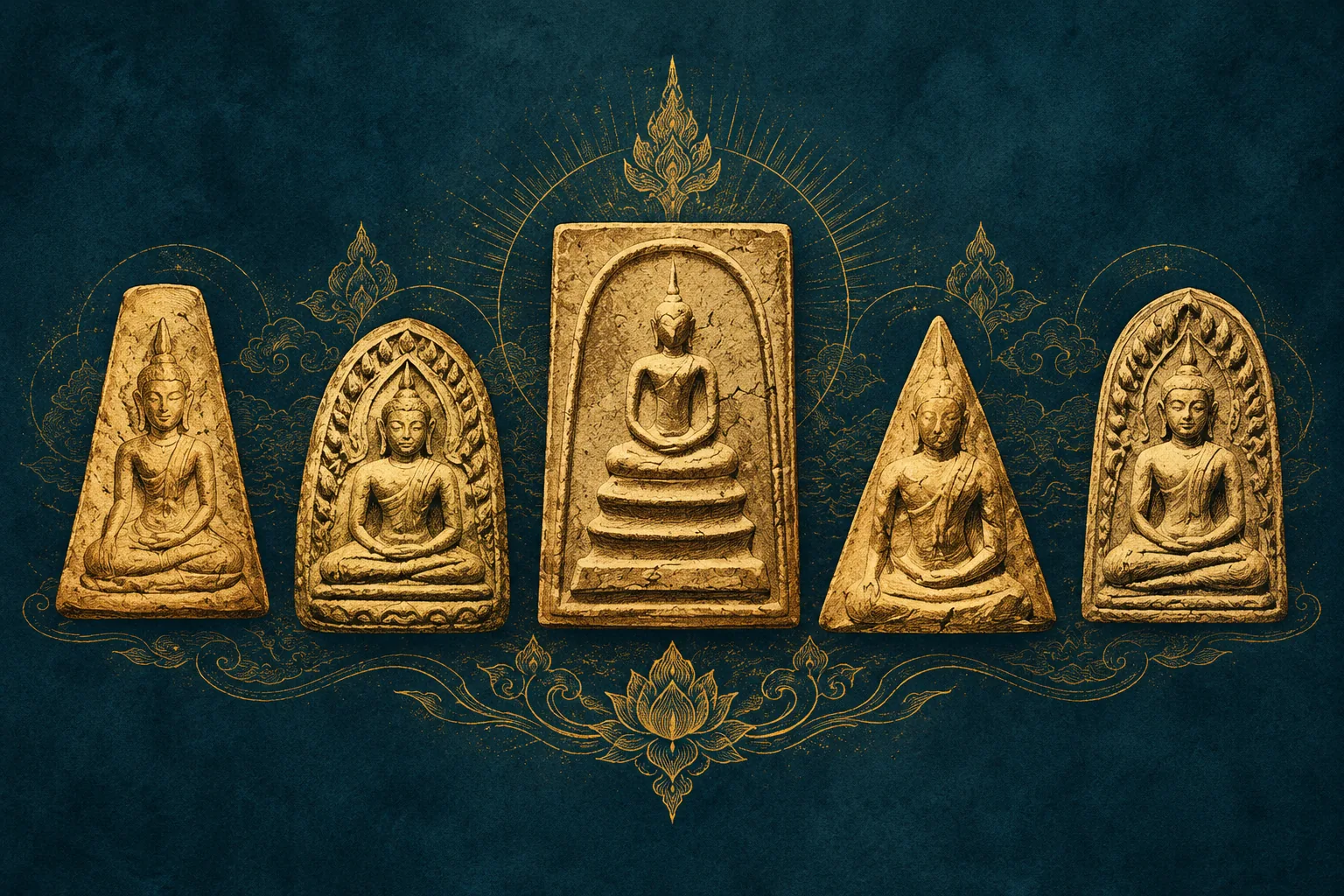
Origins & Belief · Oct 2026 (B.E. 2569)
Kuman Thong: Literature, Folk Belief and the Modern Market
Without sensationalism: separate literary roots, later charm imaginaries and modern products.
16 min
Kuman Thong: Literature, Folk Belief and the Modern Market
Without sensationalism: separate literary roots, later charm imaginaries and modern products.
Kuman Thong has multiple origins and uses in Thai culture. Research often refers to the story in Khun Chang Khun Phaen, but a literary character, later magical imaginaries and today’s child-form charms are not the same thing. University research notes shifts from protection/invulnerability imagery toward luck, companionship and consumer culture.
How to read the image
‘Kuman Thong’ is not a reliable label for material, age or origin. Claims involving human remains, harm, illegal acquisition or dangerous rites must not be romanticised or copied; law, ethics and safety come first. For a child-form item for sale, ask for issuing temple or maker, material declaration, date and checkable record rather than assuming that a more alarming story means older or more potent.
From Khun Chang Khun Phaen to modern child figures: separate literature, magical legend and cult object
A major cultural background for Kuman Thong is the dark episode in the Thai epic Khun Chang Khun Phaen in which Khun Phaen obtains a fetus and ritually turns it into a child-spirit helper. It is an important literary and magical imaginary, not a manufacturing description for every modern object. Child figures, temple commemoratives, household images and commercial ‘spirit child’ brands now vary greatly in material and doctrine; many issuers explicitly use substitute materials and blessing rites unrelated to abuse of remains. A responsible article must not market horror or imply that illegally obtained human material is orthodox or more powerful.
The language of ‘raising’ and its ethical boundary: never replace care for living people
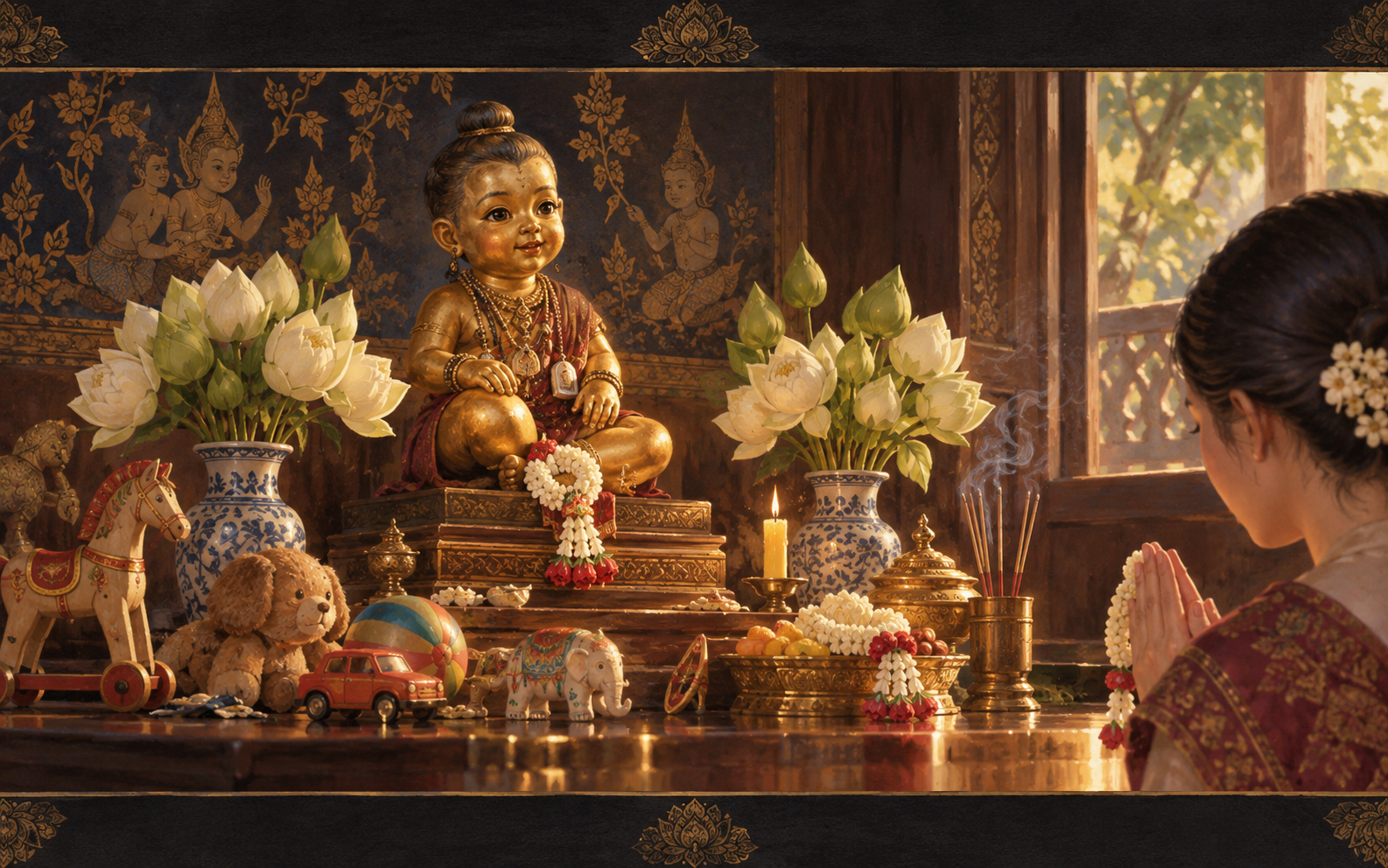
Some devotees offer food, drinks and toys and address the figure as a child, with folk accounts of warning, guarding the home or attracting customers. Other temples and households treat it only as a memorial, compassionate emblem or focus for merit. Neither position proves a measurable spirit. Worship must never involve trafficking in remains, abuse, frightening children, delayed medical care or transferring family responsibility to an object. Collection research should record issuer, date, name, material, officiant and original documentation, while separating literary narrative, testimony and verifiable fact.
Its Thai context
Placing Kuman Thong in Thai social history shows how literature, media, religious language and markets shape an object together. This site covers history and culture only; it does not provide instructions for making, summoning or feeding one.
Names, provenance and local difference
Thai deities, guardians and folk sacred beings often coexist in texts, art, local oral tradition, temple rites and contemporary markets. The same name does not always indicate the same identity, and one image may carry different stories and customs across provinces, lineages, temples and periods. This site separates traceable historical material, community accounts and later market language rather than presenting one telling as a fact for every place.
Belief, image and market cannot replace one another
Ways of worship can reflect devotees’ respect and hopes, and images can provide cultural and iconographic clues; neither proves the age or authenticity of a particular pendant, takrut or figure. A concrete object still requires checks of issuer, temple, date, materials, ceremony and public records. This distinction does not make belief cold; it makes both cultural writing and collecting more honest.
A note for readers and collectors
First establish whether the name is a Thai original, Buddhist guardian, local spirit or commercial label. Then check temple, ceremony, date, materials and public issue records. Similar imagery or the same name never proves an object’s origin, age or authenticity.