Origins & Belief · Oct 2026 (B.E. 2569)
Why do Thai temples keep and honour whole takhian logs?
From a riverside tree and boat timber to Nang Takhian and a temple shrine: how a log becomes a centre of local devotion.
8 min
Why do Thai temples keep and honour whole takhian logs?
From a riverside tree and boat timber to Nang Takhian and a temple shrine: how a log becomes a centre of local devotion.
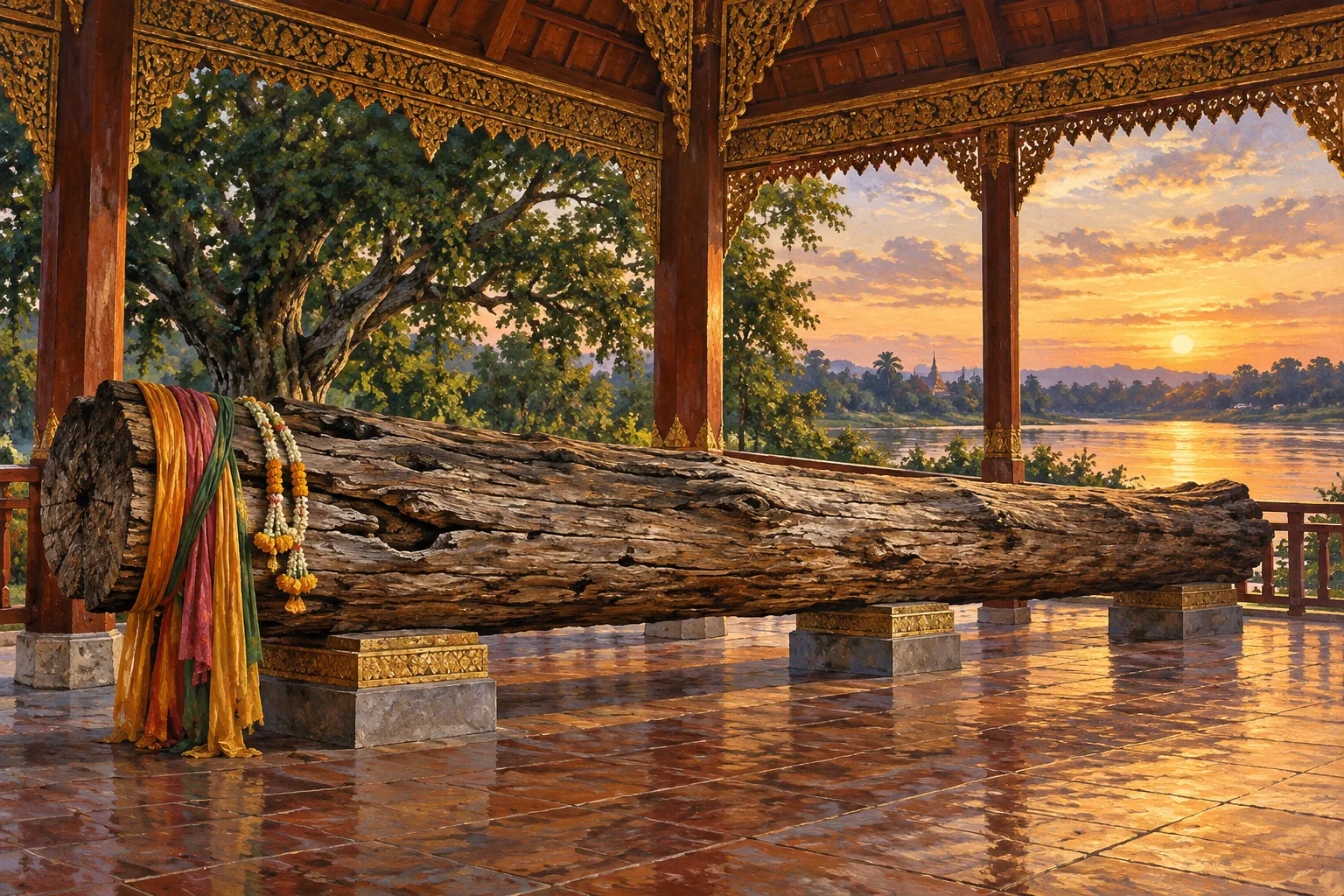
In some Thai temples a whole, immense log rests under a shelter, wrapped with coloured cloth and visited with flowers and incense. It is more than an old piece of timber to the people who recovered it from a river and brought it there. The log may be associated with Nang Takhian, a female tree spirit, and with a story held in common by the surrounding community.
First, the tree itself
The vernacular name takhian can refer to different trees. This article concentrates on takhian thong, Hopea odorata of the dipterocarp family, which is often linked to the spirit tradition. A large, straight evergreen found near water, it provides strong, durable timber formerly used in boats and buildings. Its place beside rivers and in working life helps explain why it entered the stories of human settlements.
Who is believed to dwell within?
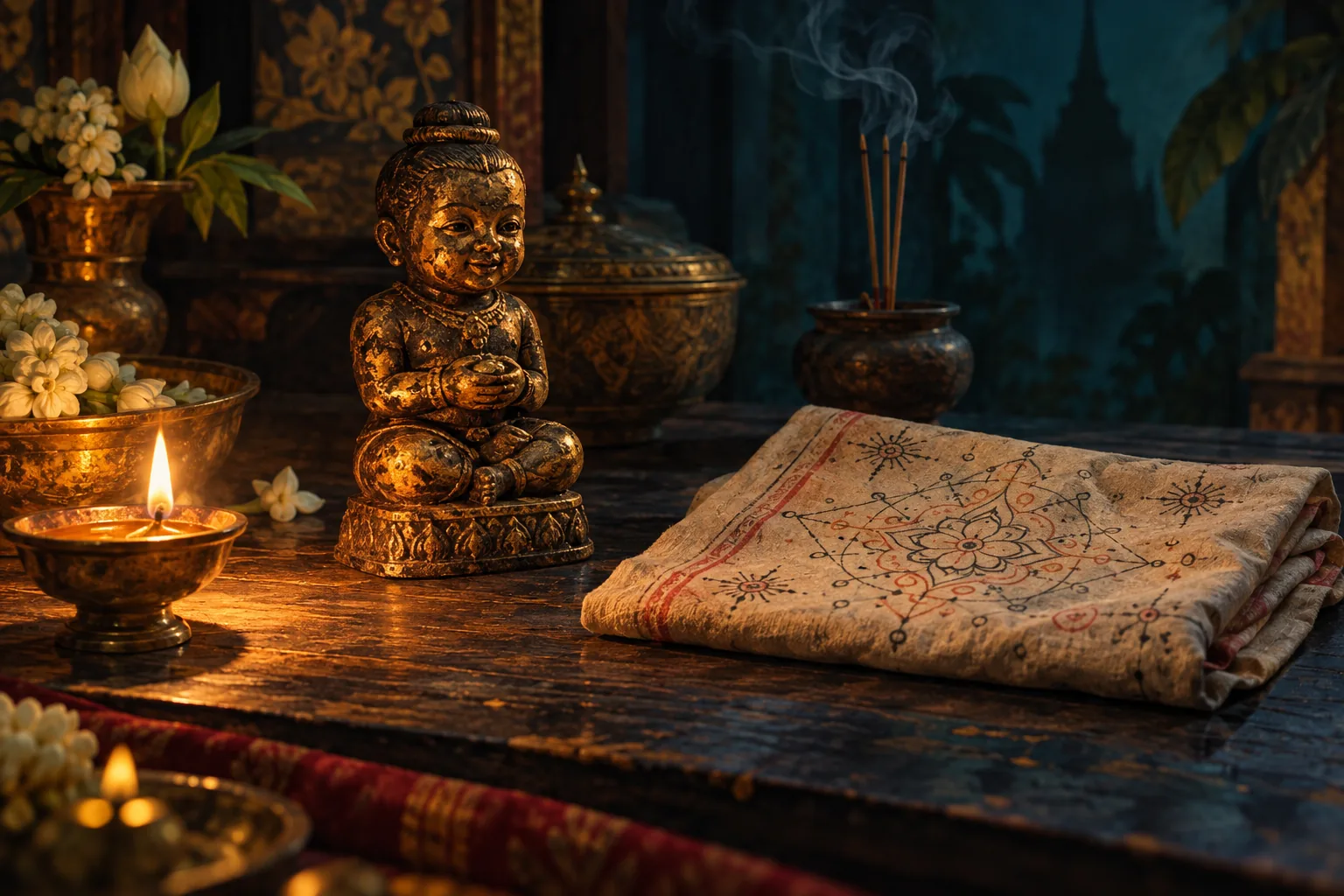
Thai traditions recognise guardian presences in forests, great trees and waterways. The Buddhist term rukkha thewada, a tree deity, offers another vocabulary for such beliefs. The female presence associated with takhian is called Nang Takhian, sometimes respectfully Chao Mae. Her name and story vary by locality; there is no single national biography. Crucially, a Thai cultural encyclopaedia records that not every takhian is thought to house her. Particular trees, sometimes marked by unusual roots or grain, become the focus of local accounts.
How old is the belief?
Beliefs about spirits in trees are woven into Thai folk and religious life, but no reliable evidence identifies the year in which takhian worship began. We can identify a documented point: research cites Nang Takhian in Sunthorn Phu's Nirat Mueang Klaeng, dated to Buddhist Era 2349, or 1806. Its presence in early nineteenth-century literature shows that the belief was already known; it does not mean that it began in 1806. Oral traditions, boat rituals and local shrines carried it onward.
Why keep the entire log?
In this tradition, a tree's significance need not end when it is felled. Southern Thai boat-blessing rites address the presences associated with timber and invite their protection aboard the vessel. When a great log is found in a riverbed and local dreams or memories link it to a guardian, preserving it whole makes sense to devotees. The physical log holds the story together and provides a common place for respectful visits; cutting it apart would change that symbol.
There is a documented example from Buddhist Era 2557 (2014): a local government in Phrae recorded several old takhian logs uncovered during river dredging. Residents held rites and moved two intact trunks to Wat Nantharam. A temple offered shelter, care and a shared gathering place. Another community study records an annual rite at a Nang Takhian shrine within a temple. Local devotion and temple life coexist here; honouring a log is a community practice, not a requirement of Buddhist doctrine for every temple.
Why do people believe a spirit is present?
Several experiences help us understand the belief. A very old, towering tree suggests endurance; a huge trunk preserved in a river seems extraordinary. Felling and boatbuilding once carried real risks, so people offered respect before working with timber and sought protection. Dreams and oral accounts give that respect a name and personality in Nang Takhian; cloth, flowers and recurring rites make shared memory visible. These are ways to understand how the belief persists, not evidence that can prove a spirit's existence or date the belief's origin exactly.
A place in life today
Today some visitors ask Nang Takhian for safety or good fortune; others come because a log connects them to local history and family memory. Whatever one believes about spirits, a preserved trunk reminds us that one tree can be a living organism, useful material, historical witness and focus of community feeling at once. Understanding its place in a temple brings us closer to the ways people relate to land and inherited stories.