Origins & Belief · Nov 2026 (B.E. 2569)
Literary figures and deities: where does devotional power come from?
Khun Phaen, the Monkey King and Hindu deities cannot all be assessed as historical people. How do images, ritual and shared devotion give sacred objects meaning?
5 min
Literary figures and deities: where does devotional power come from?
Khun Phaen, the Monkey King and Hindu deities cannot all be assessed as historical people. How do images, ritual and shared devotion give sacred objects meaning?
Can we honour a sacred object linked to a figure whose life is not documented in history? The question arises with Khun Phaen, the Monkey King and Hindu deities. It helps to separate two matters: whether a figure lived as a historically verifiable person, and whether that figure has a real place in devotional life. These are different questions.
No biography does not mean no meaning
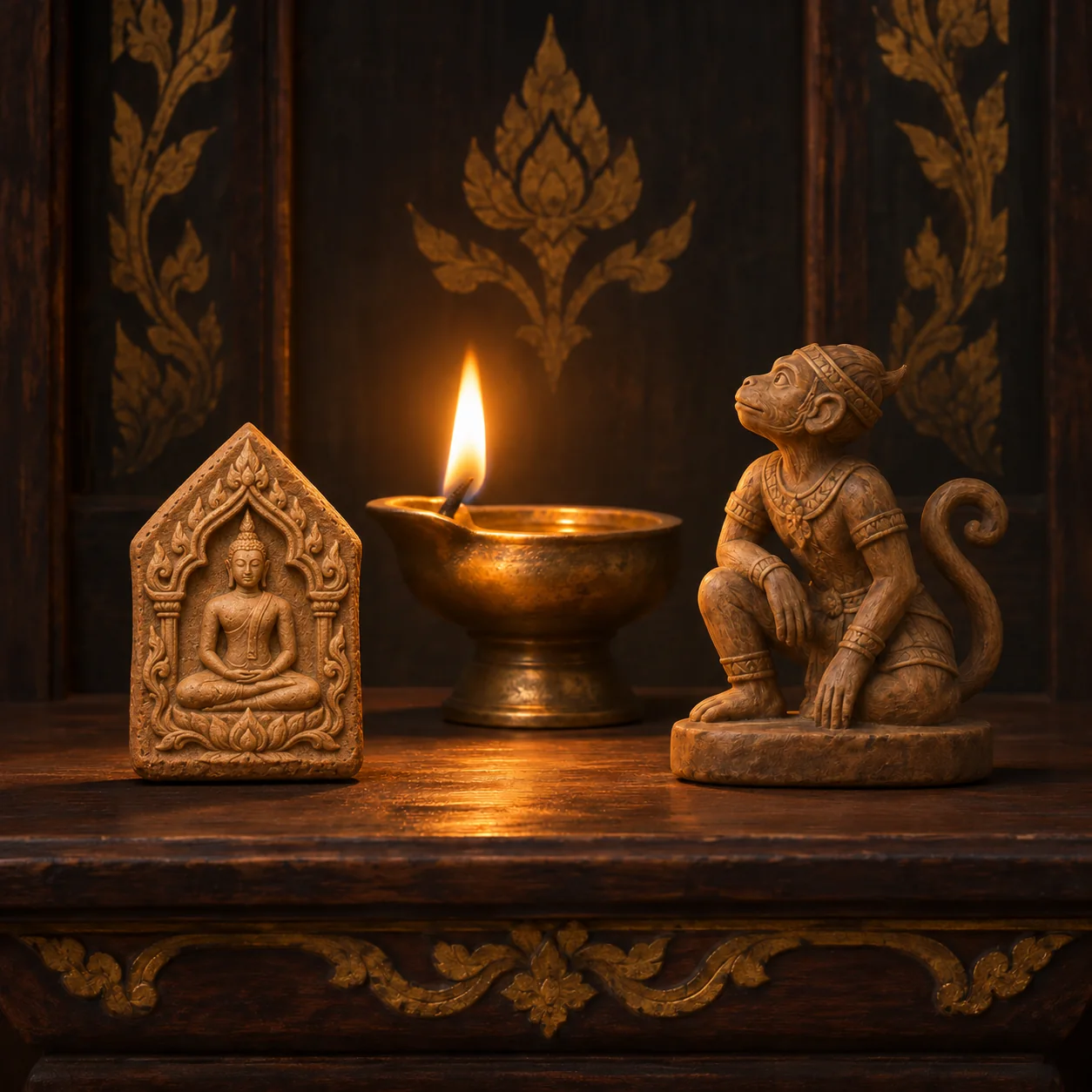
The Tale of Khun Chang Khun Phaen grew through oral performance and revision. It is not a straightforward biography of its two protagonists. Yet its hopes and imagery have become part of Thai culture. Collectors should also note that some amulets called Phra Khun Phaen show a seated Buddha. A name alone does not tell us that the tablet portrays the literary hero.
The Monkey King does not live only on the printed page. Temples honour the Great Sage, and devotees connect his image with courage, protection and perseverance. Hindu deities and the gods honoured in Thai Brahmanical traditions are different again. Devotees do not generally approach them as ordinary people whose civil records need finding. Sacred images offer a focus for respect, prayer and relationship.
Where might the power be found?
Within faith, some speak of a deity's response, others of a teacher's practice, blessings and consecration, or of the intentions shared by devotees. These are ways worshippers understand their experience. In daily life, devotion can also help a person settle the mind, remember a promise and act with greater care and kindness. Family and community support may be part of that strength. These accounts can coexist without requiring everyone to accept only one.
Devotion and shared memory
People sometimes say that a figure grows stronger as more incense is offered. In cultural life, sustained worship certainly deepens stories, rituals and shared memory, giving later generations a tradition to follow. A devotee may understand this continuity as collective intention. Numbers alone, however, cannot establish the existence of an independent supernatural force. That remains a matter of faith and interpretation.
Know what you are collecting
A collector need not find a historical birth record for every figure before valuing an amulet or sacred object. More useful questions are: what does the figure mean, who made this object, what tradition does it carry, and why do I wish to honour it? Faith is not a guarantee that every request will be fulfilled. Respect, curiosity and room for unanswered questions can give a collection lasting meaning.