Origins & Belief · Oct 2026 (B.E. 2569)
Bones, Ashes and ‘Died Saturday, Cremated Tuesday’: Where Thai Occult Amulet Materials Came From
This is not a recipe found in Buddhist scripture. It emerged where relic veneration, charnel-ground ideas, Thai spirit traditions, literature and the modern amulet market overlapped. Its most mysterious phrase began as a funeral taboo.
14 min
Bones, Ashes and ‘Died Saturday, Cremated Tuesday’: Where Thai Occult Amulet Materials Came From
This is not a recipe found in Buddhist scripture. It emerged where relic veneration, charnel-ground ideas, Thai spirit traditions, literature and the modern amulet market overlapped. Its most mysterious phrase began as a funeral taboo.
Thai amulet markets sometimes make unsettling claims: an object contains cremation ash, bone powder or even the remains of a child spirit. Some lineages add that material from a person who died on Saturday and was cremated on Tuesday is exceptionally forceful. The subject deserves more than dismissal as superstition, but it also should not be accepted from sales copy alone. Three histories have become entangled here: Buddhist understandings of relics and death, Thai vernacular ideas about spirits, and the modern amulet market's reworking of rare materials.
First ask what ‘ash’ actually means
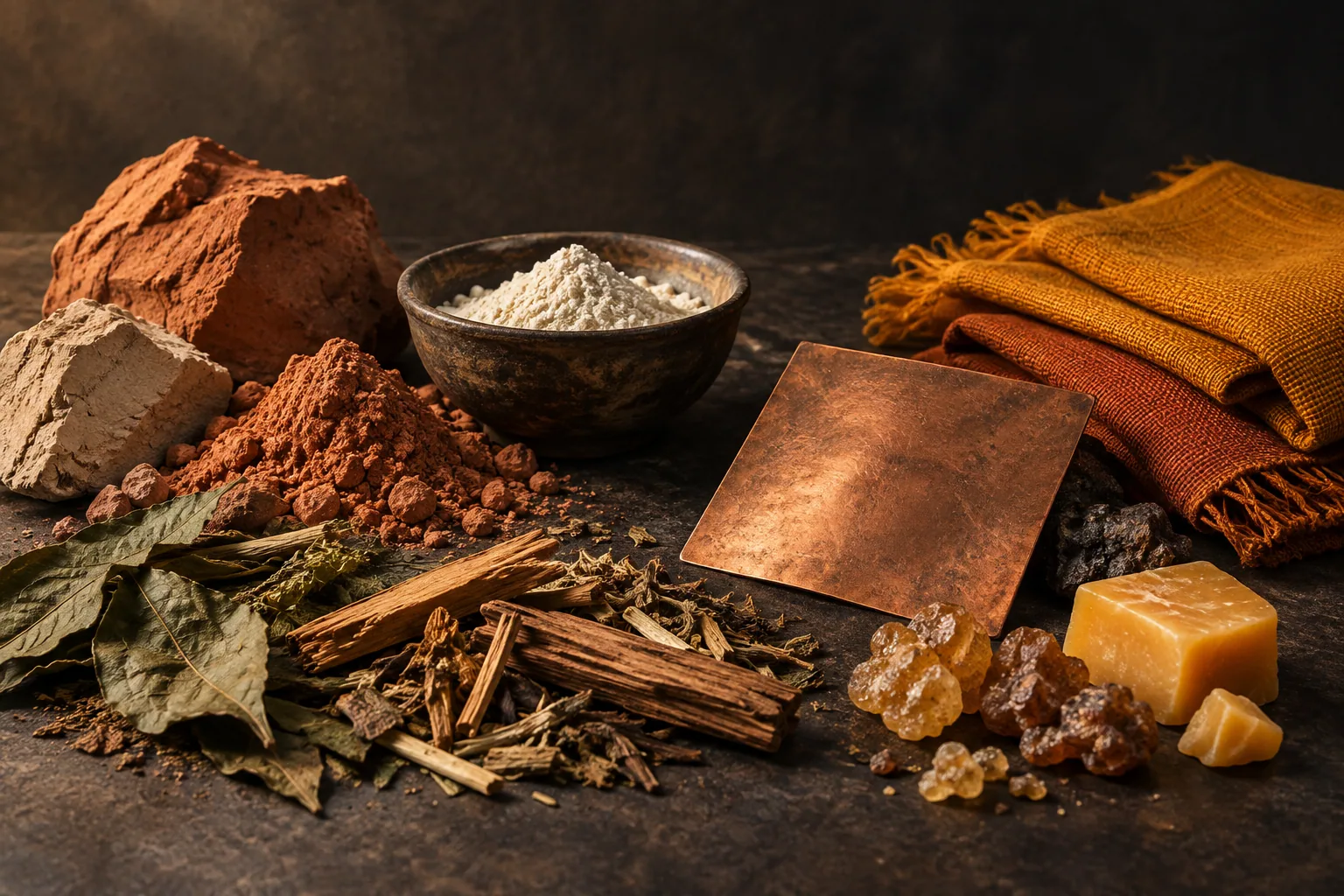
Market language often collapses very different substances into ‘ash’ or ‘dark material’. The actual possibilities include incense ash, burnt scripture or yantra paper, powder from old amulets or temple tiles, cemetery soil, coffin fragments, ordinary cremains, human bone, and the honoured relics left after a revered monk's cremation. Their religious status, provenance, composition and ethical risks are not the same. ‘Contains ash’ does not automatically mean human remains, and phong phrai kuman should not be translated uncritically as infant ashes.
Does Buddhist scripture prescribe ashes in amulets?
No passage in the Pali canon has been found instructing makers to add ordinary cremains, infant remains or cemetery substances to amulets. Two quite different Buddhist ideas are often drawn too close. The Mahaparinibbana Sutta records the distribution and enshrinement of the Buddha's relics after cremation. Its purpose is remembrance of the awakened teacher, devotion and merit—not the treatment of every corpse as magical raw material. The charnel-ground contemplations in the Satipatthana Sutta ask practitioners to observe bodily decay in order to understand impermanence and relinquish attachment. They are meditation instructions, not a talisman recipe.
The enshrinement of a revered monk's relics in a stupa, memorial or occasional sacred object follows another path: honour, lineage and a sense of continuing presence. Devotees value the teacher's discipline and teaching. Conflating such honoured relics with unproven commercial claims about anonymous human bone erases the distinction that matters most.
From charnel grounds and spirits to Kuman Thong
Thai religious life has never consisted of canonical Buddhism alone. Ancestors, place spirits, the restless dead, charnel grounds and ritual specialists have long existed alongside temple practice. A person who dies suddenly or violently may be imagined as retaining unusually intense will. Vernacular magic then introduces transformation: through invitation, placement, naming and reciprocal care, a dangerous spirit can be moved from uncontrolled threat into a relationship of guardianship. This belongs to Thai popular religion and ritual culture rather than to a single Buddhist commandment.
The best-known literary model for Kuman Thong comes from The Tale of Khun Chang Khun Phaen, in which Khun Phaen makes a spirit assistant from a foetus. Yet the epic grew through oral performance and repeated editing. Research shows that the familiar kuman episode entered through a later performance strand and became standard in nineteenth- and twentieth-century texts. It cannot by itself prove that an identical material rite existed around 1600. In the mid-twentieth century, masters such as Luang Pho Tae produced free-standing Kuman Thong figures for domestic care, bringing literary imagery, household devotion and the amulet market closer together.
Phrai Kuman powder and the twentieth-century material story
Human bone and cremation ash became recurring ‘material stories’ in the amulet market largely in the modern period. As Kuman Thong, Khun Phaen and powder amulets expanded in the later twentieth century, ingredient names also became labels for lineages and editions. A Journal of the Siam Society study dates Luang Pu Tim's Phra Khun Phaen Phong Phrai Kuman to B.E. 2518 (1975) and deliberately says that cremated remains were allegedly present. The qualifier matters: it records a powerful tradition of attribution, not laboratory confirmation of every object. Collector sources also give B.E. 2515, so ‘related issues and traditions of the 1970s’ is safer unless a particular temple record and specimen establish more.
‘Died Saturday, cremated Tuesday’ began as a funeral taboo
The Thai phrase tai wan sao, phao wan angkhan—‘died Saturday, cremated Tuesday’—was clearly recorded by the early twentieth century. In Customs Connected with Death, first published in B.E. 2482 (1939), Phraya Anuman Rajadhon notes a popular avoidance of Saturday deaths and Tuesday cremations because both were regarded as forceful days and the resulting ghost might be fierce. He also remarks that, in practice, cremation should be arranged for the family's convenience. The early record therefore describes a combination people feared and avoided, not an occult manual telling makers to seek it out.
Why Tuesday and Saturday? Thai astrology associates Tuesday with Phra Angkhan, Mars—hot, impetuous and forceful—and Saturday with Phra Sao, Saturn—heavy, stern and formidable. Both are commonly classed among difficult or malefic planetary powers. Thai also uses angkhan for Tuesday and Mars, while another sense refers to embers or cremation ash. That verbal overlap may strengthen the association, although it cannot yet be demonstrated as the single origin of the taboo.
How an avoided combination became ‘most potent’
Vernacular magic often reverses a taboo. What ordinary society avoids as dangerous can become, in ritual settings, rare, liminal and suitable only for a capable specialist. A feared pairing of death and cremation was therefore reinterpreted by some spirit lineages as concentrated, quick-acting phrai material. A 2020 Thai academic study of contemporary child-spirit dolls lists, among current recipe claims, ash from a violent death on Saturday followed by cremation on Tuesday, along with earth from seven cemeteries. This shows that the idea circulates today; it does not make it an ancient law obeyed by every lineage.
‘Most potent’ is therefore a ritual judgement: difficult to control, forceful within a spirit narrative, and highly taboo. It is not chemical purity. No scientific evidence shows that the weekdays of death and cremation alter ash or create measurable supernatural power. Different teachers add entirely different conditions—cause of death, age, zodiac, number of cemeteries, lunar phase or mantra—which is precisely what we would expect from fluid lineage traditions rather than a single canonical formula.
Provenance, dignity and the law
Once human remains are alleged, the question is no longer merely whether an object ‘works’. Who consented? Where did the material come from? Was the deceased treated with dignity? Section 366/3 of Thailand's Penal Code penalises, without reasonable cause, damaging, moving or destroying a corpse, bodily part, bone or ash. Mystery should not excuse anonymous claims about human remains. If a seller can offer only ‘the secret must not be questioned’, without a temple, date, lineage record or lawful provenance, that opacity is itself a risk.
- 01Clarify the word: incense ash, burnt scripture, cemetery earth, phrai powder, cremains and relics are not interchangeable.
- 02Identify the issue: different years under one master and one amulet name may use different materials.
- 03Request provenance: temple and maker records, early packaging and continuous ownership carry more weight than a late sales story.
- 04Keep a boundary: when alleged human, cemetery or child remains lack lawful provenance, do not buy, resell or repeat the claim as fact.
A connection to life today
The deepest interest in ash traditions is not that greater horror must mean greater power. They show how people live with death. Buddhism preserves reverence through relics and teaches impermanence through charnel contemplation. Vernacular religion tries to turn fear into relationship and order. Markets can turn taboo into scarcity and price. When an amulet is said to contain ‘dark material’, the mature response is neither ridicule nor fascination alone. It is to hold cultural understanding, respect for the dead and the courage to ask for provenance at the same time. Mystery can be appreciated without sacrificing dignity or fact.