Origins & Belief · Oct 2026 (B.E. 2569)
Teachers before Power: Ruesi, 108 Forms and the Wisdom behind Sacred Objects
Across Thai ritual tables, stages, healing lineages and charm culture, the Ruesi is compelling not because he guarantees power, but because he teaches that every art has a teacher and every power requires discipline.
22 min

Teachers before Power: Ruesi, 108 Forms and the Wisdom behind Sacred Objects
Across Thai ritual tables, stages, healing lineages and charm culture, the Ruesi is compelling not because he guarantees power, but because he teaches that every art has a teacher and every power requires discipline.
What makes the Ruesi a teacher is not the number of spells attributed to him, but the way knowledge passes from teacher to student—and survives through the student's conduct.
Enter certain Thai ritual halls, dance schools or traditional-healing spaces and you may first meet an aged, composed face: long beard, topknot and deeply set eyes, sometimes wrapped in tiger-pattern cloth, sometimes holding beads, a manuscript or staff. He is neither a palace deity nor a portrait of a Buddhist monk. The image carries the mind beyond the town—to forest, cave, herbs, fire and the silence of long discipline. This is the Ruesi's first and strongest appeal: knowledge does not simply appear; someone withdrew, observed, endured and then passed it on.
Ruesi is not the name of one god
Ruesi derives from Sanskrit ṛṣi, a seer of sacred verse, sage, disciplined practitioner or hermit; Thai writes the term as ฤๅษี or ฤาษี. It is a broad category, not the proper name of a single deity. Ruesi appear in Indian epics, Buddhist literature, Thai local legends and performing arts, but their identities, ethics and knowledge differ. One advises a prince, another holds herbal and bodily knowledge, another predicts events, while others stand for music, dance, craft or incantation lineages. Calling one Ruesi ‘the sole inventor of all magic’ is memorable but compresses many periods and traditions into a market slogan. More accurately, the Ruesi became a shared image through which many knowledge systems imagine their earliest teacher.
Before awakening, the Buddha-to-be also studied with forest teachers
Buddhist texts record that after renunciation Siddhattha studied profound meditative attainments with Āḷāra Kālāma and Uddaka Rāmaputta. He mastered their systems rapidly yet concluded that they did not yield the complete liberation he sought, and continued his journey. Chinese-language markets often call them ‘the Buddha's Ruesi teachers’. That makes cultural sense when using broad Thai categories such as dabot or ruesi, but their names and the textual setting should be retained. The lesson is not that Ruesi stand above the Buddha, or the reverse. Even the future Buddha respected teachers, learnt in practice, and then tested the limits of what he had learnt. Reverence and independent judgement can coexist.
From forest sage to Thailand's ancestral teacher
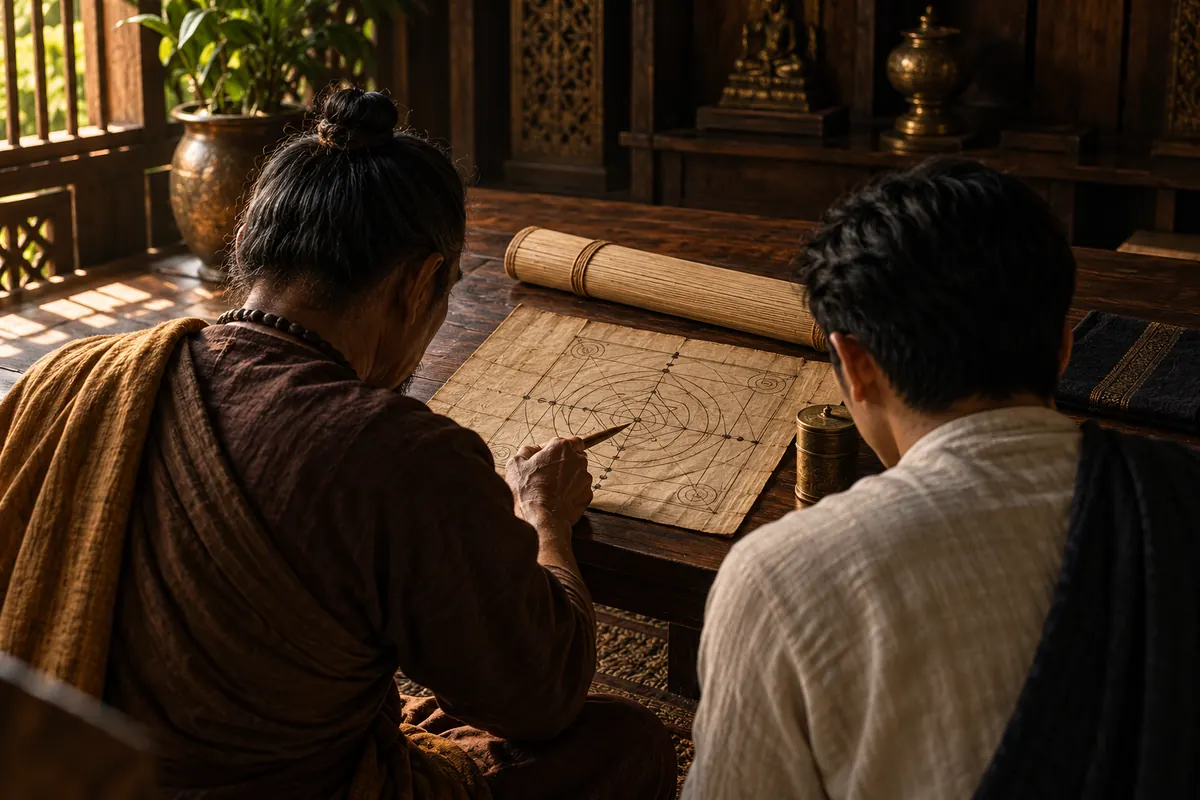
In Thailand, the Ruesi did not remain inside ancient Indian stories. The Ramakien and other Indic-derived literature cast sages as teachers, rescuers and testers of heroes. Local foundation tales use them to explain places and sources of knowledge. Wat Pho's Ruesi Dat Ton carries breathing, stretching and medical knowledge through the hermit's body. Thai performing-arts traditions make the teacher visible through wai khru and khrop khru: teacher heads are arranged, offerings made, music played and invocations recited under a qualified ritual master. Fine Arts Department material specifically links the Ruesi head representing Bharata Muni with the first teacher of dramatic arts. A bearded face is therefore not mere decoration. Within a lineage it declares: this art did not begin with me, and it is not mine alone to possess.
The 108 forms: not a single national register
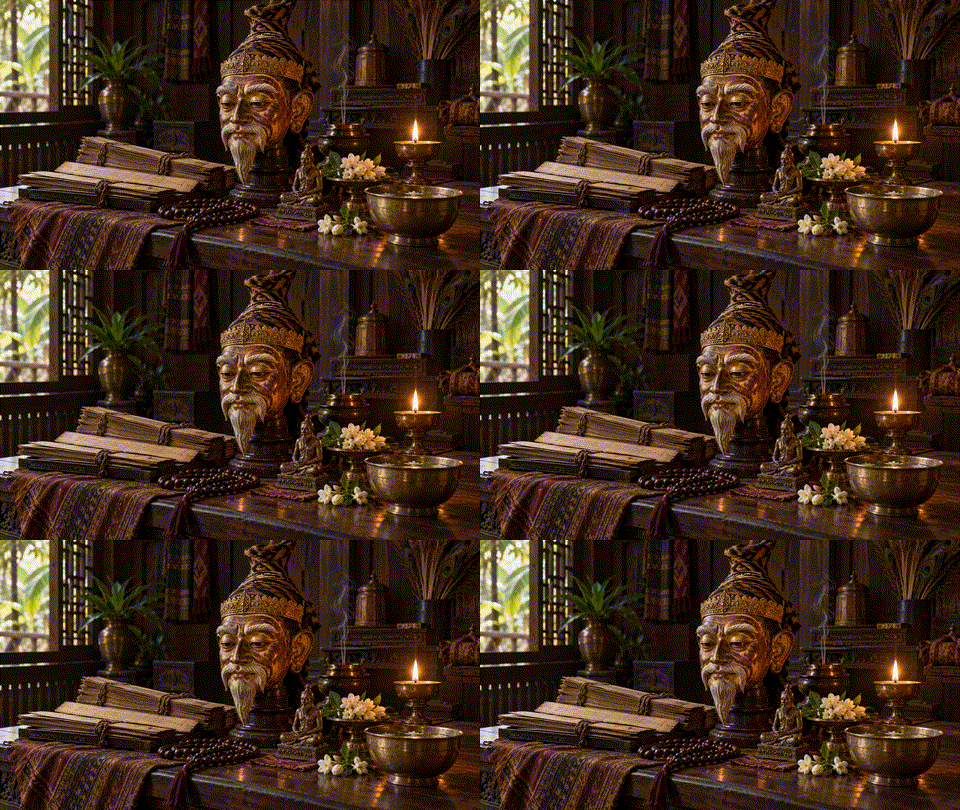
‘The 108 Ruesi’ is common in Thai lineage and charm language, yet 108 often signals fullness, vastness or an innumerable assembly in South and Southeast Asian religious numerology. It does not mean every temple and school possesses one identical list of 108 historical individuals. A lineage may gather teachers of medicine, herbs, astrology, incantation, music, dance, craft, martial practice and forest discipline. Forms may be differentiated by name, face, headdress, colour, posture or attribute. Fire-eyed sages, teachers of the arts, tiger aspects and other animal-faced Ruesi do appear on contemporary altars and products, but names, stories and systems can differ completely. Professional study does not force a list to reach 108; it asks whose register this is, who recorded it, and in which rite or object it operates.
Khrop Khru is more than placing a mysterious head over someone
Chinese introductions often translate khrop khru as a ‘Ruesi empowerment’ that opens wisdom, cleanses an energy field or injects power. The shorthand is easy to grasp but collapses different rites into one. Performing-arts wai khru and khrop khru involve a defined teacher lineage, music, offerings, invitations, masks or heads, and qualifications for the presiding master. Bringing a teacher head over a student's head, or making symbolic contact, recognises entry into a disciplined learning relationship; it is not merely a one-off energy sensation. Contemporary spiritual schools may hold related khrop sian or teacher rites, but procedure and meaning must be read through that school's stated lineage, never promoted as one Thai national standard. The deeper test is not how much power one claims afterwards, but whether one keeps the discipline, honours teachers, practises and refuses to abuse knowledge.
Why ritual practitioners, artists and healers all approach the Ruesi
The Ruesi crosses fields because he represents not one benefit but an order of learning. A ritual practitioner sees the boundary that requires asking the lineage before using knowledge. A performer sees where movement, music and repertoire came from. A traditional healer sees sustained attention to herbs, breath and the body. Students, researchers and creators see that quiet, concentration and inspiration are cultivated through discipline. Popular lineages may associate Ruesi with wisdom, protection, authority, persuasion, safety, artistic inspiration or commercial goodwill. These are languages of aspiration, not a guaranteed feature list attached to every image. Precisely because the Ruesi is not a wealth symbol with only one job, his sacred object can remain meaningful for years, changing as its keeper learns, works and demands more of himself.
What is genuinely compelling about owning a Ruesi sacred object
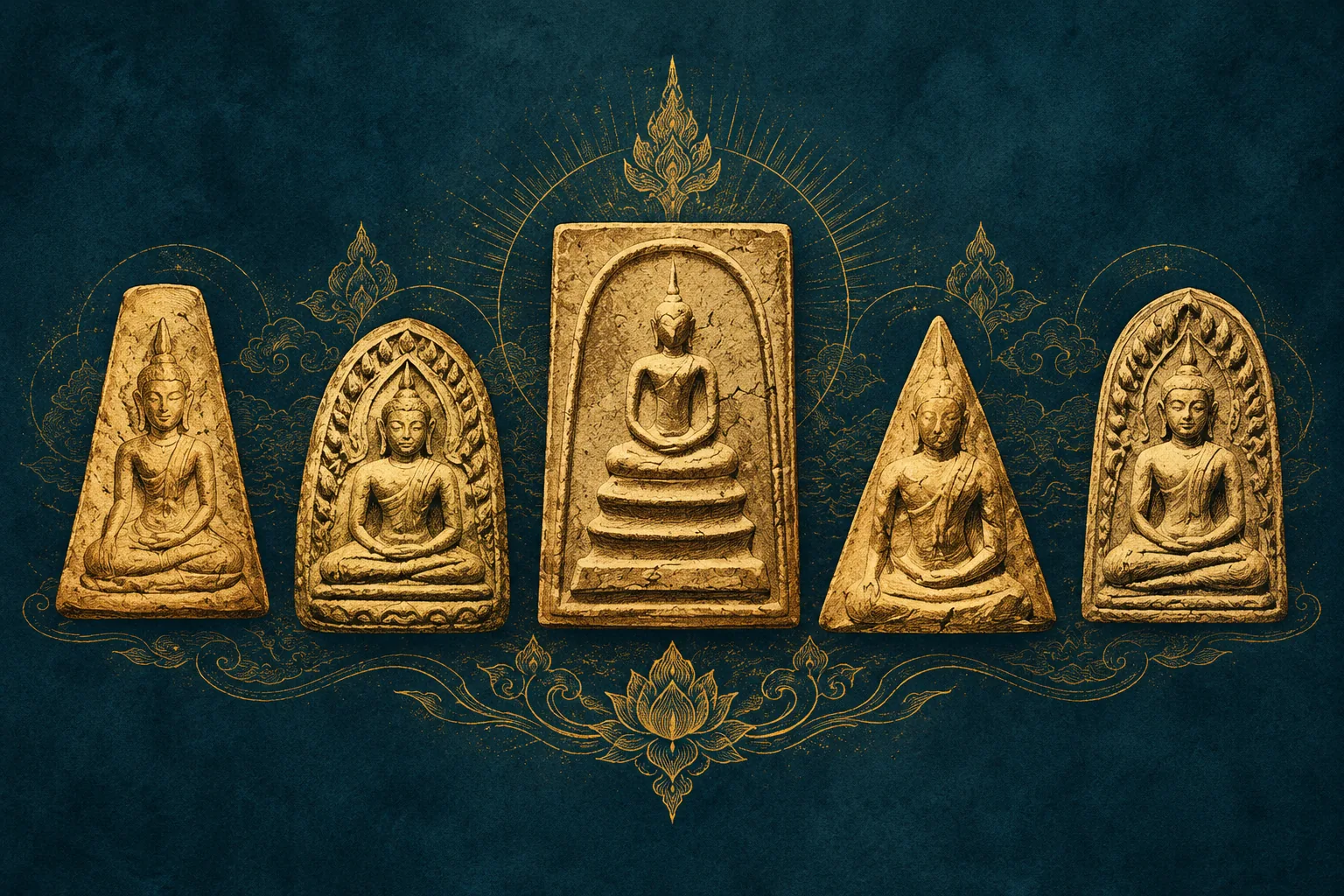
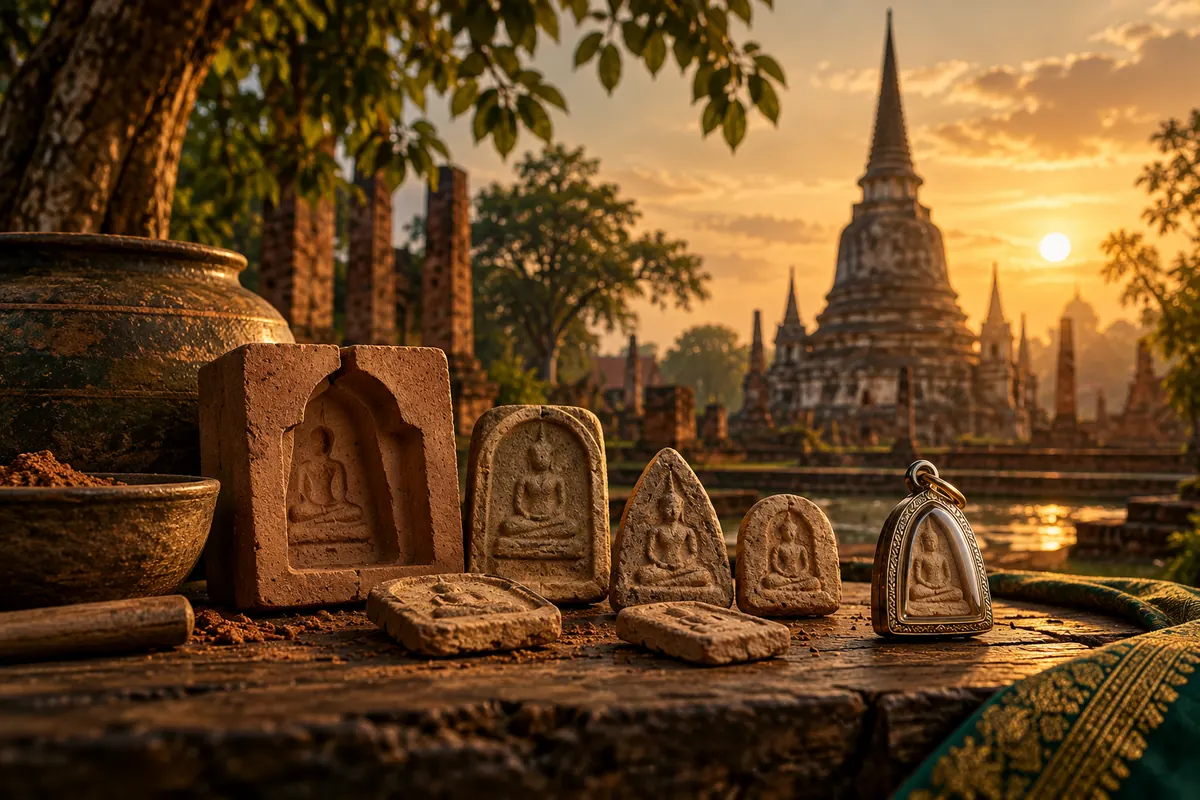
A well-made Ruesi object often carries a gaze unlike that of other charms: miniature wrinkles, lowered eyes, seated body, staff or beads do not project power outward so much as question the keeper. Did you govern your mind today? Did you practise your craft? Did you remember who taught you? For a collector, the interest need not rest on miracle tales. Cast metal, herbal compound, wood, teacher masks, seats and forms show how different makers understood teacher, forest and knowledge. A Ruesi amulet with clear provenance, coherent imagery and a genuine connection to its keeper's path can be a distinctive khrueang rang—or a teacher on the desk who daily recalls composure, learning and gratitude. The best reason to want one is not fear of missing supernatural power, but recognition that some part of oneself still deserves cultivation.
How to choose a Ruesi object that is more than a sales story
- 01Identify the form first: record the Thai name, face, headdress, attributes and posture. Beard or tiger pattern alone cannot name a Ruesi.
- 02Ask about lineage and issuer: a temple, ajarn, arts college and private school have different contexts. ‘108 Ruesi’ is not a substitute for provenance.
- 03Check date, material and same-issue records. Boxes, cards, chants and stories can be added later; seek original notices, ceremony images and comparable examples.
- 04There is no national offering checklist. Follow clear lineage or issuer guidance; a clean place, water, flowers and sincerity often matter more than expensive offerings.
- 05Keep efficacy claims within belief: document wishes for wisdom, protection or inspiration, but never turn them into guarantees of health, safety, investment returns or spirit control.
Wisdom above power is the Ruesi's enduring appeal
The Ruesi remains compelling because he asks not only ‘what do you want to gain?’ but ‘what character will carry it?’ The forest ascetic's appearance, the breadth of 108 forms, the gravity of teacher rites and a palm-sized amulet all return to one principle: power without wisdom magnifies desire, and knowledge that forgets its source soon becomes display. When a Ruesi image makes you sit a little more steadily, learn a little more deeply, thank a teacher and hold your own conduct to a higher standard, it has fulfilled its most valuable role. Perhaps that is why, among so many gods and charms, people still wish to keep a teacher close.