Identification Guides · Sep 2026 (B.E. 2569)
Read the mold before you argue authenticity
The dearest arguments start before the mold is matched. Metal and powder do not share the same weights: metal leans on the mold, powder on the material.
14 min
Read the mold before you argue authenticity
The dearest arguments start before the mold is matched. Metal and powder do not share the same weights: metal leans on the mold, powder on the material.
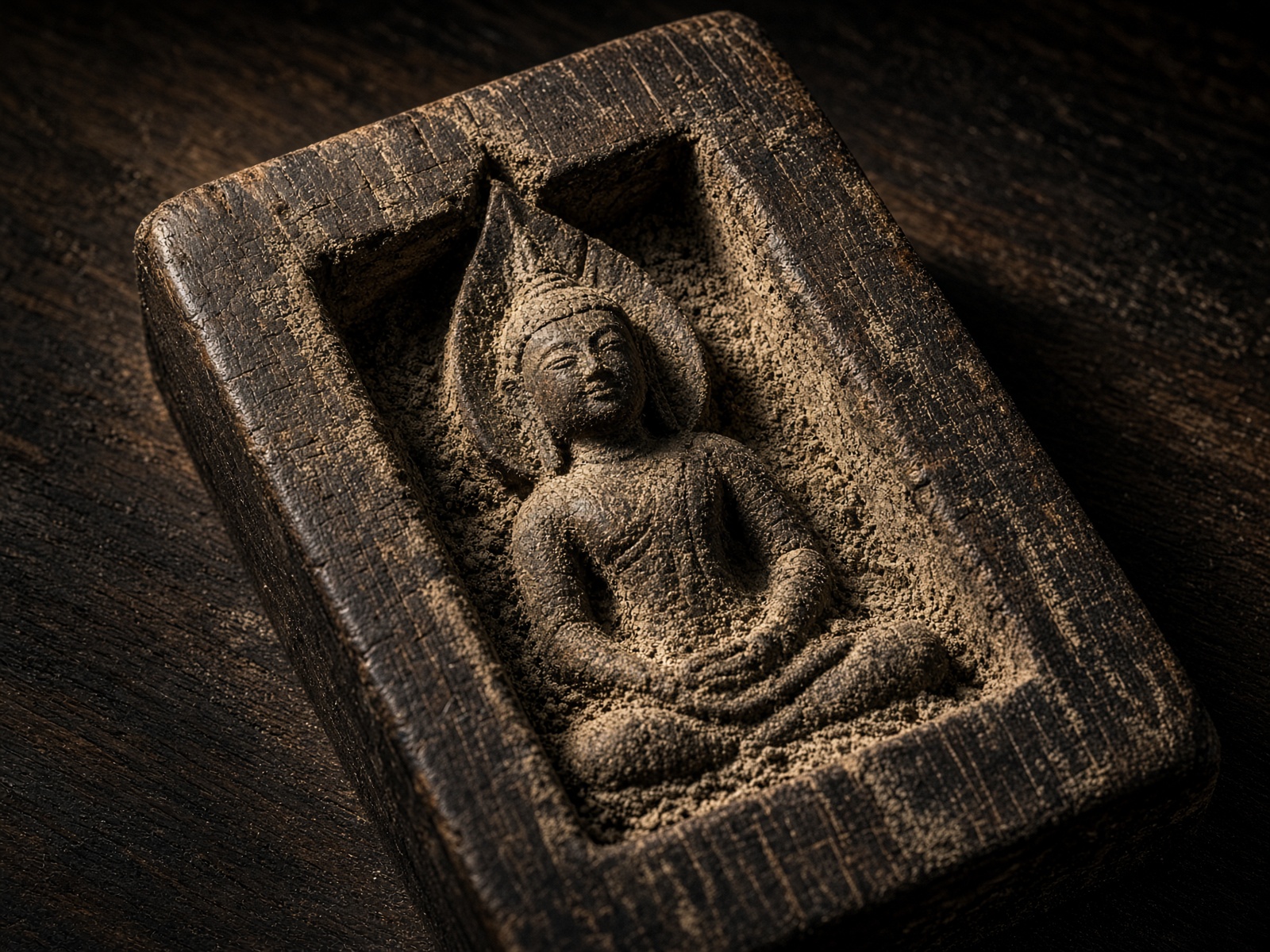
Thai amulets are not branded goods. One master, one temple, one year can still mean several molds — phim. The mold sets the outline, the robe, the face, the base and the reverse. Until the mold is matched, debating skin, meat and smell is mostly wasted motion. Once it is matched, metal and powder need their effort in different places.
Original, later, and recast
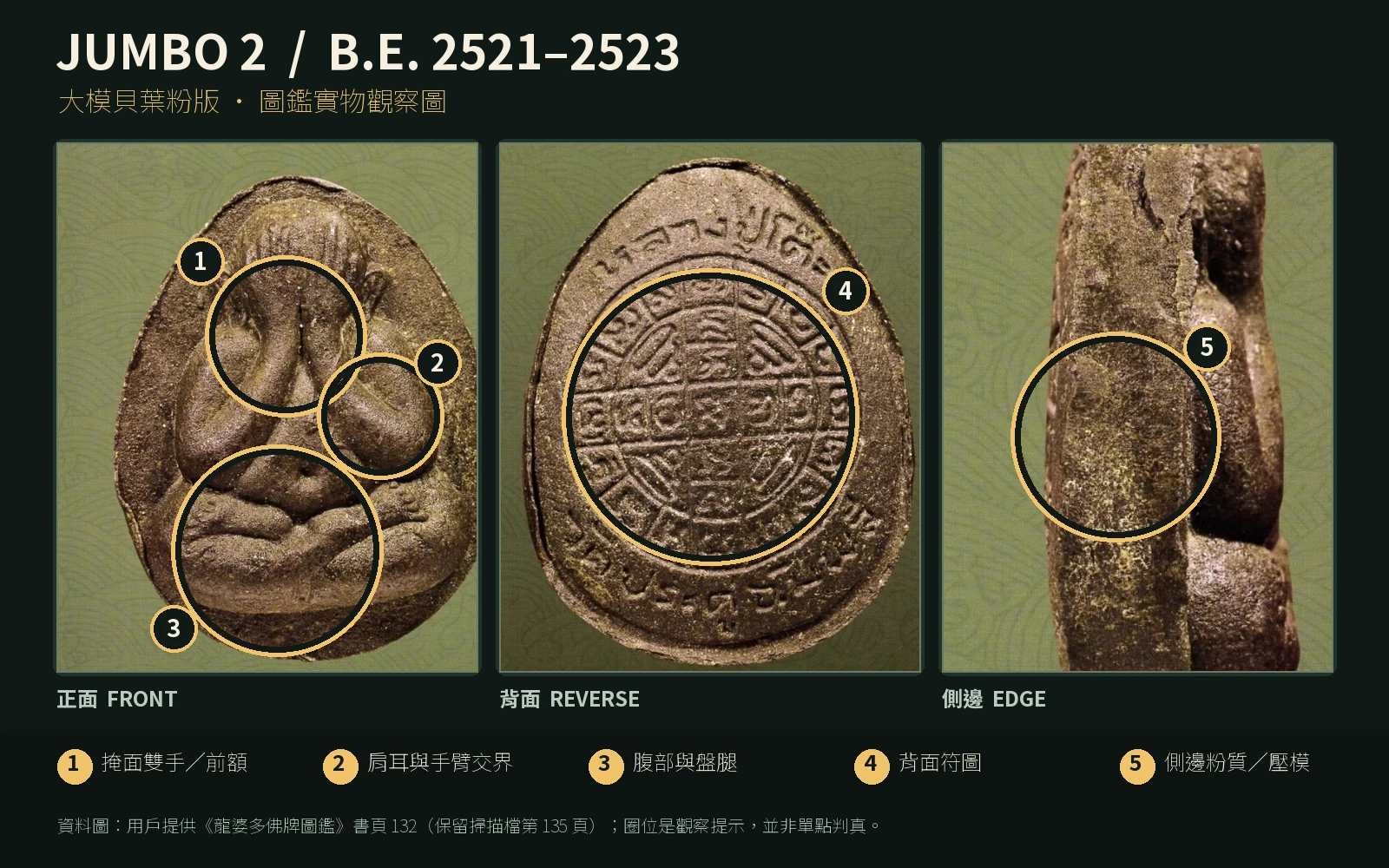
An original mold is the one used in the period of issue. Later molds may be reopened by a temple or a disciple, sometimes recut, sometimes slightly reduced. A recast is taken off a finished piece: lines fatten, detail fills, edges round. In Chinese selling copy, a ‘beautiful mold’ is praise. In Thai, a pretty phim and a correct phim are not the same sentence.
For metal, about seven parts mold and three parts material. For powder the ratio often reverses: three parts mold, seven parts material. Both still need the mold. Only the weight changes.
Why metal and powder do not share one ratio
Take metal. Seven parts are the mold: outline, line, tooth — whether they match the mother of that issue. About three parts are the material: alloy, rust, whether the age fits the period. Fail the mold, and no amount of genuine-looking age will pass the first gate. Recasts, fake age and chemical skin usually break first on the mold.
Powder often runs the other way. A powder tablet is pressed, and the force is not equal from piece to piece. Clarity from the same mold can differ widely; fine points may not print at all. Sharpness, or a missing hairline, is therefore not a verdict. One still has to ask whether the powder is loose or compact, and whether colour and grain under a loupe match the issue. On present experience, powder is about three parts mold and seven parts material.
This does not mean a powder tablet can skip the mold. The mold is still read; it simply carries less weight than it does on metal. Change the ingredients, and colour, feel and the structure under magnification all change. To fake that in bulk is harder than to recast a metal mother. Powder under a loupe is relatively stable, and relatively hard to counterfeit. Hard to fake is not the same as no need to match the mold. If the mold is clearly wrong, exclude first. Only when the mold roughly fits should the effort move to powder and age.
Khreuang rang: not every piece has a mold
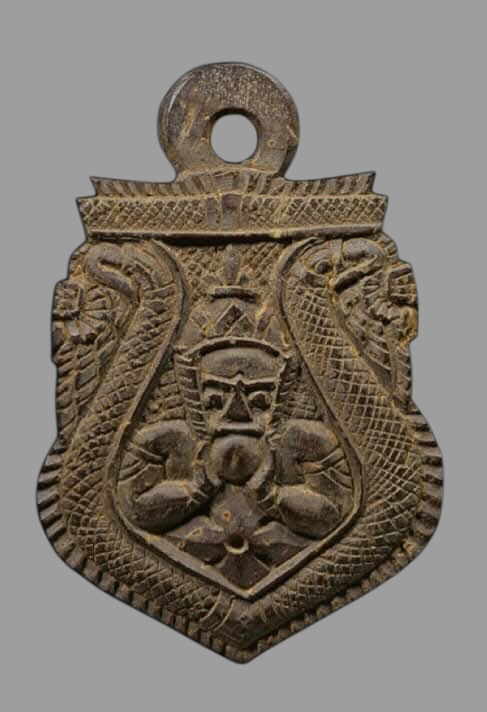
What Chinese collectors call guan lan is Thai khreuang rang: a sacred object that is not in the form of a Buddha. Takrut, yantra cloth, teeth, palad khik, singha and tiger figures, and some hand-worked metal, sit here. They stand beside phra khrueang, the Buddha tablet. The way they are made is often not the same.
Many khreuang rang are made one by one by hand. There is no mother mold, and no batch pressed from one mold. The seven-three split for metal, and the three-seven split for powder, cannot be copied onto them unchanged. Where there is no mold, the effort belongs on the writing of the yantra, the cut, the material, the age, and whether the piece fits known work of that master and issue.
Some khreuang rang are still pressed or cast. If there is a mold, match it. If there is none, do not pretend there is one to match. To apply “read the mold first” to a piece that never had a mold is to take the argument off the road.
If there is a mold, match it first. If there is none, the mold is not lesson one.
Matching a mold needs specimens, not feelings. Reliable specimens come from pieces with a long and clear chain of custody, and from period photographs from the temple. Web images are a starting point, never a close: lens, retouching and glare all rewrite line.