Origins & Belief · Oct 2026 (B.E. 2569)
From Pran Boon to Nora Rong Khru: Hunters, Comic Masks, Ancestral Masters and Wat Yang Yai
Ta Pran Boon, Ta Pran Chan, Mae Tha Si and Chom Thao Na Thong may appear on stage, in teacher worship, in ancestral memory or in vow fulfilment. The first task is not to call every name a deity, but to distinguish story character, stage role, mask, lineage master and contemporary devotional image.
22 min
From Pran Boon to Nora Rong Khru: Hunters, Comic Masks, Ancestral Masters and Wat Yang Yai
Ta Pran Boon, Ta Pran Chan, Mae Tha Si and Chom Thao Na Thong may appear on stage, in teacher worship, in ancestral memory or in vow fulfilment. The first task is not to call every name a deity, but to distinguish story character, stage role, mask, lineage master and contemporary devotional image.
In the Nora world of Southern Thailand, one mask does not necessarily carry one identity. In a story it may be a hunter; on stage, a comic and announcer; in invocations and teacher rites, a sign of the masters; outside the theatre, a devotional image at a temple or shrine. Asking only ‘which god is this?’ easily produces the wrong answer. Better questions are: in which story, performance, lineage and local community does this name appear?
First separate three terms: Nora, rong Nora and Nora rong khru
Nora, also written Manora or Manohra, is a Southern Thai tradition combining dance, improvised singing, narrative and ensemble music. Rong Nora literally means a Nora shelter or stage: the space used for performance or ritual. Traditional structures are generally open-sided and close to the ground, with posts, a roof, mats and a place for offerings, though details vary by locality and lineage. Nora rong khru is not a building but a teacher-honouring rite. It invites deceased masters and family ancestors, repays obligations, fulfils vows and, in some lineages, initiates or crowns new performers. Rong Nora is the place; Nora rong khru is the rite. They are related, not interchangeable.
Where Manohra comes from: history, origin legend and literature are not one line
UNESCO inscribed Nora in 2021 and describes it as a Southern Thai dance-drama and improvised-singing tradition practised for more than five centuries. Yet communities do not share one identical account of a ‘first performance’. Common lineage legends tell of Nang Nuan Thong Samli learning dance in a dream, her son Thep Singkhon or Khun Si Sattha transmitting it, and Phraya Sai Fa Fat bestowing regalia and rank. Localities, families and masters preserve different details. The Phra Suthon–Manohra tale, meanwhile, supplies important characters and repertoire, but it cannot be reduced to ‘a hunter caught Manohra, therefore Nora began’. Origin legend explains lineage identity, literature supplies narrative, and history traces social transmission. They should be read together, not substituted for one another.
Ta Pran Boon: literary hunter, stage comic and ritual master
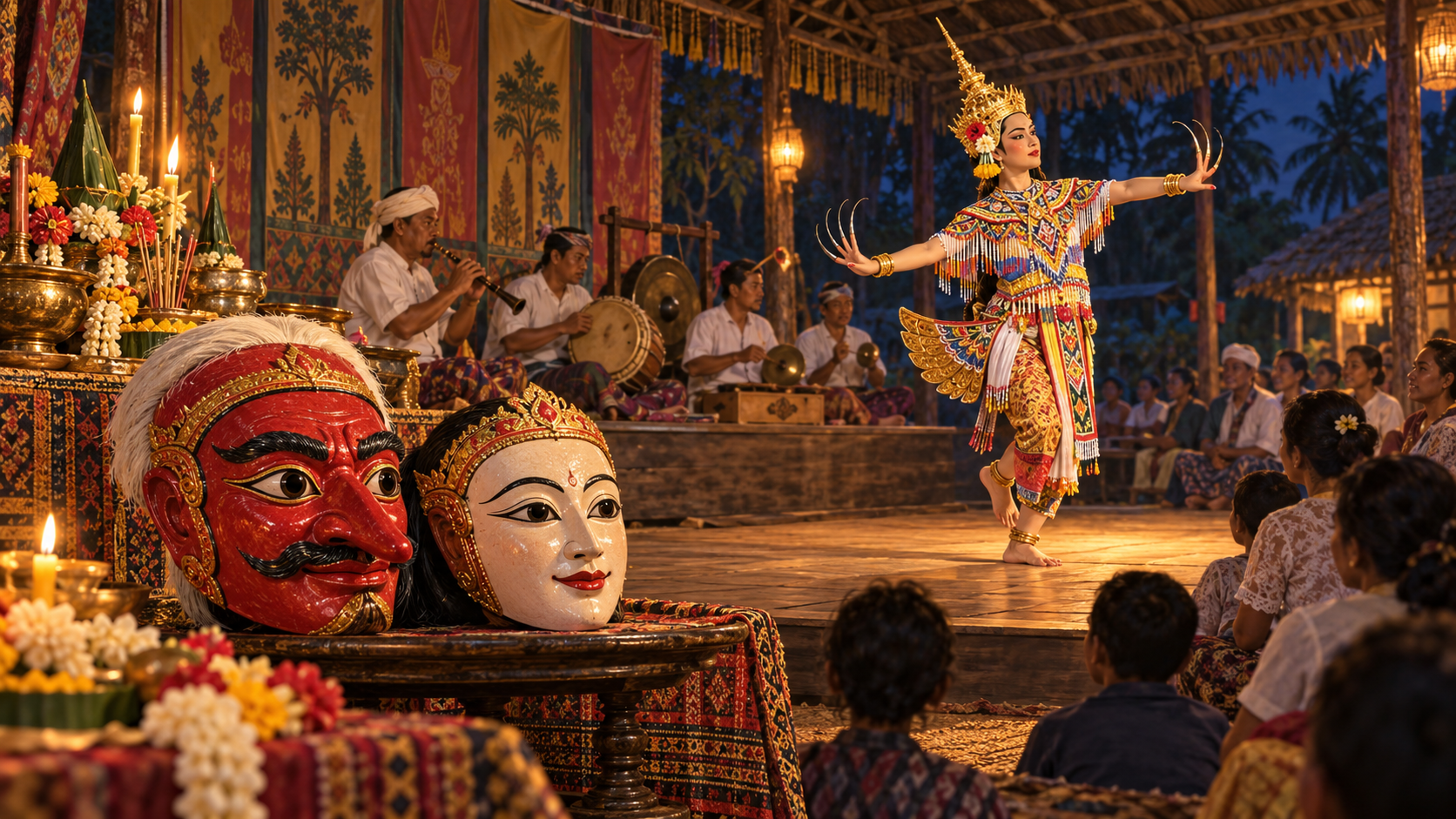
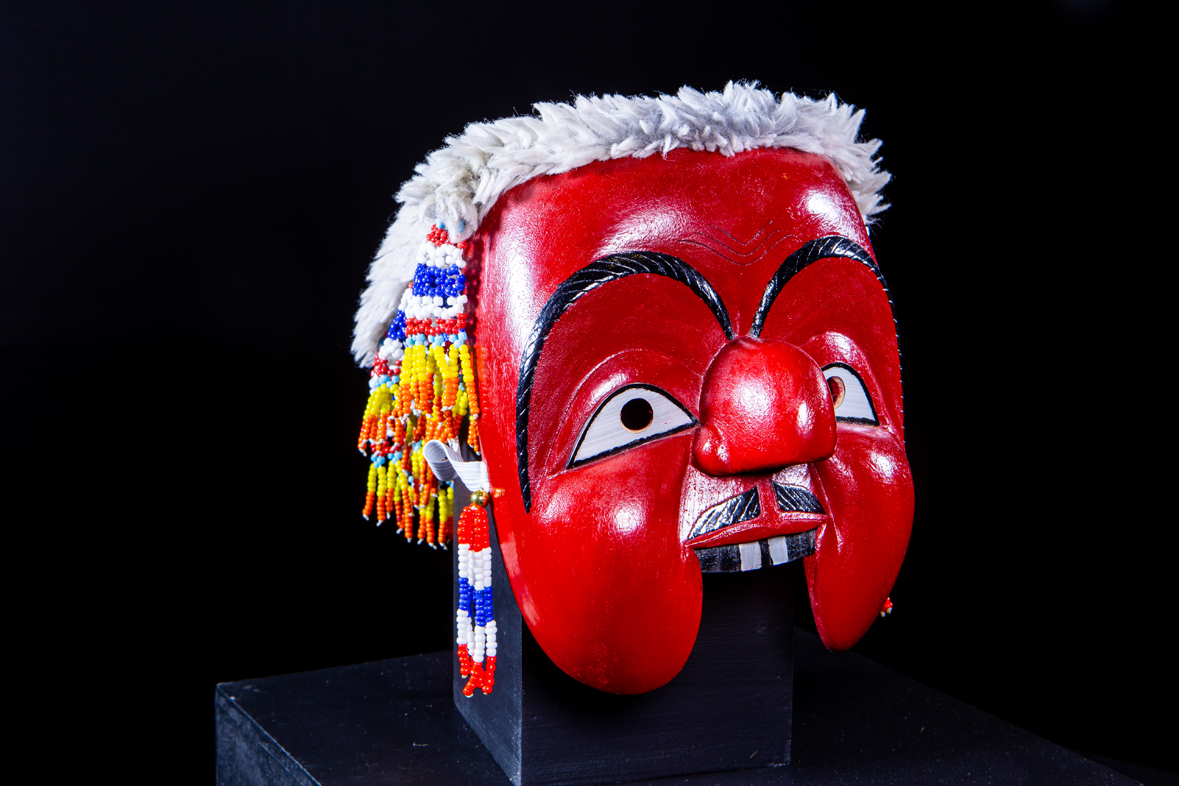
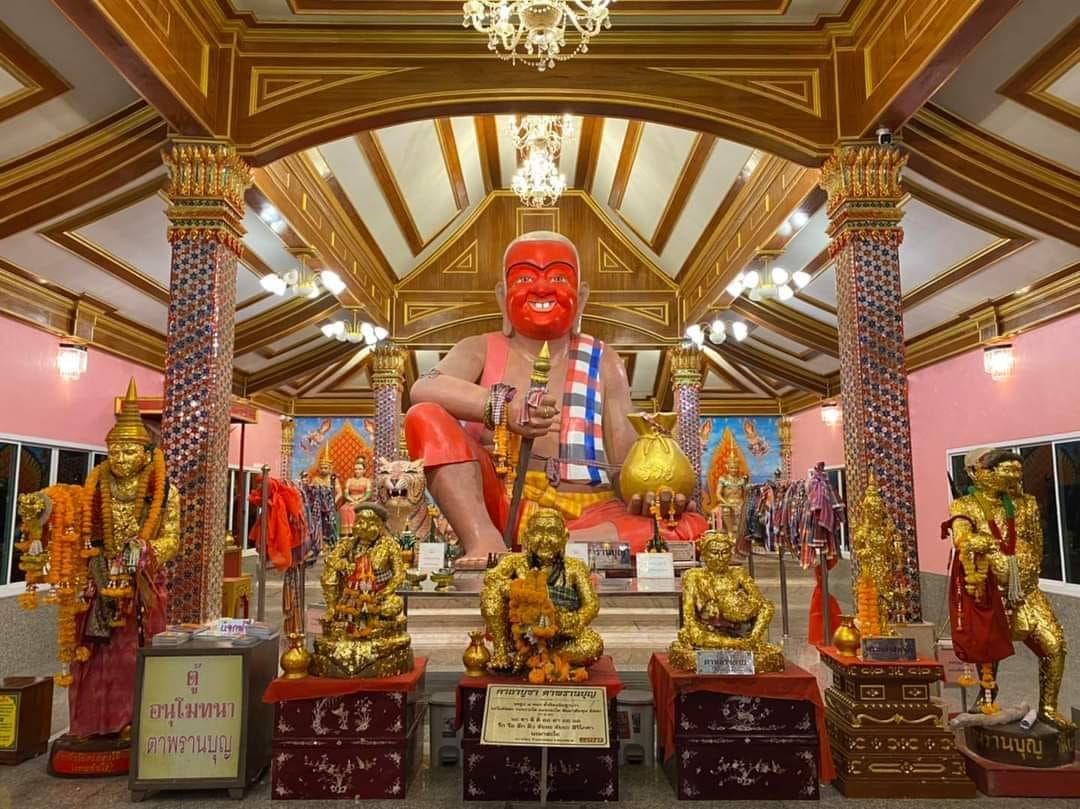
Pran Boon is easier to explain because evidence is strong on three levels. In southern versions of Phra Suthon–Manohra, he captures the youngest kinnari, Manohra, with a naga lasso and brings her before Phra Suthon, turning the story. On a Nora stage, the pran becomes a major performance function: a red half-mask leaves the lower jaw free for speech and song, while jokes, improvisation and audience contact energise the event. The hunter can announce what will be played next. In the rong khru setting, Pran Boon is also named among important khru mo Nora, or ancestral masters; masks may receive candles, offerings and respect. Wat Yang Yai has made him a prominent modern local devotional and cultural emblem. That does not make him a monk or abbot, nor does it prove that the whole Nora tradition began at this temple.
Mae Tha Si: first a female comic role and pale mask, not a biography to invent
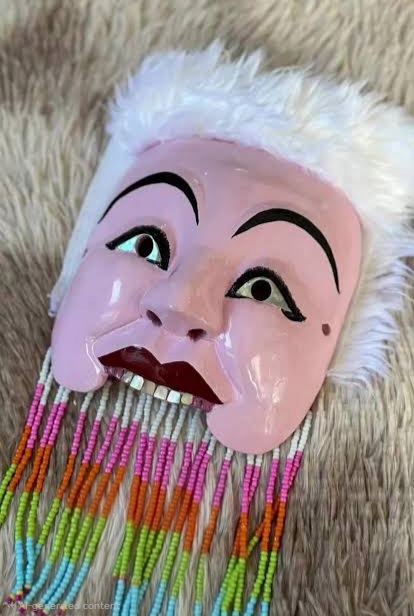
In stronger performance documentation, thasi is first a female comic role and mask type. The na thasi presents a female face, normally white or flesh-toned, without the white hair of the red male hunter mask. It allows a performer of either sex to enter an exaggerated, witty and recognisably everyday female character. Hunter and thasi masks can also appear together among the objects honoured during rong khru, so they are not merely comic props. Recent devotional and amulet markets often personify the role as Mae Tha Si and attach claims about attraction, relationships or protection. Those claims can be documented as contemporary development, but should not be projected backwards as the fixed biography of an ancient woman without evidence.
Chom Thao Na Thong and Ta Pran Chan: lineage names do not always carry biographies
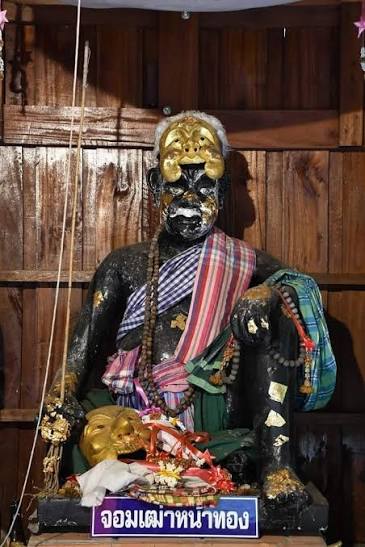
Chom Thao Na Thong, approximately ‘the venerable golden-faced elder’, is genuinely named in teacher invocations, Nora master lists and some studies of possession and teacher rites. The sound classification is khru mo Nora or ta-yai Nora: a named deceased master or ancestor. He does not belong to the same canonical set of twelve in every lineage, and no single secular biography is accepted everywhere. Reliable public evidence for Ta Pran Chan is markedly thinner. Unlike Pran Boon, the name cannot presently be triangulated across major literature, performance manuals and official cultural documentation. It is safest to treat it as a name in some local oral, devotional or lineage settings, without turning a claimed mask colour, story, power or ritual function into a rule for all Southern Thailand. When encountering an object, altar or rite, ask which master, troupe and locality it belongs to. An evidential gap is itself a research result; legend need not fill it.
Wat Yang Yai: a major modern devotional node, not Nora's sole birthplace
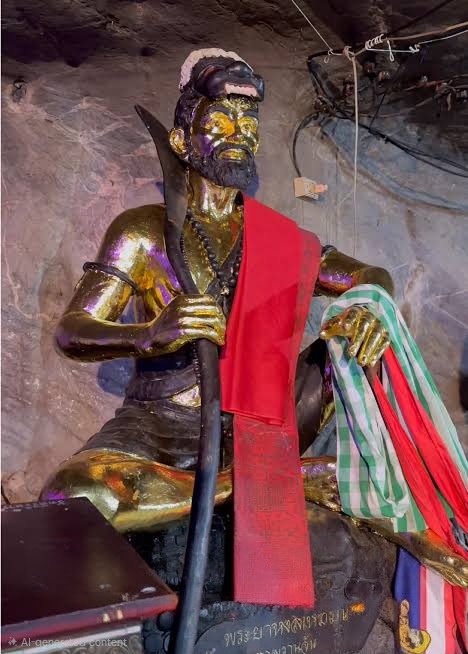
Wat Yang Yai stands in the Tha Sala area of Nakhon Si Thammarat; local documentation gives Wat Khongkha Lom as an earlier name. Today it is known for pink architecture, Nora-crown motifs, a Pran Boon devotional area and related festivals. It has also hosted a Southern shadow-puppet competition associated with a Pran Boon event. Local narrative connects the pink colour with Thao Chomphuchit, whom the hunter once rescued. Together these features show how a modern temple can gather Buddhist space, local story, performance culture and popular vows into one destination. Online dates for foundation, discovery of the temple image and early history conflict; a legal institutional history still requires temple archives and Buddhist authority records. It is reasonable to call Wat Yang Yai an important contemporary centre of Pran Boon devotion. It exceeds the evidence to make it the origin of every hunter, Mae Tha Si, Chom Thao Na Thong or Nora as a whole.
Why is Nora performed: entertainment, narrative, community rite or vow fulfilment?
- 01Public entertainment, or Nora doen rong: temple fairs, festivals, celebrations and hired shows present dance skill, singing, improvised verse, comedy and story. The hunter is especially important in closing the distance between stage and audience.
- 02Teacher rite, or Nora rong khru: ancestral masters are invited and honoured, lineage bonds are renewed, and rites such as khrop thoet or receiving disciples may be performed according to lineage. A full form can run for several days; a smaller form is shorter.
- 03Vow fulfilment and family obligation: a household may have promised the masters a performance if a request were granted, while descendants of a Nora lineage may hold the rite on an agreed cycle. This is not simply a ticketed show but the discharge of a social and religious obligation.
- 04Hybrid occasions: temple festivals, cultural tourism and community events may combine blessing, education, tourism, performance and fundraising. Read the offering table, teacher invocation, host family, timetable and local rules rather than costume alone.
Six clues for reading the event
- 01Ask the event name first: Nora doen rong, Nora rong khru, vow fulfilment, or cultural showcase?
- 02Look for offerings, the master's crown, hunter and thasi masks, and whether candles and acts of respect are directed to them.
- 03Listen for a teacher invocation naming ancestral masters, not merely an instrumental overture.
- 04Identify the host: a public organiser, a temple, or a family with Nora ancestry or a vow to discharge.
- 05Watch when the hunter appears. Jokes, announcement and audience exchange indicate stage function; a mask receiving offerings and invocation enters ritual function. Both may occur sequentially at one event.
- 06Without permission, do not step across offerings, touch a mask or master's crown, or assume every part may be filmed close up.
The most useful thing to take from Nora is not a quick-reference list of gods, but the habit of reading context. The same hunter may make an audience laugh and later receive solemn respect in a teacher rite. The same thasi mask may carry comedy and lineage memory. Respecting those transitions reveals Nora not simply as beautiful movement, but as a living tradition weaving literature, music, family, apprenticeship, local belief and public entertainment together.