Origins & Belief · Oct 2026 (B.E. 2569)
Phra Narai: Vishnu
A deity of preservation and order, and an important doorway into the Ramakien and Thai royal art.
16 min
Phra Narai: Vishnu
A deity of preservation and order, and an important doorway into the Ramakien and Thai royal art.
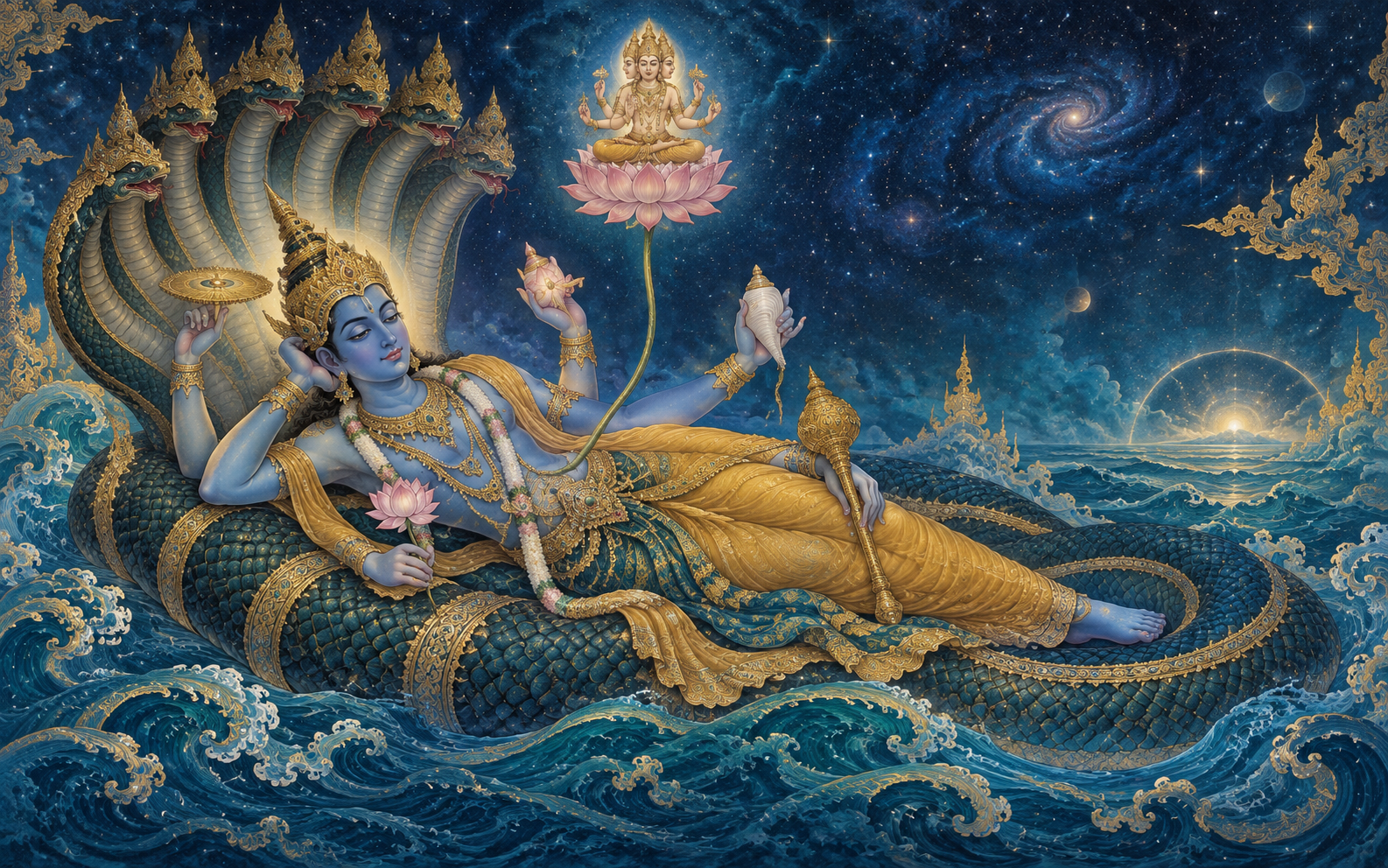
Vishnu, Phra Narai in Thai, is linked with preserving cosmic order and is often identified by four arms, conch, discus, mace and lotus. Rama is often understood as his incarnation, though regional tellings differ.
Myth, imagery and how to read it
Four usual attributes offer a first reading of Phra Narai: the conch (śaṅkha), discus (cakra), mace (gadā), and lotus (padma). They are an iconographic language, not a code that converts directly into amulet benefits. Vishnu traditions developed many avatar narratives; Rama is crucial, yet in Thailand the Ramakien reshapes Indic epic material through court literature, theatre and visual art. When studying an image, ask separately whether it cites the classical four-armed form, narrates a Rama episode, or is a modern temple or commercial sacred-object design.
Phra Narai, Vishnu and Rama: three levels of reading
Phra Narai is the Thai name for Vishnu. Rama is the royal hero of the epic and, in many Vaishnava traditions, one of Vishnu’s incarnations. This helps readers approach the Rāmāyaṇa and Ramakien, but a four-armed Narai image is not simply Rama, nor is every Thai Rama story a repetition of an Indian version. Separate deity, incarnation and literary character before merging divine images, theatre masks and object names.
Four arms and the cosmic ocean: two visual languages
Standing images often identify Narai through conch, discus, mace and lotus, or local variants; no single work must display all four. A second major image is the reclining Vishnu on the cosmic ocean: Narai rests on the serpent Ananta while Brahmā appears from a lotus. It joins unmanifest cosmos, creation and restored order. The tortoise incarnation supporting the pivot in the churning-of-the-ocean also belongs to this wider narrative field. These themes are woven across texts, images and places, not a fixed doctrine told by one picture.
In Thailand: ancient art, royal language and the Ramakien
Thai monuments and collections show Narai standing, riding Garuda or reclining on the great serpent, evidence of long Southeast Asian translations of Indic imagery. The Ramakien, meanwhile, turns the Rama story into a central framework for Thai literature, dance drama and visual culture. The two are related but not interchangeable: an ancient image requires date, material, findspot and conservation record, while a Ramakien episode belongs in literary and performance context. Modern market claims about ‘royal power’ or ‘protection’ are associations, not provenance.
A place in Thai culture
Phra Narai is prominent in Thai art, royal symbolism and the Ramakien. Related objects are often read through protection, order or leadership, but one should first distinguish classical imagery, a temple issue and later commercial production.
Texts, places and versions: no one story is the whole tradition
These deities do not belong to one fixed book, period or country. Vedic material, epics, Purāṇas, temple ritual, local oral tradition, royal literature and modern devotion can give the same name different identities, relations, attributes and narrative emphases. A better method is to ask first, ‘Which tradition is this passage from?’ and then, ‘How was it adapted or used in Thailand?’ When a source is unclear, say ‘in some traditions’, ‘in some versions’ or ‘in popular usage’ rather than pretend there is one answer.
Image, devotion and sacred object: three different things
A museum sculpture, a temple image, a theatrical or mural character, a commemorative object issued for a temple rite and a market pendant may all cite the same deity, but they cannot substitute for one another as evidence. Iconography helps identify mythic language; devotion shows how a community creates a relationship; the date, material, mold and issue history of a particular object still require separate checking. Keeping the three apart neither diminishes belief nor permits the mistake of inferring age, authenticity or efficacy from a divine name.
A note for readers and collectors
The same name can appear in Indian traditions, Thai court culture, temples, theatre and commercial sacred objects. Images, names and stories vary by period and place. When reading an object, check its temple, date, purpose and public sources before inferring background or benefits from the name alone.