Origins & Belief · Oct 2026 (B.E. 2569)
Phra Lakshmi: Lakshmi
A goddess linked with abundance, beauty, auspiciousness and Vishnu traditions.
16 min
Phra Lakshmi: Lakshmi
A goddess linked with abundance, beauty, auspiciousness and Vishnu traditions.
Lakshmi is linked in Hindu traditions with auspiciousness, abundance and prosperity, and is often described as Vishnu’s consort. The churning of the ocean is one widely told origin narrative.
Myth, imagery and how to read it
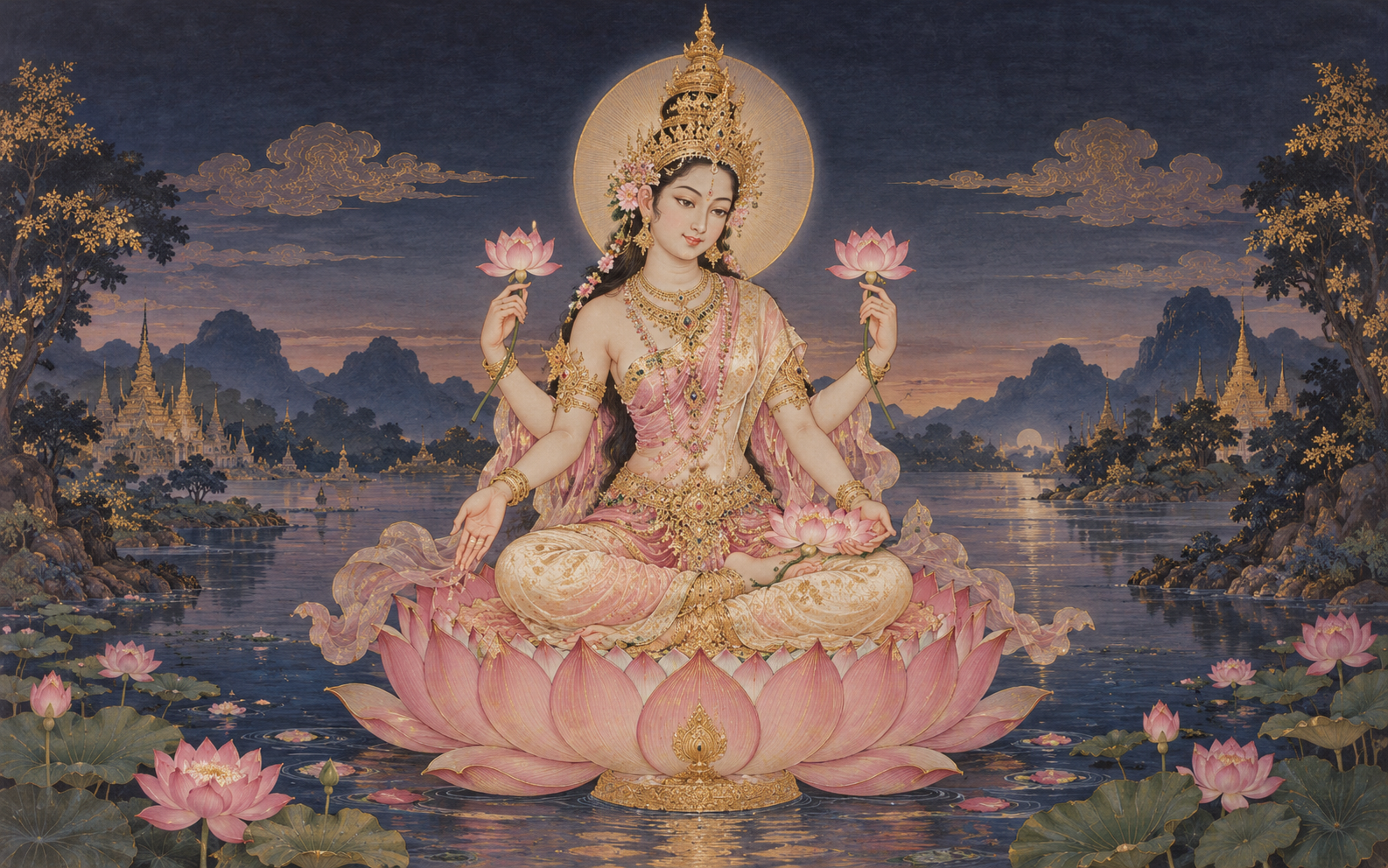
In the churning-of-the-ocean narrative, gods and asuras churn the cosmic ocean and Lakshmi emerges in many versions; the story joins abundance to order and cosmic renewal. Lotuses, paired elephants, water, a giving hand and golden radiance are common but regionally variable features. ‘Wealth’ captures only part of her meaning: śrī also covers wellbeing, virtue, fertility, relationships and fitting prosperity. A Thai sacred object should therefore be read by distinguishing inherited iconography, modern urban devotion and branded language about money.
Auspiciousness is larger than ‘getting rich’
Lakshmi’s name is closely tied to śrī: auspiciousness, radiance and flourishing. It can encompass food, health, beauty, harmonious relations, communal stability and fitting wealth—not merely cash or a successful deal. Calling her a ‘money goddess’ may be convenient in modern publicity, but narrows a wider ethical and lived meaning. A devotee may take her as a reminder of abundance and gratitude; a collector should not turn that symbolism into a promise that an object must produce income.
The churning ocean: not an isolated birth scene
In the widely told churning-of-the-ocean narrative, gods and asuras use the serpent Vasuki as a rope and Mount Mandara as a pivot to obtain the nectar of immortality; in some versions Vishnu as a tortoise supports the mountain. Lakshmi emerges from the ocean and becomes linked with Vishnu. The same narrative field also contains poison, nectar, Rahu and many other figures. It is therefore not a one-line tale in which emerging from water simply equals becoming rich, but a complex account of cooperation and conflict, danger and order, renewal and choice. Sequences and details vary by version.
Lotus, paired elephants and goddess imagery in Thailand
Lakshmi is often seated or standing on a lotus. In the Gaja-Lakshmi form, paired elephants bathe her, gathering visual languages of rain, nourishment, sovereignty and flourishing. Such signs travelled long across South and Southeast Asia and can sit beside Thai understandings of the rice goddess, Nang Kwak or commercial prayer. They can converse, but they are not one goddess: Lakshmi, Mae Phosop and Nang Kwak have distinct sources, images and devotional settings. Lotus, gold or coins are never enough to skip that distinction.
A place in Thai culture
In Thailand, Lakshmi is often associated with work, prosperity and graceful imagery. This is modern devotional language, not a promise of financial results from owning an object.
Texts, places and versions: no one story is the whole tradition
These deities do not belong to one fixed book, period or country. Vedic material, epics, Purāṇas, temple ritual, local oral tradition, royal literature and modern devotion can give the same name different identities, relations, attributes and narrative emphases. A better method is to ask first, ‘Which tradition is this passage from?’ and then, ‘How was it adapted or used in Thailand?’ When a source is unclear, say ‘in some traditions’, ‘in some versions’ or ‘in popular usage’ rather than pretend there is one answer.
Image, devotion and sacred object: three different things
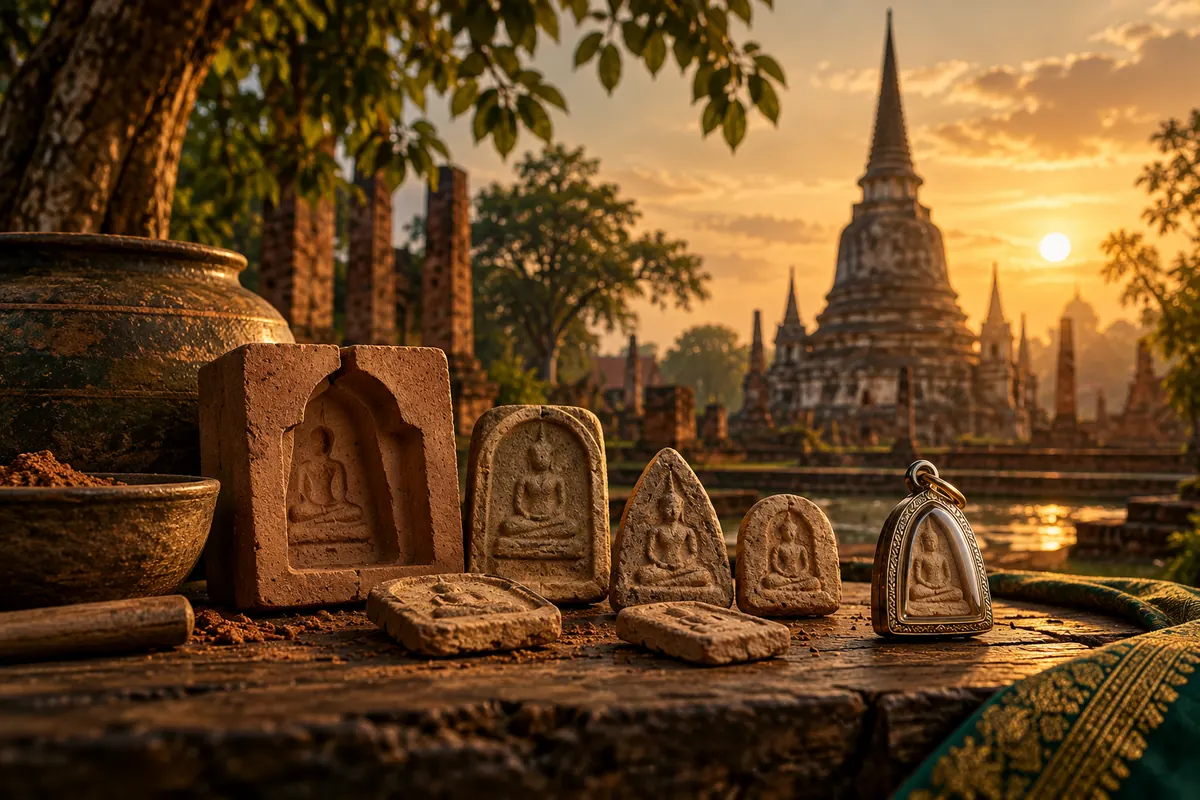
A museum sculpture, a temple image, a theatrical or mural character, a commemorative object issued for a temple rite and a market pendant may all cite the same deity, but they cannot substitute for one another as evidence. Iconography helps identify mythic language; devotion shows how a community creates a relationship; the date, material, mold and issue history of a particular object still require separate checking. Keeping the three apart neither diminishes belief nor permits the mistake of inferring age, authenticity or efficacy from a divine name.
A note for readers and collectors
The same name can appear in Indian traditions, Thai court culture, temples, theatre and commercial sacred objects. Images, names and stories vary by period and place. When reading an object, check its temple, date, purpose and public sources before inferring background or benefits from the name alone.