Origins & Belief · Oct 2026 (B.E. 2569)
Phra Chaiwat: more than a small Phra Kring—a portable image of victory
Chaiwat carries the sense of victory and increase. Royal campaign and coronation traditions later intersected with temple castings paired with Phra Kring.
14 min
Phra Chaiwat: more than a small Phra Kring—a portable image of victory
Chaiwat carries the sense of victory and increase. Royal campaign and coronation traditions later intersected with temple castings paired with Phra Kring.
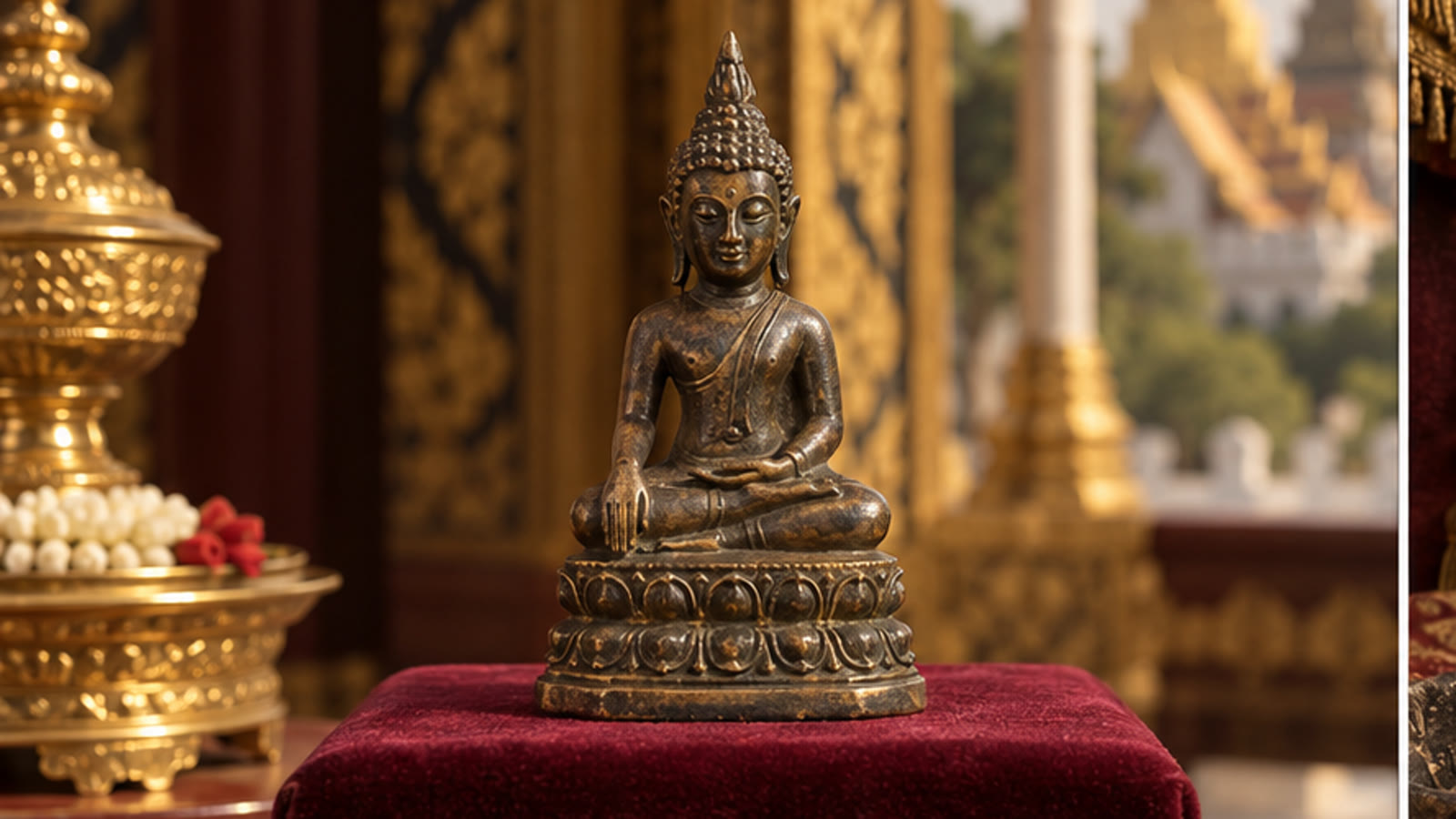
Phra Chaiwat is commonly encountered as a small metal seated Buddha issued beside a Phra Kring, which is why it is often called a miniature Kring. Its name, however, belongs to the phra chai or victory-image tradition, while chaiwat evokes victory and flourishing. That history gives it an identity beyond size.
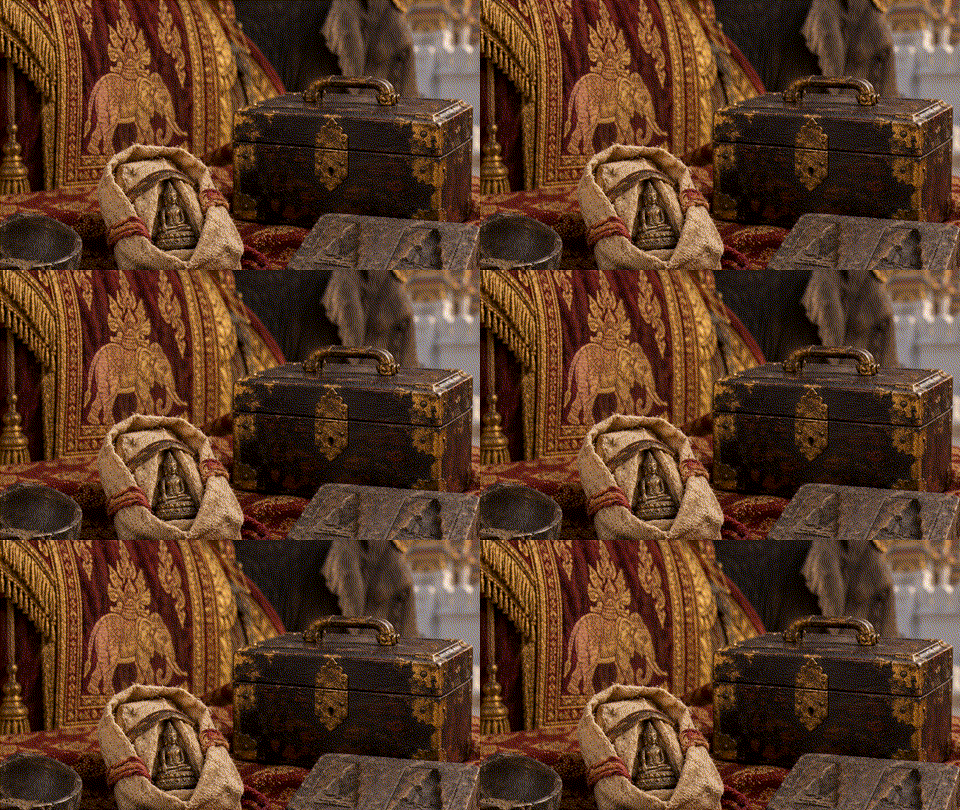
Beginning with Phra Chai Lang Chang
Thai royal tradition included Phra Chai Lang Chang, victory images carried on elephant-back during campaigns. Rama I later installed an important Phra Chai before the Emerald Buddha and commissioned a new Phra Buddha Patima Chaiwat for palace devotion. The creation of a reign’s Chaiwat after coronation became a Chakri custom. Its roots concern kingship, protection, victory and legitimacy—not a collector’s accessory.
Royal images and today’s small amulets
A royal Chaiwat is not automatically the same category as every small image worn today. Later temple casting joined the name and victory symbolism to portable size and often issued Chaiwat beside Phra Kring from the same sacred metals and ceremony. The histories meet, but should remain analytically distinct: state and palace image on one side, wearable temple issue on the other.
The form is not eternally fixed
Official descriptions of the royal image note a small metal Buddha in the earth-touching posture, sometimes with a fan handle in the left hand, suitable for movement. Temple editions vary in face, crown, posture, base and cavity according to lineage. Calling every tiny cast Buddha Chaiwat confuses it with small Phra Kring, other Phra Chai, Phra Yot Thong and ordinary cast images. Both records and iconography must support the name.
How to study it beside Phra Kring
When the two form a set, first compare box, certificate, number, alloy colour and casting traces, then match each to its own mould. Small size does not excuse crude study: face, fingers, knee lines, base and closure are precisely where recasts often lose definition first. A Chaiwat circulating alone also raises the question whether it was separated from a set or independently issued.
Wearing it today: victory is more than defeating others
Devotees associate Chaiwat with career breakthroughs, competition, safe movement, overcoming difficulty and stable standing. Returning to a name that joins victory with flourishing, its most useful reminder is to defeat panic, inertia and poor judgment before measuring victory over others. For students of Thai casting, a well-documented Kring–Chaiwat pair also holds two complementary symbolic languages: healing and victory.