Origins & Belief · Sep 2026 (B.E. 2569)
Why Thai people wear amulets
For readers who have never held one: where Thai amulets come from, why they hang at the chest, and where talk of their power begins.
18 min
Why Thai people wear amulets
For readers who have never held one: where Thai amulets come from, why they hang at the chest, and where talk of their power begins.
Many people first meet a Thai amulet in a gold case, on a chain, under glass. It looks like jewellery, and is often sold as jewellery. In Thai the more exact word is phra khrueang: a sacred image made to be carried. It is not a kind of ornament. It is a temple Buddha reduced to the scale of the body.
Chinese calls them fo pai, “Buddha plaques.” The phrase is handy, and misleading. It makes a tablet sound like a stamped badge. Thai also uses watthumongkhon for any object held to carry auspicious power: powder tablets, cast metal, takrut, monk images, holy water, yantra powder. The amulet is only the most visible, and the most collected, of that family.
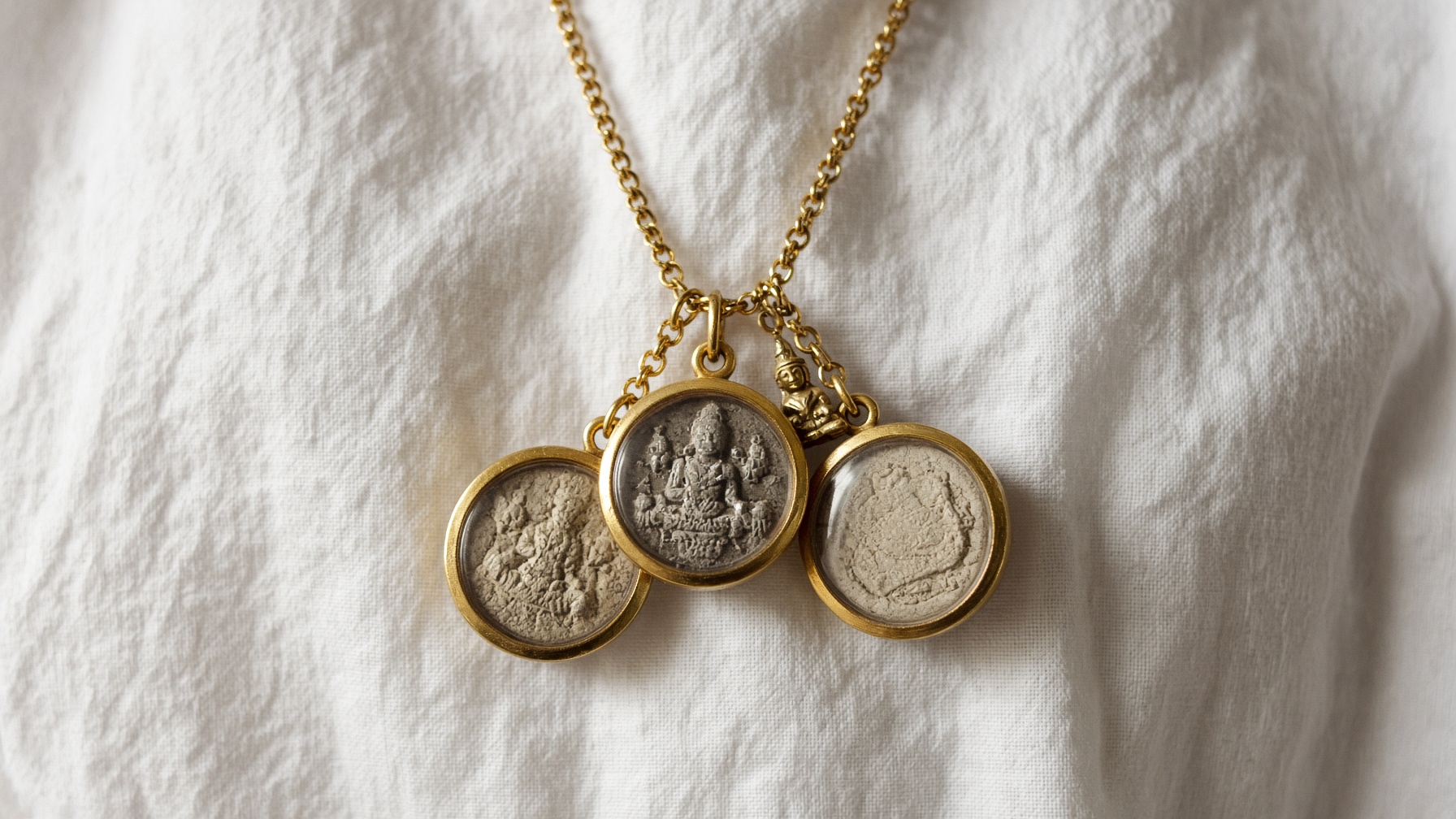
From the temple image to something that can be worn
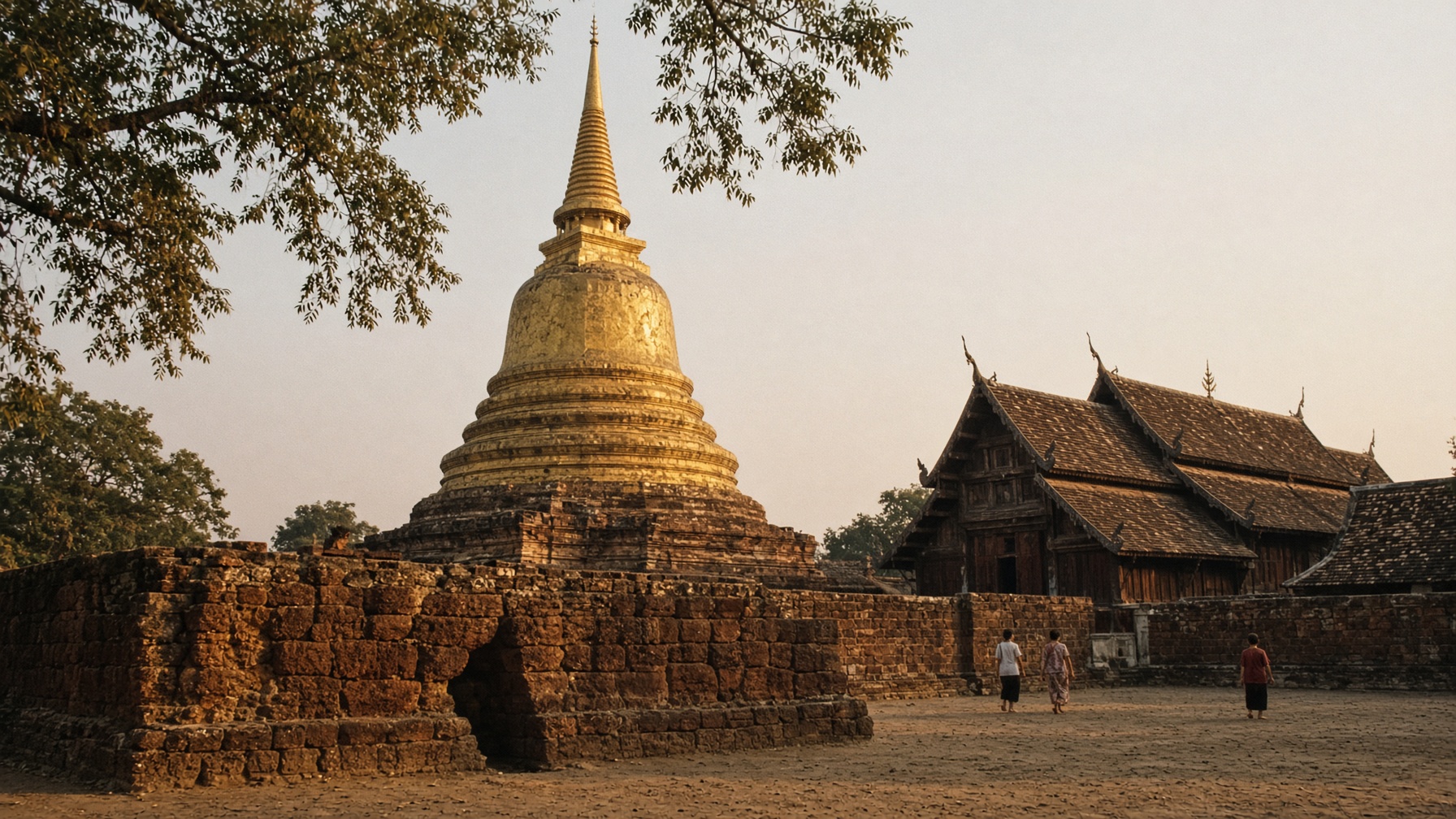
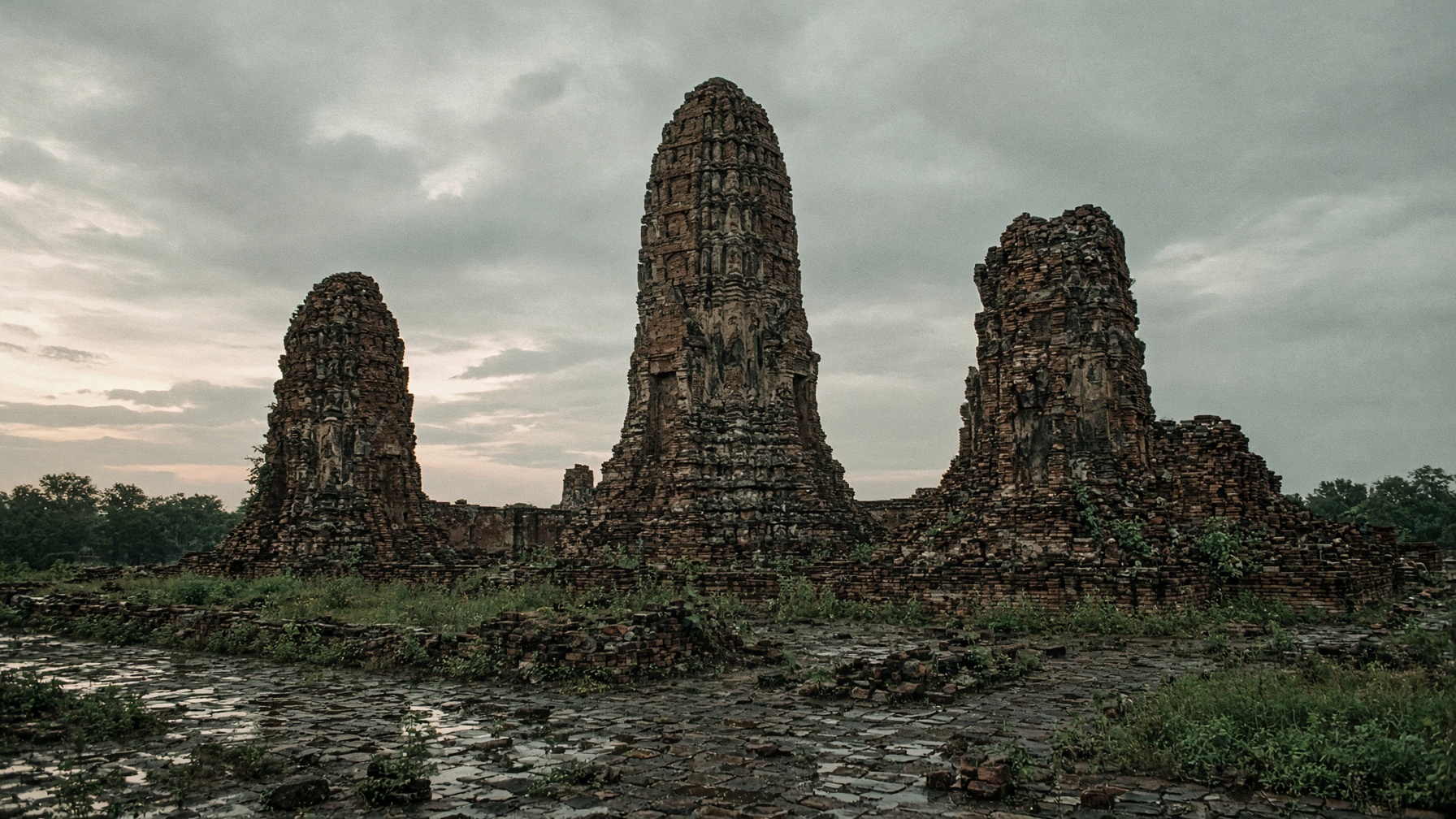
Buddhism did not arrive in what is now Thailand in a single wave. Mon, Khmer, Lanna, Sukhothai and Ayutthaya each left a Buddha-image tradition. The early sacred object was usually a large temple figure — stone, bronze, brick — made to be worshipped, not worn.
To make a Buddha image was held to be merit. A large figure consumes material and space, and usually counts as one act of making. Reduce the image to something that fits a palm, and the same intention can produce many. People of the time therefore reasoned that a small image, though slight, could be piled into many acts of making.
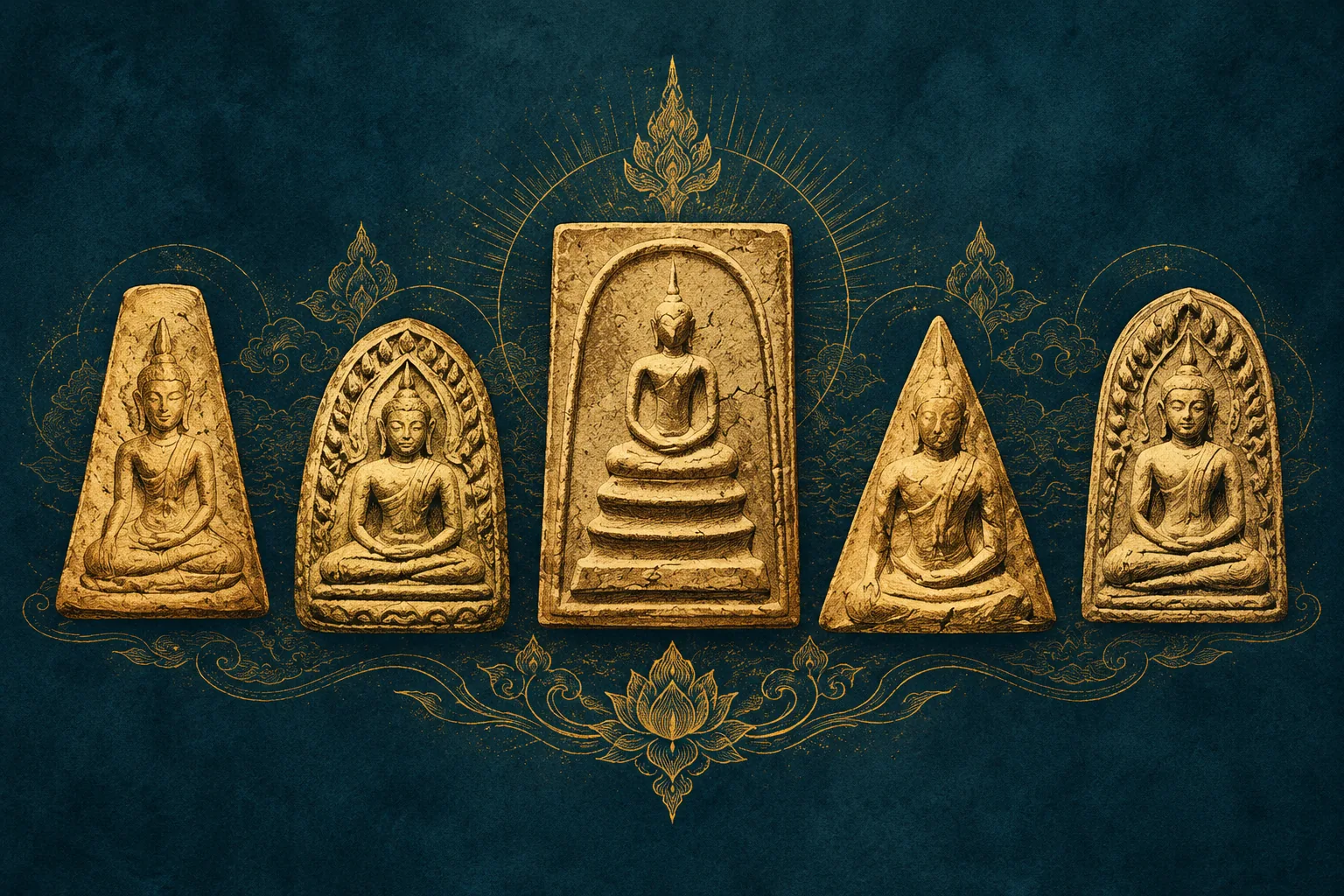
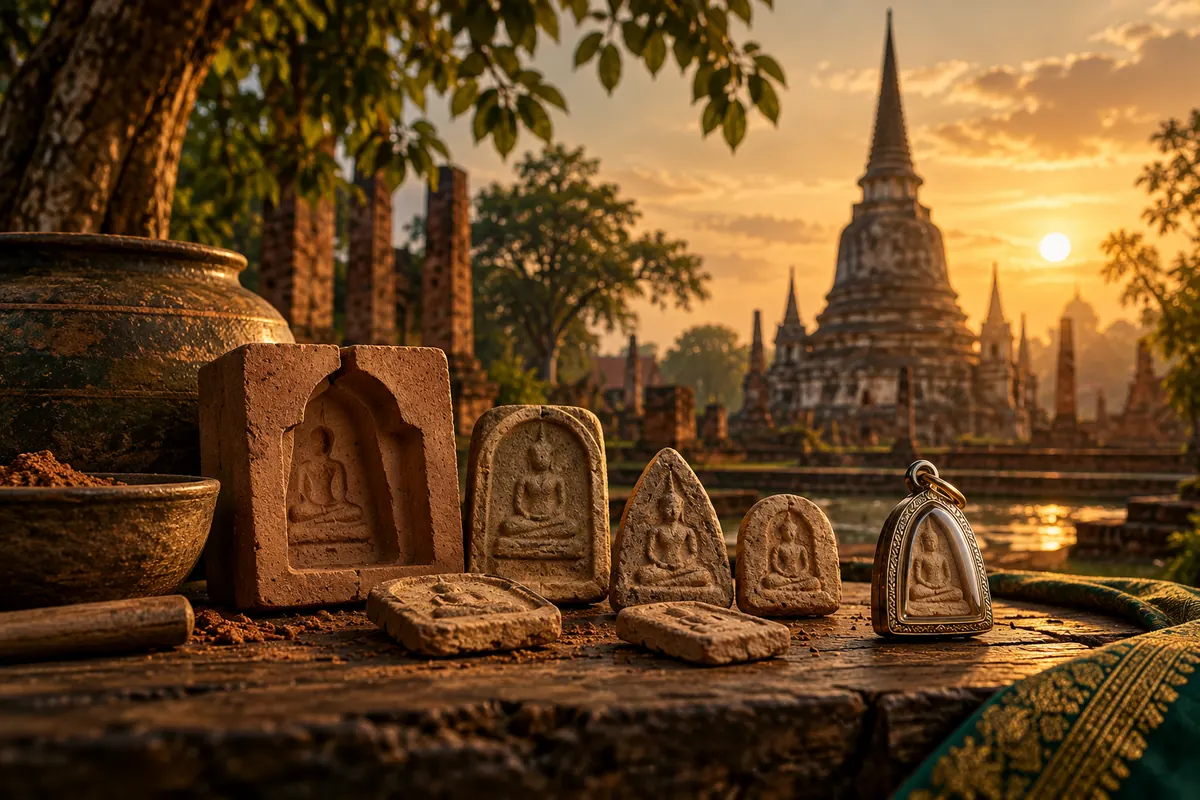
These small images were not first made to be worn. Most were lodged inside a chedi, in the body of a large Buddha, or in a foundation: an offering, and a guard for the tower. While the chedi stood, the images stayed in the dark. The phra phim of archaeology is this impressed clay or powder tablet.
Time wore the brick. Chedis fell. Images that had been sealed were exposed to the air. Later people picked them up — to wear, or to keep. A share of the old tablets seen today comes by this road: merit first, then unearthing, and only then an object that can be worn or sold. The first job was offering, not retail.
From the Bangkok period onward, pieces blessed by senior monks, issued by temples, and given to the faithful became ordinary. The Somdej powder tablets of Wat Rakhang in the nineteenth century are often written as the start of modern collecting: lime, shell ash, floral powder; several molds; wide circulation, and therefore dense imitation. In the later twentieth century, geji ajarn — renowned monks and masters — issued work in volume. The amulet moved from temple merit into a soldier’s pocket, a taxi mirror, a Chinese gold shop’s glass case.
Why wear it on the body
To answer only “for protection” is to crush a lived habit into a slogan. Thai people wear amulets for several reasons at once, and the reasons do not cancel one another.
- 01Remembrance. The piece holds a Buddha, a bodhisattva, an arahant, or a particular master. To wear it is to carry worship from the temple onto the road. Many people do not chant every day. They do pass the piece every day.
- 02Relation. The piece ties a person to a temple, a monk, a consecration. Enlistment, a long journey, a vow after illness: these are common moments to receive one. The object is evidence, and a souvenir of a bond.
- 03A layered world. Theravāda Buddhism, Brahmanic rite, and local spirit belief sit side by side in ordinary Thai life. Wearing a piece is both a Buddhist mindfulness at the body, and a guard against danger, envy, and hostile magic. The two languages often hang on one chain.
- 04Trade and identity. Drivers, soldiers, merchants, boxers: the piece at the chest can be a visible sign among peers — which temple you trust, which master you follow. It is faith, and a social mark.
What is worn first is a relation: to a master, to a temple, to one’s own precepts.
Where talk of power comes from
This is the question beginners want answered first, and the one sales copy is happiest to fill. Thai uses phutthakhun: the virtue, the potency, of the Buddha. It is not a force in a laboratory. It is a body of told experience — safety, grace in company, livelihood, healing, protection. The teller may be a temple, a master’s pupil, a collector, a dealer. Different mouths, different tones.
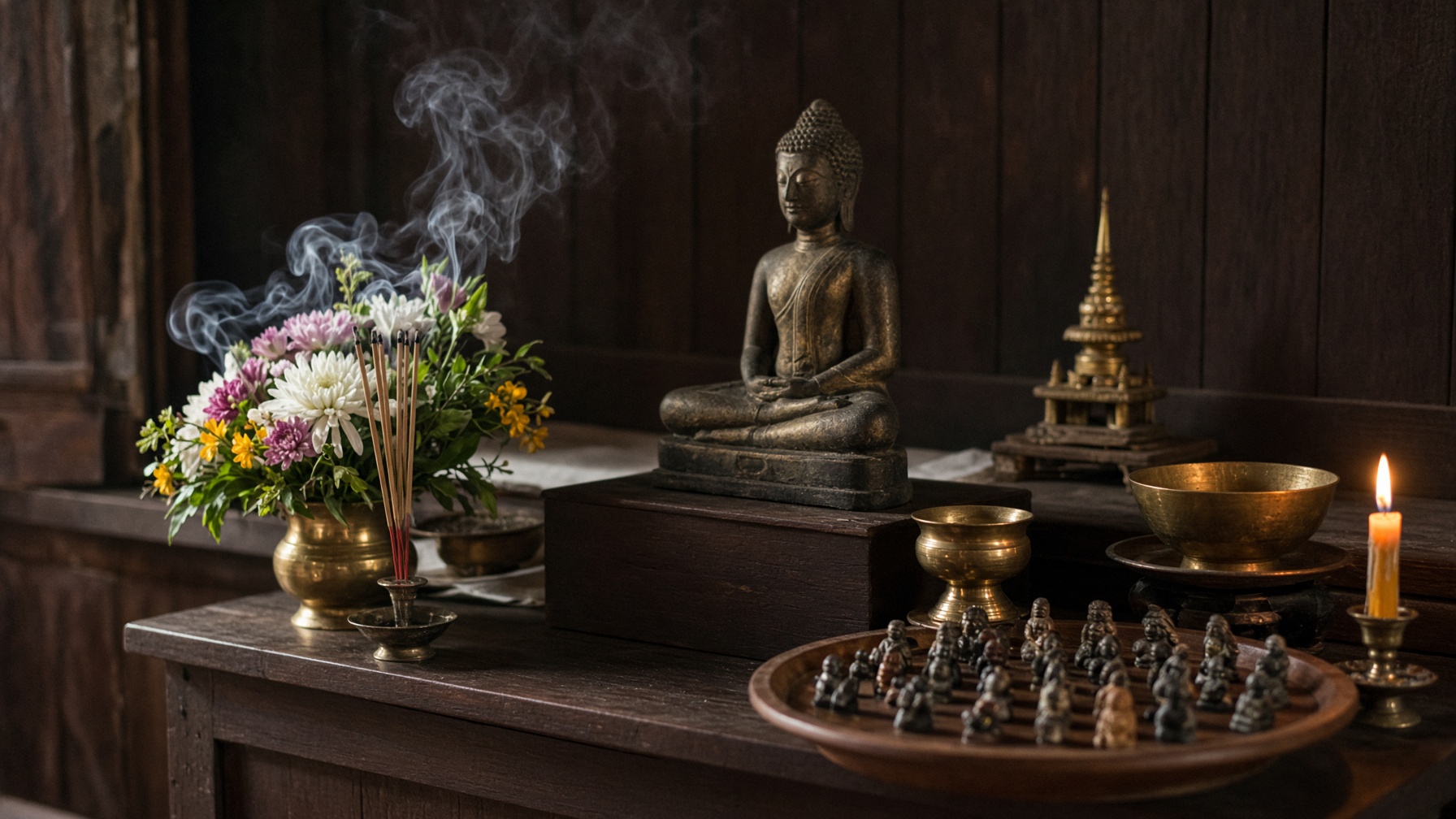
These four kinds of speech should be heard apart, not mashed into “it works.”
- 01Doctrinal speech. The image reminds one of precepts, giving, mindfulness. The first power of a piece is the wearer’s conduct. To wear it without precepts is, in temple language, already incomplete.
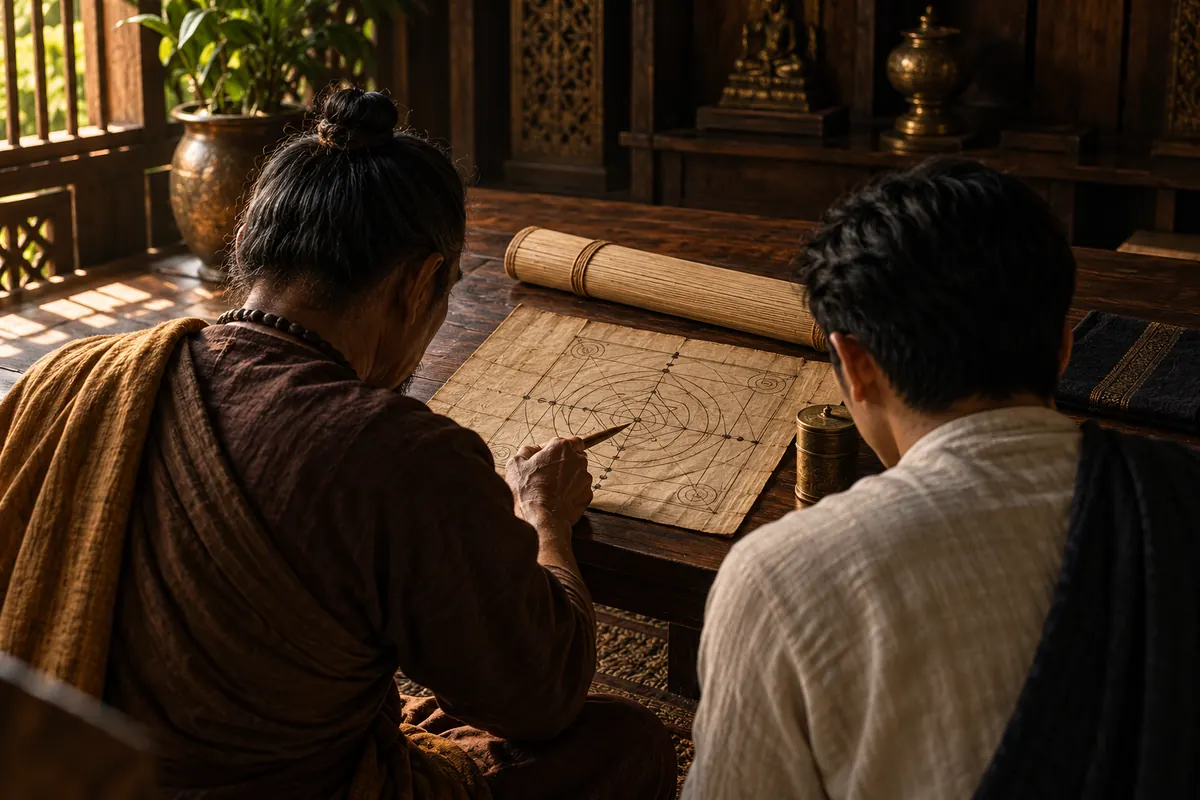
- 02Ritual speech. Consecration, ingredients, yantra, chanting, lineage are held to invite power into the object. That is the work of a temple and a master. A photograph cannot stand in for the rite.
- 03Folk speech. One mold is said to favour compassion, another safety; a master’s Khun Paen to favour grace in company. These pairings are mostly stacked by oral tradition, not listed verse by verse in a canon. Oral tradition can be serious. It is still not a law of physics.
- 04Market speech. Price, rarity, miracle stories, a celebrity wearer reinforce one another. The dearer the piece, the easier the story is to round off. When you hear market language, ask first whom the sentence serves.
Forms a beginner will actually meet
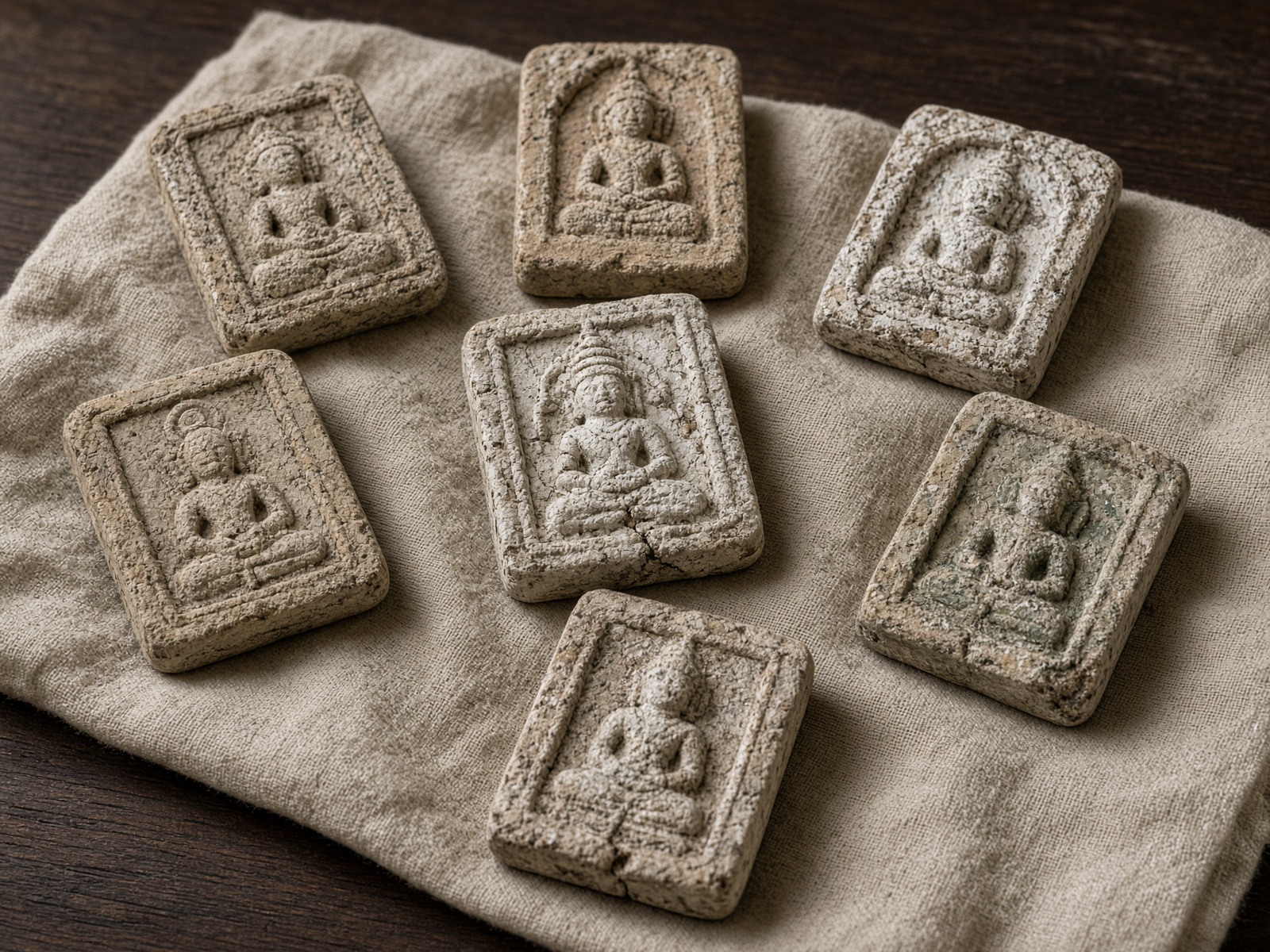
You need not memorise every name at once. Sorting the form is more useful than sorting “whether it works.”
- 01Powder tablets: ash, earth, floral and yantra powder pressed in a mold. Somdej, Nang Phaya, and Pidta belong here. Arguments about authenticity usually begin with the mold.
- 02Cast metal: poured or struck. The small standing figures of Luang Phor Ngern’s first issue, and many twentieth-century coins, belong here. Fake age and chemical skin are the usual traps.
- 03Takrut: a sheet of metal, paper, hide or leaf, rolled into a tube. It may be inscribed, and some are filled. Commonly worn on a cord, or set in a case. Small in the hand; long in the telling.
- 04Monk images: the master’s face as the piece. What is trusted is that person, not a generic Buddha. Temple, year and mold still apply.
If you know nothing yet
Do not start with price, and do not start with “which is the most powerful.” Start with something that can be checked: a dated temple, a recorded master, a mold that has samples. Leave the story for later. The market will fill the story. The object answers only in outline, material and provenance.
The custom of wearing a piece is older than the collectors’ market. The collectors’ market is older than any website. History is useful because it splits three things: an offering in a temple, a faith on the body, a price on a counter. Once they are apart, it is harder to be hurt.