Origins & Belief · Oct 2026 (B.E. 2569)
Uma and Kali: Difference, Relationship and Development
More than ‘gentle versus fierce’: from Parvati and Durga to Kali and Thai goddess imagery.
16 min
Uma and Kali: Difference, Relationship and Development
More than ‘gentle versus fierce’: from Parvati and Durga to Kali and Thai goddess imagery.
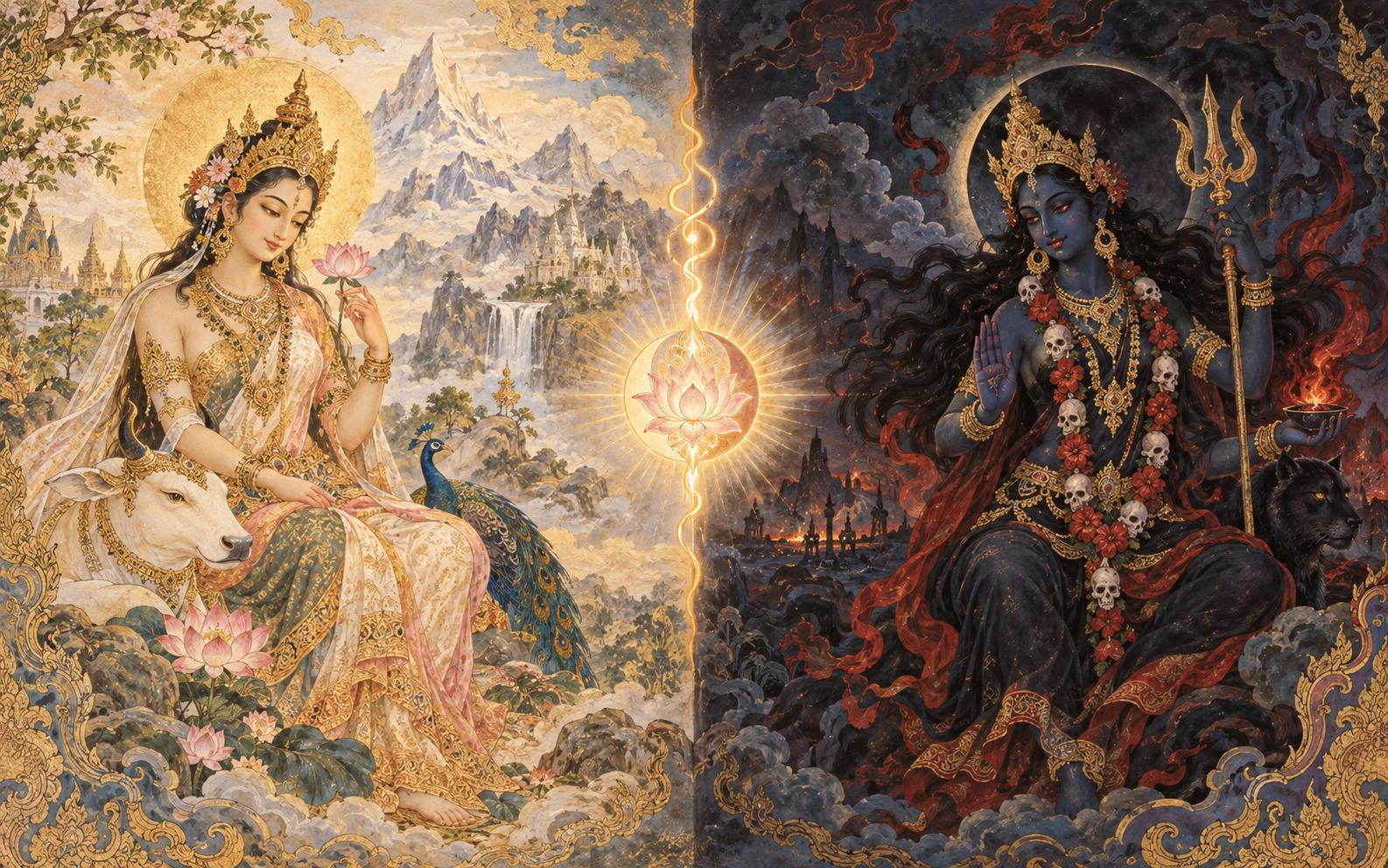
Phra Mae Uma usually corresponds to the cluster of names and images around Sanskrit Uma/Parvati, a goddess associated with Shiva. Phra Mae Kali, Kālī, belongs to another name-and-image tradition with forceful visual and textual histories. In many goddess traditions they can be understood as different manifestations of one divine feminine power (Shakti/Devi), but this does not make them fully interchangeable in every region, text, temple or devotee community. Research on Uma art in Thailand likewise finds relationship as well as distinct roles and forms among Uma/Parvati, Durga and Kali.
How to read the image
In common iconographic language, Uma/Parvati may appear as a composed goddess, Shiva’s partner, mother of Ganesha and Skanda, or in connection with mountain, lotus, family and asceticism. Kali is often marked by a dark body, loose hair, tongue, multiple arms, weapons, garlands of skulls or heads, and images of her standing over Shiva. These are not merely ‘frightening’ decorations: they involve time, mortality, the dissolution of ego, overcoming violence and feminine divine power. Different stories let Kali emerge from Durga, Devi’s forehead or other divine situations; no one demon-slaying version is the sole origin of every tradition.
Not an either-or: Uma, Parvati, Durga and Kali
Calling Uma ‘gentle’ and Kali ‘fierce’ is memorable but inadequate. Uma and Parvati often name image-clusters tied to Shiva, mountain, asceticism, marriage and motherhood; Durga and Kali can, in different narratives, articulate victory over disorder, protection and intense feminine divine power. Many traditions understand them as manifestations of one goddess-power, yet that is a theological and devotional relation, not permission to exchange every name, image and shrine at will.
What Kali’s forceful imagery is saying
Dark body, loose hair, tongue, weapons, garlands of heads or skulls, and the image of Kali over Shiva are often the most misread elements. They do not merely turn her into a horror character. They use images of death, time, violence, fear and the dissolution of ego to hold tension between destruction and protection. Metropolitan Museum collection interpretation likewise notes that Kali can be understood in different settings as both fearsome destructive force and life-giving or maternal power. That is why one dark multi-armed image is never enough for a hasty identification.
Thai temples and festivals: localisation is not collapse
South Indian Tamil temples in Bangkok and practices such as Navaratri give Phra Mae Uma, Durga, Kali and related names a visible, continuing devotional life in Thailand. Thai Fine Arts material on Wat Phra Sri Maha Uma Devi and the festival records Uma as principal deity, with Kali and other figures in the procession. This shows that Thai goddess devotion has concrete communities and rites, not merely online labels for wealth or romance. It also requires respect for each temple’s own name, calendar and ritual rather than calling every goddess image the ‘same amulet’.
Its Thai context
Thailand adds another layer: ancient Khmer-Indic art, royal Brahmanical tradition, South Indian Tamil temples and contemporary online devotion all coexist. A shrine naming its principal deity Uma does not mean every related image is not Durga or Kali; conversely, a market object called a ‘Kali amulet’ does not automatically have a textual or temple lineage. A steadier method preserves the original name, describes visible imagery, records the temple’s or issuer’s information, and keeps scholarly and popular readings distinct.
Names, provenance and local difference
Thai deities, guardians and folk sacred beings often coexist in texts, art, local oral tradition, temple rites and contemporary markets. The same name does not always indicate the same identity, and one image may carry different stories and customs across provinces, lineages, temples and periods. This site separates traceable historical material, community accounts and later market language rather than presenting one telling as a fact for every place.
Belief, image and market cannot replace one another
Ways of worship can reflect devotees’ respect and hopes, and images can provide cultural and iconographic clues; neither proves the age or authenticity of a particular pendant, takrut or figure. A concrete object still requires checks of issuer, temple, date, materials, ceremony and public records. This distinction does not make belief cold; it makes both cultural writing and collecting more honest.
A note for readers and collectors
First establish whether the name is a Thai original, Buddhist guardian, local spirit or commercial label. Then check temple, ceremony, date, materials and public issue records. Similar imagery or the same name never proves an object’s origin, age or authenticity.