Origins & Belief · Oct 2026 (B.E. 2569)
Tree Spirits and Local Guardians: Thai Sacred Places
A tree, a tract of land and a shrine: not one being, not one rulebook.
16 min
Tree Spirits and Local Guardians: Thai Sacred Places
A tree, a tract of land and a shrine: not one being, not one rulebook.
Thai local belief often treats large trees, forests, land, passes and village thresholds as places requiring respect. Fine Arts material notes that spirit belief predates Brahmanical and Buddhist layers and later interweaves with them. Names such as chao thi, chao pho, chao mae, thepharak and rukkhadevata vary by place and role.
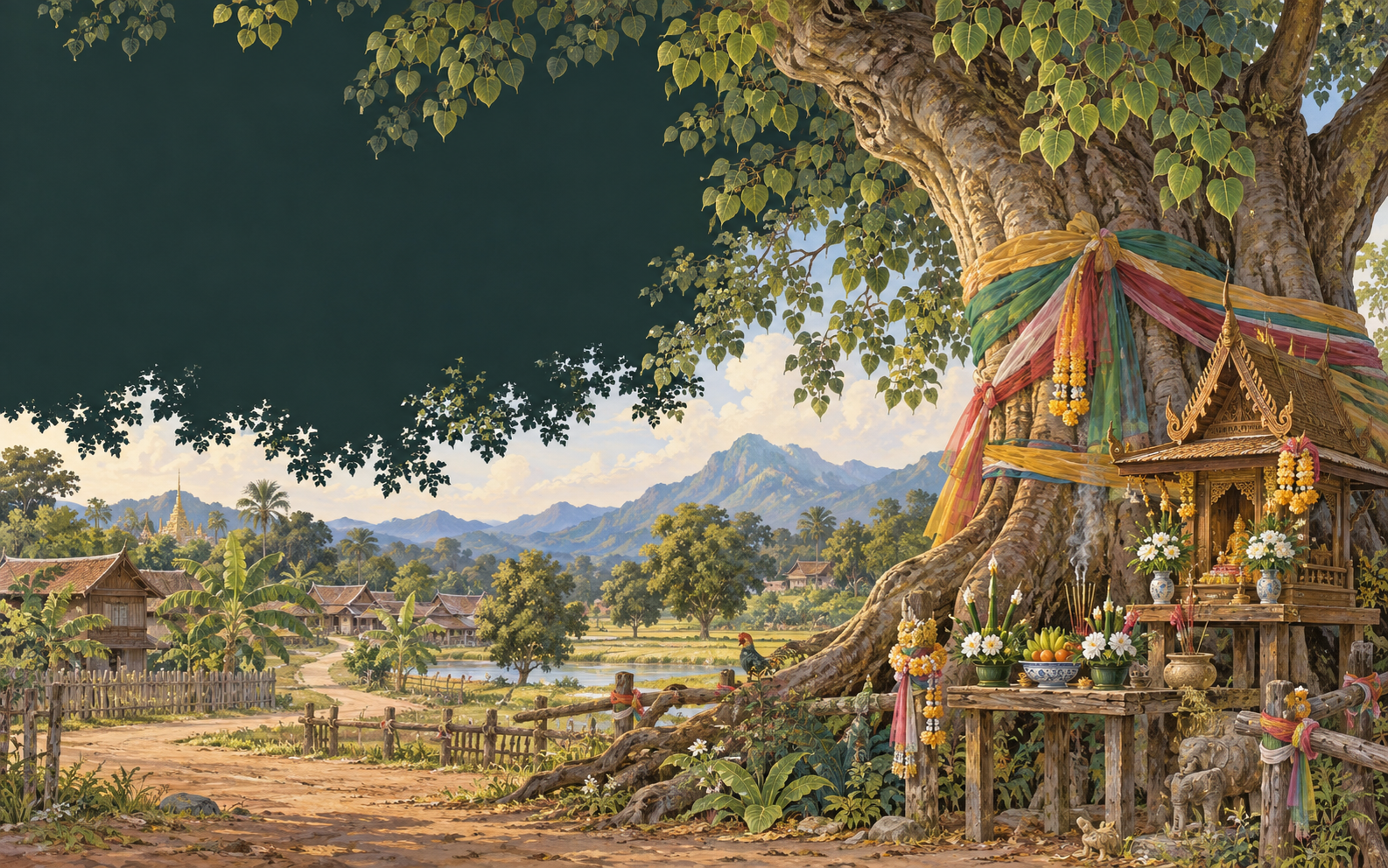
How to read the image
Cloth wraps, garlands, shrines, stones or a tree alone do not prove a particular deity. Many local guardians live primarily in oral tradition and communal memory, without an old inscription or universal genealogy. Responsible writing records place, local name, ritual timing and checkable evidence, and says plainly which parts are local telling.
Tree spirits, land guardians and city-pillar deities are not one category
Chinese summaries often translate nang mai, chao thi, phra phum and thepharak alike as ‘local god’ or ‘tree spirit’, erasing different relationships. Tree spirits attach to particular trees, forests and local narratives; phra phum or chao thi concern a house or parcel of land; city-pillar shrines centre on urban space, a pillar and civic ritual. The Thai Cultural Encyclopedia separately documents land-spirit and city-pillar shrine forms and functions. One red-clothed tree photograph cannot represent them all. Ancestors, chao pho and forest guardians add further local names that should be preserved with place.
Offerings, cloth and lottery numbers: document practice without endorsing every claim
People may offer flowers, incense, food or clothing to an old tree, land shrine or local guardian, fulfil vows, seek dreams or request lottery numbers. Practice changes by locality, community and shrine rule. Record who did what, when, and to which named being rather than turning a wish into an objective divine job. Conservation also matters: nails in a living tree, plastic offerings, fire from candles and entry into hazardous places can harm environment and people. Respect for belief does not suspend historical checking, law or public safety.
Its Thai context
These beliefs also involve environmental and communal ethics: notifying or making an offering before cutting a large tree, building a home or entering forest can express respect for land and other lives. Do not turn every cloth-wrapped tree or shrine into a sales claim for guaranteed numbers or protection.
Names, provenance and local difference
Thai deities, guardians and folk sacred beings often coexist in texts, art, local oral tradition, temple rites and contemporary markets. The same name does not always indicate the same identity, and one image may carry different stories and customs across provinces, lineages, temples and periods. This site separates traceable historical material, community accounts and later market language rather than presenting one telling as a fact for every place.
Belief, image and market cannot replace one another
Ways of worship can reflect devotees’ respect and hopes, and images can provide cultural and iconographic clues; neither proves the age or authenticity of a particular pendant, takrut or figure. A concrete object still requires checks of issuer, temple, date, materials, ceremony and public records. This distinction does not make belief cold; it makes both cultural writing and collecting more honest.
A note for readers and collectors
First establish whether the name is a Thai original, Buddhist guardian, local spirit or commercial label. Then check temple, ceremony, date, materials and public issue records. Similar imagery or the same name never proves an object’s origin, age or authenticity.