Origins & Belief · Oct 2026 (B.E. 2569)
Thao Wessuwan: Guardian King of the North
Often called ‘Thao Wessuwan’ or the Ghost King in Chinese collector circles, his Buddhist guardian role, northern direction and wealth imagery should be separated from sensational commercial imagery.
16 min
Thao Wessuwan: Guardian King of the North
Often called ‘Thao Wessuwan’ or the Ghost King in Chinese collector circles, his Buddhist guardian role, northern direction and wealth imagery should be separated from sensational commercial imagery.
Thao Wessuwan (Vaiśravaṇa) is one of the Four Guardian Kings in Buddhist cosmology and protects the north. Thai art references also describe him as a defender of Buddhism and leader among yaksha or non-human beings.
Myth, imagery and how to read it
Thao Wessuwan is neither the ten-headed adversary of the Ramakien nor adequately described by ‘Ghost King’ alone. His name belongs to the Vaiśravaṇa/Kubera lineage shared across Indic and Buddhist worlds; Thailand places him within the Four Guardian Kings and the northern direction. Art may show an armed gatekeeper, royal crown, mace or wealth imagery, with forms changing across murals, temples and modern statuary. Buddhist guardian, yaksha imagery and market vocabulary overlap in Thailand but are not synonyms. For an amulet, identify the cited form, temple and ceremony, and whether an issue record can be checked.
Northern king, lord of yakkhas and guardian of wealth: three overlapping identities
Thao Wessuwan is more than the modern popular ‘ghost king’. In Buddhist texts such as the Āṭānāṭiya discourse and the Four Great Kings framework, Vaiśravaṇa guards the north and commands yakkhas. In Indic religion Kubera is also associated with the north, treasure and wealth. Texts overlap these names, offices and genealogies in different ways, while Thailand commonly reads him as yakṣa king, Buddhist protector and guardian of wealth. Command over non-human beings, protection of the teaching and guardianship of treasure are related but distinct historical layers, not one slogan about attracting money.
Why a yakṣa form with a club: read guardianship and kingship first
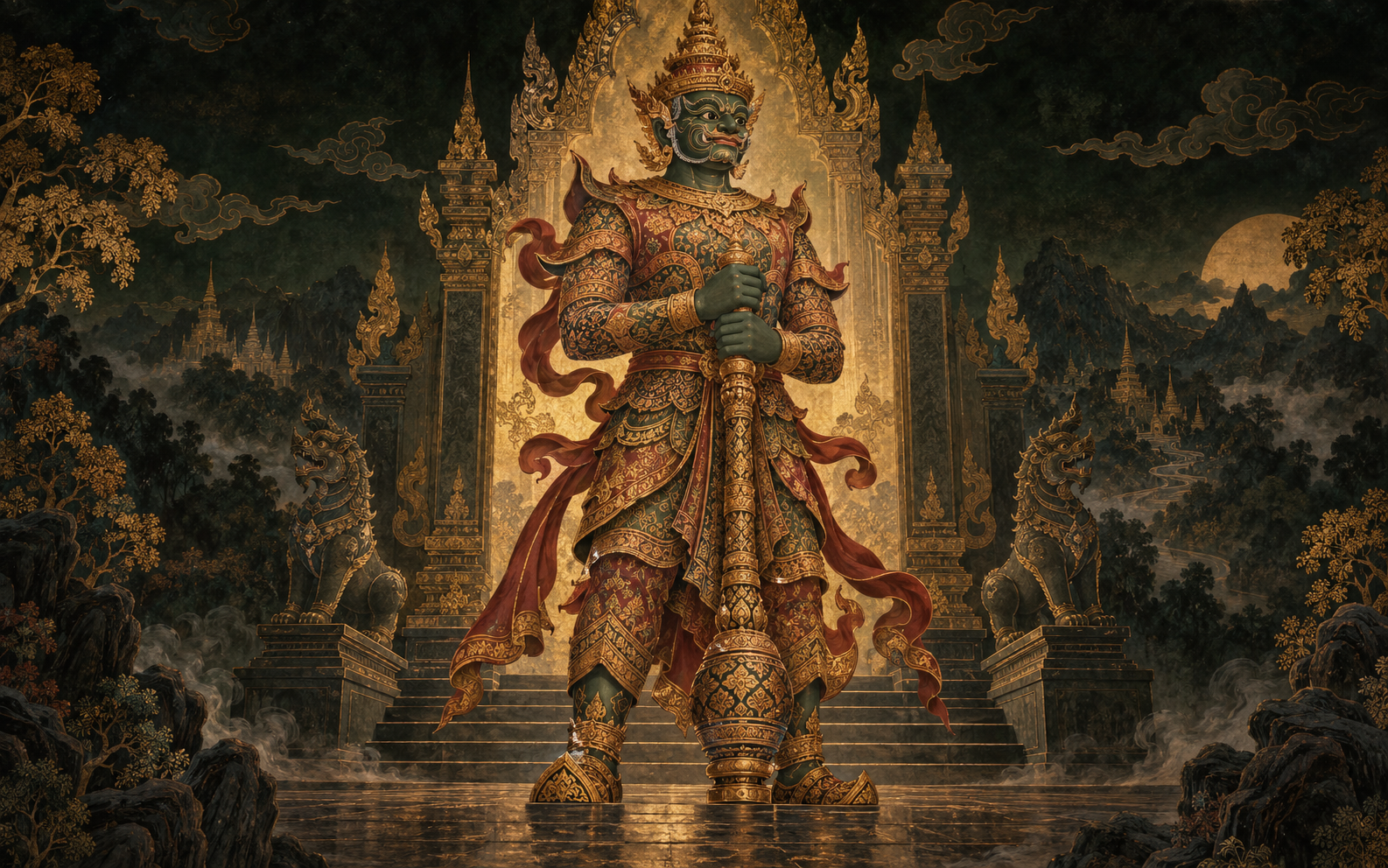
Thai images often give him a richly crowned yakṣa body, wide eyes, fangs and a standing pose with both hands on a club. This visual language joins temple guardianship, royal authority and the protection of space; Fine Arts material likewise identifies him among the Four Great Kings, guarding the north and bearing a club. Colour, armour, posture, implement and whether he appears alone nevertheless change by court style, temple, workshop and date. A yakṣa image is not automatically Wessuwan, and resemblance to a ‘ghost king’ proves neither temple, year nor authenticity. Read inscription, direction, companion figures and issue records together.
Thai door guardian, child protector and modern market figure: separate the periods
Older Thai accounts record pictures of club-bearing Wessuwan hung near a sleeping child, using the authority of the ‘lord of yakkhas’ to deter harmful spirits. Temple art may place him at gates or among directional guardians. Modern amulet markets further stress warding, security, authority and prosperity, producing temple issues, police or military commemoratives and commercial replicas. These are not one timeless rule. Study an object through issuer, date, purpose, material and ritual record; protection from spirits, wealth or invulnerability remains devotional language, not a verifiable product guarantee.
A place in Thai culture
His image has drawn strong attention in Thailand’s sacred-object market and is associated with protection, authority and wealth imagery. Collectors should check temple, ceremony, date and maker rather than accept protection, wealth or exorcism claims from a ‘Ghost King’ label alone.
Texts, places and versions: no one story is the whole tradition
These deities do not belong to one fixed book, period or country. Vedic material, epics, Purāṇas, temple ritual, local oral tradition, royal literature and modern devotion can give the same name different identities, relations, attributes and narrative emphases. A better method is to ask first, ‘Which tradition is this passage from?’ and then, ‘How was it adapted or used in Thailand?’ When a source is unclear, say ‘in some traditions’, ‘in some versions’ or ‘in popular usage’ rather than pretend there is one answer.
Image, devotion and sacred object: three different things
A museum sculpture, a temple image, a theatrical or mural character, a commemorative object issued for a temple rite and a market pendant may all cite the same deity, but they cannot substitute for one another as evidence. Iconography helps identify mythic language; devotion shows how a community creates a relationship; the date, material, mold and issue history of a particular object still require separate checking. Keeping the three apart neither diminishes belief nor permits the mistake of inferring age, authenticity or efficacy from a divine name.
A note for readers and collectors
The same name can appear in Indian traditions, Thai court culture, temples, theatre and commercial sacred objects. Images, names and stories vary by period and place. When reading an object, check its temple, date, purpose and public sources before inferring background or benefits from the name alone.