Origins & Belief · Oct 2026 (B.E. 2569)
Virupaksha: Guardian King of the West
The western Guardian King: broad sight, nāgas, and how to read temple guardian imagery.
16 min
Virupaksha: Guardian King of the West
The western Guardian King: broad sight, nāgas, and how to read temple guardian imagery.
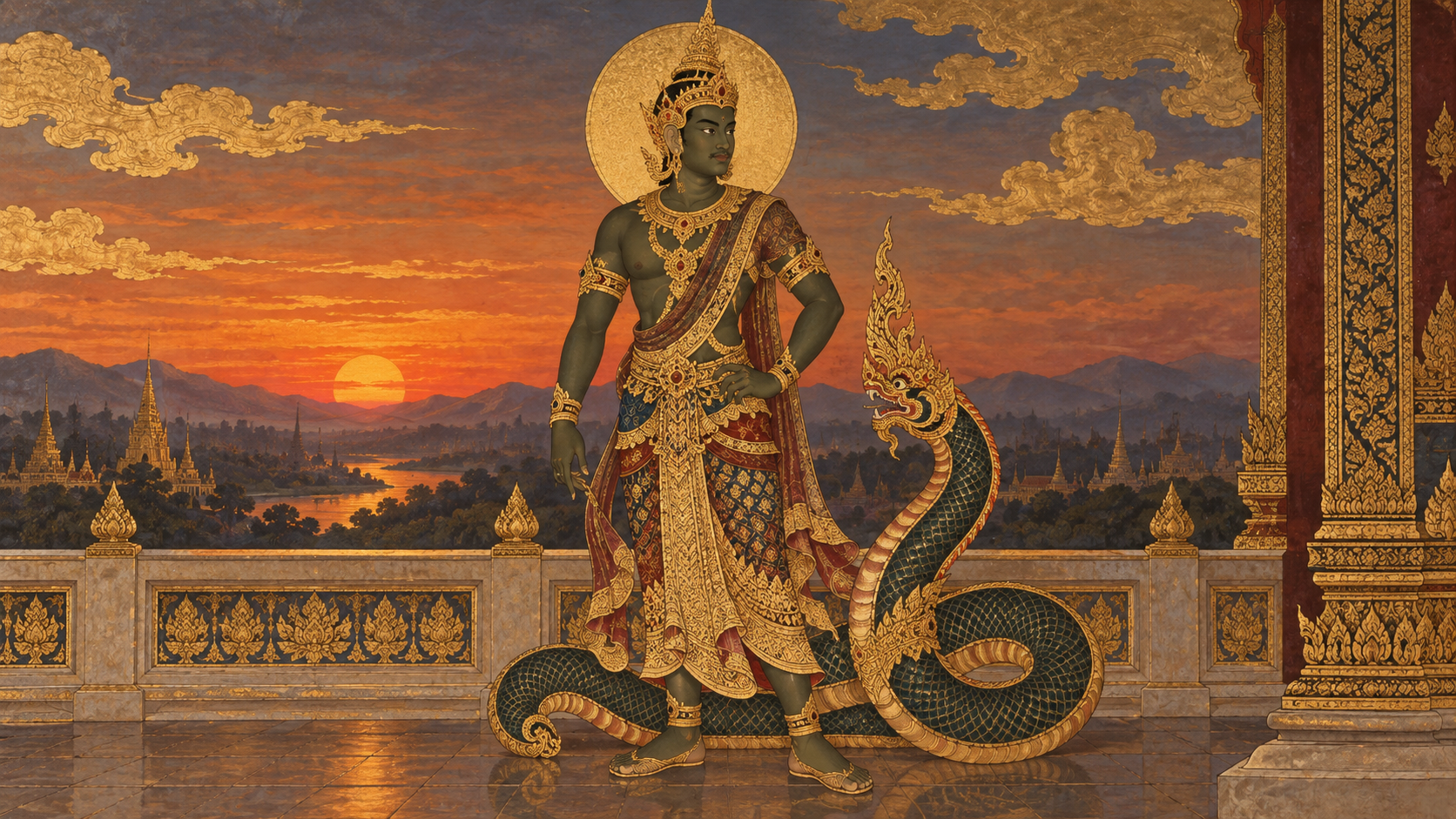
Virūpākṣa, Virūpakkha in Pali and Thao Virupaksha in Thai, guards the west. National Museum Bangkok material notes that Thai Theravada tradition also treats nāgas as his retinue, an important clue for reading his relation to serpent guardian imagery.
Myth, imagery and how to read it
‘Broad sight’ is often used for Virūpākṣa, suggesting watchfulness and seeing; it must not become a supernatural guarantee that an object can see anyone’s future. Nāga imagery makes him especially important in Southeast Asia. Serpents and dragons can appear at temple gates, balustrades and stairs, and in local stories, where Buddhist guardianship intertwines with water, land and local tradition. A serpent image is not therefore automatically Virupaksha: determine whether it is an independent nāga, his retinue or a later design reference. Relationship and placement are far more reliable than simply noticing a snake.
Western king, lord of nāgas and the meaning of ‘wide-seeing’
Thao Virupaksha is the western guardian among the Four Great Kings, and Buddhist texts associate him with nāgas. East Asian translations call him the Wide-Eyed King, but the name should not be flattened into the childish claim that ‘large eyes see far’; it belongs to a tradition of extraordinary sight and vigilance. Nor does lordship over nāgas mean he is simply a dragon. Across Indic and Southeast Asian art, nāgas may be serpents, multi-headed hoods, human figures with serpent signs or kings, linked with water, subterranean realms, rain, treasure and protection. Text and object determine the reading.
Nāga, serpent hood and weapon: visual clues need their scene
Thai Four Kings charts show Virupaksha with a particular body colour, royal dress and weapon; other Asian traditions may give him a serpent, stupa or sword. Nāga sculpture in Thai museum collections also demonstrates serpent hoods, multiple heads and human nāga bodies. These materials form a comparative framework, not a universal template from one museum object. Ask whether the figure occupies the west, belongs to a set of four, appears with nāgas and is named by an inscription. A serpent alone does not make the image Virupaksha.
From Buddhist cosmos to Thai water cultures: connect carefully, do not collapse
Nāgas guard temple stairs and stupas and inhabit Thai water narratives, making Virupaksha’s nāga command intelligible beside local nāga devotion. But a nāga does not prove that a temple worships Virupaksha, nor is every serpent charm one of his followers. A sound account separates three layers: the western king of texts, nāgas in Thai Buddhist art, and modern amulet claims about protection or authority. They may influence one another, but one layer cannot serve as evidence for another.
A place in Thai culture
The most useful way to understand Virupaksha is to place the Four Guardian Kings, nāga guardianship and Thai temple space in one picture, not to attach his name to every serpent charm. Each object still needs its issuer and original documentation checked.
Texts, places and versions: no one story is the whole tradition
These deities do not belong to one fixed book, period or country. Vedic material, epics, Purāṇas, temple ritual, local oral tradition, royal literature and modern devotion can give the same name different identities, relations, attributes and narrative emphases. A better method is to ask first, ‘Which tradition is this passage from?’ and then, ‘How was it adapted or used in Thailand?’ When a source is unclear, say ‘in some traditions’, ‘in some versions’ or ‘in popular usage’ rather than pretend there is one answer.
Image, devotion and sacred object: three different things
A museum sculpture, a temple image, a theatrical or mural character, a commemorative object issued for a temple rite and a market pendant may all cite the same deity, but they cannot substitute for one another as evidence. Iconography helps identify mythic language; devotion shows how a community creates a relationship; the date, material, mold and issue history of a particular object still require separate checking. Keeping the three apart neither diminishes belief nor permits the mistake of inferring age, authenticity or efficacy from a divine name.
A note for readers and collectors
The same name can appear in Indian traditions, Thai court culture, temples, theatre and commercial sacred objects. Images, names and stories vary by period and place. When reading an object, check its temple, date, purpose and public sources before inferring background or benefits from the name alone.