Origins & Belief · Oct 2026 (B.E. 2569)
Virulhaka: Guardian King of the South
The southern Guardian King: the name ‘growth,’ kumbhandas, and the iconography of the spear.
16 min
Virulhaka: Guardian King of the South
The southern Guardian King: the name ‘growth,’ kumbhandas, and the iconography of the spear.
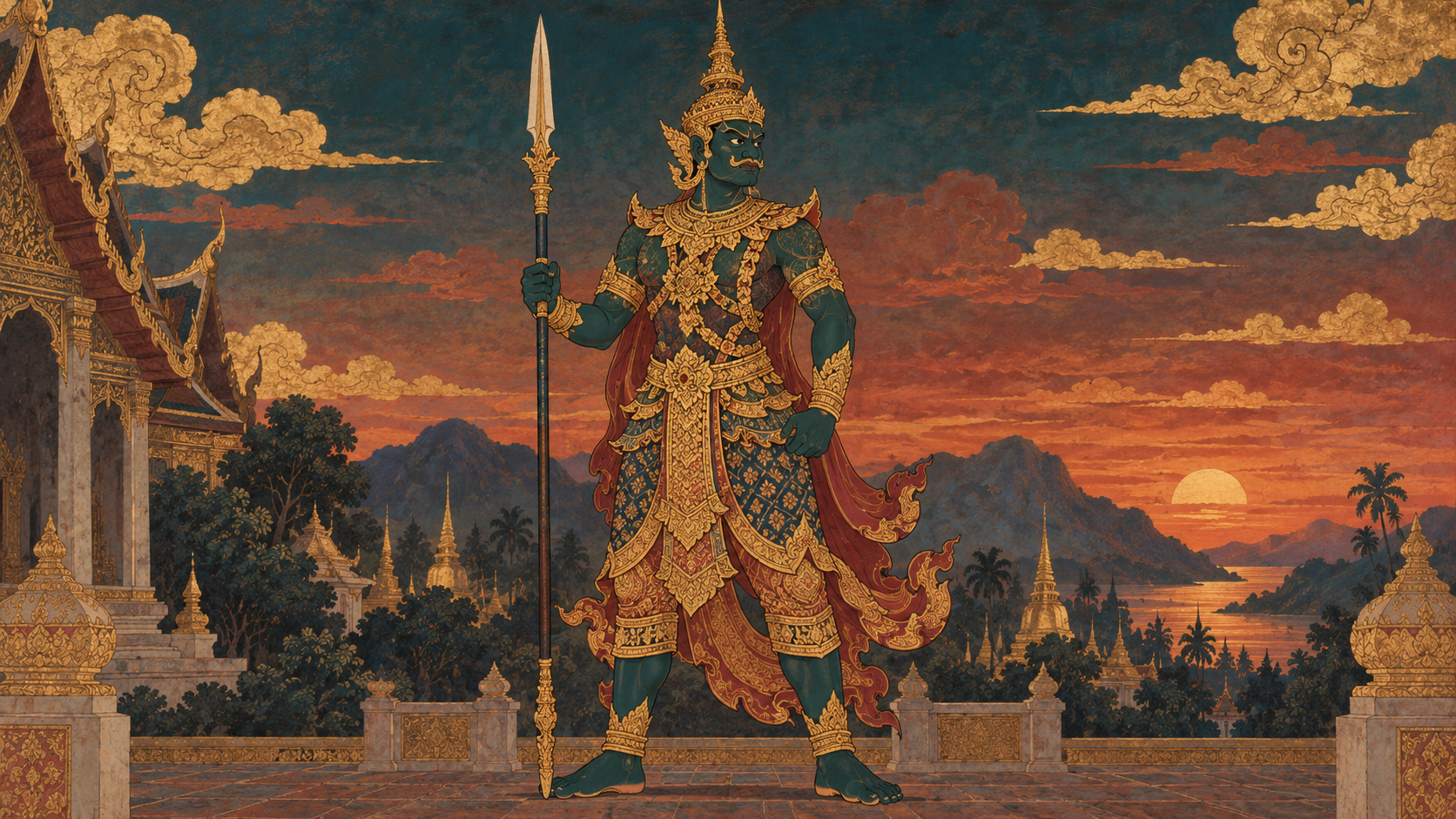
Virūḍhaka, Virūḷhaka in Pali and Thao Virulhaka in Thai, guards the south. Thai Fine Arts material lists him among the Four Guardian Kings and identifies a blue-green body, spear and leadership of kumbhandas as common Thai visual clues.
Myth, imagery and how to read it
The name ‘Virūḍhaka’ can carry senses of growth or increase, but it must not be converted directly into modern claims of guaranteed promotion or business success; those are later languages of aspiration and marketing. The spear gives a strong martial and protective stance in temple art, yet no single spear, face colour or proportion occurs in every work. His relational setting matters more: south, the four-king group, kumbhandas and the function of safeguarding Buddhism. A spear-bearing yaksha without direction, inscription or group comparison should not be hastily named Virulhaka.
Southern king and the kumbhaṇḍas: begin with the textual office
Thao Virulhaka is the southern guardian among the Four Great Kings. Buddhist materials including the Mahāsamaya discourse associate him with the kumbhaṇḍas. Translations and visual forms of this class differ across Pali, Sanskrit, Chinese and regional art, so it should not be reduced to one generic kind of ‘ghost’. His central identity is directional kingship and command within Buddhist cosmology, not an isolated god of wealth or personal luck. Read all four together: east Dhatarattha, south Virulhaka, west Virupaksha and north Vessavana, each with a direction and retinue.
Blue body, spear and sword: do not merge regional conventions
A Thai Fine Arts chart uses a blue body and spear as clues for Virulhaka, while East Asian Zengzhang Tianwang commonly carries a sword. Both are regional artistic conventions; neither makes the other ‘wrong’. As the divine name moved from Indic Buddhist cosmology through Sri Lanka, Southeast Asia and East Asia, costume, colour and weapon were reconstructed. A website image must therefore say whether it follows a Thai, East Asian or other convention. An unlabeled warrior without direction or comparison to the full set invites misidentification.
‘Growth’ is not a guarantee of business growth
The East Asian title ‘King of Increase’ is easily turned by modern sellers into a promise that business, wealth or status will grow. That is not a sufficient reading of the classical office. Translation history, southern guardianship and the four-king protective structure matter more than auspicious wordplay. For a Thai object, ask whether it belongs to a Four Kings set, temple-gate programme, rite or commemorative issue. Without issue evidence, do not invent an efficacy from a translated name.
A place in Thai culture
Thai images of the Four Guardian Kings belong to cosmology and temple space. Reading ‘growth’ through one’s life aims may be personal devotion, but it cannot replace checking a concrete object’s issuer, temple, date and rite.
Texts, places and versions: no one story is the whole tradition
These deities do not belong to one fixed book, period or country. Vedic material, epics, Purāṇas, temple ritual, local oral tradition, royal literature and modern devotion can give the same name different identities, relations, attributes and narrative emphases. A better method is to ask first, ‘Which tradition is this passage from?’ and then, ‘How was it adapted or used in Thailand?’ When a source is unclear, say ‘in some traditions’, ‘in some versions’ or ‘in popular usage’ rather than pretend there is one answer.
Image, devotion and sacred object: three different things
A museum sculpture, a temple image, a theatrical or mural character, a commemorative object issued for a temple rite and a market pendant may all cite the same deity, but they cannot substitute for one another as evidence. Iconography helps identify mythic language; devotion shows how a community creates a relationship; the date, material, mold and issue history of a particular object still require separate checking. Keeping the three apart neither diminishes belief nor permits the mistake of inferring age, authenticity or efficacy from a divine name.
A note for readers and collectors
The same name can appear in Indian traditions, Thai court culture, temples, theatre and commercial sacred objects. Images, names and stories vary by period and place. When reading an object, check its temple, date, purpose and public sources before inferring background or benefits from the name alone.