Origins & Belief · Oct 2026 (B.E. 2569)
Dhatarattha: Guardian King of the East
The eastern Guardian King: gandharvas, the stringed instrument, and directional language in Thai temples.
16 min
Dhatarattha: Guardian King of the East
The eastern Guardian King: gandharvas, the stringed instrument, and directional language in Thai temples.
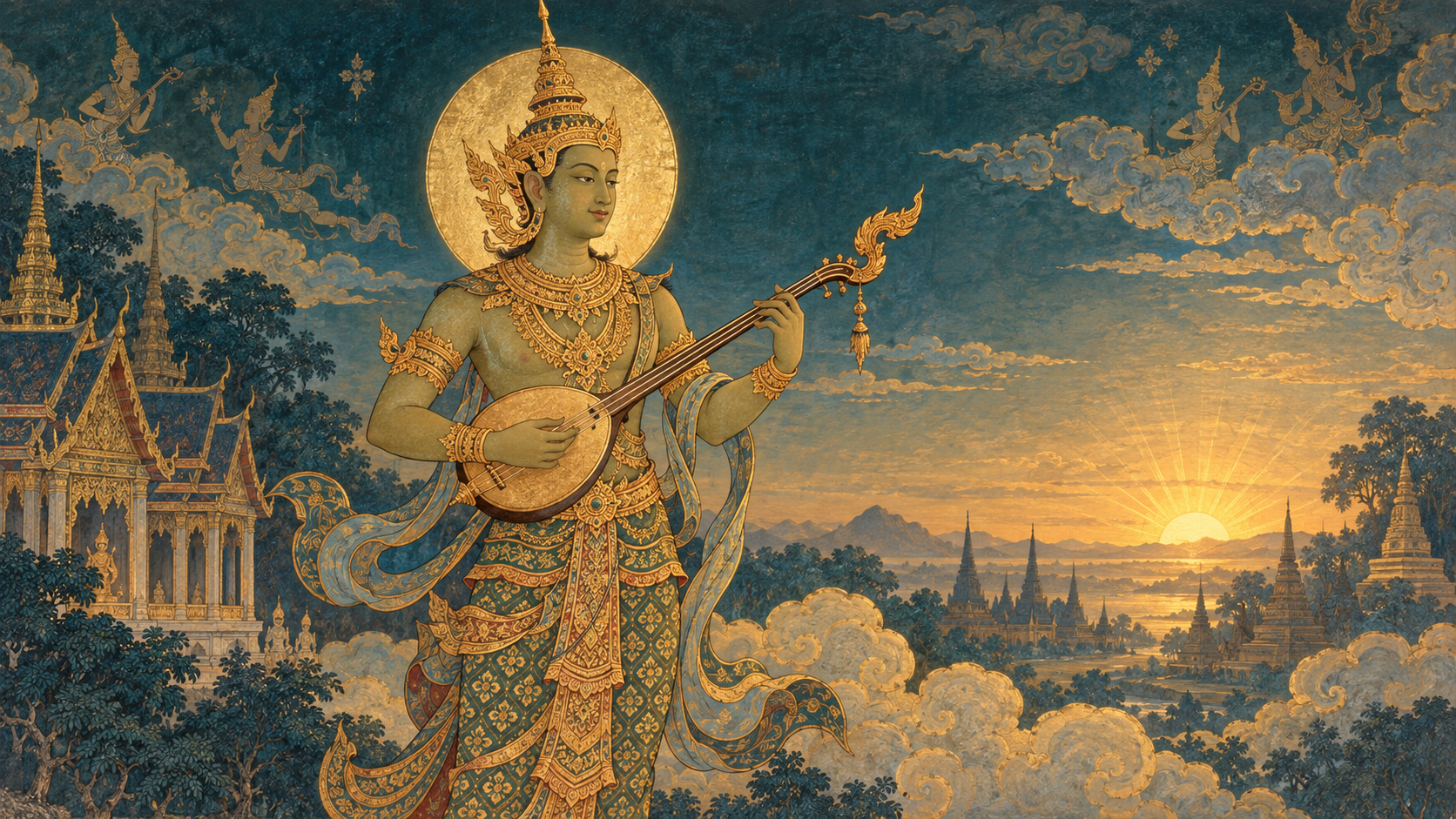
Dhṛtarāṣṭra, Dhatarattha in Pali and Thao Dhatarattha in Thai, is one of the Four Guardian Kings in Buddhist cosmology and guards the east. Thai Fine Arts material connects him with gandharvas and the iconographic tradition of a three-stringed lute.
Myth, imagery and how to read it
‘Upholding the realm’ is not a modern job title for national defence but a Buddhist-cosmological role of guarding one quarter of the world and sustaining order. His connection with gandharvas and a stringed instrument distinguishes the image from a generic military guard: the instrument can evoke celestial music, rite and protection, not a sales label promising entertainment or musical talent. Thai traditions may use body colour, direction, retinue and implement as clues, but temple guardians, murals and modern sacred objects vary. To identify a work as Dhatarattha, read inscription, position within a four-king group and the temple’s own public account together.
Reading Dhatarattha in Pali texts: East and the gandhabbas
Dhatarattha does not begin with modern temple images. The Pali Dīgha Nikāya’s Great Meeting discourse lists the Four Great Kings individually: Dhatarattha rules the east and leads the gandhabbas; Virūḷhaka rules the south and the kumbhandas; Virūpakkha rules the west and the nāgas; and Vessavaṇa, Thao Wessuwan, rules the north and the yakkhas. This textual frame matters because the four are not interchangeable ‘ghost kings’. They form a Buddhist cosmology structured by direction, retinue and differentiated guardianship.
Why the lute matters: music is not decoration
Gandhabbas are often connected in Indic-Buddhist language with celestial music, fragrance and musicians. Dhatarattha’s three-string lute or lute-like instrument is therefore more than a device for making him look different from the other kings. Thai Fine Arts documentation also pairs him with the three-string lute, making it a real local clue. Instrument form, gesture, body colour and dress nevertheless change by period and medium. East Asian temples may show a pipa; Thai works may show a three-string lute or different royal attire. Read the eastward placement, the other three kings and inscriptions first, then treat the instrument as supporting evidence—not proof of date, temple or authenticity.
Thai temple space: the Four Kings work as a set
In Thai temples and art shaped by Buddhist cosmology, the Four Kings are compelling because they make the four directions into a visible order of guardianship. That does not mean every temple gate, mural or set of four armed figures is automatically the Four Kings. Fine Arts discussion of Wat Arun’s directional prangs cautions that figures placed in four directions still need to be distinguished through implements, mounts, subject and total layout. The lesson is directly useful to collectors: do not decide from ‘at a gate’ or ‘holding a lute’; compare temple, period, group imagery and public record before moving cultural understanding into identification.
A place in Thai culture
In Thai temples the Four Guardian Kings often appear as a group protecting the four directions. Dhatarattha is best read within that directional structure, not through an isolated instrument or a claim of efficacy.
Texts, places and versions: no one story is the whole tradition
These deities do not belong to one fixed book, period or country. Vedic material, epics, Purāṇas, temple ritual, local oral tradition, royal literature and modern devotion can give the same name different identities, relations, attributes and narrative emphases. A better method is to ask first, ‘Which tradition is this passage from?’ and then, ‘How was it adapted or used in Thailand?’ When a source is unclear, say ‘in some traditions’, ‘in some versions’ or ‘in popular usage’ rather than pretend there is one answer.
Image, devotion and sacred object: three different things
A museum sculpture, a temple image, a theatrical or mural character, a commemorative object issued for a temple rite and a market pendant may all cite the same deity, but they cannot substitute for one another as evidence. Iconography helps identify mythic language; devotion shows how a community creates a relationship; the date, material, mold and issue history of a particular object still require separate checking. Keeping the three apart neither diminishes belief nor permits the mistake of inferring age, authenticity or efficacy from a divine name.
A note for readers and collectors
The same name can appear in Indian traditions, Thai court culture, temples, theatre and commercial sacred objects. Images, names and stories vary by period and place. When reading an object, check its temple, date, purpose and public sources before inferring background or benefits from the name alone.