Origins & Belief · Oct 2026 (B.E. 2569)
Phra Somdej: Wat Rakhang, Somdej Toh, and a modern amulet canon
Phra Somdej holds an exceptional market position, yet the name is neither one mold nor proof that every namesake came from Wat Rakhang. Its history requires separate attention to Somdej Toh, temple lineages, powder, and collecting history.
17 min
Phra Somdej: Wat Rakhang, Somdej Toh, and a modern amulet canon
Phra Somdej holds an exceptional market position, yet the name is neither one mold nor proof that every namesake came from Wat Rakhang. Its history requires separate attention to Somdej Toh, temple lineages, powder, and collecting history.
Among the Benjapakee, Phra Somdej is not the oldest, yet it occupies the highest market position. Its central figure is Somdej Phra Buddhacarya Toh Brahmaramsi, commonly called Somdej Toh. Nineteenth-century Bangkok saw expanding monastic, royal, and lay networks. Molded votive images increasingly moved from offerings and deposits into portable, inherited, and classified religious objects. The Wat Rakhang Khositaram Somdej stands at this transition.
Origin and date: a period, not a magic year
Collector histories usually place the Wat Rakhang production around the reign of Rama IV and the later nineteenth century, associating it with Somdej Toh. Sources disagree about starting years, batches, and totals. Compressing every Wat Rakhang Somdej into one year creates false precision. It is safer to understand a production and circulation tradition extending across years. Toh died in 1872; that date is one historical boundary, not a birth certificate for every tablet.
Iconography, molds, and powder
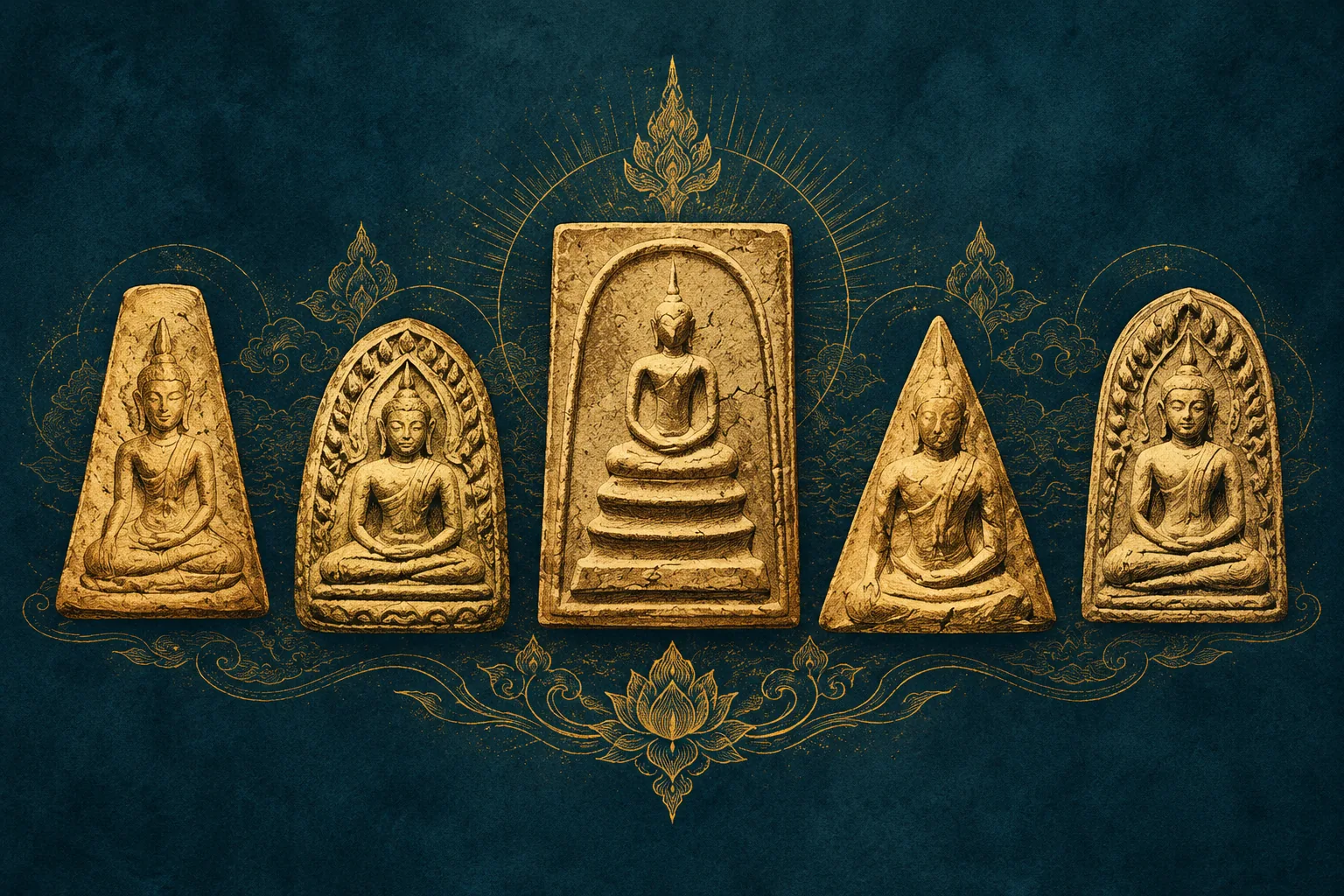
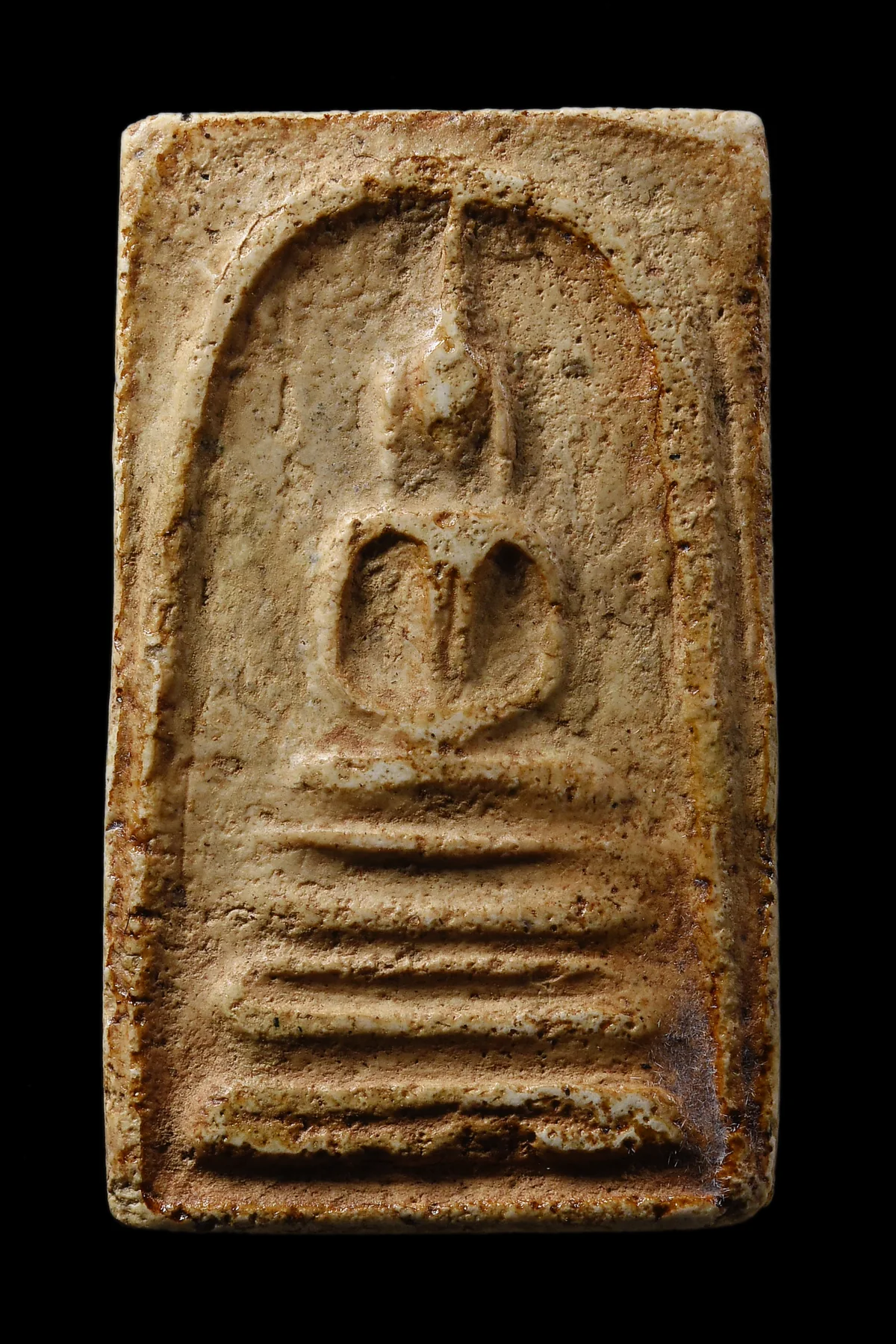
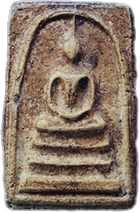
The typical Somdej is a rectangular powder tablet: the Buddha sits cross-legged on tiered bases within an arched niche. Its apparent simplicity conceals close mold differences in head proportion, ear lines, chest and abdomen, arm turns, base tiers, arch terminals, and border spacing. Collectors discuss principal, chedi, extra-base, lotus-bud topknot, and bodhi-canopy molds, with further subgroups under each. A mold name is a research tool, not a label inferred from silhouette alone.
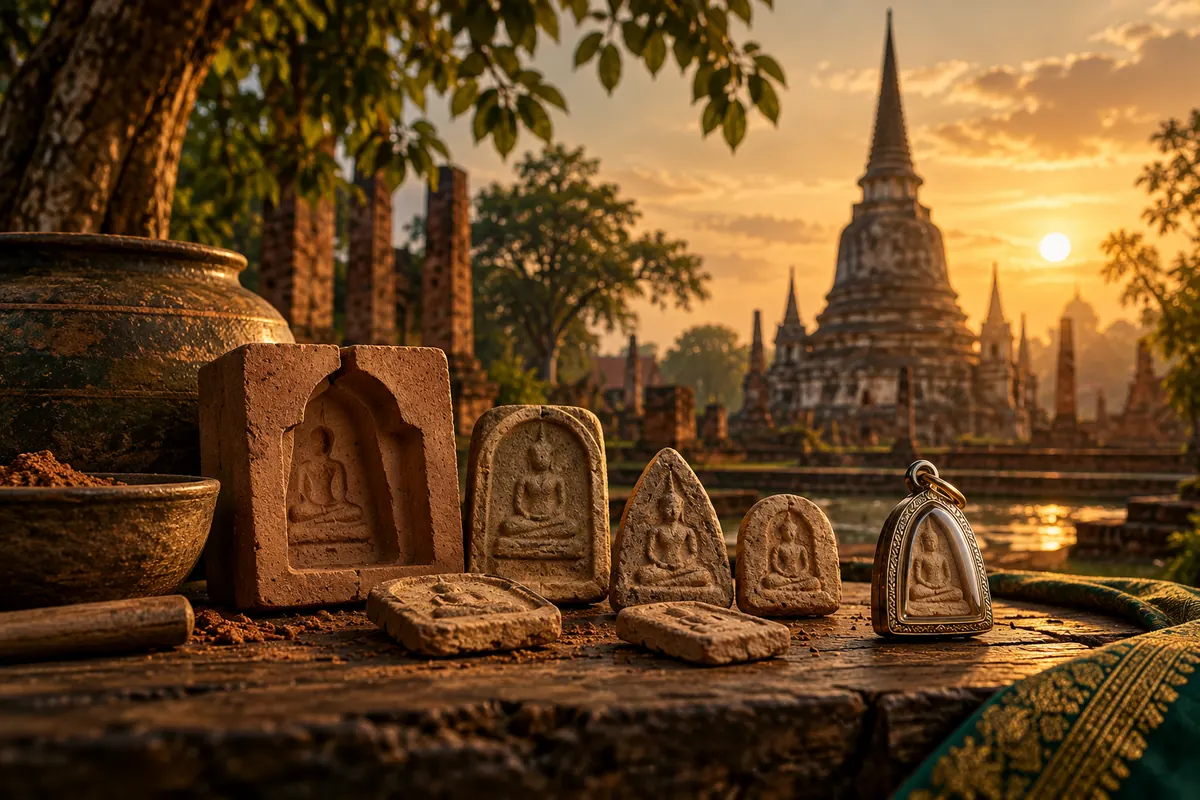
Tradition describes lime, shell lime, sacred powders, pollen, manuscript powder, and other fine matter, but later oral lists accumulated over time and cannot be assumed to describe every piece. Study should consider density, pores, inclusions, shrinkage, surface aging, and natural losses together. Cracks, yellow stains, or an ‘old look’ alone do not establish age; imitations can manufacture surfaces too.
Why it came to head the Benjapakee
When twentieth-century collectors formed the Benjapakee list, Wat Rakhang Somdej occupied its centre. This was not a scriptural ranking. It grew from Toh's reputation, temple status, scarcity, mold scholarship, elite collections, and media narratives. The title ‘king of amulets’ then added a premium to the name itself. For the same reason, Somdej is heavily imitated and misattributed. Later namesakes, other temple lines, and artificially aged copies cannot be merged under the word Somdej.