Origins & Belief · Oct 2026 (B.E. 2569)
Phra Som Kor: Thung Setthi, the arched image, and a landscape of caches
Phra Som Kor is not a one-mold story from a single stupa. It belongs to Kamphaeng Phet and Nakhon Chum, the Thung Setthi cache field, and a religious network spanning Sukhothai into Ayutthaya.
17 min
Phra Som Kor: Thung Setthi, the arched image, and a landscape of caches
Phra Som Kor is not a one-mold story from a single stupa. It belongs to Kamphaeng Phet and Nakhon Chum, the Thung Setthi cache field, and a religious network spanning Sukhothai into Ayutthaya.
The Thai name Phra Kamphaeng Som Kor identifies a Kamphaeng Phet lineage with a distinctive niche, som. Kor is a mold name and is popularly explained through the outline's resemblance to the Thai letter ก. Its core geography is not one temple but Kamphaeng Phet, Nakhon Chum west of the Ping River, and the many temples and deposits of Thung Setthi.
The Kamphaeng Phet–Nakhon Chum landscape
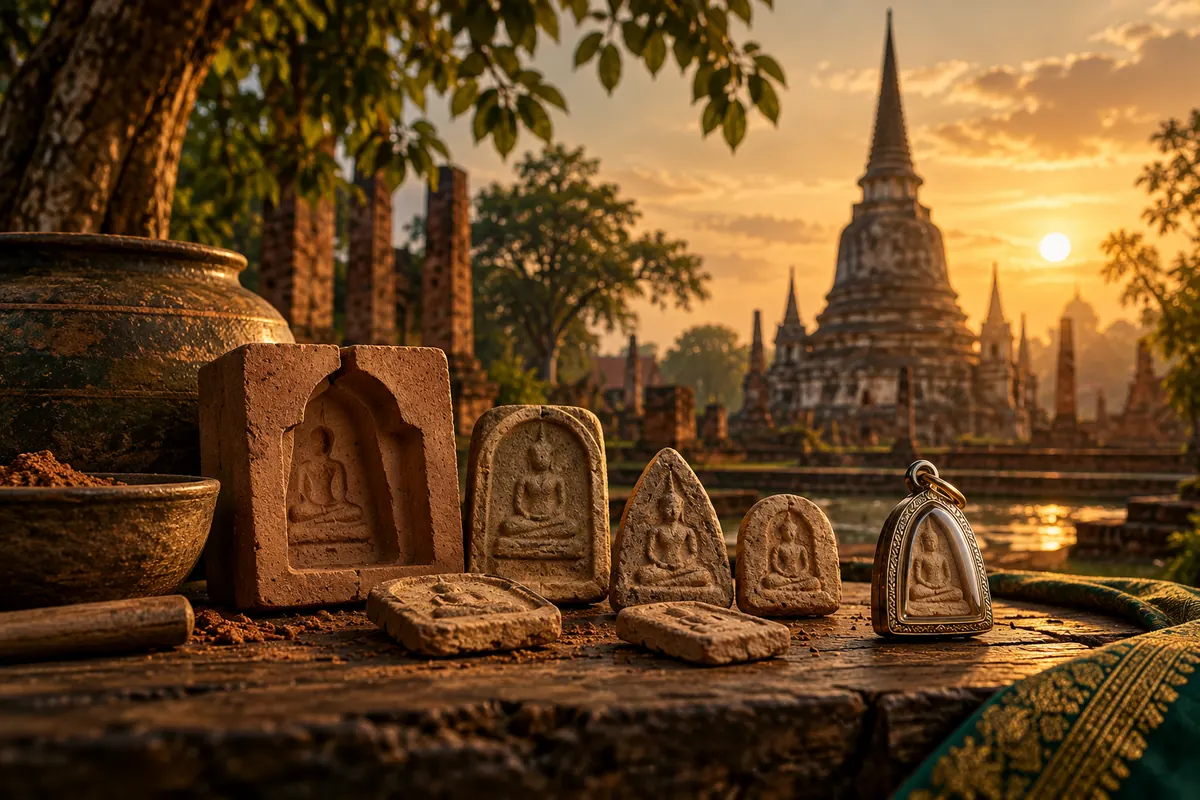
From the later Sukhothai into the Ayutthaya period, Kamphaeng Phet was a major city and route between the north and the Chao Phraya basin. Nakhon Chum, Wat Phra Borommathat, Wat Som Kor, temples inside and outside the walls, and Thung Setthi formed a broad sacred landscape. Vast deposits of molded images accumulated merit, sustained Buddhism, and demonstrated the city's ability to mobilise makers, materials, and devotees. Som Kor belongs to this regional system, not merely to an expensive product name.
Not one cache: multiple Thung Setthi sources
Collector literature names Wat Som Kor, Wat Phikun, Wat Nong Phikun, and other sites around Thung Setthi. Soil, firing, burial, and preservation vary between deposits, producing differences in colour, cache skin, and losses. Market language sometimes interchanges old Kamphaeng tablets and Som Kor, but Kamphaeng Phet yielded many types. Only pieces belonging to the relevant iconographic and mold system are Som Kor. A claimed find-place must be specified beyond the broad label Thung Setthi.
Iconography and principal molds
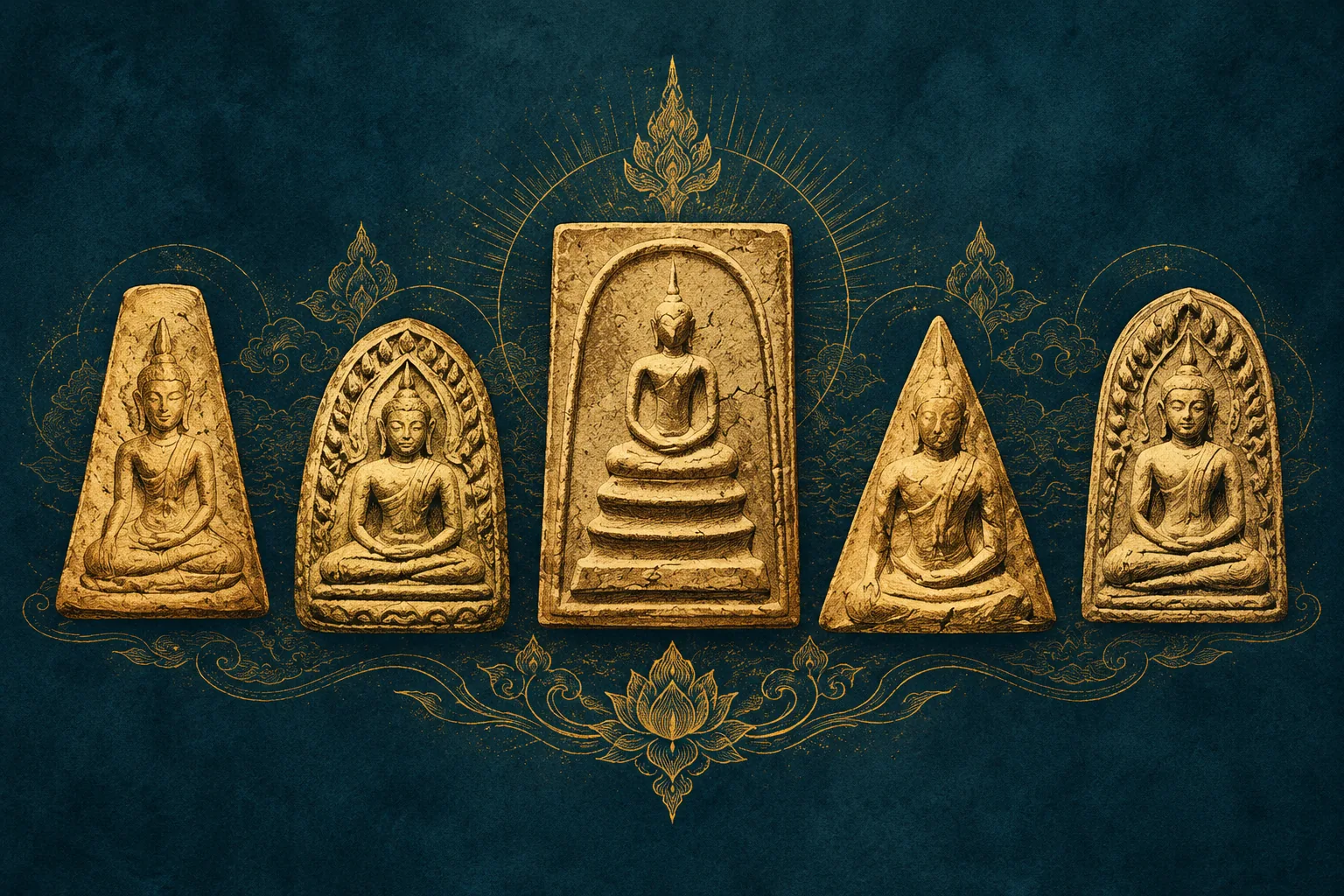
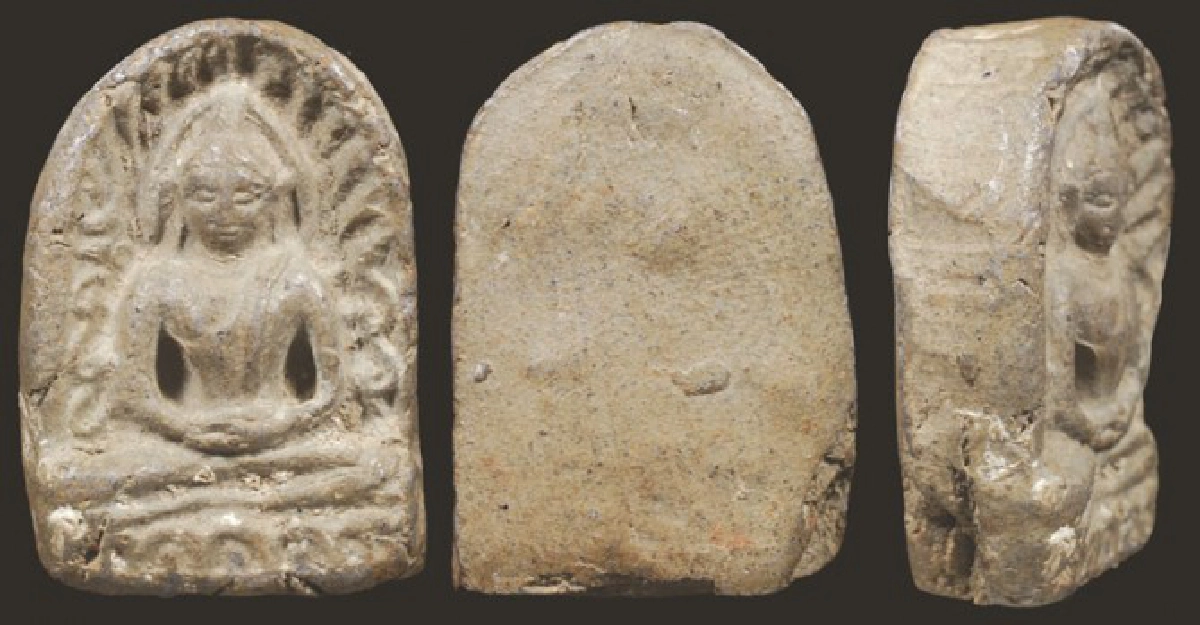
Som Kor is generally fired clay or powder-rich earth. The seated Buddha appears within an arch of flame, vine, or scroll ornament. The ornamented large mold is best known, alongside plain large, medium, small, Khanom Tom, and other groups. Study the opening of the arch, rhythm of foliage, head, torso, arms, knees, and bases; an arch-like outline alone does not make a Som Kor. Many pieces also have substantial thickness and curved profiles that flat photographs conceal.
‘With me, poverty recedes’: the wealth tradition
The best-known market phrase is mi ku laeo mai chon—‘with me, poverty recedes.’ It joins the name Thung Setthi, cache legend, and aspirations to prosperity in a memorable line. Popular belief also grants protection, career, authority, and favour. These are modern devotional and collecting traditions, not promises demonstrated by archaeology. A wearer may treat the amulet as a symbol of diligence and stability, but financial outcomes remain grounded in action.