Origins & Belief · Oct 2026 (B.E. 2569)
Phra Saraswati: Saraswati
A goddess of learning, language, music and knowledge.
16 min
Phra Saraswati: Saraswati
A goddess of learning, language, music and knowledge.
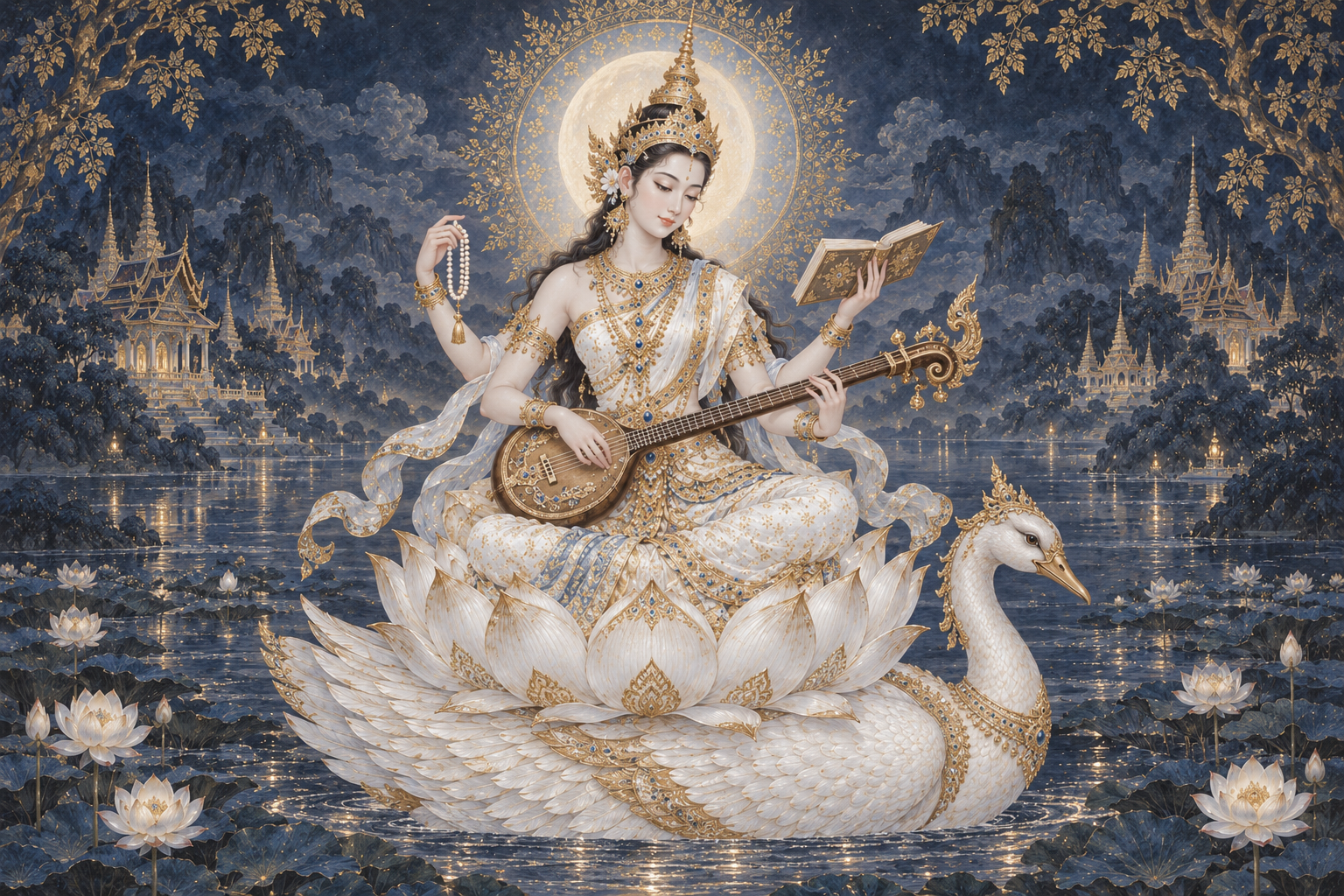
Saraswati is linked in Hindu traditions with knowledge, speech, music and learning. Images often include a book, rosary, instrument or lotus, though details vary by region.
Myth, imagery and how to read it
Saraswati’s early associations include river, flow and speech; in later Hindu traditions she develops as a goddess of learning, poetry, music and discernment. White dress, lotus, swan or goose, and vīṇā are common clues, not compulsory specifications on every work. A book can signal transmitted learning, a rosary concentration and repeated practice, and an instrument the joining of sound, rhythm and skill. These symbols better frame a process of study than a guaranteed exam outcome. For objects bearing her image, return to the issuing temple, date and design source.
From river and speech to learning: how a divine name expanded
Saraswati did not begin simply as a ‘goddess for students’. Early Indic material links the name with river, flow, poetry and the force of speech; later Hindu traditions make her increasingly legible as a figure of learning, music, literature and discernment. That long development explains why an image may combine water, lotus, book and instrument. It does not mean that every attribute must be present, or that stories from different periods are one fixed version. Museum collections also show her honoured in knowledge traditions beyond Hindu practice, reminding us that this aspect travelled across communities.
Book, vīṇā, rosary and swan: read the combination first
A book or palm leaf may point to learning and textual transmission; a rosary to concentration, recitation or practice; the vīṇā to sound, rhythm and cultivated skill; water birds, lotuses and water to older vocabularies of clarity, flow and river. Attributes, however, change with region, workshop, period and religious setting. Four or two arms, white clothing, vehicle or implement are never a single formula for authenticity. A sounder method is to record what can actually be seen, then compare works from the same temple, period or reliable collection instead of deciding from one object in the hand.
In Thailand: knowledge, state records and modern devotion
The National Museum Bangkok preserves a Saraswati image whose museum record connects it with the historical space of the former Department of Saraswati or civil-registration office. It is a useful Thai example: a divine name can enter public memory around records, education and administrative knowledge as well as private prayer. Yet it is a documented case, not evidence that every Thai student, temple or school follows the same rite. Asking for concentration or an easeful course of study is a cultural language of devotion; learning itself still depends on time, teachers, method and practice.
A place in Thai culture
Students, teachers and creators in Thailand may ask Saraswati for focus and a smooth course of study. This sits alongside — not in place of — actual preparation, learning and responsibility.
Texts, places and versions: no one story is the whole tradition
These deities do not belong to one fixed book, period or country. Vedic material, epics, Purāṇas, temple ritual, local oral tradition, royal literature and modern devotion can give the same name different identities, relations, attributes and narrative emphases. A better method is to ask first, ‘Which tradition is this passage from?’ and then, ‘How was it adapted or used in Thailand?’ When a source is unclear, say ‘in some traditions’, ‘in some versions’ or ‘in popular usage’ rather than pretend there is one answer.
Image, devotion and sacred object: three different things
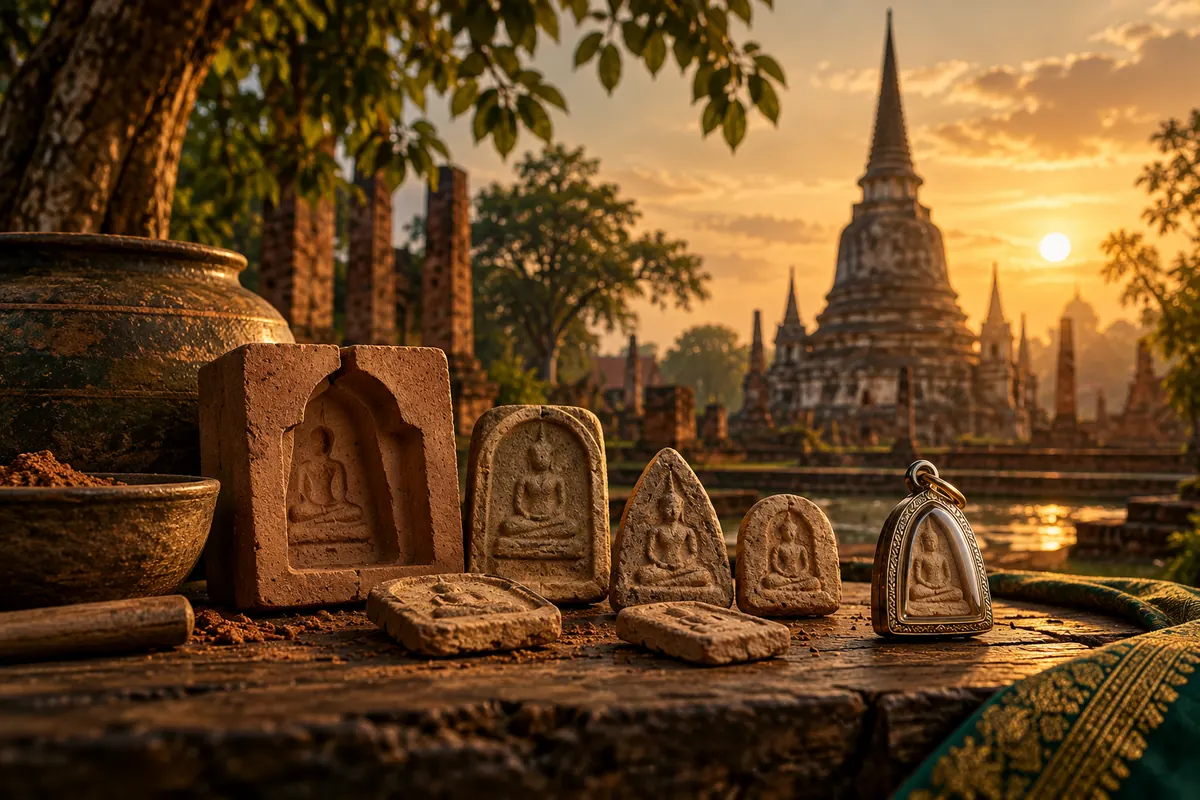
A museum sculpture, a temple image, a theatrical or mural character, a commemorative object issued for a temple rite and a market pendant may all cite the same deity, but they cannot substitute for one another as evidence. Iconography helps identify mythic language; devotion shows how a community creates a relationship; the date, material, mold and issue history of a particular object still require separate checking. Keeping the three apart neither diminishes belief nor permits the mistake of inferring age, authenticity or efficacy from a divine name.
A note for readers and collectors
The same name can appear in Indian traditions, Thai court culture, temples, theatre and commercial sacred objects. Images, names and stories vary by period and place. When reading an object, check its temple, date, purpose and public sources before inferring background or benefits from the name alone.