Origins & Belief · Oct 2026 (B.E. 2569)
Phra Sangkachai: beyond the laughing belly, meet Mahakaccana
Often confused with the Chinese Budai or reduced to a wealth Buddha, the Thai image points to a great disciple renowned for expanding the Buddha's concise teaching.
15 min
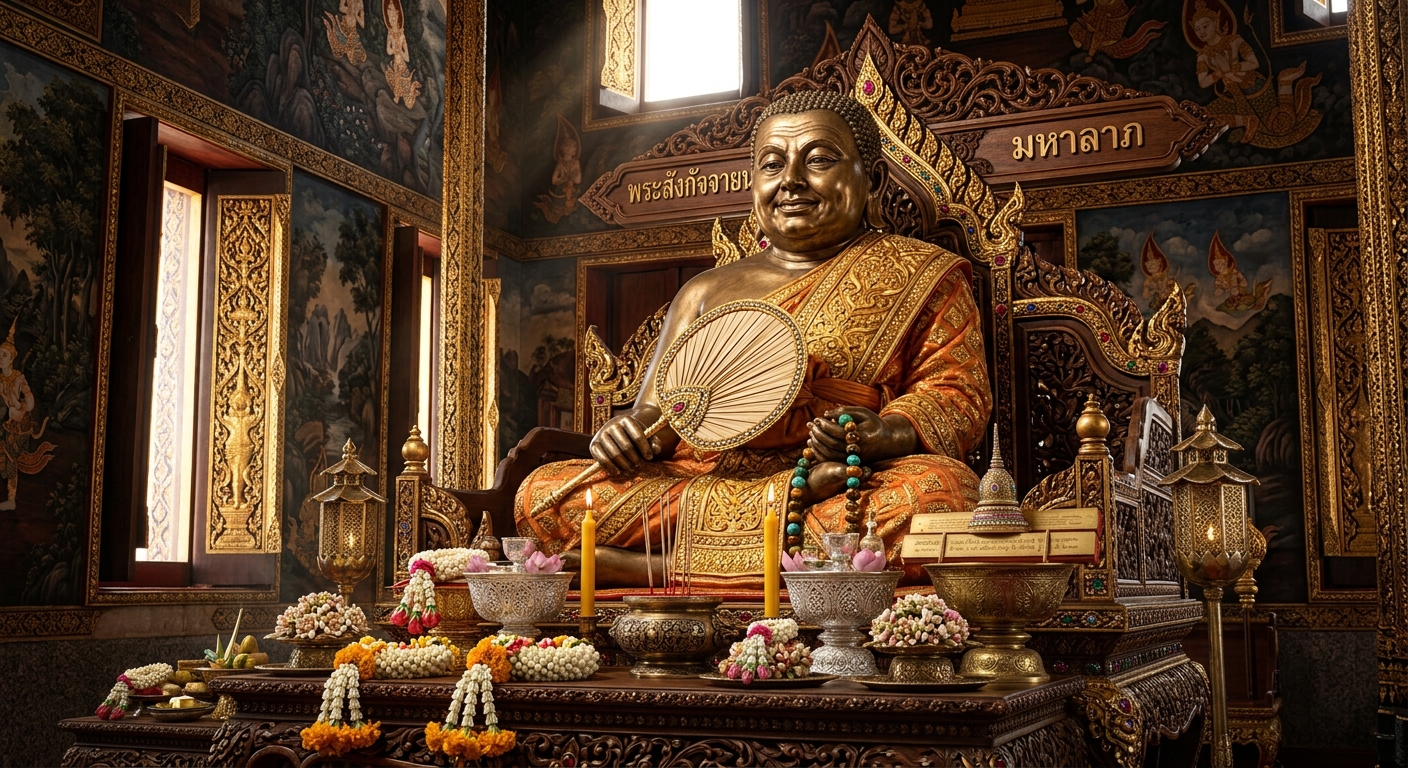
Phra Sangkachai: beyond the laughing belly, meet Mahakaccana
Often confused with the Chinese Budai or reduced to a wealth Buddha, the Thai image points to a great disciple renowned for expanding the Buddha's concise teaching.
The Chinese-market name Sangkachai refers in Thai to Phra Sangkaccayana, associated with the disciple Mahakaccana. Pali tradition praises him above all for expanding concise statements of the Buddha into clear, detailed explanation. His core is therefore wisdom, teaching and the ability to make complexity intelligible; prosperity is a later devotional layer.
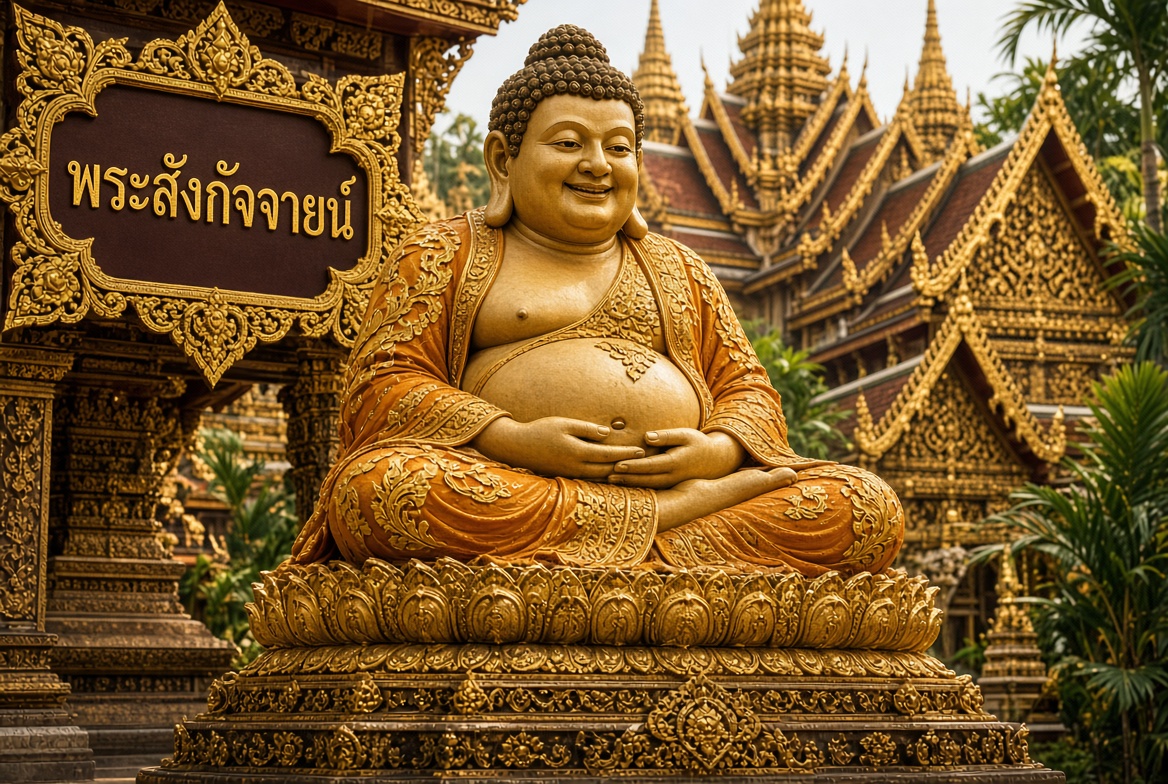
Why the figure became corpulent
Tradition describes the elder as handsome and golden-skinned, at times mistaken from afar for the Buddha and at times provoking unwholesome desire. To prevent confusion and attachment, he transformed into a short, corpulent figure. The story does not equate fatness with wealth; it redirects attention from beauty to teaching. Broad belly, short neck and rounded body warn against judging by appearance.
How to distinguish him from Budai
Chinese Budai is the later Chan monk Qici, typically laughing with exposed belly and cloth sack, and regarded in East Asia as a manifestation of Maitreya. Thai Sangkachai is usually a robed monk seated with hands before the abdomen or in a teaching attitude, centred on Mahakaccana. Modern products mix them; identify sack, robe, posture, inscription and the temple's own name, not belly alone.
Why prosperity entered the tradition
A full body readily evokes sufficient food, abundance and contentment, while Chinese transliteration introduced a character for wealth, strengthening the prosperity reading. Yet the canonical identity remains the interpreter of teachings. Devotees can approach him through study, teaching, negotiation, analysis and professional understanding rather than compressing every value into money.
A Sangkachai worth keeping close
For examinations, teaching, writing, management or explaining complexity, Sangkachai can feel more personal than a generic wealth god. Check whether iconography is coherent, whom the temple names, and whether material and edition are documented. The object worth keeping is one that recalls a sequence: understand first, explain clearly, and build abundance through wisdom.