Origins & Belief · Oct 2026 (B.E. 2569)
Phra Rod: Wat Mahawan, Hariphunchai, and a millennium of memory
Phra Rod is regarded as the oldest Benjapakee type. It joins ancient Lamphun, Queen Chamadevi traditions, stupa discoveries, and modern collecting, but legend and archaeological context must remain distinct.
16 min
Phra Rod: Wat Mahawan, Hariphunchai, and a millennium of memory
Phra Rod is regarded as the oldest Benjapakee type. It joins ancient Lamphun, Queen Chamadevi traditions, stupa discoveries, and modern collecting, but legend and archaeological context must remain distinct.
Phra Rod is principally associated with Wat Mahawan in Lamphun. Ancient Lamphun, Hariphunchai, was a major Mon and Theravada Buddhist centre in the north. Temple tradition traces Wat Mahawan to Queen Chamadevi and remembers the stupa as a deposit place for Phra Rod. The tablet therefore condenses local history, urban memory, and religious identity, not merely an old molded image.
Date and legend: what ‘a thousand years’ can mean
Official local material describes Wat Mahawan as more than thirteen centuries old and links its foundation to Queen Chamadevi. This is important temple and local memory. Yet the precise age of an individual tablet cannot be calculated directly from the temple's founding. Without complete strata, cache inventories, and scientific analysis, the responsible formulation is that Phra Rod's form, material, and find-place belong to a Hariphunchai context, while exact makers and years belong to later legend.
A fallen stupa and repeated discoveries
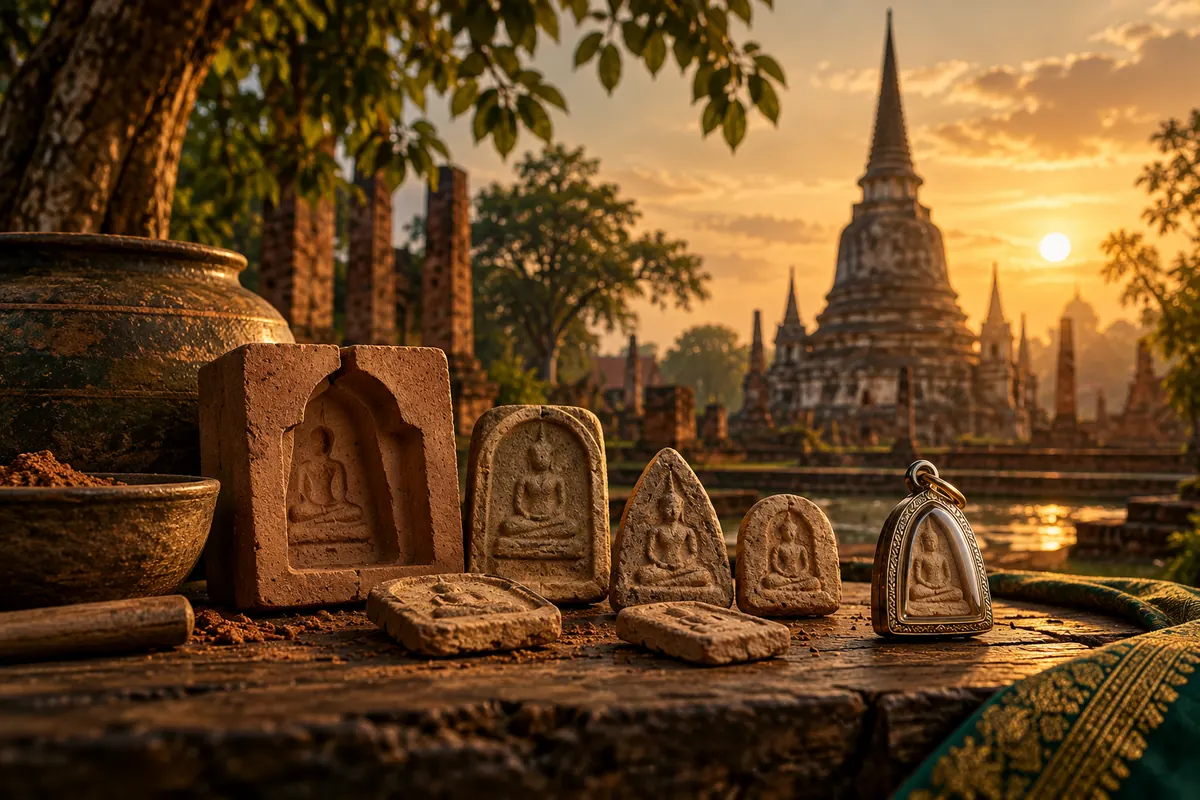
Modern circulation did not begin with one controlled excavation. Temple histories record damage to the old stupa and finds during work in 1892, followed by discoveries in 1908 and mid-twentieth-century repairs. Some tablets were re-enshrined, others entered private hands, and surrounding ground was later searched informally. Terms such as old cache, new cache, or a named opening must therefore be tied to actual provenance rather than merged into one event.
Image, five principal molds, and fired clay
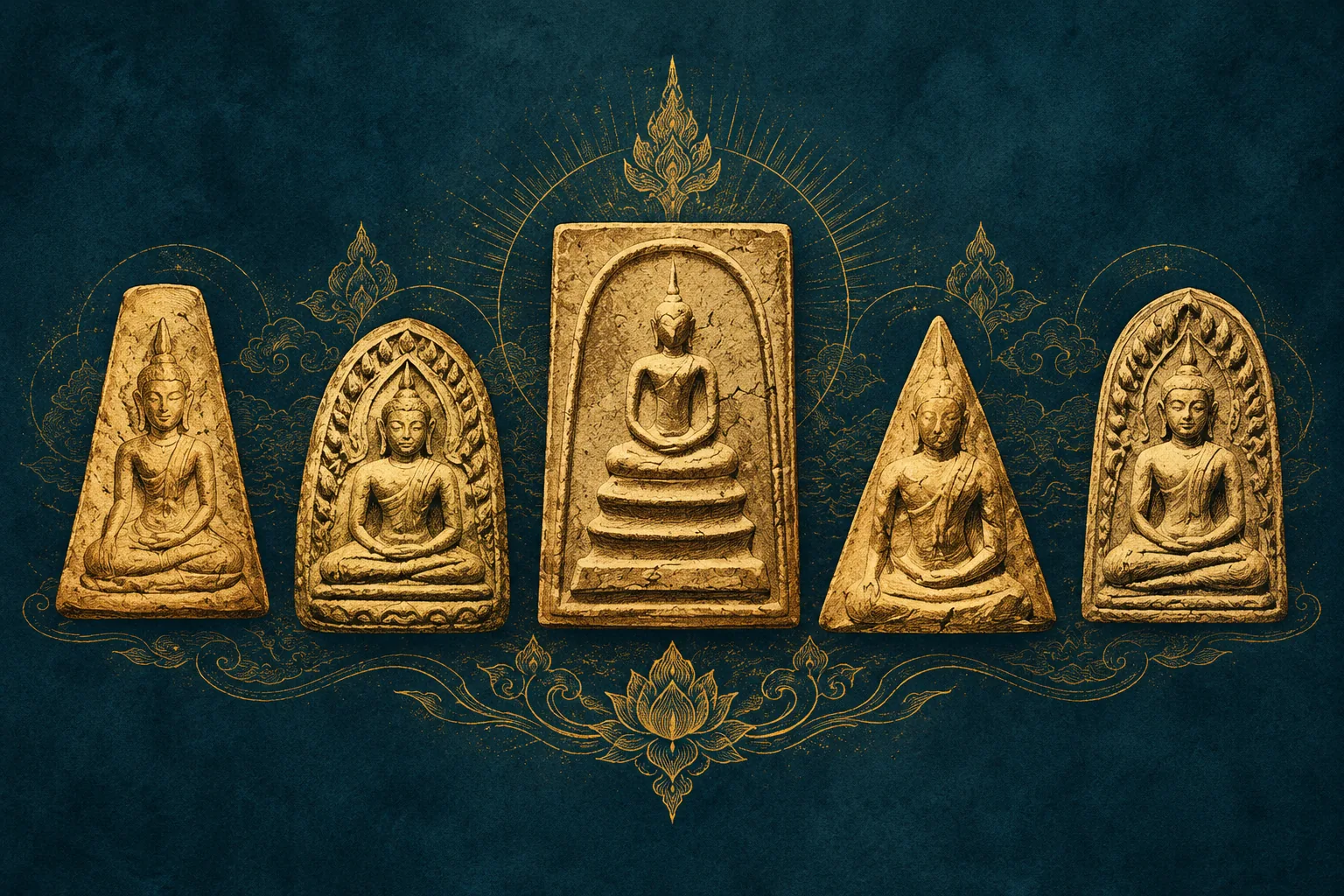
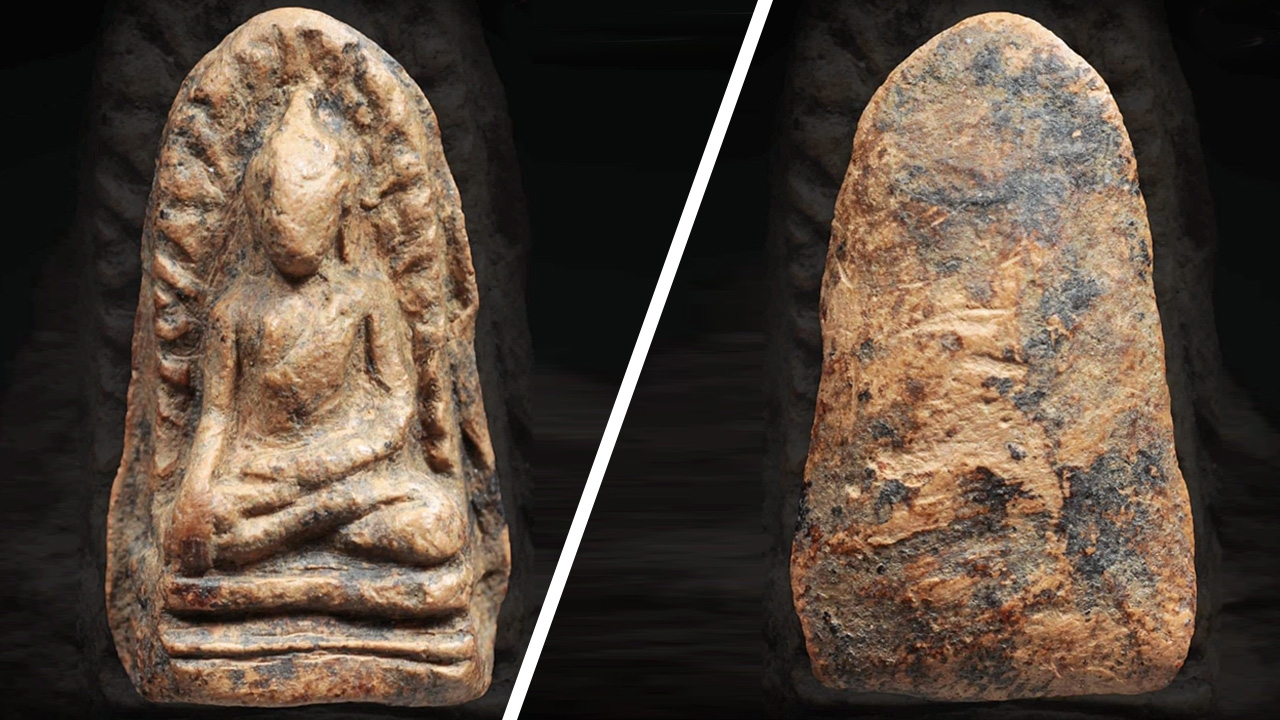
Phra Rod is normally a small fired-clay tablet. The seated Buddha is tightly enclosed by bodhi-leaf or flame-like architecture and dense side ornament. Collectors commonly use five basic mold groups—large, medium, small, short, and top-reaching ushnisha—though lineages vary in fine terminology. Study centres on head and topknot, facial placement, chest, arm and knee lines, base, side foliage, lower edge, and pressing and firing traces on the reverse.
Fired-clay colours range from red and orange to ochre and dark brown, affected by clay, firing, burial, and deposits. Similar colour or thick cache skin is not a single test of authenticity; added soil, chemical staining, and abrasion can imitate age. Begin with mold structure, then combine clay, shrinkage, breaks, deposit location, and provenance.
Rod and the language of escape
The Thai word rod evokes passing through, surviving, or escaping. Popular belief therefore associates Phra Rod with safety, avoiding calamity, and personal favour. Another tradition links the name to Narada Rishi, part of a broader story of sages creating sacred images. Such beliefs explain devotion; they do not authenticate an object. Its deeper appeal is that a very small clay tablet can carry a millennium of city, temple, and popular memory.