Origins & Belief · Oct 2026 (B.E. 2569)
Phra Rahu: Rahu
A figure linked with eclipses, astrology and shadow imagery; distinguish astronomical events from religious symbol.
16 min
Phra Rahu: Rahu
A figure linked with eclipses, astrology and shadow imagery; distinguish astronomical events from religious symbol.
Rahu comes from Indian myth and astrological traditions, where the swallowing of sun or moon explains eclipses. Modern astronomy explains eclipses through the positions of Earth, Moon and Sun; myth offers cultural narrative.
Myth, imagery and how to read it
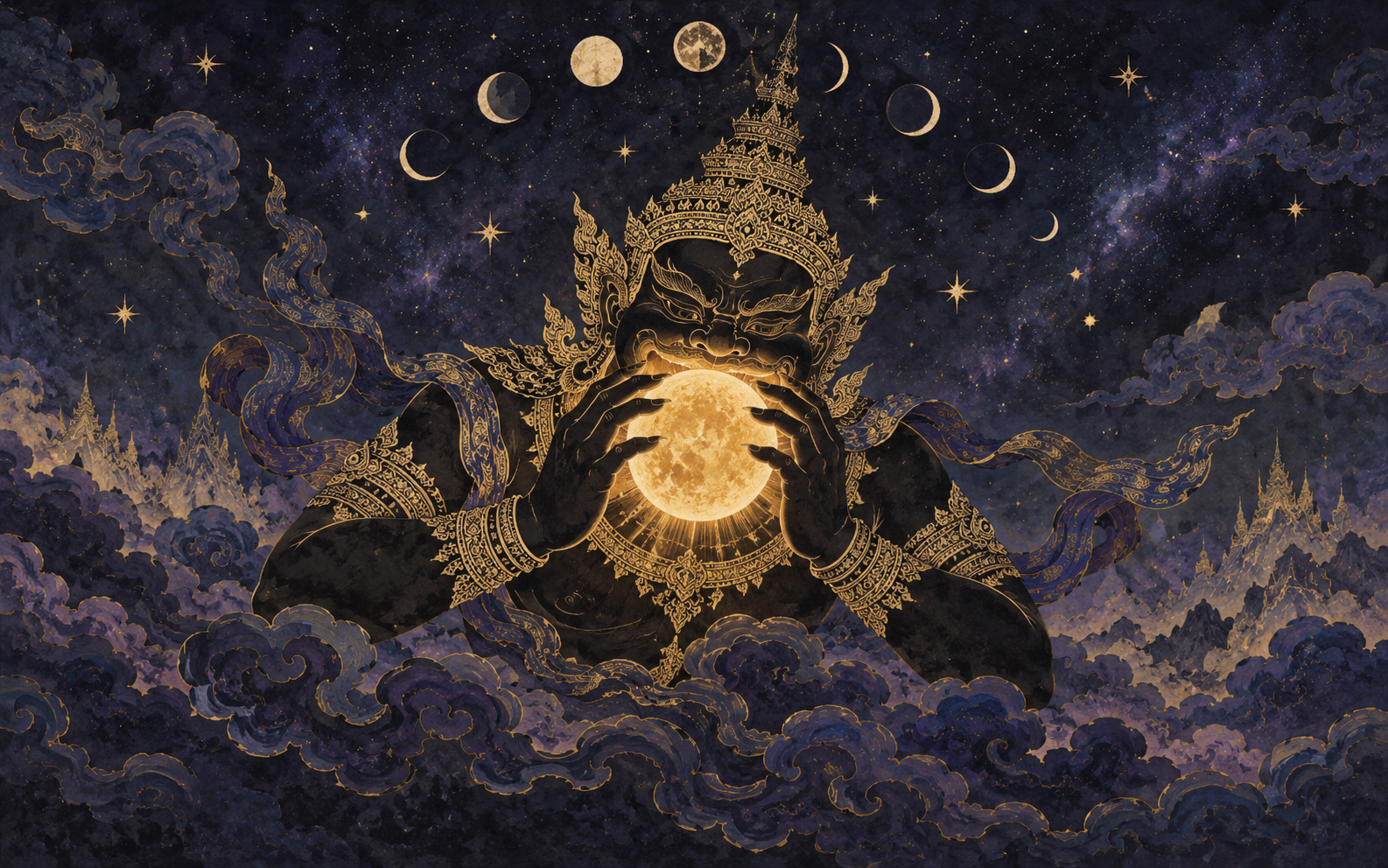
Rahu is often tied to the churning-of-the-ocean story: he joins the gods receiving the elixir, is recognised and cut by Vishnu, and, having tasted it, survives as a head that pursues sun and moon. This is mythic language for eclipses, not an astronomical mechanism. Indian astrology also treats Rahu and Ketu as non-material nodal concepts, while Thai astrology and ritual developed their own practices. Dark upper body, open mouth with sun or moon, and a circular luminary are symbolic forms. Writing and collecting should neither replace science with the eclipse story nor turn astrological anxiety into a reason one must buy a particular object.
A severed head in myth, nodes in astronomy
The story of Rahu ‘swallowing’ sun and moon has a clear narrative purpose: it gives eclipses a visible pursuer. Modern astronomy explains eclipses through the relative positions of Sun, Moon and Earth; in Indian astrology, Rahu and Ketu commonly name the two nodes where the lunar orbit meets the ecliptic, not visible planets. Keeping the three layers apart does not weaken the story. It prevents myth from being mistaken for physics, or a technical astrological term from being reduced to a frightening god.
Rahu and Ketu: more than a black eclipse-eater
In the familiar churning-of-the-ocean narrative, Rahu joins the distribution of nectar in disguise, is recognised and cut down by Vishnu, and, having tasted the nectar, survives as a head; in some versions the body is connected with Ketu. Texts differ in character, sequence and outcome, so one online retelling should not be presented as the only answer. Thai images often foreground an open mouth, a round sun or moon, or a dark body to make the idea of obscuration legible. Colour, arm count, implements and offering habits vary by temple, period and ritual line.
How the nine grahas were localised in Thailand
Thailand’s Navagraha or nine grahas joins sun, moon and other astral powers into a language of astrology and ritual. Fine Arts documentation shows one common arrangement: Rahu with Garuda and Ketu with nāga, while sun, moon and others have their own mounts. It is a useful starting point for reading Thai images and rites, not an unchanging national rule. Participation in Rahu rites at moments of transition is a cultural way of meeting uncertainty, obscuration and cycles of time. To introduce a particular object or offering, identify its temple and ritual source first; never present a single online ‘offering list’ as mandatory everywhere in Thailand.
A place in Thai culture
In Thailand, Rahu is often linked with turning points, obscuration and astrological ritual. Objects and offerings vary greatly; one online list is not a rule for every temple.
Texts, places and versions: no one story is the whole tradition
These deities do not belong to one fixed book, period or country. Vedic material, epics, Purāṇas, temple ritual, local oral tradition, royal literature and modern devotion can give the same name different identities, relations, attributes and narrative emphases. A better method is to ask first, ‘Which tradition is this passage from?’ and then, ‘How was it adapted or used in Thailand?’ When a source is unclear, say ‘in some traditions’, ‘in some versions’ or ‘in popular usage’ rather than pretend there is one answer.
Image, devotion and sacred object: three different things
A museum sculpture, a temple image, a theatrical or mural character, a commemorative object issued for a temple rite and a market pendant may all cite the same deity, but they cannot substitute for one another as evidence. Iconography helps identify mythic language; devotion shows how a community creates a relationship; the date, material, mold and issue history of a particular object still require separate checking. Keeping the three apart neither diminishes belief nor permits the mistake of inferring age, authenticity or efficacy from a divine name.
A note for readers and collectors
The same name can appear in Indian traditions, Thai court culture, temples, theatre and commercial sacred objects. Images, names and stories vary by period and place. When reading an object, check its temple, date, purpose and public sources before inferring background or benefits from the name alone.