Origins & Belief · Oct 2026 (B.E. 2569)
Phra Phrom: Brahmā
From creation narratives to Bangkok shrines: understanding Phra Phrom without reducing four faces to four promises.
16 min
Phra Phrom: Brahmā
From creation narratives to Bangkok shrines: understanding Phra Phrom without reducing four faces to four promises.
Brahmā, known in Thai as Phra Phrom, is commonly understood in Hindu traditions as a creator. His four-faced image is among Thailand’s most recognisable; theology and local traditions differ in how they tell his origins and relations.
Myth, imagery and how to read it
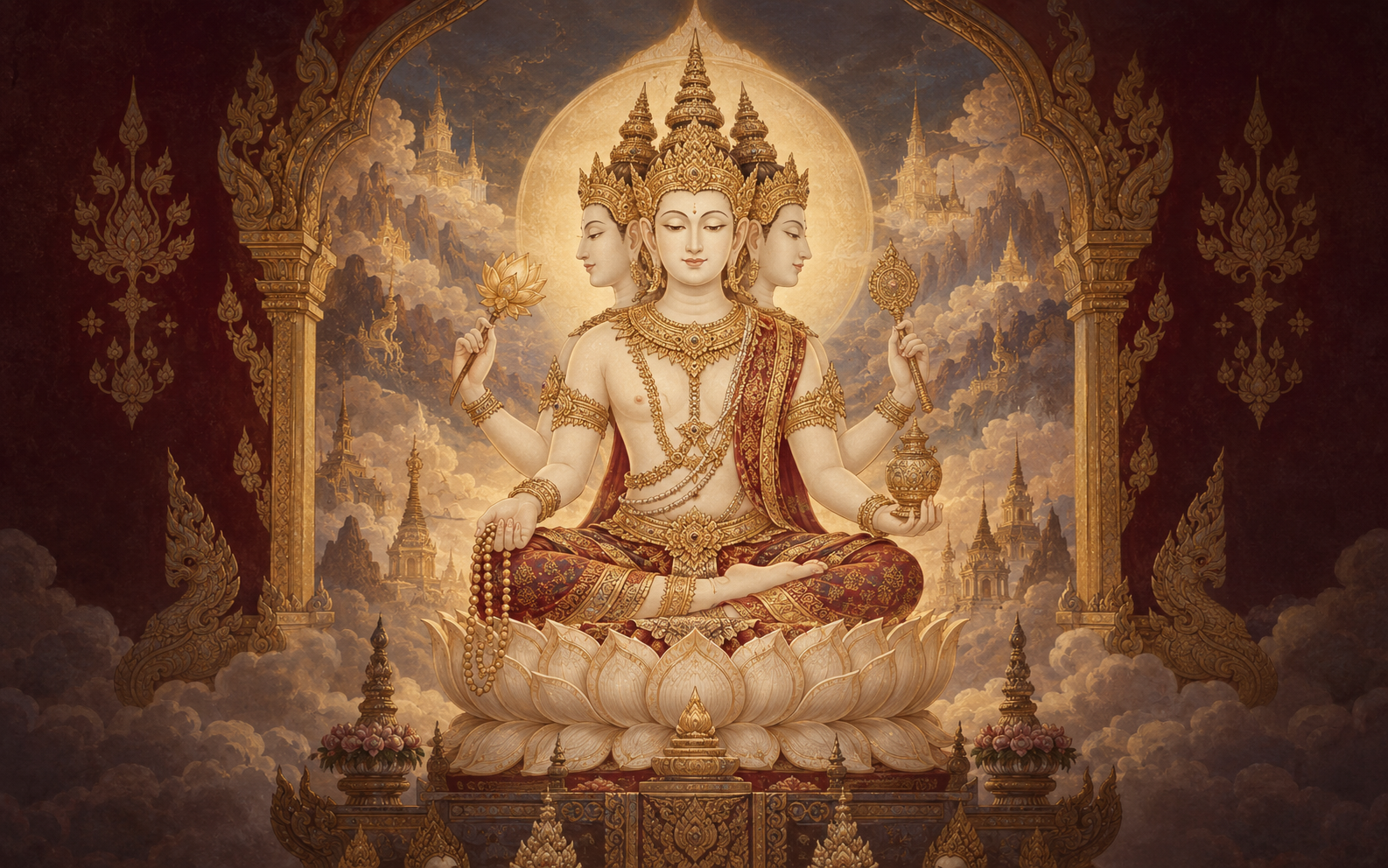
‘Creator’ is a useful introduction, but it should not turn Brahmā into a single, exclusive creator god. Brahmanical and Hindu cosmologies describe recurring creation, preservation and dissolution, and Brahmā’s standing changes across Purāṇic and local traditions. Four faces can signal vision in the four directions and connections with the Vedas or ordered knowledge; books, rosaries, water vessels and lotuses vary by place and image. In a Thai image, read the four faces, crown, attributes and shrine or temple context before reducing each face to a separate promised result.
What do the four faces mean?
The four faces are not four different gods, nor do classical texts set one universal rule that each face controls one request. They may be read through the four directions, the four Vedas, complete awareness, or a gaze extending across the world. These are related interpretive clues, not a price list for wishes. The clockwise circuits and wish-specific practices familiar in Thailand are local devotional practice: worth recording, but not universal Hindu doctrine.
Read the image back into tradition — not into promised effects
Thai art records often show Phra Phrom with four faces and four arms, carrying such things as a rosary, text, water vessel or ritual ladle; combinations change with period and workshop. These objects point toward time, knowledge, water, ritual and creation. They are not a shortcut for authenticating an amulet. Where attributes are unclear, added or mixed, first ask what image type, temple or design source was being cited before making claims about meaning or issue history.
Phra Phrom, Brahmā and the Buddhist ‘Brahmā’ in Thailand
Translation pending
Brahmā and Brahman: a deity is not a philosophical absolute
Translation pending
Why there is more than one creation account
Some traditions describe Brahmā emerging from the golden egg (Hiraṇyagarbha); others, especially in Vishnu-centred narrative settings, show him appearing on a lotus grown from Vishnu’s navel. These are not mutually exclusive exam answers from which only one may be chosen. They belong to different texts, schools and periods of cosmic imagination. Their concern is not a modern scientific account of the universe’s origin, but how undifferentiated water, egg, lotus or sleeping divinity can articulate the emergence of order, time and life. A good article names the difference so readers do not mistake ‘creator’ for one universal storyline accepted by all Hindus.
Five faces, four faces, and the ethics of myth
Many later narratives explain that Brahmā once had five faces and lost the upward face. The cause may be competition with Shiva, pride, or another moral allegory. Versions differ markedly in characters, motives and outcomes, and some contain questions of power and gaze that modern readers may find troubling. Responsible writing neither turns the most dramatic telling into ‘literal history’ nor uses it for spectacle. It identifies a particular narrative as a way of reflecting on pride, desire, order or divine relations. Most Thai Phra Phrom images have four faces; their visible form, site and date should remain the first basis for reading them.
Bangkok Phra Phrom shrines: modern urban devotion has a traceable history
Do not imagine the familiar urban four-faced shrine as a form unchanged since antiquity. Thailand’s Fine Arts Department records that the Phra Phrom shrine at the former Erawan Hotel near Ratchaprasong was established for smooth construction; its shrine and image were designed and made in a prescribed style by people connected with the department. It later became an important reference for Phra Phrom shrines at homes and large buildings. This documented modern history matters: it continues Brahmanical-Hindu imagery while also being shaped by Bangkok’s architecture, tourism and popular hopes. Devotion can be sincere while history remains specific.
A place in Thai culture
Thai Phra Phrom shrines are often associated with hopes for work, study, family and general wellbeing. This reflects modern urban devotional practice, not a promise of wealth or outcome.
Texts, places and versions: no one story is the whole tradition
These deities do not belong to one fixed book, period or country. Vedic material, epics, Purāṇas, temple ritual, local oral tradition, royal literature and modern devotion can give the same name different identities, relations, attributes and narrative emphases. A better method is to ask first, ‘Which tradition is this passage from?’ and then, ‘How was it adapted or used in Thailand?’ When a source is unclear, say ‘in some traditions’, ‘in some versions’ or ‘in popular usage’ rather than pretend there is one answer.
Image, devotion and sacred object: three different things
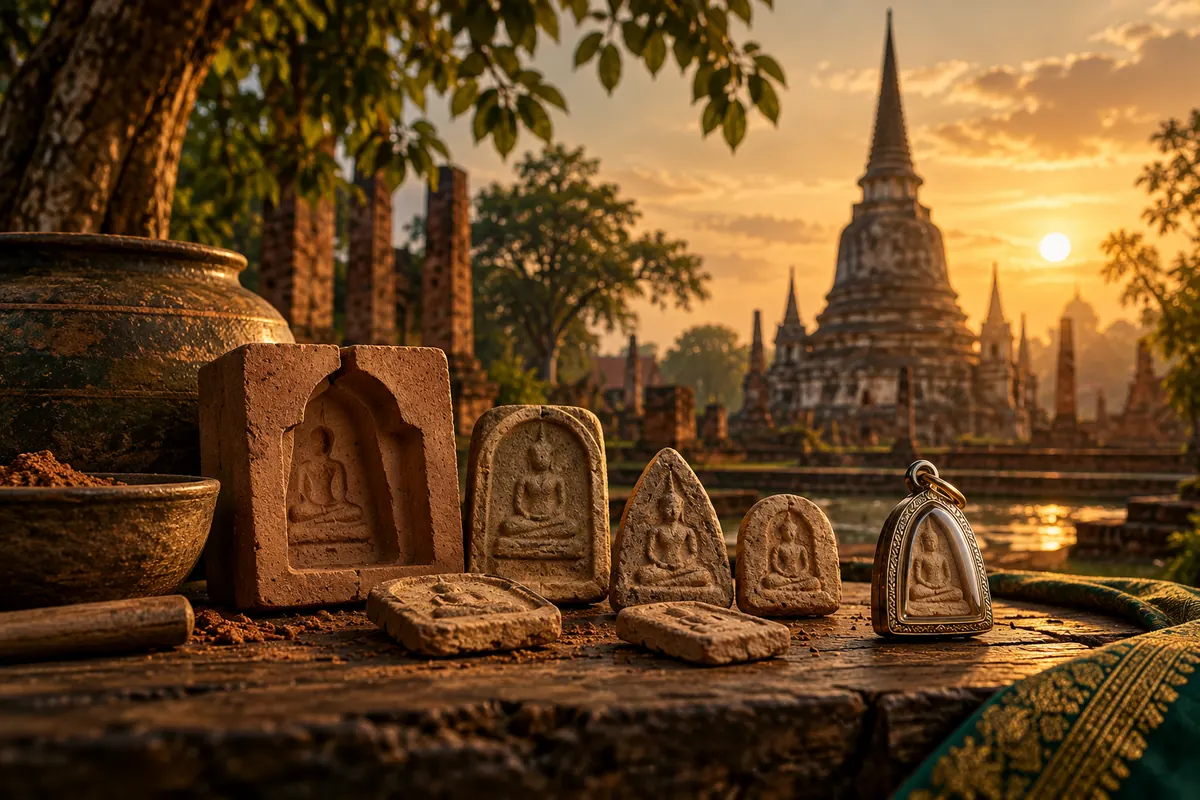
A museum sculpture, a temple image, a theatrical or mural character, a commemorative object issued for a temple rite and a market pendant may all cite the same deity, but they cannot substitute for one another as evidence. Iconography helps identify mythic language; devotion shows how a community creates a relationship; the date, material, mold and issue history of a particular object still require separate checking. Keeping the three apart neither diminishes belief nor permits the mistake of inferring age, authenticity or efficacy from a divine name.
A note for readers and collectors
The same name can appear in Indian traditions, Thai court culture, temples, theatre and commercial sacred objects. Images, names and stories vary by period and place. When reading an object, check its temple, date, purpose and public sources before inferring background or benefits from the name alone.