Origins & Belief · Oct 2026 (B.E. 2569)
Phra Phong Suphan: an ancient Suphan Buri cache, three faces, and disputed history
The 1913 opening, gold-leaf inscriptions, old, middle, and young faces, and palm-marked backs form the classic Phong Suphan story. Yet inscriptions, dates, and later legend cannot be merged without criticism.
17 min
Phra Phong Suphan: an ancient Suphan Buri cache, three faces, and disputed history
The 1913 opening, gold-leaf inscriptions, old, middle, and young faces, and palm-marked backs form the classic Phong Suphan story. Yet inscriptions, dates, and later legend cannot be merged without criticism.
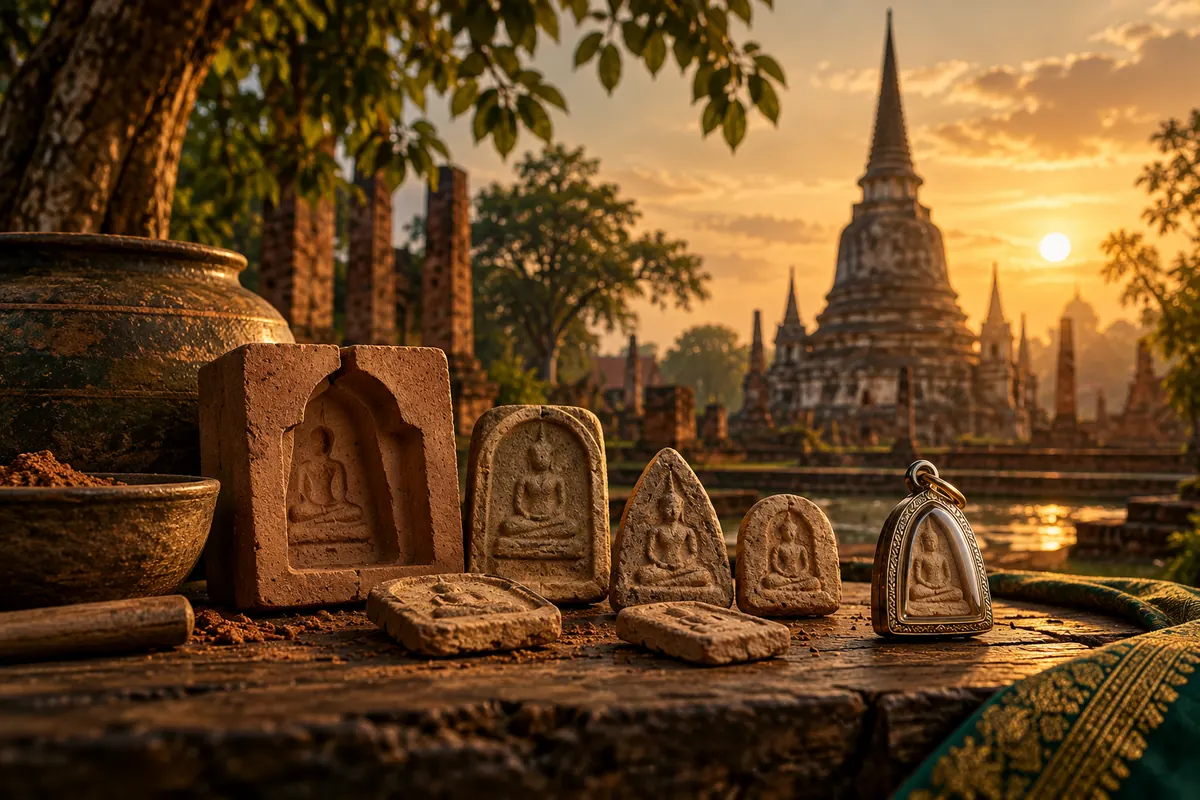
Phra Phong Suphan comes from the main prang cache of Wat Phra Si Rattana Mahathat in Suphan Buri. The ruins and prang are important early Ayutthaya monuments, showing that Suphan Buri was a political, religious, and craft centre in the fourteenth and fifteenth centuries. The tablet's historical value begins with this urban and temple context, not its later market rank.
The cache opening of 1913
In 1913 the principal prang cache was opened, yielding molded images, inscribed gold leaves, and other religious objects. Traditional accounts read the gold texts as early Ayutthaya royal production records and name monks, sages, and totals. Fine Arts Department scholarship cautions that the script of some leaves may reflect later copying. This does not automatically make the tablets late; it means the event described, the date of writing, and the date of manufacture must be studied separately.
The three canonical faces
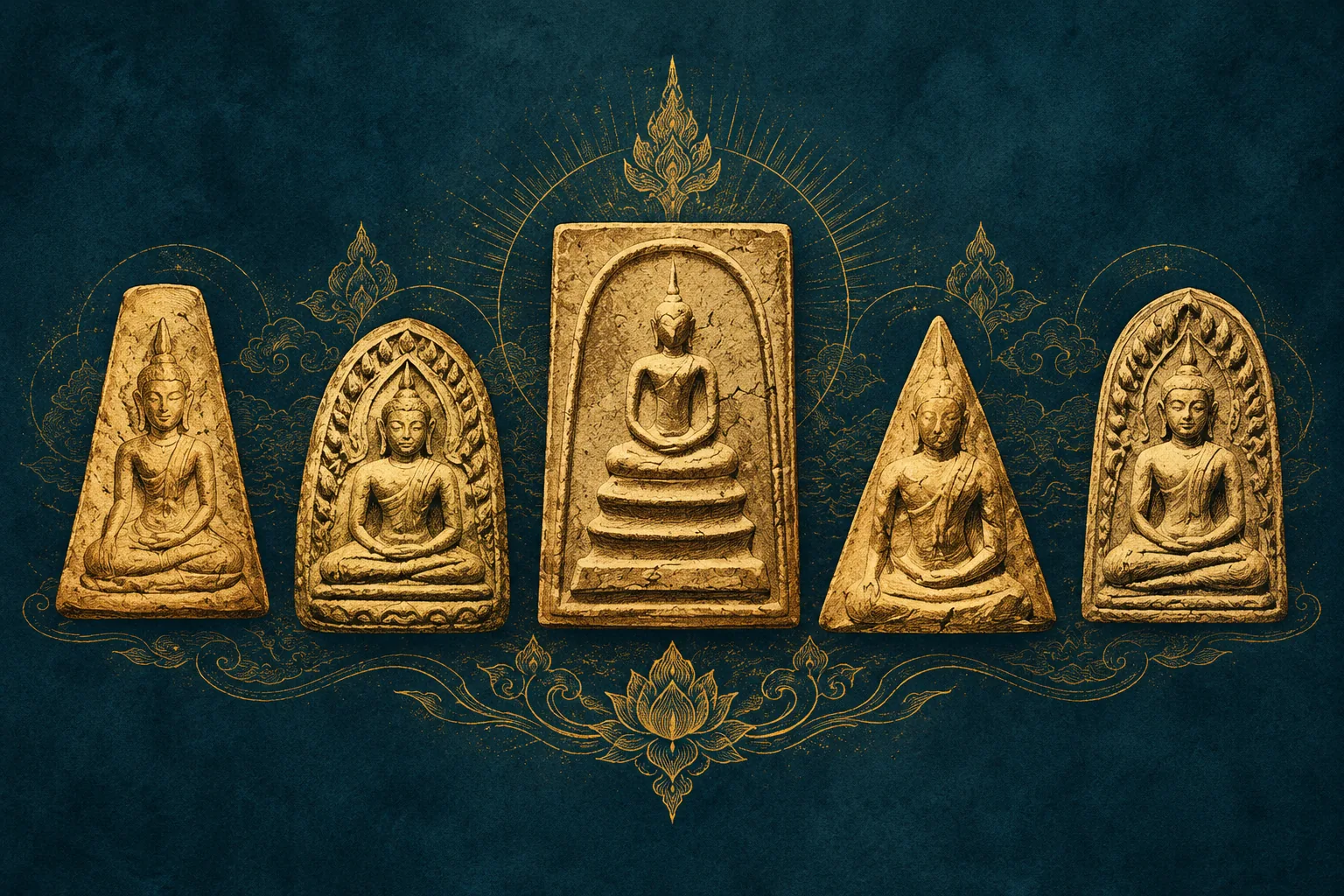
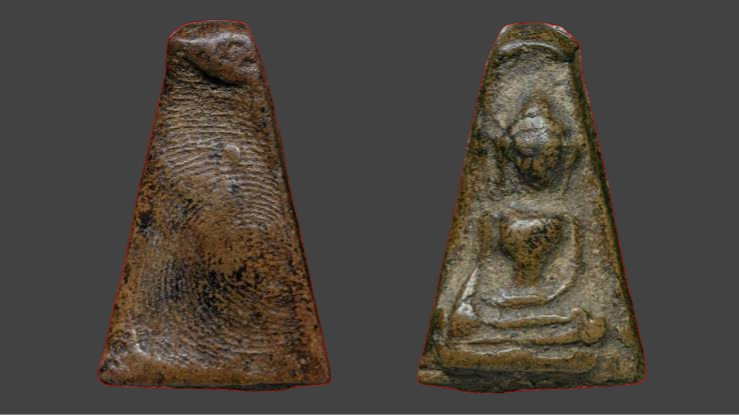
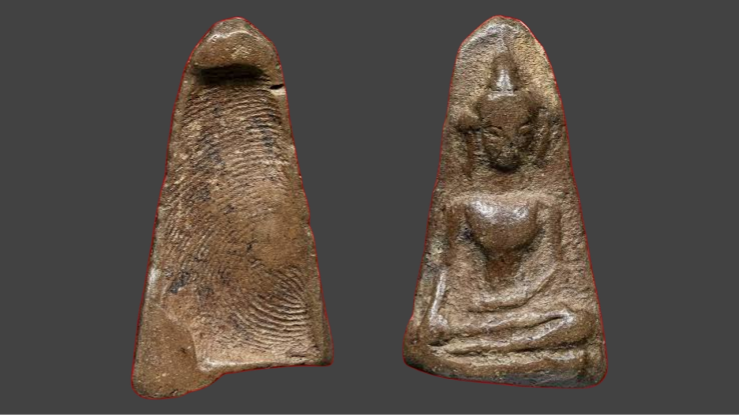
Phra Phong Suphan normally tapers upward in a trapezoidal or softly triangular outline. Its top is flat, gently arched, or rounded rather than forming the pointed triangular apex associated with Phra Nang Phaya. The Buddha sits compactly on tiered bases. Collectors distinguish old-face, middle-face, and young-face molds. The distinction is not merely whether the face looks old or young; it is a structural combination of head, brows, eyes, nose, mouth, torso, arms, knees, and bases. Classification by facial impression alone can confuse wear, copied molds, and distinct dies.
Powder, earth, mineral matter, and palm-marked backs
Although phong means powder, the material is usually described as a pressed mixture of fine earth and powders, ranging from red and ochre to green-grey and black. Variations may reflect clay, organic fines, minerals, firing, and burial; colour alone cannot date or classify a piece. Backs often show pressing, fingerprints, or palm texture, evidence of manufacture. Copies can add such marks deliberately, so they must be read with the front mold, edge shrinkage, and material aging.
Belief, market, and limits of study
Popular belief links Phong Suphan with authority, courage, protection, career, and favour. Collectors pursue it for the ancient cache, three main molds, and scarcity of complete pieces. These beliefs and market stories explain desire, but they are not historical proof. An individual piece requires mold, measurements, both faces, material, and provenance, while photographs cannot establish internal texture, weight, or restoration.