Origins & Belief · Oct 2026 (B.E. 2569)
Phra Nang Phaya: Phitsanulok's queenly tablet, triangular form, and cache memory
Nang Phaya is known for a spare triangular form, broad torso, and queenly tradition. It connects Phitsanulok, Queen Wisutthikasat, Rama V's visit, and twentieth-century discoveries, but each layer carries a different kind of evidence.
16 min
Phra Nang Phaya: Phitsanulok's queenly tablet, triangular form, and cache memory
Nang Phaya is known for a spare triangular form, broad torso, and queenly tradition. It connects Phitsanulok, Queen Wisutthikasat, Rama V's visit, and twentieth-century discoveries, but each layer carries a different kind of evidence.
Phra Nang Phaya centres on Wat Nang Phaya in Phitsanulok, near Wat Phra Si Rattana Mahathat and the celebrated Phra Phuttha Chinnarat. The temple is part of the sacred landscape of the former royal city, not an isolated shrine. The tablet's triangular outline and restrained image later acquired the market epithet ‘queen's amulet,’ folding local history, female kingship, and protective belief into one name.
Queen Wisutthikasat and the temple tradition
Tradition links the temple and tablets to Queen Wisutthikasat in the sixteenth century. She was consort of Maha Thammaracha and mother of King Naresuan. This explains the cultural force of the queenly name. Contemporary documentation does not, however, confirm every detail of the temple's first construction or the queen's direct supervision of the tablets. It should be presented as temple and local tradition rather than an uncontested record.
1901 and the modern discovery history
Collector history most often cites 1901, when Rama V visited Phitsanulok and tablets were reportedly found during preparations and works around the temple. Some were said to have been presented to the court or distributed to the entourage. Further discoveries occurred at different locations and times later in the twentieth century. Nang Phaya did not enter the market in one opening; provenance, soil, and preservation can differ. Describing every example as one 1901 batch is inaccurate.
The triangle is distilled, not crude
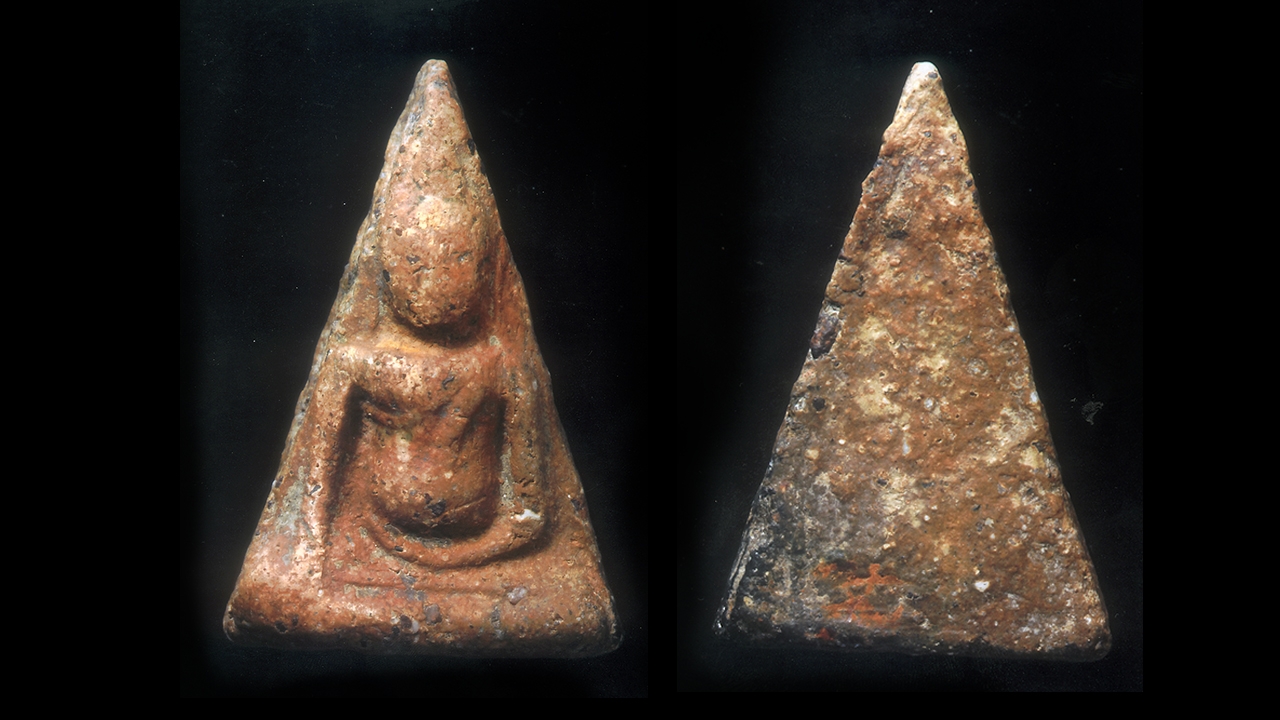
The typical Nang Phaya is built by a triangular cut. The Buddha sits in the earth-touching gesture without an elaborate niche and often without a pronounced high base. The head occupies the apex, shoulders and chest expand, arms descend, and knees stabilise the lower line. Collectors discuss large, middle, small, curved-knee, straight-knee, broad-chest, and flat-chest groups. Names must be checked against total proportion and line placement; wear and copied molds distort chest, hands, knees, and edges.
Clay, mineral inclusions, and the reverse
Nang Phaya is generally fired clay, from reddish and orange brown to dark brown, often with sand or mineral inclusions. The reverse is usually plain but retains irregularities of pressing, trimming, firing, and burial. Online claims that one white speck, black grain, or soil deposit proves authenticity are too simple. Inclusions must be read through embedding, breaks, surface aging, mold, and provenance.
Queenly belief and present meaning
Popular belief links Nang Phaya with presence, leadership, favour, attraction, and women's fortune, drawing businesspeople, managers, and female wearers, although men also venerate it. A sounder reading treats ‘queen’ as a symbol of steadiness, autonomy, and responsibility, not a guarantee of power or charm. For collectors, its ability to create a forceful identity with very few lines demonstrates the maturity of early molded-image design.