Origins & Belief · Oct 2026 (B.E. 2569)
Buddha sheltered by the naga: Mucalinda and the heads that need not number seven
Chinese usage says Seven-Naga Buddha, but the Thai name simply means the Buddha sheltered by a naga. Five, seven and other forms exist; the centre is meditation unmoved in the storm.
15 min
Buddha sheltered by the naga: Mucalinda and the heads that need not number seven
Chinese usage says Seven-Naga Buddha, but the Thai name simply means the Buddha sheltered by a naga. Five, seven and other forms exist; the centre is meditation unmoved in the storm.
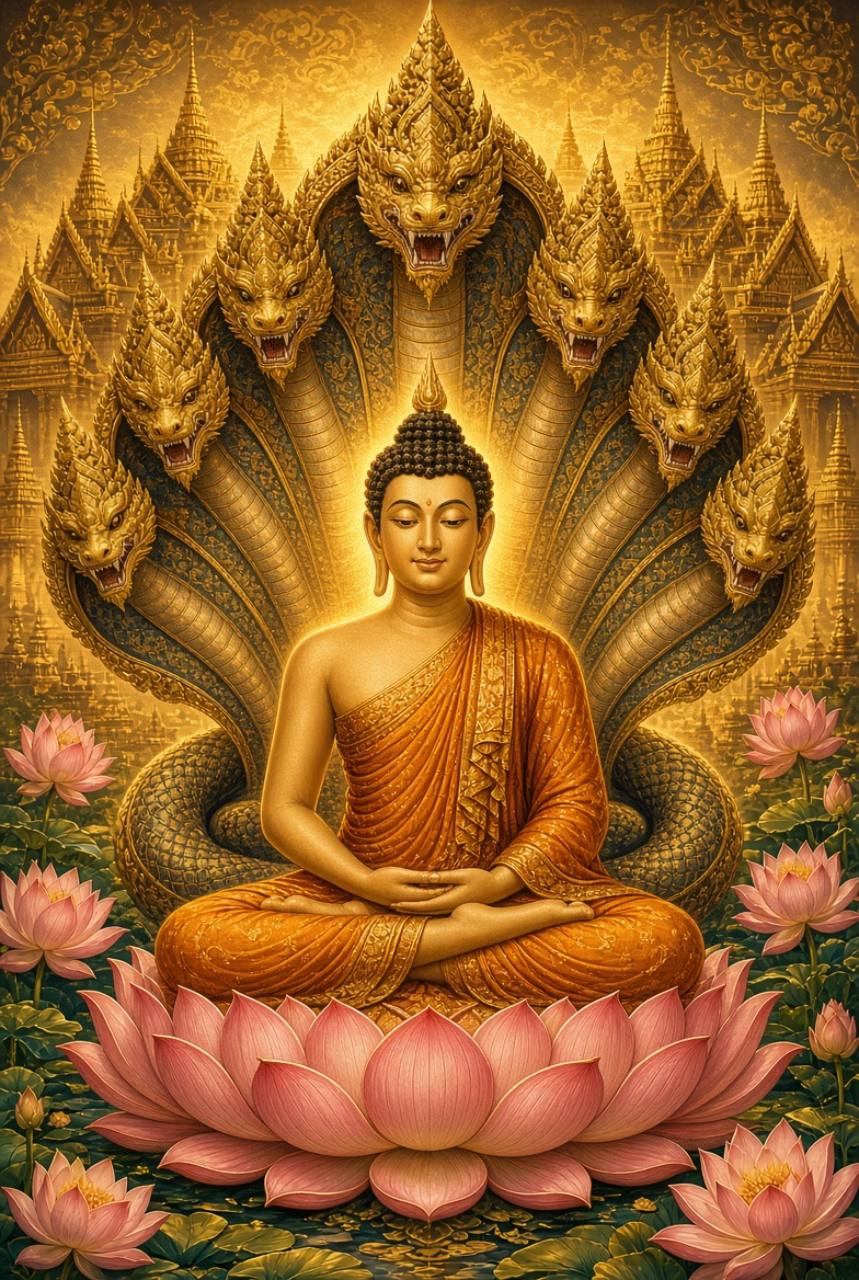
Phra Nak Prok shows the Buddha seated on the coils of a naga whose many hoods form a canopy. Chinese collectors say Seven-Naga Buddha because seven heads are common, yet Fine Arts records also note five-headed and other regional forms, with varying coils and serpent styles. Head count identifies a form; it is not a scale of authenticity or power.
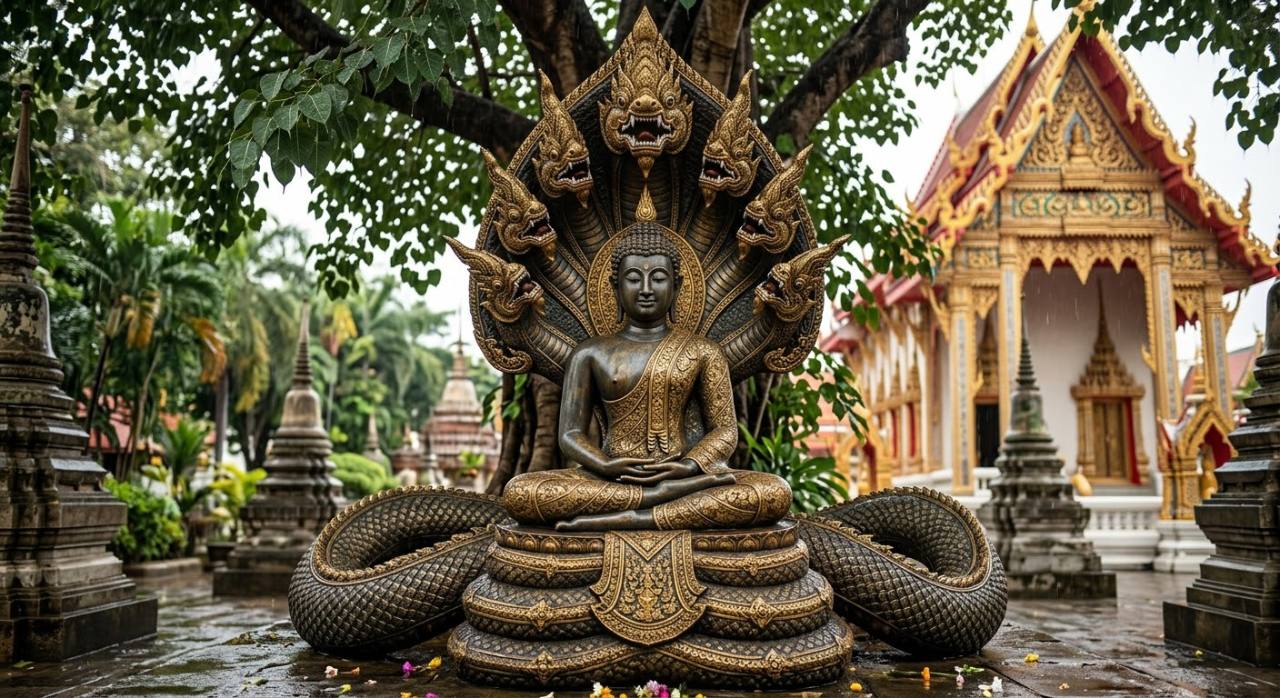
The sixth week after awakening
In the Buddha biography, during the sixth week after awakening the Buddha meditates beneath the Mucalinda tree as unseasonable rain continues for seven days. The naga king of the nearby pond coils seven times around him and spreads his hood as shelter. When the rain ends, the naga takes human form and pays homage. The point is not that the Buddha lacks power without a creature, but that nature and non-human beings honour awakening.
How different arts reshaped the naga
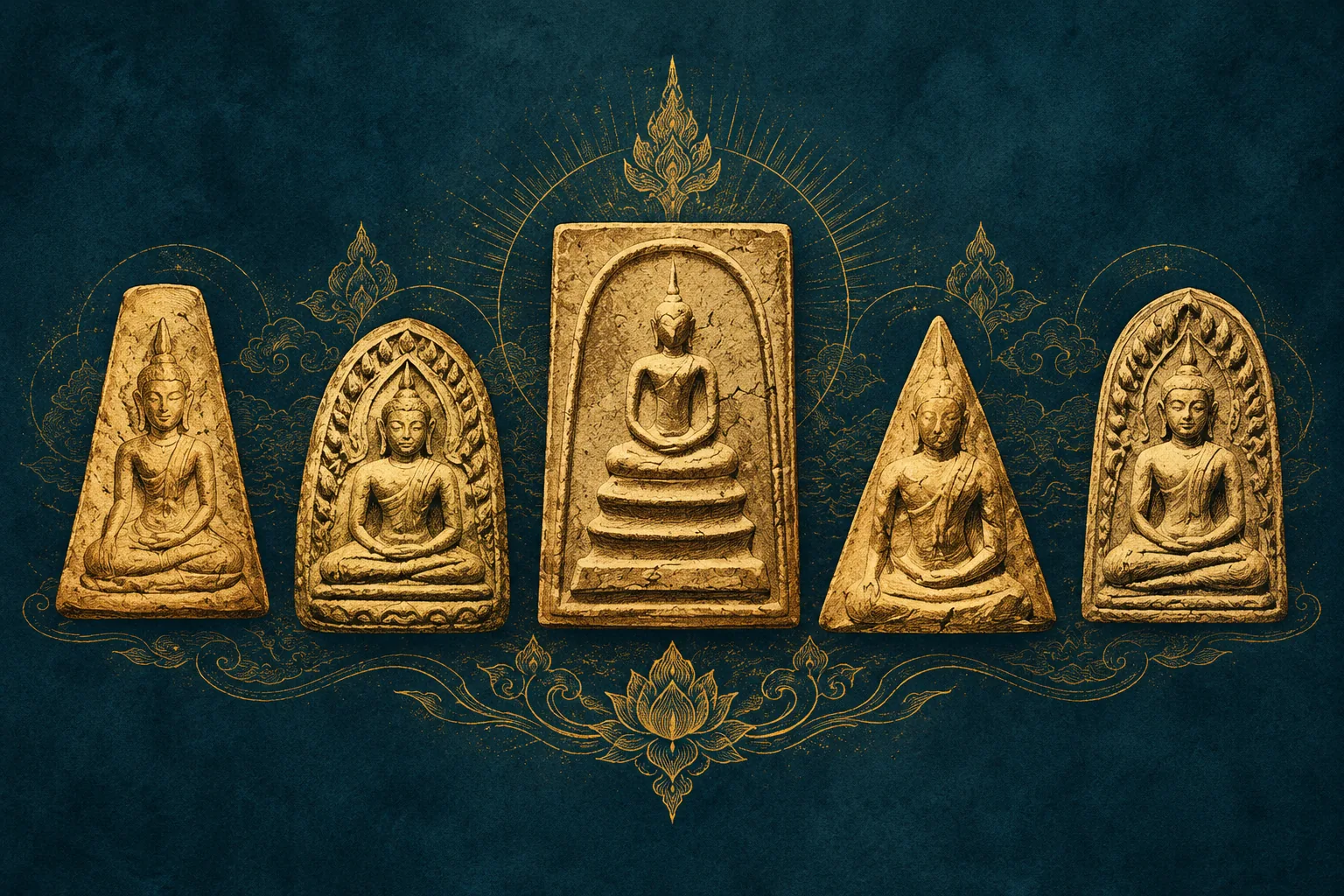
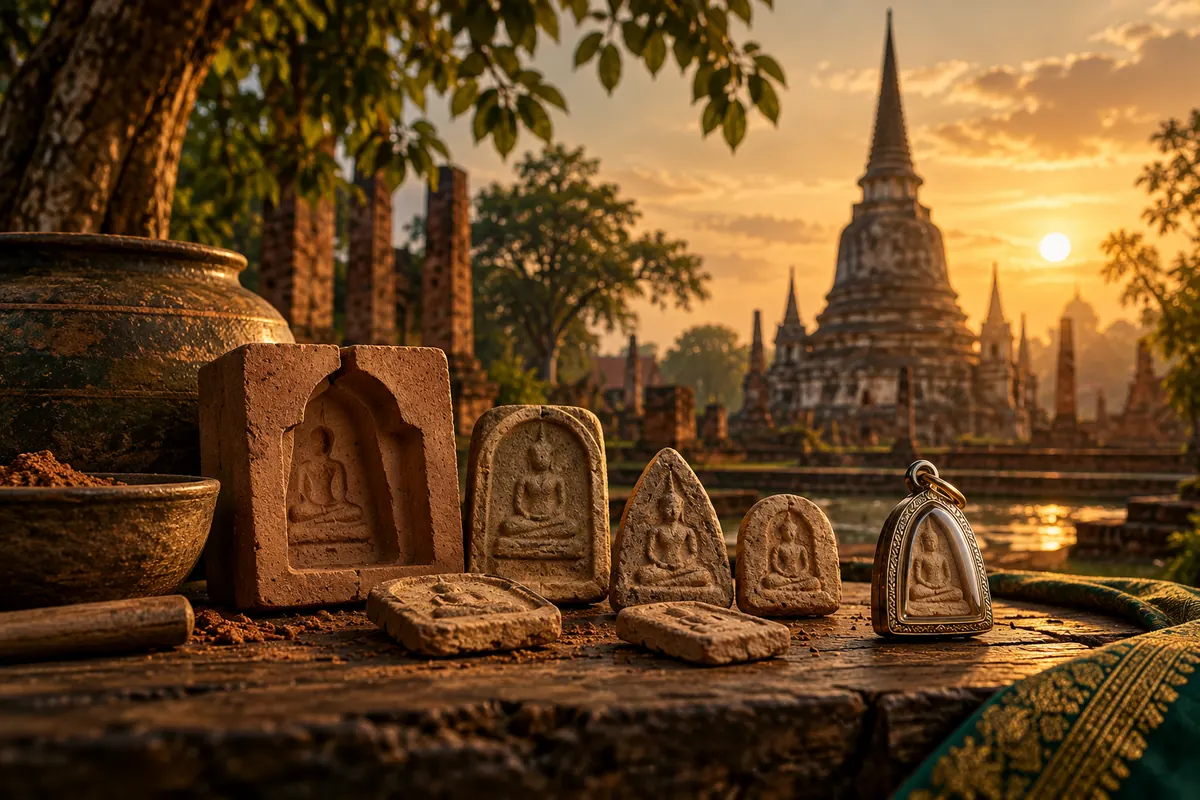
The Mucalinda theme travelled from India into Southeast Asia and appears differently in Dvaravati, Khmer, Sukhothai, Ayutthaya and Bangkok-period art. Some crowned, close-robed images carry Bayon style; others use Thai faces. Ancient examples occur in stone, stucco and ivory before modern powder tablets, coins and casts. Dating requires the whole artistic language, not a count of naga heads.
Why it is also the Saturday Buddha
Thailand later paired days of the week with Buddha postures, Saturday commonly taking Nak Prok. This birthday-Buddha system is a later joining of Buddhist narrative and astrology, not a rule from the Buddha's lifetime requiring Saturday-born people to wear the image. Saturday birth can create a cultural bond, while anyone may value protection, meditation and steadiness in storms.
How devotees understand protection
Devotees associate Nak Prok with protection, weather and water safety, emotional stability and sudden change. Its strongest meaning is not a life without storms, but keeping a centre when storms arrive. Verify hoods, coils, Buddha gesture, base, temple and edition. More heads do not mean stronger protection.