Origins & Belief · Oct 2026 (B.E. 2569)
Phra Mae Uma: Uma, Parvati and Thai Goddess Traditions
Do not collapse every goddess into one: Uma, Parvati, Durga and local goddesses in Thailand.
16 min
Phra Mae Uma: Uma, Parvati and Thai Goddess Traditions
Do not collapse every goddess into one: Uma, Parvati, Durga and local goddesses in Thailand.
Uma and Parvati are often understood as gentle forms of divine feminine power and Shiva’s consort, but names, stories, rites and images vary greatly across South Asia. In Thailand, Phra Mae Uma often becomes an entry point for several goddess traditions.
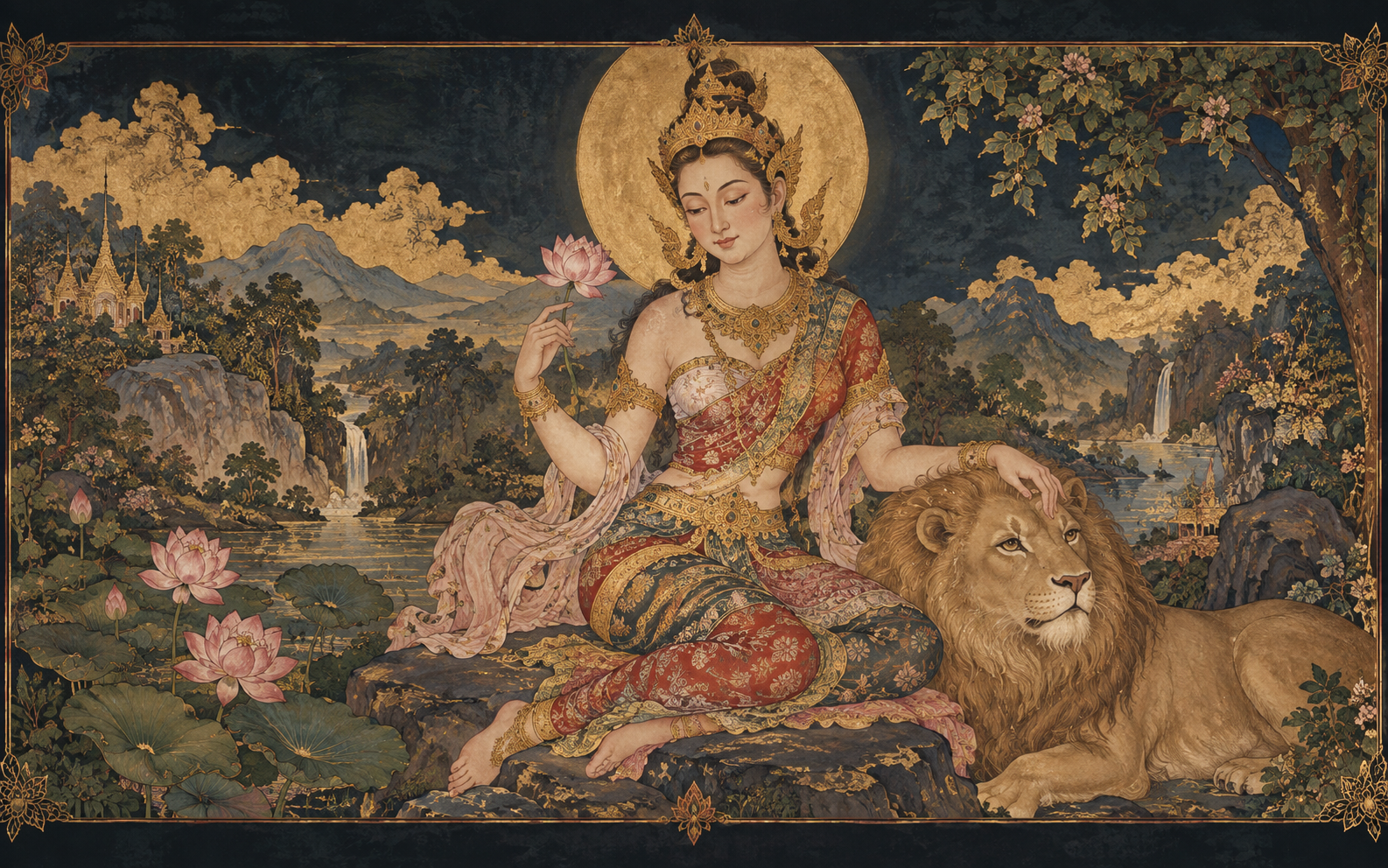
How to read the image
Lions, lotuses, mountains, maternal forms and multi-armed warrior images can all appear, but do not necessarily name the same goddess. In Thailand, South Indian Tamil temple traditions, Bangkok Hindu shrines, Thai art and popular labels influence one another. A careful account retains a shrine’s Thai or Tamil name and explains its relationship to Uma, Parvati or another goddess rather than reducing all to a single ‘love’ or ‘protection’ goddess.
Uma, Parvati, Durga and Kali: one goddess field, not four interchangeable labels
In Thailand, Phra Mae Uma usually covers the Uma-Parvati tradition associated with Shiva. Parvati, ‘daughter of the mountain’, is often presented as Himalaya’s daughter and the rebirth of Sati, whose ascetic practice reunites her with Shiva; she is also mother of Ganesha and Skanda. Durga and Kali may be understood in goddess theology as martial or fierce manifestations of divine feminine power, yet each has its own textual, mythic and iconographic history. Calling her only ‘Shiva’s wife’ erases her roles as ascetic, mother, demon-slayer and supreme goddess; treating every form as wholly unrelated is equally misleading.
Thai contexts: ancient sculpture, Tamil temples and modern festivals coexist
Thai devotion to Uma cannot be understood only through modern popular shrines. Ancient Khmer-Indic art preserves Uma and Durga images; Bangkok’s Sri Maha Mariamman Temple was founded by a Tamil community and its Navaratri procession now engages a wider urban public. Royal Brahman practice, South Indian temples, Thai Buddhist devotees and commercial statue shops may use related names in one city without sharing one ritual system. Identify an object through the temple’s own name, attributes, vehicle, posture, attendants and festival setting before discussing popular requests for family, strength or protection. One shrine’s practice is not a national rule.
Its Thai context
Thai cultural documentation on Bangkok Hindu temples shows that temple names and principal deities already involve complex South Indian and Thai localisations. For any related object, first establish which divine name and iconographic system the issuer uses; ‘goddess’ alone cannot establish its claims.
Names, provenance and local difference
Thai deities, guardians and folk sacred beings often coexist in texts, art, local oral tradition, temple rites and contemporary markets. The same name does not always indicate the same identity, and one image may carry different stories and customs across provinces, lineages, temples and periods. This site separates traceable historical material, community accounts and later market language rather than presenting one telling as a fact for every place.
Belief, image and market cannot replace one another
Ways of worship can reflect devotees’ respect and hopes, and images can provide cultural and iconographic clues; neither proves the age or authenticity of a particular pendant, takrut or figure. A concrete object still requires checks of issuer, temple, date, materials, ceremony and public records. This distinction does not make belief cold; it makes both cultural writing and collecting more honest.
A note for readers and collectors
First establish whether the name is a Thai original, Buddhist guardian, local spirit or commercial label. Then check temple, ceremony, date, materials and public issue records. Similar imagery or the same name never proves an object’s origin, age or authenticity.