Origins & Belief · Oct 2026 (B.E. 2569)
Phra In: Indra
King of heaven and a deity of rain and thunder, shared across Thai Buddhist and Hindu cultural language.
16 min
Phra In: Indra
King of heaven and a deity of rain and thunder, shared across Thai Buddhist and Hindu cultural language.
Indra, Phra In in Thai, comes from early Indian religious traditions and is linked with sky, thunder, rain and heavenly kingship. He also entered Buddhist cosmology, giving him a cross-tradition presence in Thailand.
Myth, imagery and how to read it
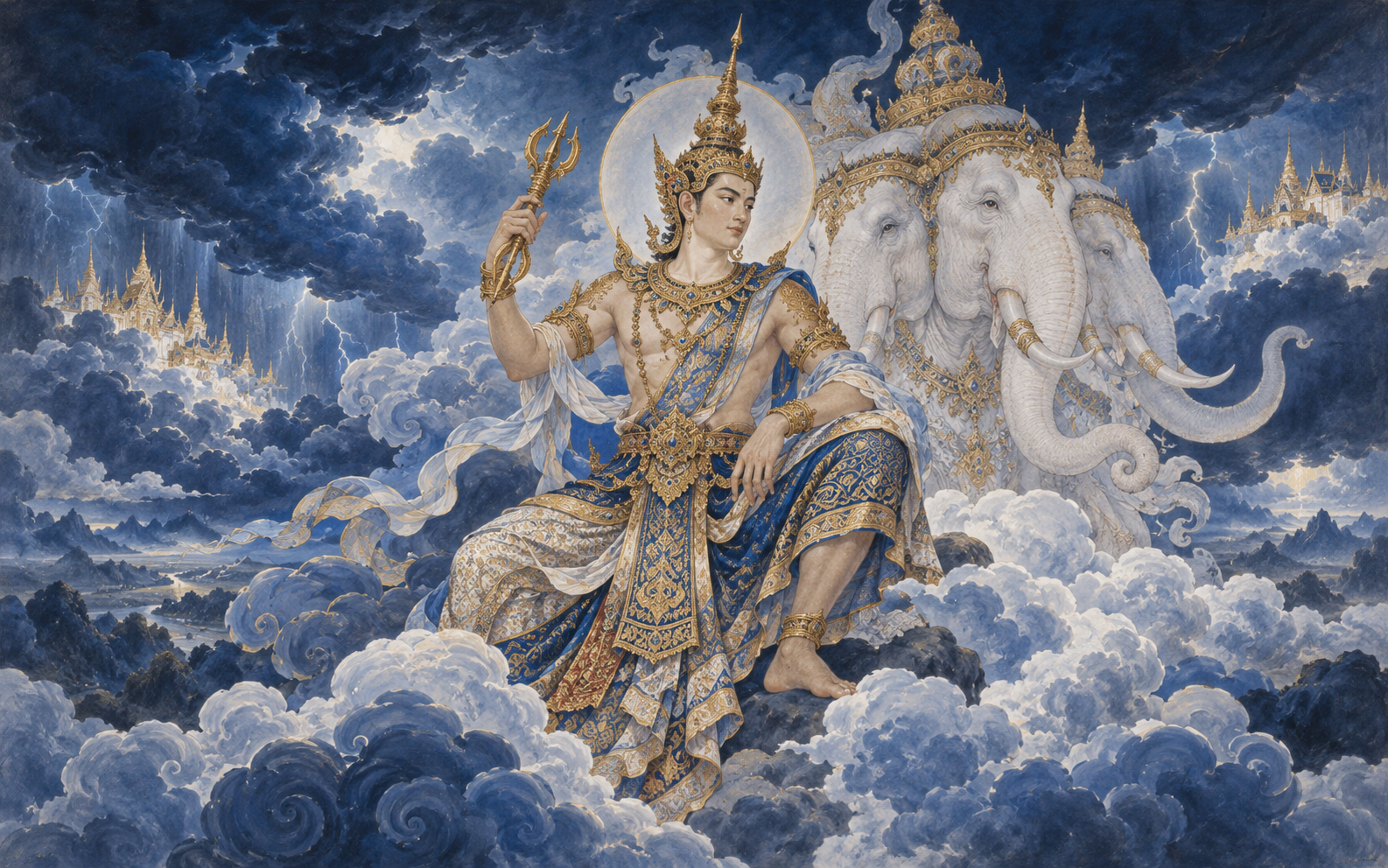
In early Indic traditions such as the Ṛgveda, Indra has a prominent role in storm, rain, victory over drought and heavenly kingship; later Hindu systems reposition him and his narratives. When he enters Buddhist cosmology and Thai art, he may appear as Śakra, king of heaven, or a witness and helper at decisive moments. The vajra, crown, white elephant Airavata and storm clouds are frequent visual cues. This movement across traditions is precisely the interpretive difficulty: one Thai name, Phra In, may point to different contexts in text, mural, theatre or a modern amulet.
From storm god to Śakra: not one straight line
Phra In or Indra is easily compressed into ‘king of the gods’, but his history is more complex. Early Indic traditions particularly foreground thunder, rain, battle and heavenly kingship; later Hindu narratives retain him as important without always placing him at the summit. When he enters Buddhist cosmology, he often appears as Śakra, ruler of the Thirty-three gods, a witness, or a helper in moments of moral action and danger. So when a source says Phra In, first ask whether it means the Vedic deity, a Hindu story, Buddhist heaven, or a character in Thai literature and mural painting.
Vajra and Airavata: visual clues, not a universal specification
Thai Fine Arts descriptions often identify the vajra, lightning imagery and the three-headed elephant Airavata as important clues for Phra In: the vajra evokes thunder, while Airavata joins heavenly transport to kingship. Clues are not a checklist for authentication. Thai murals, carvings, pediments, costume and modern amulets select elements according to medium and story; some show only the elephant, others only a crown, clouds or an implement. Read the scene first: is he bringing rain, fighting, assisting a bodhisattva, supporting kingship, or simply forming an auspicious heavenly image? The scene often says more than a single attribute.
Phra In in Thai Buddhist and royal visual culture
In Thailand, Phra In does not fit only in a ‘Hindu deity’ box. Fine Arts records of Lanna and Sukhothai material, together with Buddhist Jātaka retellings, show him as a heavenly helper or witness; his Airavata image also persists in visual languages of kingship and celestial order. The same name therefore crosses religious and political art. When a market listing reduces Phra In to guaranteed rain, authority or success, it compresses a complex tradition into a sales line. For any particular amulet or image, return to temple, maker, date, issue purpose and reliable comparative images.
A place in Thai culture
Thai stories, murals and performances often place Phra In in heavenly acts of aid or witness. Popular associations with rain or success are cultural associations, not verifiable effects.
Texts, places and versions: no one story is the whole tradition
These deities do not belong to one fixed book, period or country. Vedic material, epics, Purāṇas, temple ritual, local oral tradition, royal literature and modern devotion can give the same name different identities, relations, attributes and narrative emphases. A better method is to ask first, ‘Which tradition is this passage from?’ and then, ‘How was it adapted or used in Thailand?’ When a source is unclear, say ‘in some traditions’, ‘in some versions’ or ‘in popular usage’ rather than pretend there is one answer.
Image, devotion and sacred object: three different things
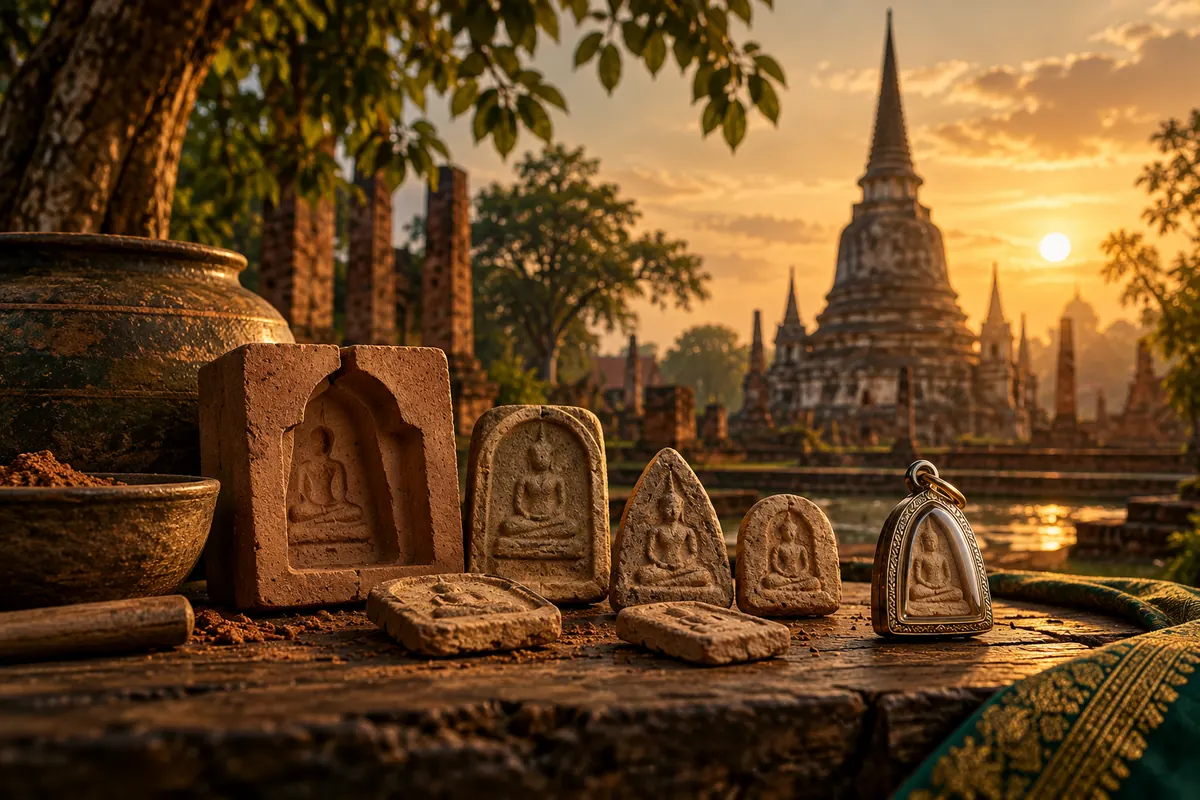
A museum sculpture, a temple image, a theatrical or mural character, a commemorative object issued for a temple rite and a market pendant may all cite the same deity, but they cannot substitute for one another as evidence. Iconography helps identify mythic language; devotion shows how a community creates a relationship; the date, material, mold and issue history of a particular object still require separate checking. Keeping the three apart neither diminishes belief nor permits the mistake of inferring age, authenticity or efficacy from a divine name.
A note for readers and collectors
The same name can appear in Indian traditions, Thai court culture, temples, theatre and commercial sacred objects. Images, names and stories vary by period and place. When reading an object, check its temple, date, purpose and public sources before inferring background or benefits from the name alone.