Origins & Belief · Oct 2026 (B.E. 2569)
Phra Chan: Chandra, the Moon
Lunar phases, calendars and the Moon in the nine-planet tradition.
16 min
Phra Chan: Chandra, the Moon
Lunar phases, calendars and the Moon in the nine-planet tradition.
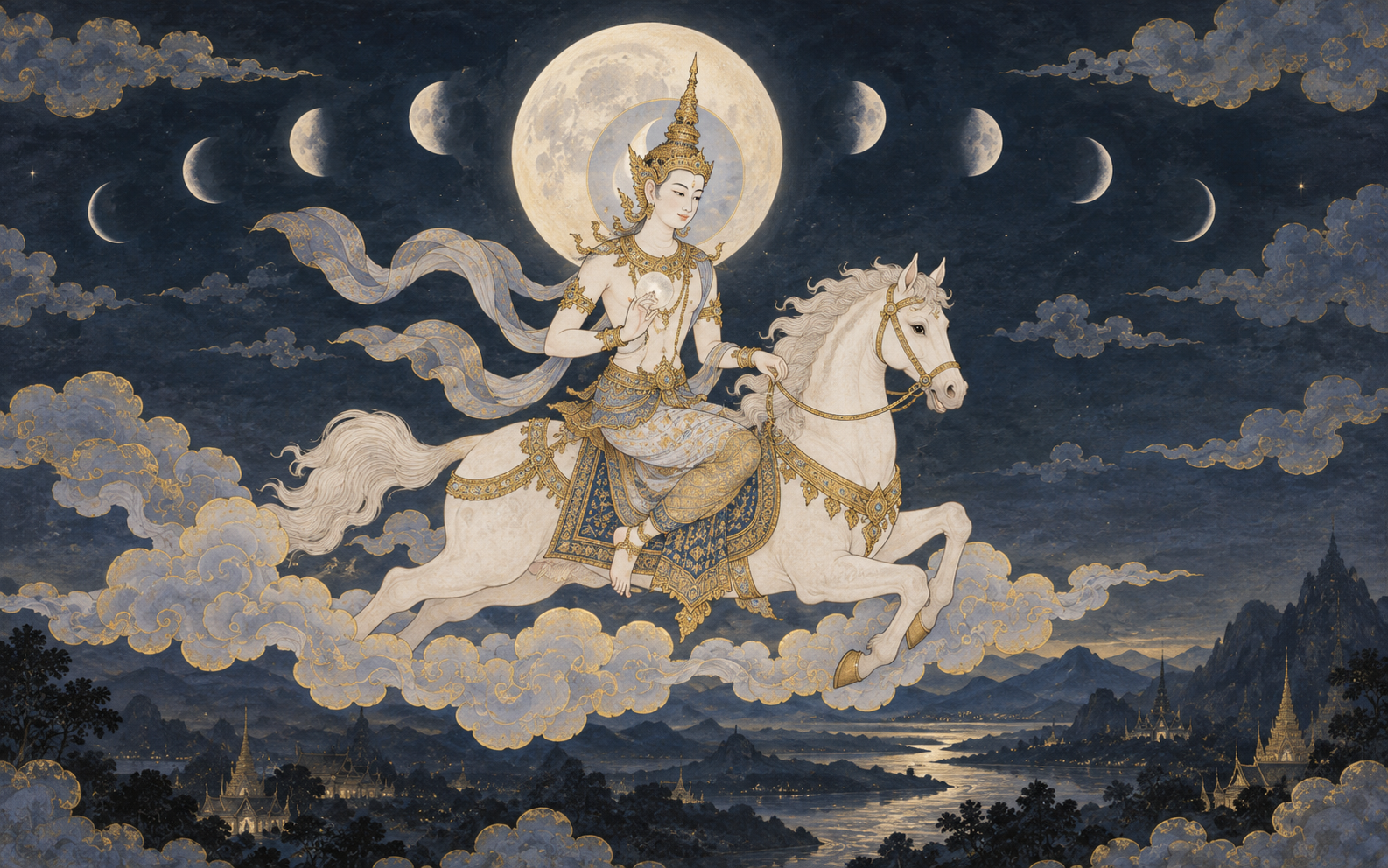
Chandra, Phra Chan in Thai, is linked with the Moon in both Indic and Thai astrological language. Thai cultural material presents him among the nine planetary figures with gentle lunar associations; this is traditional interpretation, not a scientific assessment of personality.
How to read the image
White colour, moon disc, horse and water imagery commonly occur in lunar images. Phases arise from the relative positions of Sun, Earth and Moon; a lunar eclipse is Earth’s shadow. ‘Rahu swallowing the Moon’ is mythic narrative. Presenting both respects readers better than treating symbolism as astronomical causation.
Lunar phases, moon deity and lunar graha: do not substitute them
The Moon is both observable celestial body and a carrier of myth and calendar. Phases follow the positions of Sun, Earth and Moon; lunar calendars arrange days by those phases; Phra Chan or Chandra makes the Moon a deity that can be narrated and imaged in Indic-Thai religious and astrological language. Placing the three together does not weaken devotion. It tells readers whether a passage concerns astronomy, timekeeping or myth. Eclipses can have a scientific account and the cultural story of Rahu pursuing sun and moon; neither language should impersonate the other.
Thai lunar imagery: white, horse and number are not personality tests
Thai Fine Arts material describes the lunar graha with a horse, associations of white, and the number fifteen; these are iconographic and astrological vocabularies within a particular tradition. They can help readers recognise a pediment, painting or a full nine-graha group, but cannot be rewritten as scientific claims about people born on a Monday. Artists of different periods need not retain every element, and a work showing only white or a horse cannot be identified as the Moon by that alone. Read the whole setting, inscription and traceable source.
When lunar time enters Thai daily life
The lunar graha feels close in Thailand not only through myth, but because festivals, observance days and many community rites still mark time by lunar calendars. This relation between moon and lived rhythm is more worth explaining than reducing a lunar pendant to claims about romance, sleep or changing fate. When an object claims to be part of a nine-graha set, check for a complete group, a stated iconographic explanation and an issue history. If it is a later commercial pendant wrapped in lunar design, say so; do not borrow an old calendar to invent a history it does not possess.
Its Thai context
Lunar calendars structure many Thai festivals and rites, so Phra Chan readily enters everyday senses of time. For a nine-planet or lunar amulet, establish whether it actually belongs to a temple’s set, and note later market language that binds planets, weekdays and ‘changing fate’ together.
Names, provenance and local difference
Thai deities, guardians and folk sacred beings often coexist in texts, art, local oral tradition, temple rites and contemporary markets. The same name does not always indicate the same identity, and one image may carry different stories and customs across provinces, lineages, temples and periods. This site separates traceable historical material, community accounts and later market language rather than presenting one telling as a fact for every place.
Belief, image and market cannot replace one another
Ways of worship can reflect devotees’ respect and hopes, and images can provide cultural and iconographic clues; neither proves the age or authenticity of a particular pendant, takrut or figure. A concrete object still requires checks of issuer, temple, date, materials, ceremony and public records. This distinction does not make belief cold; it makes both cultural writing and collecting more honest.
A note for readers and collectors
First establish whether the name is a Thai original, Buddhist guardian, local spirit or commercial label. Then check temple, ceremony, date, materials and public issue records. Similar imagery or the same name never proves an object’s origin, age or authenticity.