Origins & Belief · Oct 2026 (B.E. 2569)
Phra Athit: Surya, the Sun
From an Indic sun deity to Thailand’s nine-planet tradition: light, time and astrology.
16 min
Phra Athit: Surya, the Sun
From an Indic sun deity to Thailand’s nine-planet tradition: light, time and astrology.
Sūrya, commonly Phra Athit or Phra Suriya in Thai, is a major Indic sun deity. Thailand’s nine-planet system also includes the Sun, interweaving celestial observation, calendars, ritual and later astrological language.
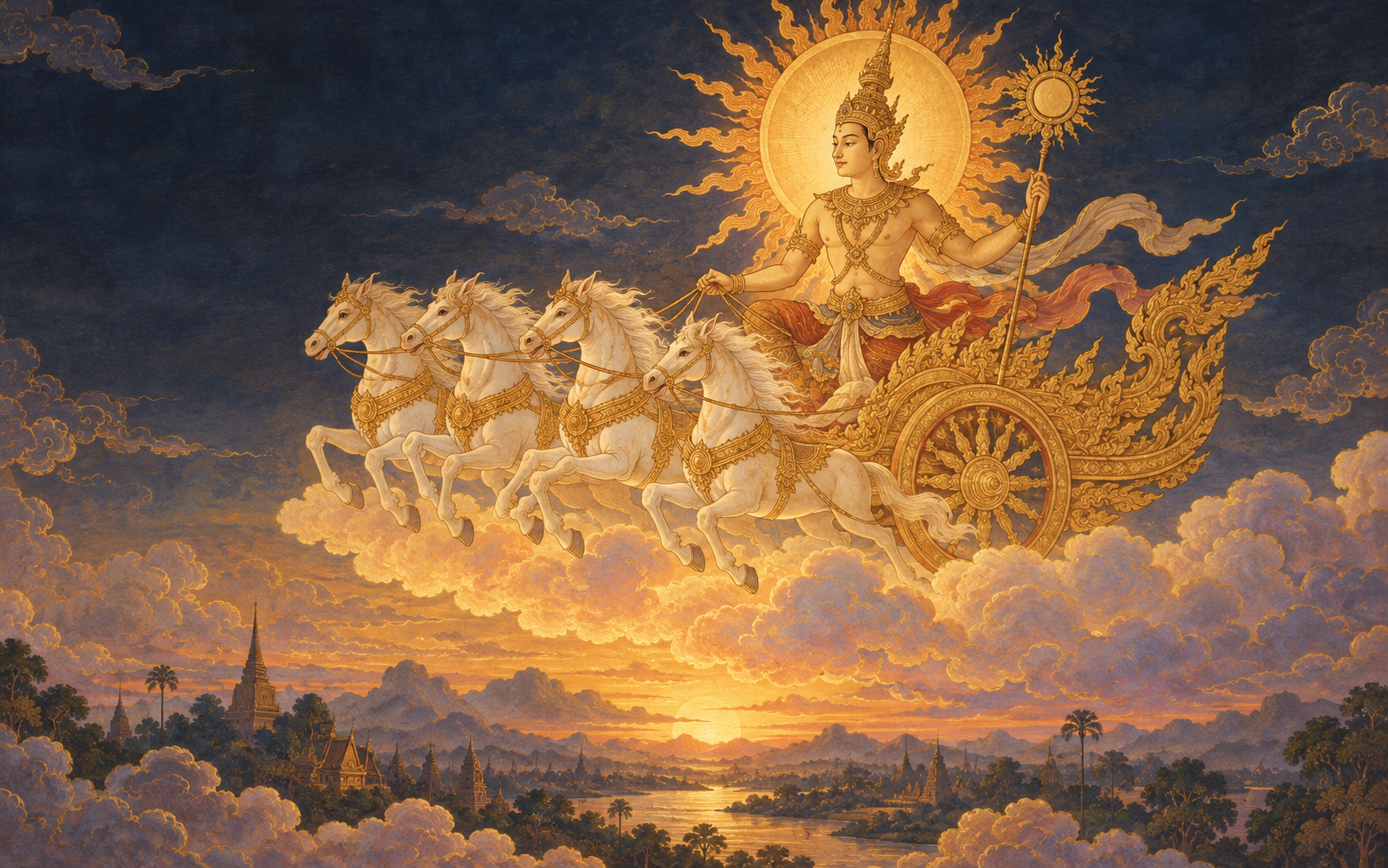
How to read the image
A solar disc, halo, chariot and horses often signal movement, light and time; number, vehicle and attributes vary by text and region. They are iconographic language, not fixed promises of success. Distinguish the mythic journey across the sky from astronomy’s account of the Sun and seasons.
Sun deity, celestial body and nine grahas: three reading levels
The first task in introducing Phra Athit is not to collapse ‘god’, ‘Sun’ and ‘fate’ into one sentence. Sūrya is an Indic solar deity; the Sun is a star studied by astronomy; and Thailand’s Navagraha makes the Sun one member of an astrological and ritual set. They borrow the same images of disc, light and movement but answer different questions: myth speaks of order and divinity, astronomy of illumination and seasons, while the nine grahas belong to calendars, ritual and astrology. Keeping the layers apart prevents religious imagery from being presented as scientific causation.
The Sun in Thailand’s nine grahas: a local arrangement with sources
Thai Fine Arts documentation records one common Navagraha arrangement: the Sun rides a lion, joined by Moon, Mars, Mercury, Jupiter, Venus, Saturn, Rahu and Ketu. This matters because it shows Thai practice did not simply copy an Indic name unchanged; it joined astrology, seasonal time and ritual to local imagery and ceremony. It remains a traditional system, not a scientific instrument for predicting a person from a birth weekday, and temples, periods and media may present it differently.
From a solar disc back to the actual object
In the market, gold or red colour, a lion or a solar disc is often hurriedly labelled a ‘Sun god amulet’. That is only a first visual lead. A fuller reading asks whether other elements of a nine-graha set occur, whether a temple or ceremony published the design, whether reverse inscriptions fit the claimed date, and whether the image cites royal art, Hindu myth or contemporary graphic design. When evidence is thin, ‘solar imagery’ is usually more honest than asserting a particular deity.
Its Thai context
Thai art and calendars connect Phra Athit with Sunday, the nine planets and solar imagery. For an object marketed as ‘Sun deity’, do not decide from colour or a disc alone; ask whether its temple cites the nine planets, Hindu tradition, royal art or a later design theme.
Names, provenance and local difference
Thai deities, guardians and folk sacred beings often coexist in texts, art, local oral tradition, temple rites and contemporary markets. The same name does not always indicate the same identity, and one image may carry different stories and customs across provinces, lineages, temples and periods. This site separates traceable historical material, community accounts and later market language rather than presenting one telling as a fact for every place.
Belief, image and market cannot replace one another
Ways of worship can reflect devotees’ respect and hopes, and images can provide cultural and iconographic clues; neither proves the age or authenticity of a particular pendant, takrut or figure. A concrete object still requires checks of issuer, temple, date, materials, ceremony and public records. This distinction does not make belief cold; it makes both cultural writing and collecting more honest.
A note for readers and collectors
First establish whether the name is a Thai original, Buddhist guardian, local spirit or commercial label. Then check temple, ceremony, date, materials and public issue records. Similar imagery or the same name never proves an object’s origin, age or authenticity.