Origins & Belief · Oct 2026 (B.E. 2569)
Nang Kwak: Folk Image of Trade and Welcome
A beckoning hand is not Buddhist doctrine: shops, folk practice and mass production.
16 min
Nang Kwak: Folk Image of Trade and Welcome
A beckoning hand is not Buddhist doctrine: shops, folk practice and mass production.
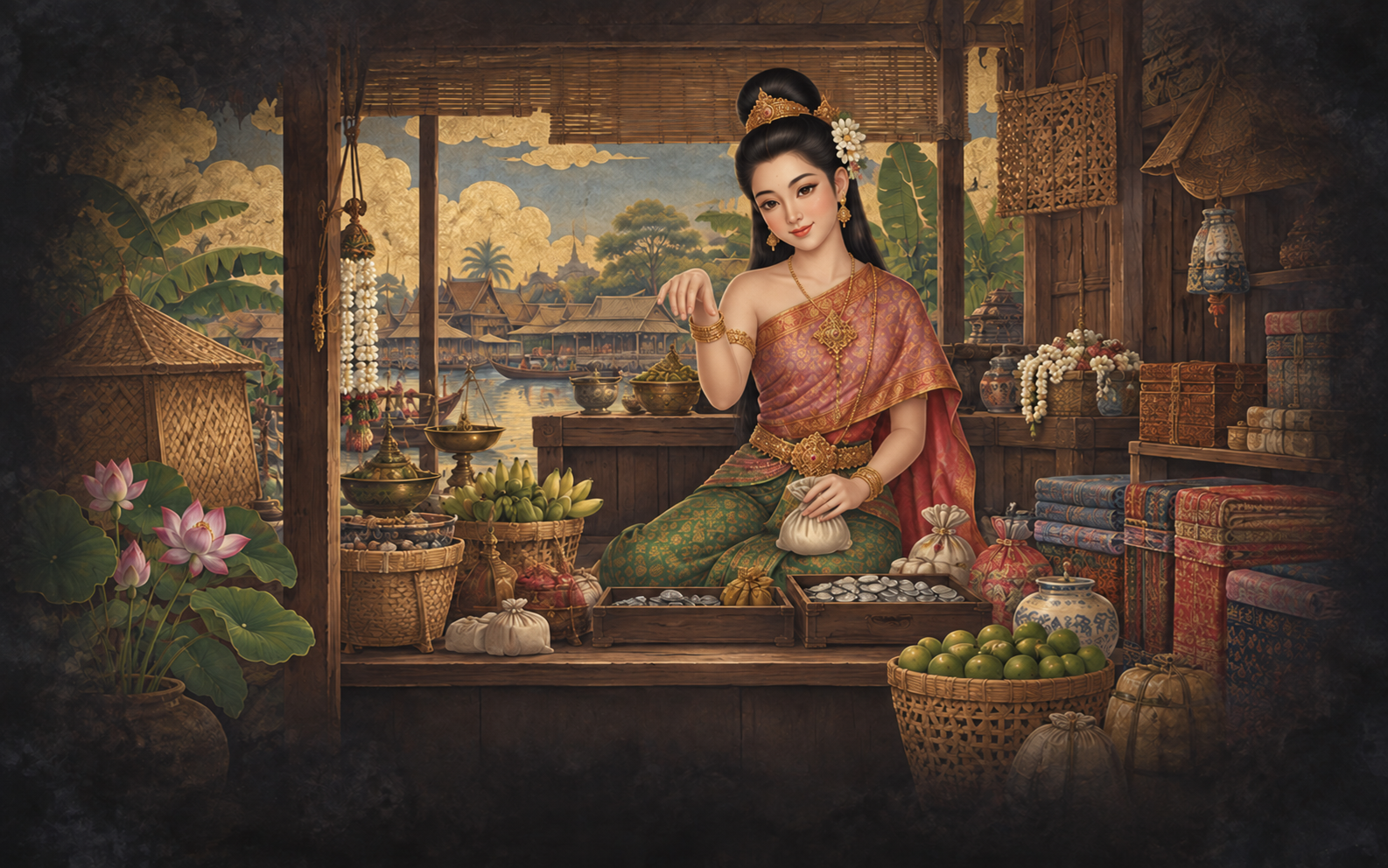
Nang Kwak is a familiar Thai female beckoning figure among merchants. Fine Arts Department archival material places her among folk charms and records wood, ivory, fragrant woods and herbs among materials and local making practices. This is not the same as a goddess with a fixed identity in Buddhist scripture.
How to read the image
The beckoning hand, dress, seat, attributes and connection to a shop are folk imagery, not authentication criteria. Markets often combine money, popularity and charm into one promise; research should instead ask whether an item is a family-shop image, a named master’s charm, a temple blessing item or a later factory product.
Nang Kwak is not Maneki-neko, and means more than ‘money calling’
Nang Kwak is usually a seated woman in Thai dress, one hand beckoning inward. Japan’s Maneki-neko is a raised-paw cat; their coexistence in modern shops does not show common origin. The Thai Cultural Encyclopedia records Nang Kwak charms in wood, clay, metal and formerly ivory, ranging from shop figures and pendants to tiny forms attached to betel equipment. The beckoning action is traditionally linked with inviting customers, pleasing speech and smooth trade. These are merchants’ devotional wishes, not verifiable evidence that a statue increases revenue.
Pu Chao Khao Khiao in the incantation: how to read the father-daughter lineage
A Thai research report reproduces a Nang Kwak worship incantation saying that Pu Chao Khao Khiao has one daughter, named Nang Kwak. The Thai Cultural Encyclopedia records a close variant calling Mae Nang Kwak his only child. The father-daughter relationship therefore belongs in an account of her tradition. It should, however, be read as a sacred genealogy preserved by incantation and Thai folk belief, not as a family history verifiable through ordinary historical records. Here Pu Chao Khao Khiao is an elder or ancestral guardian figure, and later expanded stories should not be presented as a single canonical biography.
A local rite with the same name need not be the same sacred figure
Databases also record local spirit-invitation rites called len nang kwak. A human form made partly from a weaving kwak receives a deceased person or local guardian for questioning. It shares a name and beckoning idea with the shop figure but is not automatically one continuous history. Thai folklore cannot be researched through a Chinese label alone: locality, object, rite and participants must be checked. Claims that every Nang Kwak has always been consecrated in one national method erase this variation.
Its Thai context
Nang Kwak matters because she connects Thai commercial life, folk devotion and material culture. A responsible description labels this as folk belief and avoids claiming that placing an image guarantees business.
Names, provenance and local difference
Thai deities, guardians and folk sacred beings often coexist in texts, art, local oral tradition, temple rites and contemporary markets. The same name does not always indicate the same identity, and one image may carry different stories and customs across provinces, lineages, temples and periods. This site separates traceable historical material, community accounts and later market language rather than presenting one telling as a fact for every place.
Belief, image and market cannot replace one another
Ways of worship can reflect devotees’ respect and hopes, and images can provide cultural and iconographic clues; neither proves the age or authenticity of a particular pendant, takrut or figure. A concrete object still requires checks of issuer, temple, date, materials, ceremony and public records. This distinction does not make belief cold; it makes both cultural writing and collecting more honest.
A note for readers and collectors
First establish whether the name is a Thai original, Buddhist guardian, local spirit or commercial label. Then check temple, ceremony, date, materials and public issue records. Similar imagery or the same name never proves an object’s origin, age or authenticity.