Origins & Belief · Oct 2026 (B.E. 2569)
Mae Phosop: Thailand’s Rice Goddess
Rice, gratitude, seasons and layered traditions in Thai agricultural ritual.
16 min
Mae Phosop: Thailand’s Rice Goddess
Rice, gratitude, seasons and layered traditions in Thai agricultural ritual.
Mae Phosop personifies rice and agricultural plenty in Thailand. Official cultural material notes that rice rituals are not from one religion alone but grow from long interaction among local spirit beliefs, Buddhism, Brahmanical-Hindu elements and farming life.
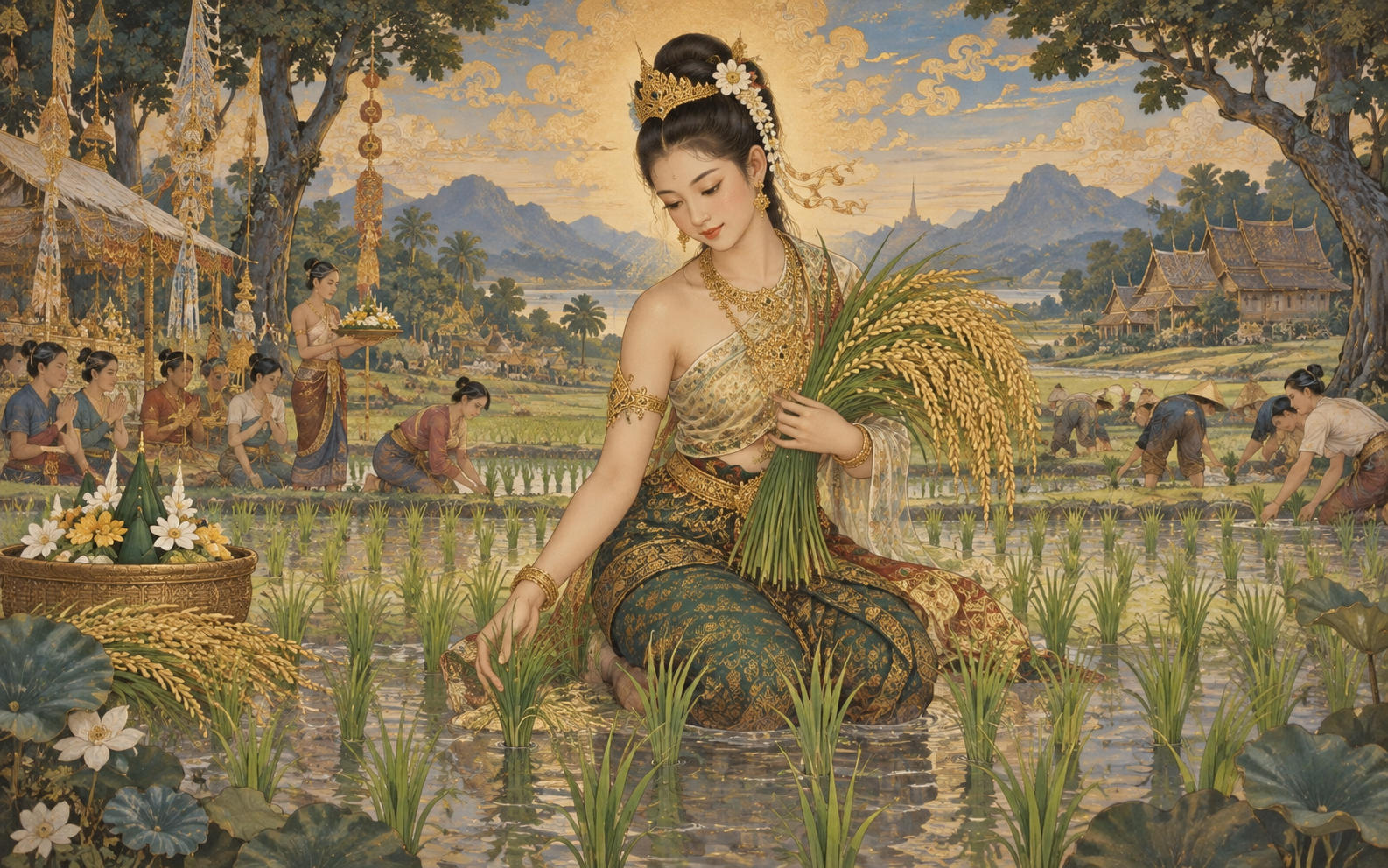
How to read the image
A rice sheaf, grain held close, paddies and seedlings are clues close to Thai agricultural contexts. Calling rice ‘mother’ expresses respect for a food that sustains life, not a reduction of food security to divine power. Regions preserve different stories and rites; no single version is Thailand’s sole orthodoxy.
She is first the mother-spirit of rice, not an abstract ‘harvest goddess’
Mae Phosop is a concentrated Thai expression of rice as living and possessing khwan, a vital essence or spirit. Regional origin stories differ: some derive rice from a goddess’s body or milk; others tell how human disrespect drove her away, causing famine, until divine mediation restored rice. Their shared ethic is not lottery luck but the prohibition on trampling, wasting or insulting food. ‘Harvest goddess’ is a useful introduction for outsiders, yet it omits khwan khao, farmers’ labour, granaries and the Thai ethics of rice.
Rice-khwan rites and regional difference: an agricultural cycle, not one offering list
Rites for rice khwan may occur at planting, pregnancy of the grain, harvest or storage. Ritual specialists, recitations, offerings and emblems vary across central, northern, northeastern and southern communities. Art records show a female figure holding rice or a rice child, while some rites use no statue at all and represent her through panicles or sheaves. Articles and object records must name region and source rather than universalise one village custom. Modern medals, charms and trademarks may borrow her image, but they do not prove the antiquity of a rite.
Its Thai context
This subject is especially useful for seeing the link between sacred objects, land and labour. For an item named after Mae Phosop, ask whether it relates to agricultural rite, temple charity, commemoration or commercial prosperity design; the same name can serve very different purposes.
Names, provenance and local difference
Thai deities, guardians and folk sacred beings often coexist in texts, art, local oral tradition, temple rites and contemporary markets. The same name does not always indicate the same identity, and one image may carry different stories and customs across provinces, lineages, temples and periods. This site separates traceable historical material, community accounts and later market language rather than presenting one telling as a fact for every place.
Belief, image and market cannot replace one another
Ways of worship can reflect devotees’ respect and hopes, and images can provide cultural and iconographic clues; neither proves the age or authenticity of a particular pendant, takrut or figure. A concrete object still requires checks of issuer, temple, date, materials, ceremony and public records. This distinction does not make belief cold; it makes both cultural writing and collecting more honest.
A note for readers and collectors
First establish whether the name is a Thai original, Buddhist guardian, local spirit or commercial label. Then check temple, ceremony, date, materials and public issue records. Similar imagery or the same name never proves an object’s origin, age or authenticity.