TAMRA After Dark · Original fiction
The Last Customer
His uncle left one instruction: lock the back door before closing. That night, someone outside called him by name.
4 min read
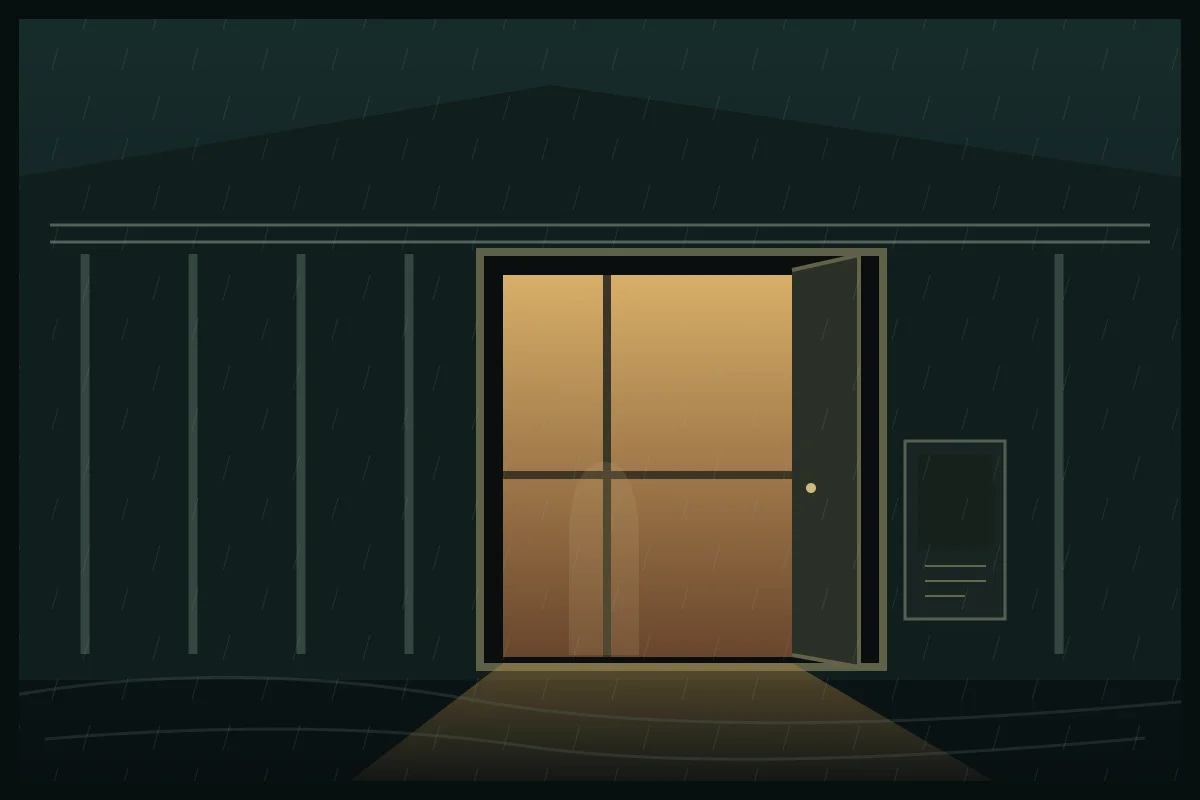
An original TAMRA story. Its characters, businesses and events are fictional.
The first night Cheng minded the shop alone, the whole street lost power.
Rain ran down the shutters and shone on the dark red sign across the road. He had put the amulets away and stacked the receipts. Before going into hospital that afternoon, his uncle had handed him the keys. “Close the front when you like. Lock the back first.” Cheng had been answering a customer’s message. He had said yes without looking up.
Three knocks came from the alley.
“Cheng. Let me in. I forgot my key.”
His uncle’s voice. Cheng went along the narrow passage and put his hand on the bolt. Then he remembered the hospital gown. The nurse had said his uncle would stay overnight. He took out his phone. No signal.
“Hurry up. It’s pouring.”
Water stood in the alley, but he could hear no movement in it. No light showed under the door. Before he could ask another question, the brass bell at the front rang.
An old man in a grey shirt sat at the counter. Cheng was sure he had already lowered the front shutter halfway. The man’s trousers were soaked, yet there were no wet footprints. He ignored the display and looked at the keys in Cheng’s hand.
“The one with the chipped edge. That’s the back door.”
“Do you know my uncle?”
The man did not answer. The knocking started again. This time the caller used Cheng’s childhood nickname, the name only his mother had used. His mother had been dead for years. Now her voice came through the wood. “Son. Open the door for me.”
His throat tightened. He was already moving towards the passage when the old man flattened a blank receipt on the counter.
“Call first.”
The old landline showed no light. The man slid the receiver towards him. Cheng dialled. His uncle answered. A television murmured in the background; a nurse was telling someone to take his medicine. After hearing Cheng out, his uncle asked one thing. “Have you opened it?”
“No.”
“Lock it now. Whatever you hear, don’t answer.”
Cheng took the chipped key to the back door. Outside, his mother was crying. Her feet were cold, she said. Had he forgotten how frightened he had been to sleep alone as a child? Every word sounded right. He fitted the key, turned it fully and heard the heavy bolt catch. The crying stopped.
Something dragged a nail down the other side of the door. It began much higher than a person’s head and scraped all the way to the floor.
Cheng counted his breaths without turning round. Only when the streetlights returned did he let go of the key. The old man had gone. The receipt was still blank. A rusty screw held down one corner.
Next morning, his uncle removed the loose fitting from the back-door lock. It was missing a screw. The one on the counter fitted exactly. He said nothing about Cheng’s mistake. Instead, he moved a box away from an old photograph.
His younger self stood outside the shop beside the man in the grey shirt.
“He taught me to look after this place.”
“Where is he now?”
His uncle wiped the dust from the glass. “Gone a long time.”
That evening Cheng locked the back door early. He wiped a chair at the counter. Just before closing, the brass bell sounded once. Nobody stood outside, but the cushion slowly dipped.
He did not ask what the customer wanted to see. He put a cup of hot tea beside the blank receipt.