TAMRA After Dark · Original fiction
Father’s Tin Box
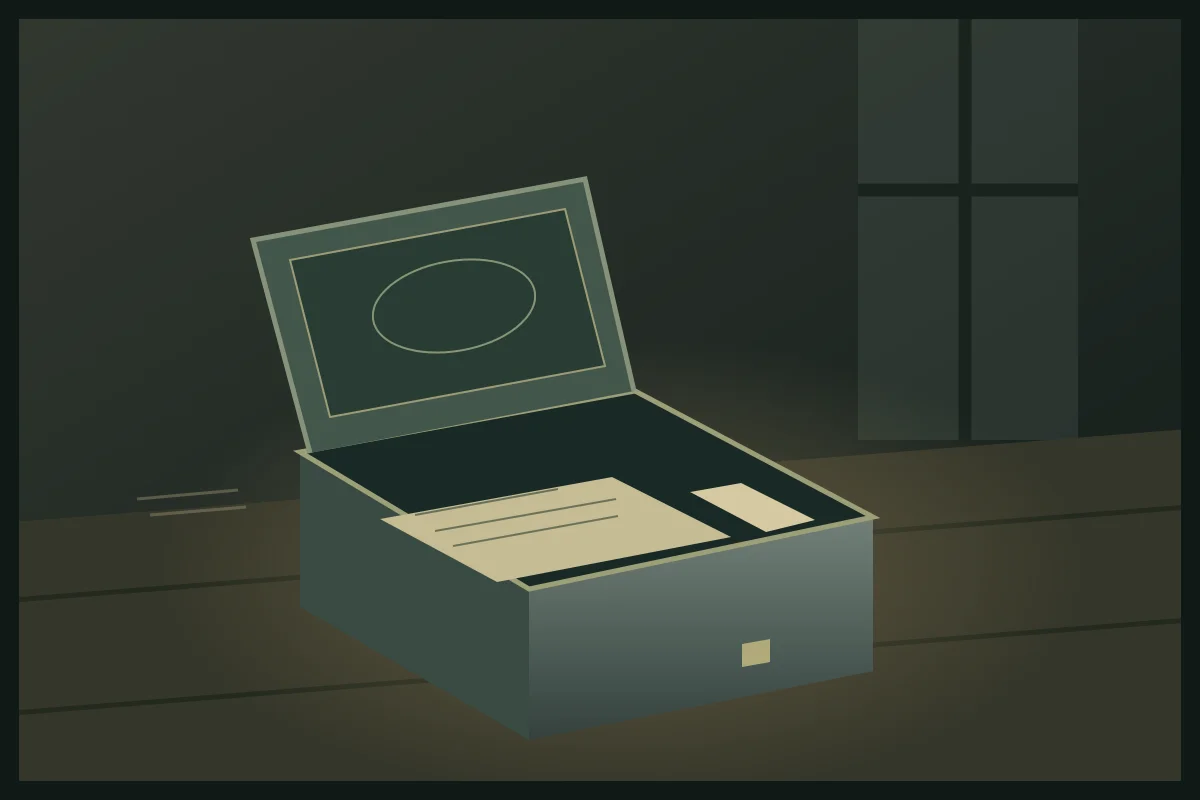
It held no treasure, only dated slips of paper. The last one was dated tomorrow.
4 min read
An original TAMRA story. Its characters, businesses and events are fictional.
Mei expected at least a savings book in the tin.
It was her first visit alone since her father died. The fourth stair still creaked. The kitchen clock was seven minutes slow. She opened the windows and planned to have the house cleared by the weekend. He had always kept the biscuit tin under his bed and asked questions whenever anyone touched it.
It was not locked. No money, no amulets: only rectangular slips of paper, each with a date and a few words. Change bulb. Fix tap. Take umbrella.
The oldest was dated the day she finished school. “Wait for Mei. Dinner.” She had gone out celebrating and come home after midnight. On the day she moved out, he had written, “Leave stair light on.” She smiled, then realised she had been standing there a long time.
After dark she ordered food and sorted boxes on the floor. Upstairs, a chair scraped. Her father used to pull his chair to the window before bed, to see whether she might be coming home.
She was alone. The neighbour’s wall was close. Perhaps it had come from next door. She turned up the television.
Near midnight the landing light flickered twice and died. She used her phone to light the stairs. The fourth step made no sound. Upstairs, the chair faced the window. There was no wind. A new light bulb lay beside its leg, its packaging open, as though somebody had been interrupted halfway through a job.
She went downstairs and looked through the slips again. The last carried tomorrow’s date. “Wait for Mei to come home. Dinner.”
Her father had been dead for three weeks.
She called the family friend who had helped with his appointments. Towards the end, he said, her father often confused dates. But every day he asked whether Saturday had come. She had kept promising Saturday, then postponing because of work. The friend did not reproach her. “He asked me not to tell you. He didn’t want you worried.”
After the call, the chair scraped upstairs again. This time she left the television off.
“I’m home,” she told the empty staircase.
Silence. Then the fourth stair gave a small creak. The chair across the dining table moved back and stopped where her father used to sit. Mei stood still until the grain of the wood blurred through her tears. Then she went to wash rice.
She made two simple dishes. Her father had complained that she overcooked eggs, but always eaten the browned edges himself. She turned the unburnt side upwards and set out two bowls and two pairs of chopsticks.
“No postponing this time.”
The food cooled. Nobody answered. No extra footprints appeared. She finished, washed the second place setting and slept in the sitting room. Upstairs, the chair did not move again.
In the morning the landing light was on. After staring at it for a while, she fetched a stepladder. The new bulb was in the fitting. The old one lay on the dining table beside the final slip. Its date was unchanged, but a familiar pencil line had crossed out “Wait for”.
What remained was: “Mei to come home. Dinner.”
She could not remember whether she had put the paper there herself. Perhaps tears had hidden the pencil mark the night before. She returned it to the tin without seeking an answer.
When the movers arrived, she asked them to take only the broken cupboard. The house would not be emptied yet. She secured the fourth stair and left a small light on the landing. The tin went beside the dining table in her own home.
On Saturdays she began leaving work a little earlier to buy vegetables and cook. Not to wait for a voice to return. Simply so that one more dinner would not always have to wait until next time.