TAMRA After Dark · Folk legend
Phi Ta Khon: When the Spirits Followed
As the procession left the forest, others joined it. This time the spirits following people had not come to claim a life.
3 min read
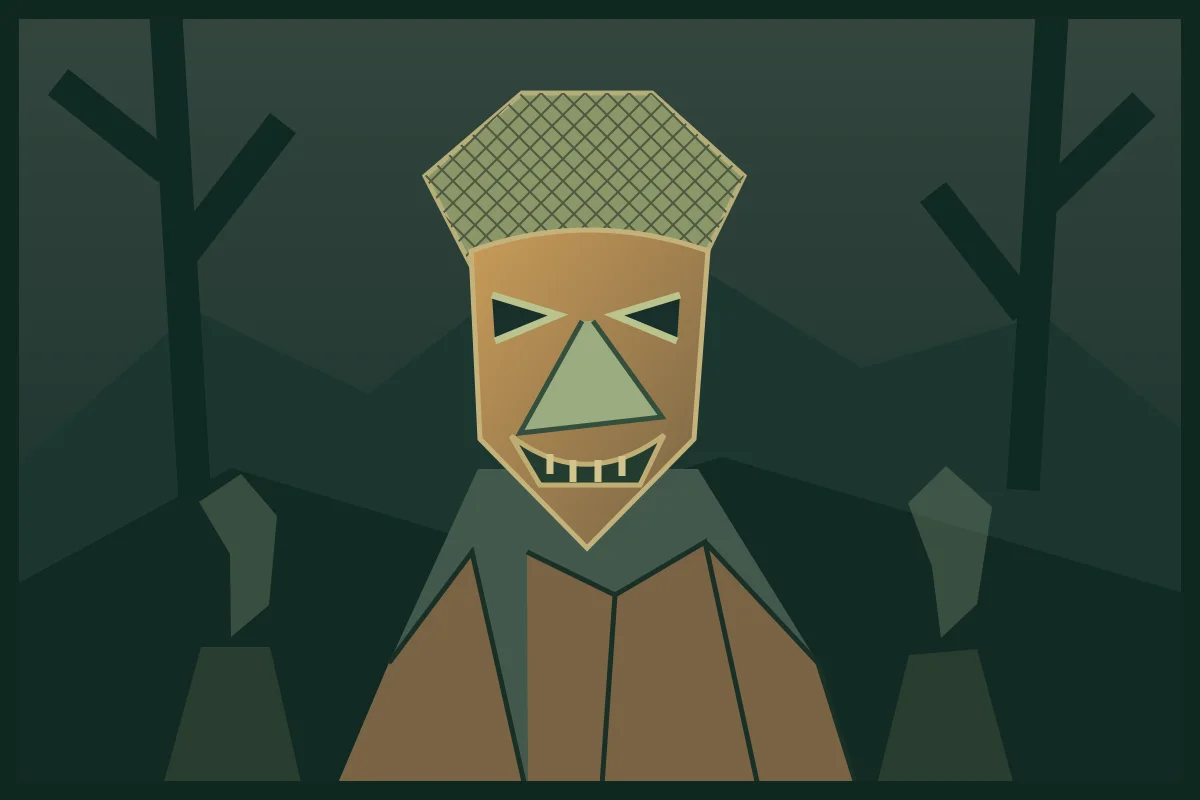
A retelling of Dan Sai’s farewell legend. This is one explanation of the festival, not its entire historical origin.
This time, the spirits at the back of the procession have not come to take anyone away.
Phi Ta Khon (ผีตาโขน), associated with Dan Sai in Thailand’s northeastern province of Loei, brings to mind towering masks: long noses, open mouths and patchwork clothes. They look like strange visitors emerging from a forest. But one story about why these spirits follow people is a story of attachment, not a hunt for victims.
According to the local tradition, when Prince Vessantara (พระเวสสันดร) and his wife Maddi (มัทรี) leave the forest to return to the city, people are not their only companions.
The animals and spirits of the forest have grown attached to them. Rather than remain behind, they join the villagers and accompany the departing couple. A human journey home becomes a procession shared with another world.
“Spirits following people” might sound like the beginning of a disaster. This tale reverses that expectation. Humans are not being punished for trespassing in a haunted place. The forest’s inhabitants enter a human procession because they are reluctant to say goodbye.
Those returning to the city go ahead; those staying behind come part of the way. The road does not divide the two worlds at once. The spirits are not trying to steal a life. They simply will not miss the farewell.
This is one explanation passed down in Dan Sai. The name Phi Ta Khon is sometimes connected with phi tam khon (ผีตามคน), “spirits following people,” as if the name itself preserves the steps of those companions.
The tale could end at the forest road. In Dan Sai, it continues in a festival.
During Bun Luang, the local merit-making celebration, people put on ghost masks and patched costumes and join a procession. A story once heard becomes a figure in the street. The mask hides a familiar face, allowing a neighbour to become, briefly, a spirit.
The masks need not begin with costly materials. A bamboo sticky-rice steamer forms a head; a coconut-palm sheath provides the face. Wood and old cloth become a nose and clothing. Familiar things assemble into an unfamiliar visitor.
A newcomer may first find the masks frightening. Stay a little longer and the ghosts are dancing and joking, sharing the street’s celebration. The figures reluctant to leave their forest companions become a festival made together by neighbours.
This is not the tradition’s only strand. Phi Ta Khon also brings together ancestor beliefs, farming, rain-seeking practices and Buddhist merit-making. Accounts and customs differ. No single legend establishes a precise year when the whole festival began.
Tonight, though, keep the forest path in mind. Someone is going home. Companions who do not usually walk human streets would like to come a little further. When a long-nosed mask turns towards you, the story behind it may not be a warning to stay away, but a farewell not yet finished.