Market & Verification · Jul 2026 (B.E. 2569)
New issues and old tablets are two markets
A new amulet is not fake because it is new, and an old one is not genuine because it is old. The questions differ; know what you are buying before you decide what to check.
11 min

New issues and old tablets are two markets
A new amulet is not fake because it is new, and an old one is not genuine because it is old. The questions differ; know what you are buying before you decide what to check.
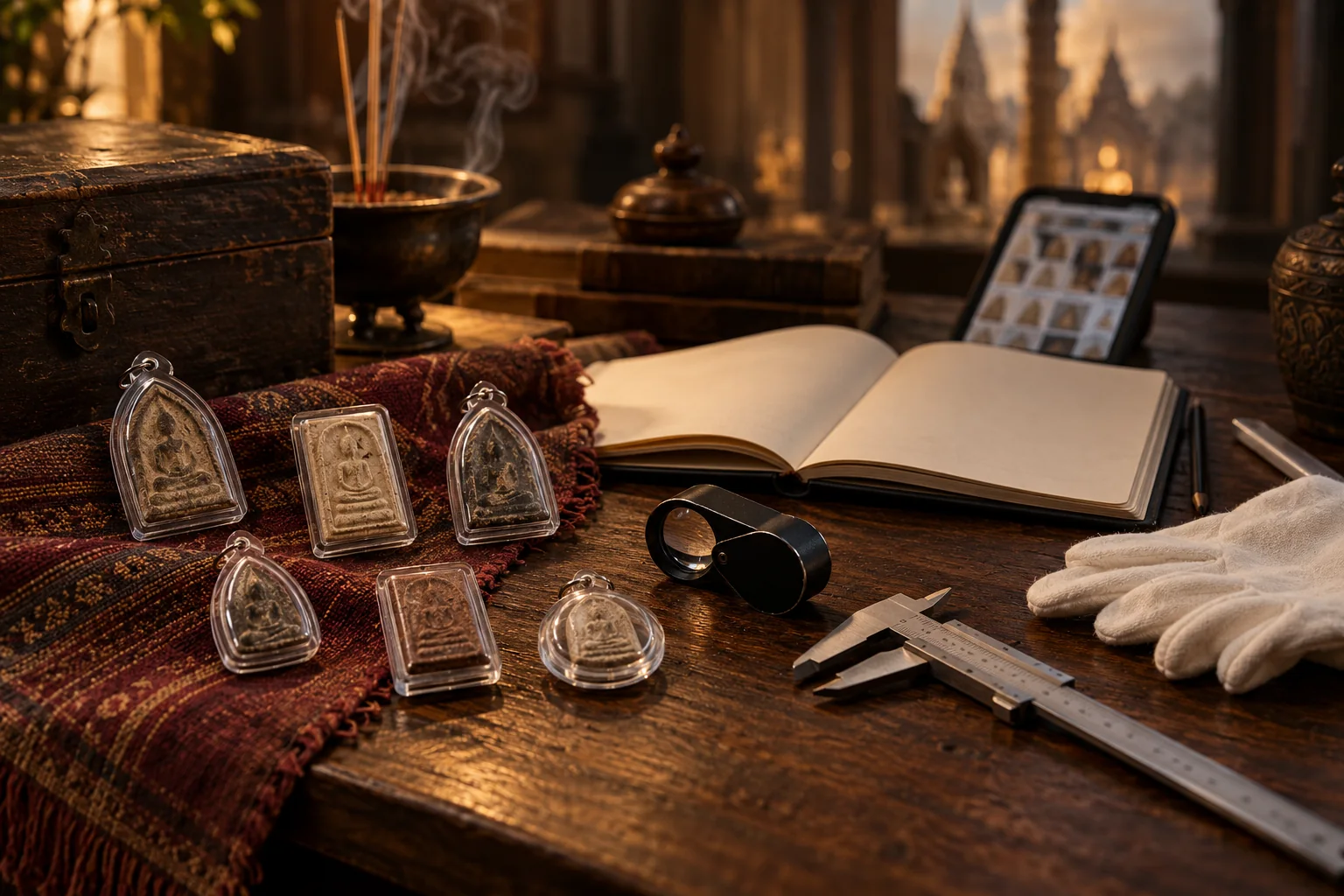
One display case may hold a temple issue from this year, a renowned master’s piece from the 1950s–1970s, and an old cache tablet. All may be called amulets and all may be collectible, but the way their records survive, the way they are copied, and the evidence a buyer can check are different. Judging all of them only by age, a box, or a card misses the point.
New issues: first confirm the edition
Here, ‘new’ means a piece made and issued in modern times by a temple, a sangha, or a known organiser. It may have an edition, year, ceremony information, quantity, original packaging, serial number or temple notice. Those are not decoration: they help answer whether object, batch and issuer belong together. A newly cut mold, fresh powder or bright metal surface can be perfectly normal. The question is usually not whether it looks old, but whether object, packaging, documents and issue information match one another.
New issues can be expensive. A well-known master, a limited run, special material, ceremony context and market demand can affect price; none of those is evidence by itself. Ask what checkable record the temple or issuer left, whether the packaging makes sense, whether the object matches official or period examples, and whether the seller allows a careful inspection before completion.
Old tablets: begin with the object and its history of circulation
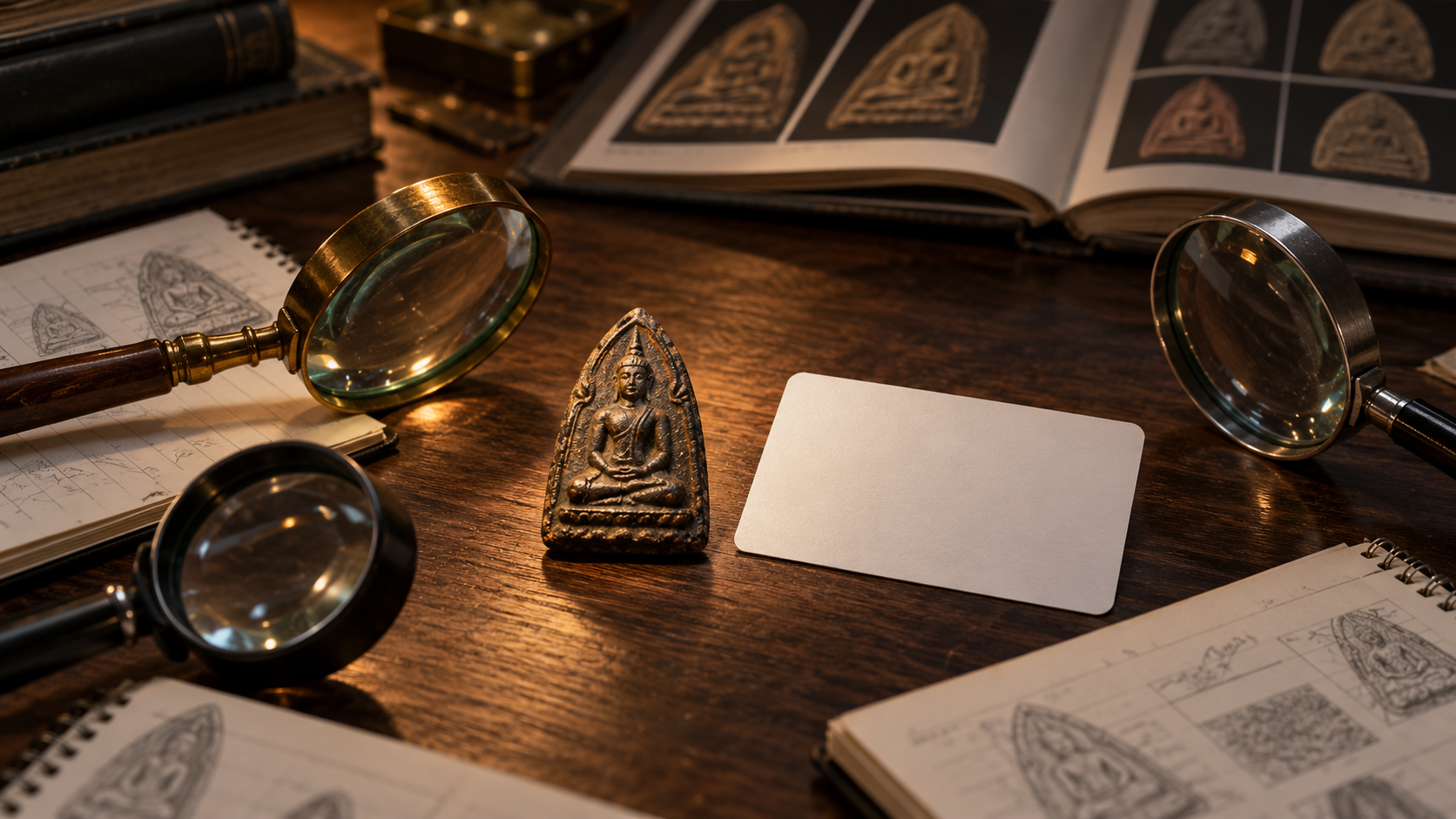
Here, ‘old’ mainly means a cache or stupa find, a piece of substantial age, or one long in circulation that can be compared with a place, period, mold or material tradition. Such pieces often have no issue-day box or document. Their evidence lies more in the object itself: mold lines, powder or metal, natural ageing, breaks, old photographs, old catalogues, and traceable circulation records. No box is not surprising; the question is whether the object fits known specimens and the history claimed for it.
Copies of old tablets can be very close, and added dirt or chemical treatment can create an appearance of age. A handsome photograph, a yellowed box, or a claim of inheritance is therefore not a conclusion. A certificate, an old collector label or an old catalogue can all be leads, but they still need to connect point by point to the object. Metal and powder pieces also call for different emphasis: the former often leans more on mold and casting detail, while the latter needs material, structure and natural ageing read together.
Not two sealed worlds: there is a wide middle
Many pieces do not fall cleanly into ‘new’ or ‘old’. A noted master’s amulet from the later twentieth century may still have issue records, packaging or living witnesses, while also carrying decades of circulation, repairs and copies. Such a piece needs both lenses: first confirm that it belongs to the claimed edition, then ask whether its mold, material and present state still fit that edition. ‘Two markets’ is not a knife that cuts the world in half; it is a reminder not to miss the questions that matter.
Before buying: a simple checklist
- 01Name the object first: a current issue, an older recorded issue, or a cache / long-circulated tablet?
- 02For a current issue: match edition, issuer, date, quantity, packaging and object; do not reject it for not looking old.
- 03For an old tablet: match mold, material, natural ageing, comparable specimens and circulation evidence; do not replace object-reading with an ‘original box’ question.
- 04For every category: keep price, faith stories, certificates and the object itself in separate boxes; for a high-value transaction, keep room for verification, return terms and a second look.