Market & Verification · Oct 2026 (B.E. 2569)
How Thai amulet competitions work: entry, judging and the meaning of a prize
What does a first prize actually establish? Follow an amulet from the event catalogue and entry fee to the judging table, then consider why sponsorship and conflicts of interest matter to collectors.
8 min
How Thai amulet competitions work: entry, judging and the meaning of a prize
What does a first prize actually establish? Follow an amulet from the event catalogue and entry fee to the judging table, then consider why sponsorship and conflicts of interest matter to collectors.
A certificate marked ‘first prize’ can draw immediate attention to an amulet. To understand it, however, start with the event, the category entered, the other pieces in that category and the people who judged them. Those details tell a collector more than the numeral alone.
First: read the event and category list
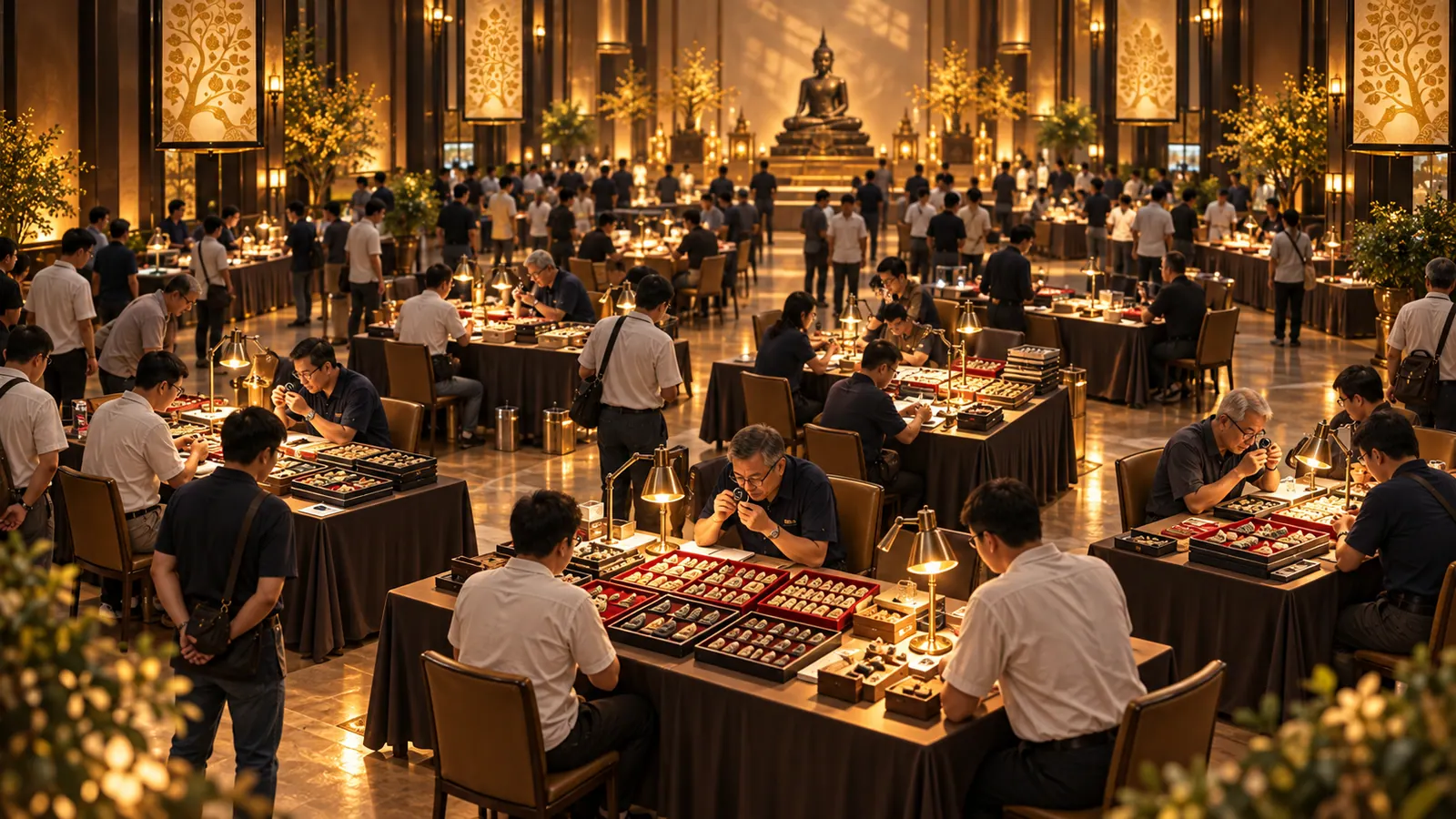
Competitions take place in different Thai provinces. Organisers normally publish the date, venue and a list of categories in advance. Categories may distinguish a monk, temple, issue, material or mould. Not every amulet has a category at every event, so entrants should check the catalogue before choosing a judging table.
Second: buy an entry ticket and submit the piece
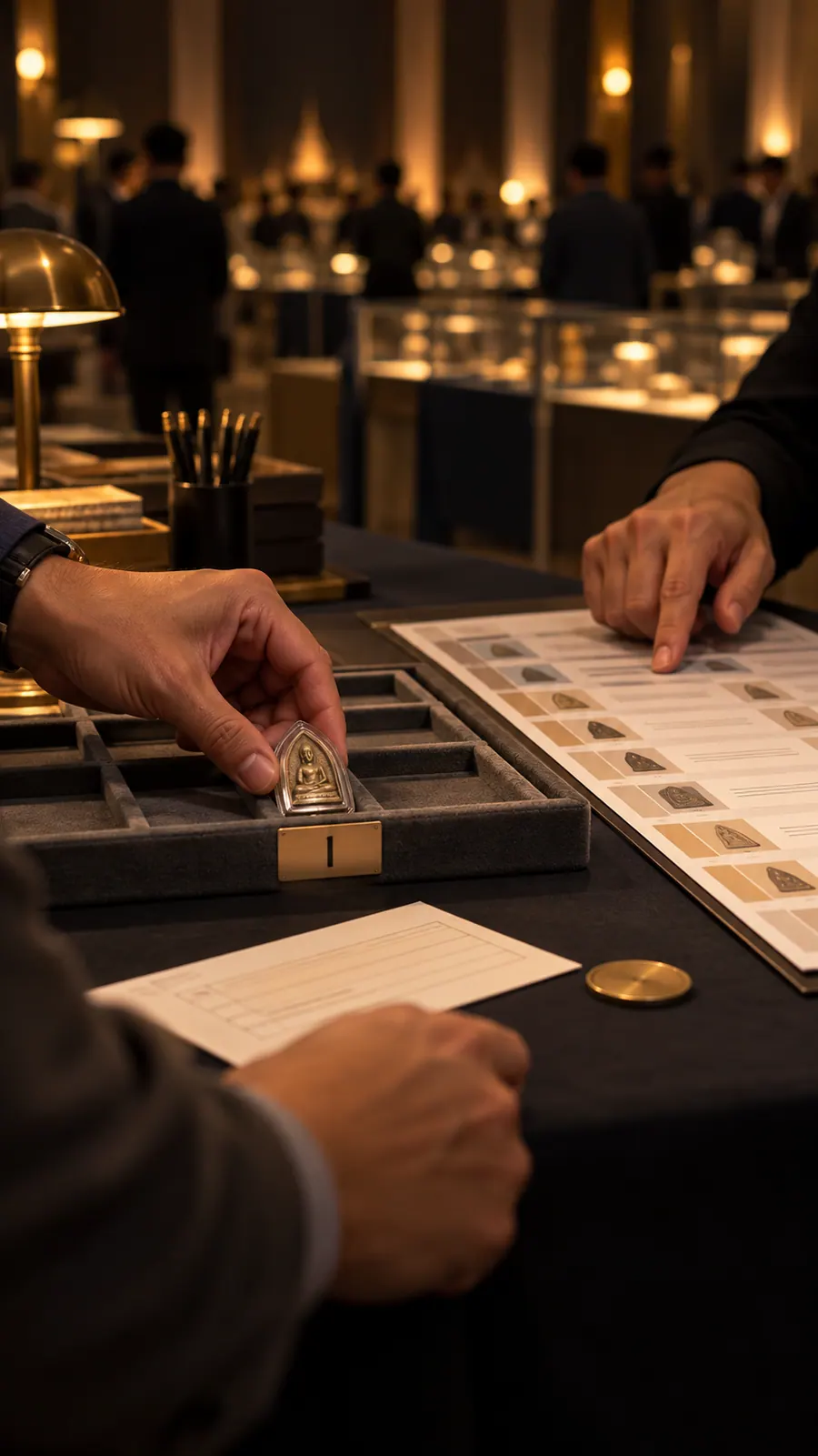
At the venue, an entrant generally buys an entry ticket, records the piece and submits it to the table for its category. Published programmes show fees around 300 baht per item, while other events charge 400 or 500 baht or a different amount. Whether spectators pay to enter also varies. Visiting the venue and entering a piece are separate arrangements.
At the judging table, staff may first check whether the piece fits the listed category. A mismatch may be returned. Accepted pieces are then compared with other entries in the same category. The entry fee buys consideration, not an award.
Third: compare condition and award the places
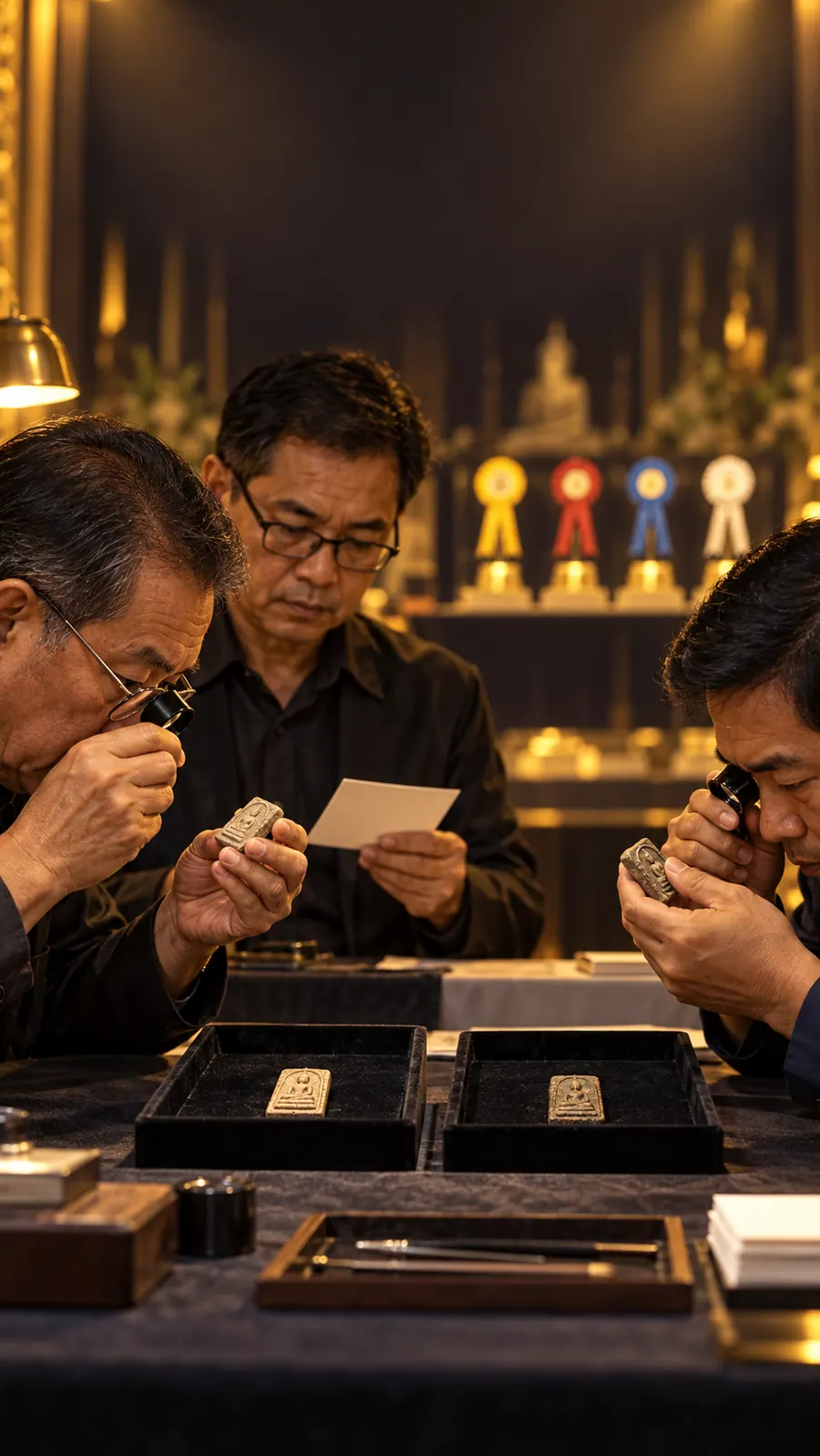
Collectors often explain the contest as a comparison among pieces of the same issue and mould: which retains its form, sharp detail and surface best? Judges must also decide whether an entry belongs in the category and is eligible. Many events award first through fourth place in a category; where eligible entries outnumber the places, some leave without a prize. The precise rules belong to each event.
The other side of a prize: sponsorship and judging
A contest needs a venue, publicity, staff and prizes; sponsorship is not inherently improper. The question is whether roles overlap. Who supports or arranges a category? Do judges have commercial ties to entrants or sellers? If a funder can influence categories or judging without disclosure, outsiders cannot tell whether a placing reflects only the piece. Clear disclosure and recusal matter more than a generic claim of expert judgment.

Some collectors voice a more serious allegation: a person might arrange a category, secure a prize for a disputed piece and later use that award in a sale. Such a claim concerns identifiable people, objects and events. Rumour alone cannot establish that any particular contest, judge or amulet was involved, and a possible abuse should not be generalised to all competitions. It does show why a contest result and an independent authenticity assessment are different forms of evidence and may disagree.
How a collector should read a certificate
- 01Check the event, date, organiser, category number and exact placing; do not rely on a cropped photograph.
- 02Match the certificate to the very piece being offered: mould, material, chips, marks and other identifying details.
- 03Keep contest placing separate from authenticity. For expensive or disputed pieces, seek an independent opinion and retain the sale and return terms.
A certificate records a competition’s decision about a particular entry. It can be useful collecting evidence, but it does not replace examination of the physical object, provenance and independent opinions. The useful question is not only ‘what place did it win?’ but ‘how was that placing reached?’