Market & Verification · Jul 2026 (B.E. 2569)
Tha Phra Chan is not a guarantee
The riverside floor, the website of the same name, and the card of the same name share a place-name. They do three different jobs. A true piece bought there does not mint a card by itself.
16 min
Tha Phra Chan is not a guarantee
The riverside floor, the website of the same name, and the card of the same name share a place-name. They do three different jobs. A true piece bought there does not mint a card by itself.
When Chinese-speaking buyers say Tha Phra Chan, they often stack three things into one name: the riverside floor on Rattanakosin Island, the trading site at Thaprachan, and the authentication card that company later issued. All three wear the place-name. They do not do the same job. Treating the market’s name as a brand guarantee is a foreigner’s usual mistake.
Where the riverside floor comes from
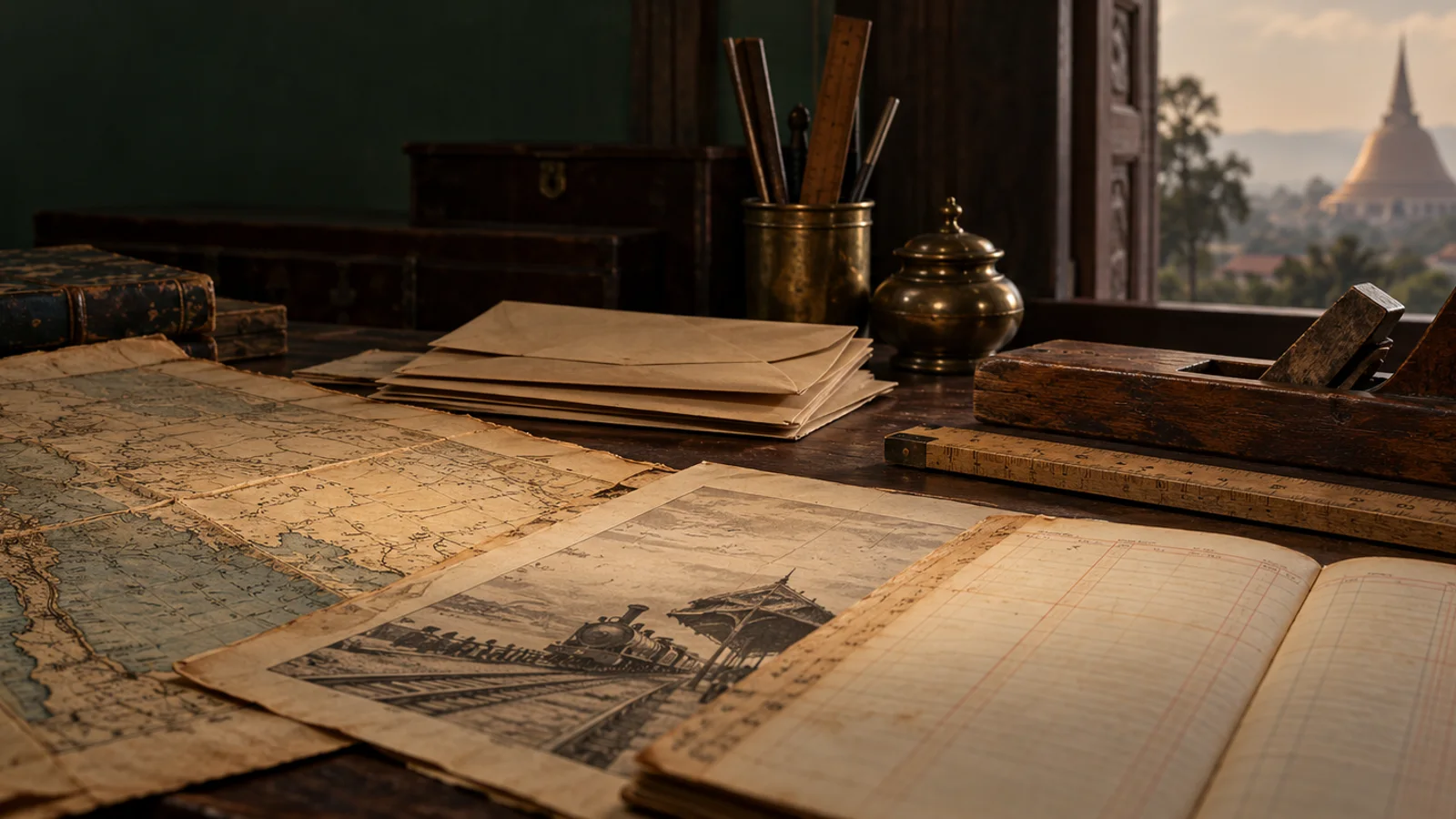
The place-name is older than the amulet floor. When Bangkok was founded there was a moon fort here; the fort went, the pier and the street kept the name. The pier sits on the Chao Phraya, against Wat Mahathat and Thammasat. After the water market became a land market, food, medicine, antiques and tablets were long sold along the wat wall. Notes from the 1970s already mention amulet stalls; around C.E. 1974 (B.E. 2517) someone counted about twenty. The floor thickened later, and became the Bangkok amulet market foreigners name first.
The floor has stalls, long-standing dealers, people who know the road to an association. It also has tourist prices, reproductions, and the pitch that a piece is powerful. It is a floor, a network, a school for the eye. It is not an institute. A true piece bought there does not become a carded piece because the stall sits at Tha Phra Chan.
What the site has to do with the floor
The domain Thaprachan was registered around C.E. 2004 (B.E. 2547). The later company, Thaprachan Dotcom, sits in an alley of the riverside floor; its bank book is at the Thammasat Tha Phra Chan branch. On the site’s list of ‘standard shops’, many shop-names themselves carry Tha Phra Chan: they were already people of this street and this pier. The relation can be said plainly: same name, same quarter, the same people taking a stall online.
That is not to say the site is the market, or that a market committee opened a website. The riverside stalls are many independent dealers. The site is a platform built by a company; a shop must apply, find a guarantor, pay a yearly fee. Later that company also issued cards, and pieces can be mailed in from the provinces. The floor itself was never a card-issuing body. The same place-name then took on a third job.
Three jobs, not one sentence
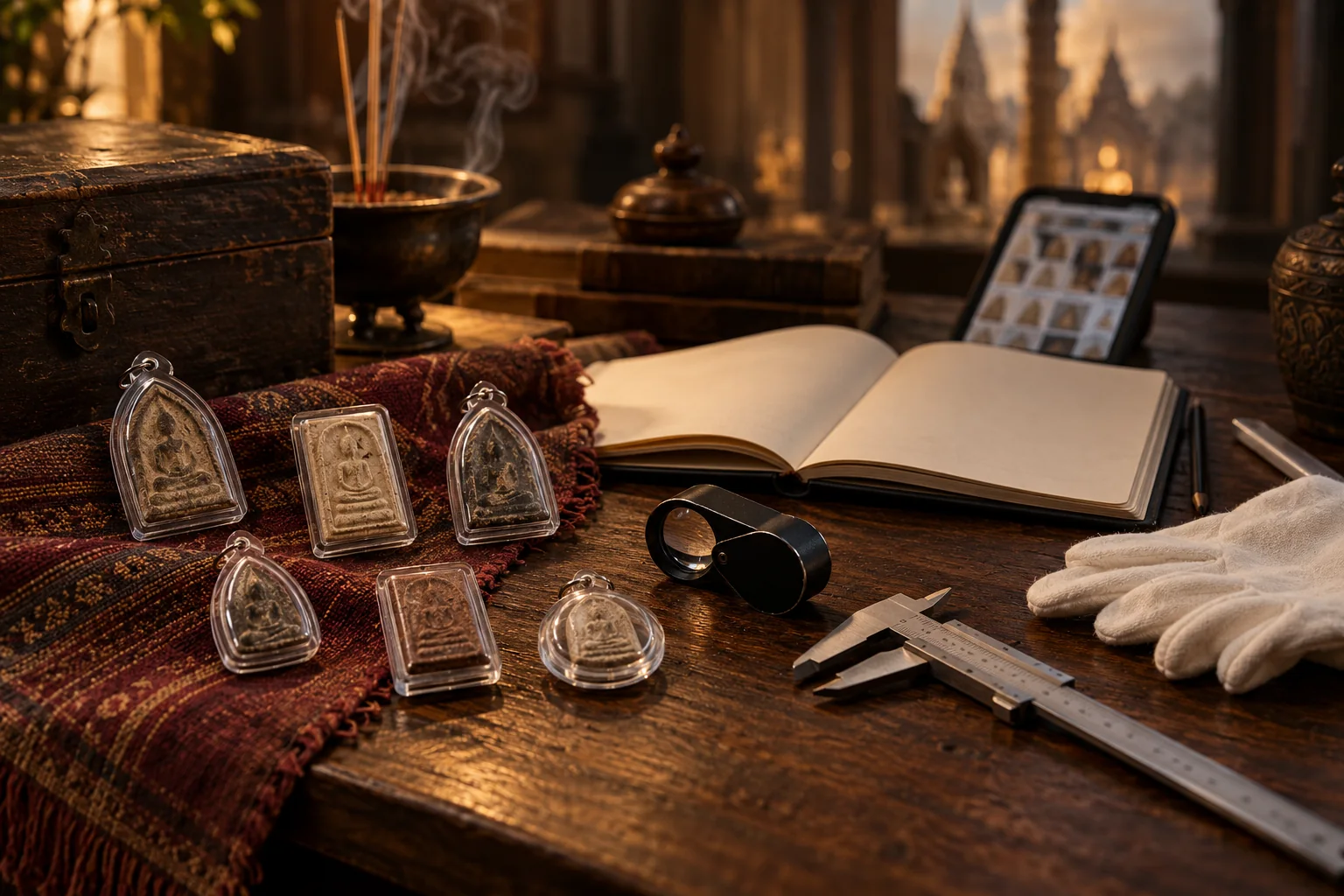
The riverside floor: the hand, the price, the person. The site: the same dealers’ stock on a screen, so a buyer far away can order from a picture. The card: that company’s call on a piece sent in — a different issuer from Samakom or Standard Amulet. The three can traffic with each other: a dealer stalls by the river, opens a shop on the site, and sends a piece to a card room. Traffic is not identity. A carded piece still wants a match of photograph, serial and text. A piece bought at Tha Phra Chan still wants mold, paste and path.
The company itself has posted that forged Thaprachan cards were on the market. The louder the name, the more a fake card is worth making. TAMRA keeps market, website and association in separate sentences, so one name cannot swallow three jobs. Tha Phra Chan is a place, a floor, and a company’s brand. It is not a guarantee.