Identification Guides
Original molds and recasts: start with the traces of making
A recast cannot be explained by saying an object ‘feels wrong’. First identify the method and the correct edition, then read rim, transitions, lettering, detail and material together. No single feature decides the case.
14 min
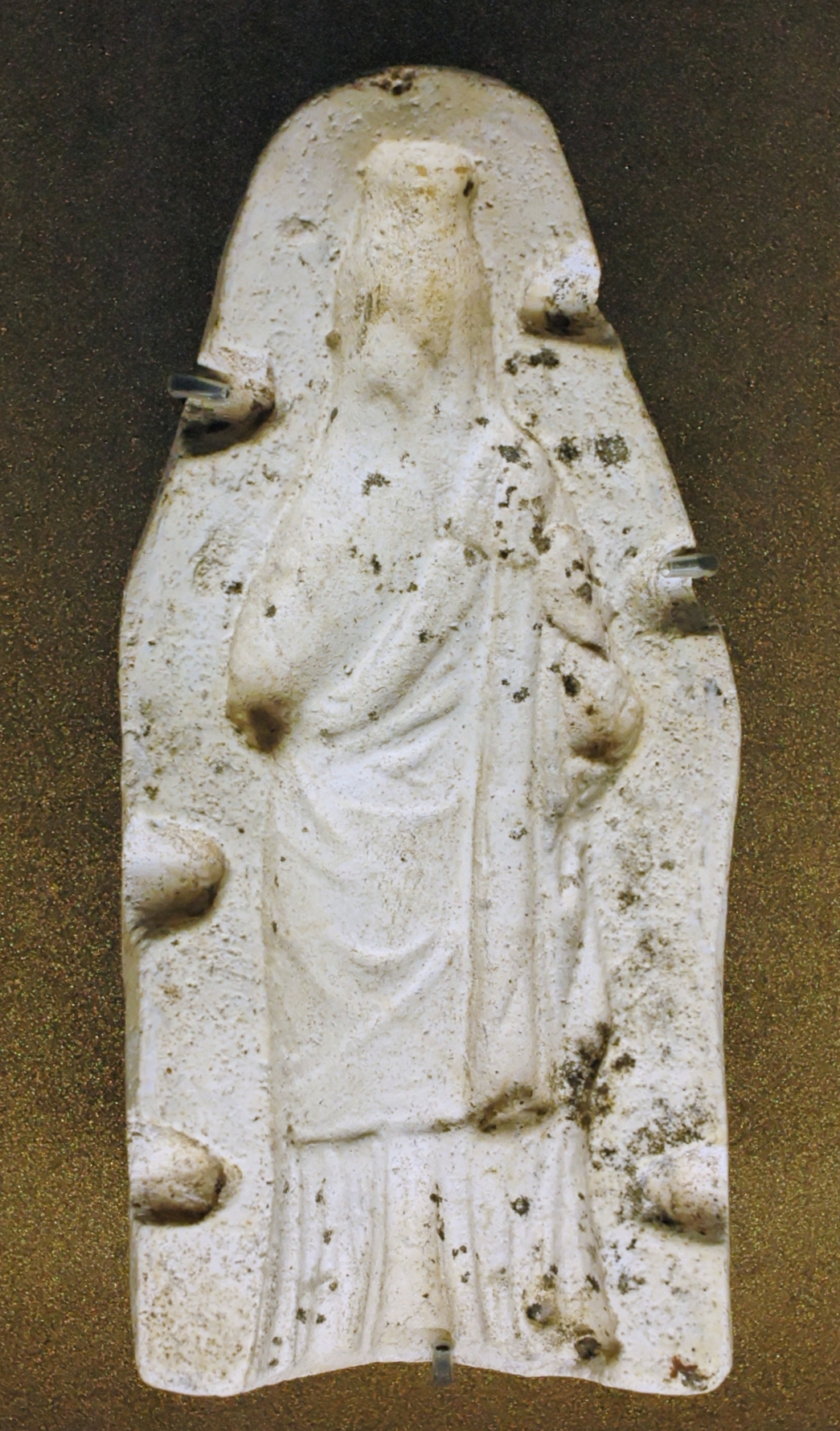
Original molds and recasts: start with the traces of making
A recast cannot be explained by saying an object ‘feels wrong’. First identify the method and the correct edition, then read rim, transitions, lettering, detail and material together. No single feature decides the case.
‘Original mold’, ‘recast’ and ‘copy-of-a-copy’ are sometimes used loosely across amulet types and markets. Here we use a practical distinction: an original mold is a tool made directly for that issue to press or cast pieces; a recast takes the shape from an already finished piece and makes a new mold; a copy-of-a-copy repeats that transfer from a recast. The point is not to force a label on every object, but to understand that each extra transfer can change shape and surface information.
The first premise: one issue may have more than one original mold
A formal issue may use different sizes, separate front and back molds, pre- and post-repair versions, or a tool that gradually wears in use. So ‘this one is less sharp than that one’ does not automatically mean recast, and a small size difference is not proof of shrinkage by itself. A reliable comparison begins by asking whether two pieces should share the same version, material and method at all. Use the wrong reference and every later detail will be misread.
What transfer molding can change: shape, transitions and detail together
When a finished piece is used to make a new mold, its raised parts become recesses in that new mold, and fine grooves, sharp corners and edges must be transferred again. The outline may thicken or shrink; points may round; fine lettering and lines may become shallower, merge or lose their start and finish; wear, chips and surface undulation from the parent piece may also be carried into the new mold. The meaningful observation is not finding one item, but seeing several changes point to the same transfer-from-a-finished-object process.
From large to small: a repeatable comparison order
- 01Confirm the name, year, temple, version and both sides before comparing. Do not treat an unproven web image as an ‘original mold’; assemble several documented examples of the same version first.
- 02Match the outer frame and overall proportions first: head, shoulders, base, border, loop or edge positions. If the large structure is wrong, do not force a match from one or two inner lines.
- 03Then examine distinctive transitions: starts and ends of lines, letter corners, robe-line crossings, base layers and spacing between motifs. Do not rely on the single prettiest point; compare relationships across several points.
- 04Only then read material and surface with the mold: do metal edges and casting or striking features, or a powder piece’s particles, breaks and pressure marks, fit the claimed method? Mold and material should support each other, not compete as an either-or test.
Metal and powder pieces require different questions
For metal pieces, read the rim, thickness, loop, letter depth and the structure left by casting or striking; light can exaggerate or erase relief, so compare from more than one angle. For powder pieces, mold information intertwines with recipe, particles, shrinkage, cracks, cut edges and release condition. Abrasion, oiling, cleaning or casing can also rewrite fine surface detail. In neither case should sharpness alone decide the result.
A common error: mistaking ‘unclear’ for ‘proven’
Low resolution, heavy retouching, strong glare, oil sheen, angled shots and a front-only image can all distort detail. When photographs are insufficient, the professional conclusion is ‘the mold cannot yet be confirmed’, not a hurried genuine-or-fake verdict. Conversely, a few similar lines do not promote a piece to an original mold; ask whether overall structure, material and circulation history support the same version. The value of reading is in excluding unreasonable possibilities, not packaging uncertainty as certainty.